If you’re arriving in Busan with more than a carry-on, the practical choice between public and private transfer comes down to how much lifting, waiting, and walking you’re willing to accept. Public transit (metro, airport bus, or regional train) can be efficient and inexpensive, but it often requires stairs, busy platforms, and multiple transfers—awkward when you’re managing large suitcases or equipment. Private transfers—taxis, rideshares, or prebooked cars—offer door-to-door convenience and less handling, but you’ll need to confirm vehicle size, luggage allowance, meeting points, and potential traffic delays. This guide gives the quick answer first, then walks through the tradeoffs, decision criteria, packing and booking checks you should make before you commit. Use it to match your physical needs, budget flexibility, and arrival time to the right transfer choice for Busan.
See current options before you compare the details
Availability and final conditions change. Open Trip.com now or keep reading for the practical comparison.
How to weigh convenience versus cost for extra luggage
Convenience and cost sit on opposite ends of the transfer decision. A private transfer reduces handling: you step off the plane, meet a driver or hail a taxi, load your suitcases, and ride straight to your accommodation. That eliminates stair carries, crowded platform navigation, and multiple boardings—benefits that grow with bulky sports gear, large suitcases, or families with infants. What a private option cannot promise on its own is fixed travel time; traffic can extend door-to-door minutes, so factor in buffer time for airport pickups during busy periods.
Public transport usually wins on cost-per-person and often on reliability for city-center arrivals during the day. However, the price advantage can be offset by inconveniences: uneven sidewalks, congested trains at rush hour, and vehicle size limits for luggage. To decide, list what you value most—money, speed, or hands-off ease—and rate each option against that list. Practical evaluation of mobility needs (can you lift a 23–28 kg suitcase?) and whether you’ll travel solo or with helpers will point you quickly toward public or private.
Comparing transfer types: what to check before booking
For private transfers—booked taxis, app rides, or prearranged cars—verify the vehicle type and luggage allowance, the exact pickup point at the airport, and whether the driver meets you inside arrivals. The airport has specific taxi ranks and authorized pickup zones; confirm where drivers are allowed to wait and whether there is a fee to enter the terminal curb. If you need a larger vehicle (van or minivan), request it specifically and ask the provider what happens if the vehicle cannot accommodate all items.
For public transport, compare door-to-door legs rather than single routes. Identify the nearest metro or bus stop to your accommodation, note transfer stations, and check if stations have elevators or escalators useful for heavy bags. Consider the number of steps between platform and exits and whether luggage trolleys are allowed. If your arrival is outside metro hours or your route requires multiple transfers, weigh that inconvenience against the fare savings. When booking passes or tickets, verify refund and change rules on the official provider page.
| Approach | Best for | Tradeoff to check |
|---|---|---|
| Private transfer (taxi, rideshare, prebooked car) | Travelers prioritizing door-to-door convenience, minimal handling, and direct routing with bulky or fragile luggage. | Higher cost and potential traffic delays; must confirm vehicle size, pickup point, and luggage policy before booking. |
| Public transport (metro, airport bus, regional train) | Budget-conscious travelers who can manage stairs and short walks and want predictable daytime schedules. | Multiple transfers and crowding can make it impractical with very large or many pieces of luggage. |
| Mixed approach (public to nearby hub + taxi for last mile) | Those balancing cost and convenience—use transit for bulk of the route, taxi for shorter, luggage-heavy final leg. | Requires coordination and may still involve one luggage transfer between modes. |
| Group shuttle or shared transfer | Groups or families where cost per person matters and some help loading makes handling easier. | Stops to drop other passengers can add time; check luggage space rules and meeting-point logistics. |
Ready to check the option that fits your plan?
Use your exact dates and traveler details so the provider page can show the current total and conditions.
Packing, labeling, and handling tips when using Busan transfers
Pack with transfers in mind: use wheeled suitcases over soft duffels when you must manage walks between modes. Clearly label large bags with your name and contact details, and place fragile or high-value items in an easily reachable carry-on. If some items are awkward—sports equipment, musical instruments, or pet carriers—measure them and compare dimensions to vehicle cargo space before choosing a private car or confirming a bus’s luggage policy. Bring straps or luggage locks; they make handling quicker and reduce the chance of dropped items during transfers.
Prepare for the handoffs. Use luggage covers to protect bags from rain or city grime, and keep a small, well-packed day bag with essentials and important documents so you don’t need to open large suitcases mid-transfer. If you’re traveling with someone, agree who handles which bag to cut transfer time. For public transport, pick seats near doors for faster exits; for private transfers, bundle and stow luggage quickly to shorten waiting time and reduce surcharge risk if the provider charges for bulky items.
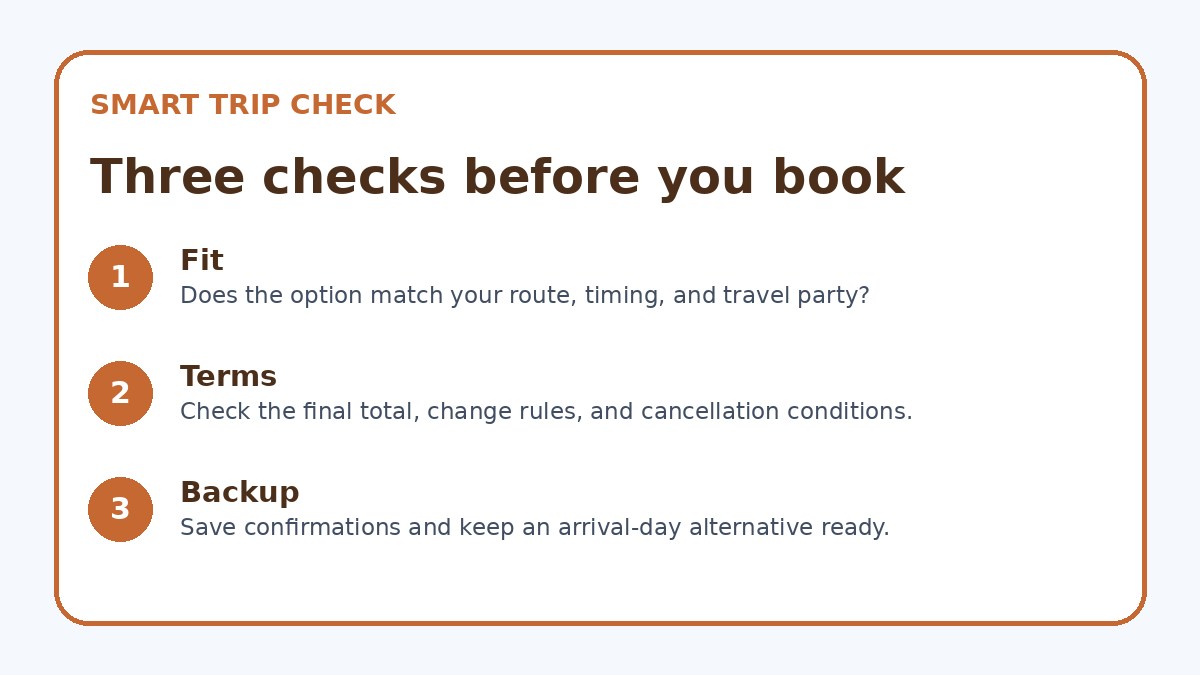
Before you book
- Measure and weigh each large item; match dimensions to the vehicle type before booking a private car.
- Check airport pickup zones and driver meeting points on the provider’s final confirmation page.
- Verify station elevator and escalator availability on your public route to avoid unexpected stairs.
- Confirm any oversized-luggage policies and extra fees with the transfer provider before payment.
- Plan arrival buffers for traffic or flight delays and read the provider’s late-arrival policy.
- Pack a compact day bag with documents, medication, and valuables to keep with you during transfers.
Making the final booking: verification and timing checklist
Before you book a private transfer, confirm the pickup protocol on the provider’s booking page: exact terminal meeting points, driver contact methods, any curbside fees, and cancellation terms. If you book via an app, allow the driver’s vehicle details and license plate to arrive before you leave baggage claim. For prearranged services, verify whether waiting time is included, and if your flight is delayed, find the policy that handles late arrivals so you won’t be charged unfairly.
When choosing public options, check the first and last departures for the metro or airport bus and whether they align with your arrival time; plan an alternate (taxi or rideshare) if you land outside service hours. If you prefer a mixture—public transit for part of the way and a taxi for the last leg—identify logical transfer points with elevators or curbside access. For all bookings, review the provider’s final confirmation for luggage restrictions, meeting-point maps, and contact lines; if in doubt, compare current availability on services like Trip.com before you finalize.
Frequently asked questions
Is it worth prebooking a private transfer to avoid carrying large suitcases in Busan?
Prebooking a private transfer can be worthwhile if you want to minimize physical strain and handling. It reduces the number of times you must lift bags and removes the need to navigate crowded platforms, stairs, or long pedestrian stretches. That said, prebooking only helps if the operator confirms the vehicle size and luggage allowance. If you decide to prebook, check the provider’s pickup instructions, waiting-time policy, and what happens if your flight is delayed. If cost is a primary concern, compare the total taxi or car cost to the time, effort, and number of transfers public transit would require.
Can I carry sports equipment or musical instruments on Busan public transit?
Many items can be carried on public transit, but bulky or irregularly shaped equipment can be awkward or restricted. Think about how easily you can lift and fit the item into crowded aisles, and whether the item will block doors or seating. If an instrument or gear needs special handling, measure it and check the policies of the transit operator and any private transfer service before you travel. For delicate or valuable items, a private transfer offering protected storage and minimal handling is often a safer choice.
What should I do if my flight is delayed and I’ve already booked a scheduled pickup?
If your pickup is scheduled, contact the transfer provider as soon as you know about the delay and share updated arrival information and the new estimated time. Review the booking confirmation for the provider’s delay or grace-period policy so you know whether additional wait fees may apply. For app-based rides, keep the app open and monitor the driver’s arrival window; for prebooked drivers, provide your new expected arrival time and a reachable phone number. When in doubt, have a fallback plan such as a taxi rank or a rideshare option at the airport.
Final planning note
Choosing between public and private transfers in Busan when you have extra luggage depends on how much lifting and walking you can tolerate, how flexible your schedule is, and how much you are willing to spend for convenience. Private transfers reduce handling and simplify logistics but require careful verification of vehicle capacity and pickup procedures. Public transport is cost-effective and often reliable for central routes but can be cumbersome with oversized items or during peak crowds. Weigh your priorities, use the checklist to confirm provider details, and consider a hybrid plan if you want to balance price with a lighter luggage load for the last mile.
Continue planning
Check current options and final conditions
Use the provider page to confirm live availability, the final total, cancellation terms, and every condition that matters to your trip.
This evergreen planning guide was created with AI-assisted drafting and a structured quality review. It does not display live prices, schedules, availability, visa guidance, or provider rankings. Verify current details before booking. Some links are affiliate links; we may earn a commission at no additional cost to you.