
Practical answer first: pick an area based on your priorities — easiest sightseeing access (Covent Garden, Westminster), nightlife and dining (Soho, Shoreditch), budget and transport links (King's Cross, Bayswater), or a quieter, local feel (South Bank, Notting Hill). For most first-time visitors the best compromise is a centrally located neighbourhood with a strong Tube connection and good walking access to major sights. That reduces wasted travel time while letting you return easily for a rest during a long day of museums and walks. Below I explain the tradeoffs each area offers, how to prioritize safety, transport and vibe, and specific checks to make before you book so you pick the hotel that actually works for your trip.
Central London: Covent Garden, Westminster and the West End
Staying in central neighbourhoods like Covent Garden, Westminster or the West End puts theatre, national museums and major landmarks within a short walk. These areas are made for first timers who want to tick off top attractions quickly: you’ll be close to Trafalgar Square, the Houses of Parliament, the National Gallery and plenty of restaurants. Hotels here range from compact city rooms to larger established properties. The main tradeoff is that these locations are busy, especially in the evening or on weekends, so choose a quieter street or an inner courtyard room if street noise concerns you.
Transport is straightforward: multiple Tube lines and buses cross central zones, making onward trips to other quarters efficient. If you plan evening shows, check the hotel’s late-check-in policy and whether reception operates 24/7. Also confirm the nearest Tube station and which lines serve it on the hotel’s booking page to be sure connections match your planned routes. Staying central reduces commuting time but typically costs more than outer areas—balance proximity against room size and hotel amenities you actually need.
Trendy and lively: Soho, Shoreditch and Camden
If you prioritise nightlife, independent dining and creative scenes, Soho, Shoreditch and Camden deliver character and variety. Soho is compact and excellent for theatre and restaurants; Shoreditch offers bars, street art and a tech-startup vibe; Camden draws crowds for live music and markets. These neighbourhoods suit travellers who plan to eat late, explore on foot, and appreciate an energetic atmosphere. Noise and crowds are part of the experience—select a hotel with good soundproofing or quieter room options if you want both access and rest.
Transport connections are typically strong but can be patchy late at night—buses run later than the Tube on many routes. For Shoreditch and Camden, check proximity to Overground stations, which connect differently than the Tube, and remember that some central walking routes can be longer than they appear on a map. Confirm the hotel’s walking time to the nearest station on the booking page and whether the area feels safe for your group at night; personal comfort varies and local reviews can give a practical sense of evening conditions.
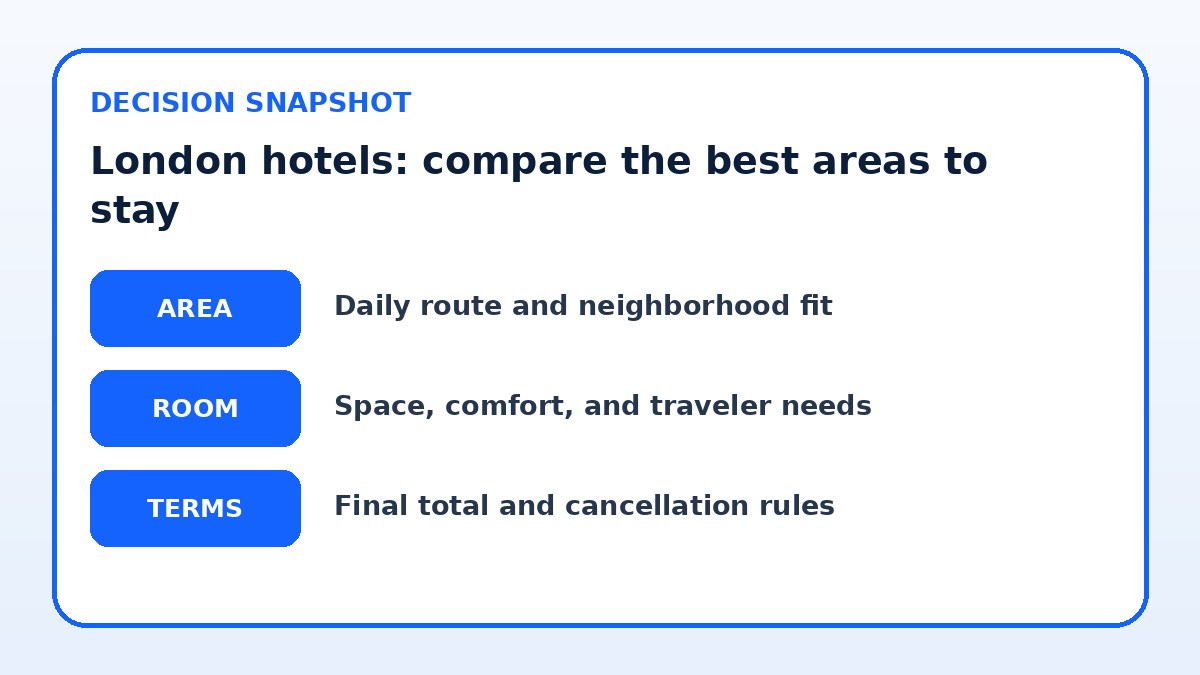
| Approach | Best for | Tradeoff to check |
|---|---|---|
| Stay central (Covent Garden/West End) | First-timers prioritising walkable access to top attractions | Higher prices and busier streets, especially during evenings and weekends |
| Stay lively (Soho/Shoreditch/Camden) | Visitors valuing nightlife, dining variety and creative scenes | More noise and crowds; some walking routes and late transport require planning |
| Stay practical (King’s Cross/Paddington/Bayswater) | Budget-conscious travellers who value transport links and airport access | Less picturesque streets; atmosphere can be commuter-focused |
| Stay relaxed (South Bank/Notting Hill/Kensington) | Travelers wanting quieter streets, museums and scenic walks | Slightly longer commutes to some central theatres and nightlife hubs |

Budget and practicality: King's Cross, Bayswater and Paddington
If you want lower nightly rates without sacrificing access to the city, consider King's Cross, Bayswater or Paddington. These zones host major rail terminals and strong Tube links that shorten travel time to many attractions and to airports. Rooms here often offer better value for space. The tradeoff is that neighbourhood character varies—some streets are functional and busy with commuters rather than picturesque—so weigh location against your desire for charm versus convenience.
When booking in these areas, verify the hotel’s exact distance to the station and which lines you’ll use to reach your planned attractions. For airport transfers, being near a rail terminal can simplify connections, but confirm the terminal services on the booking page and whether you’ll need an extra transfer. Budget travellers should also check luggage storage and late arrival policies because cheaper rooms sometimes have stricter rules that matter for early or late journeys.
Before you book
- Confirm the hotel’s exact street address and check walking routes to the nearest Tube or rail station on a map before booking.
- Verify the lines served at the closest station and whether those connections match your planned daily routes and airport transfers.
- Read recent guest comments about noise, lift availability and cleanliness rather than relying only on star ratings.
- Check the hotel’s late-check-in, early-check-out and luggage storage policies on the provider’s booking page before you reserve.
- If you need accessibility features, request confirmation of step-free access, room layout and accessible bathroom details from the hotel.
- Compare total travel time from the hotel to your top three planned attractions rather than judging location by neighbourhood name alone.
Quieter and scenic: South Bank, Notting Hill and Kensington
If you prefer a calmer base with parks, riverside walks or high-end museums close by, the South Bank, Notting Hill and Kensington are strong choices. South Bank gives easy riverside access and pedestrian routes to the Tate Modern, Globe and Borough Market, while Notting Hill and Kensington offer leafy streets, local cafes and proximity to museums like the V&A. These areas suit travellers who plan relaxed mornings, scenic walks and museum days rather than nonstop sightseeing.
The tradeoff is a slightly longer commute to some central landmarks and theatres, particularly at night when crossing the river can add time. Confirm the hotel’s walking route to the nearest Tube or pedestrian river crossing on the booking page so you know how long typical trips will take; small route differences can matter if you’re returning mid-afternoon for a rest. If you value quiet evenings and attractive streets, these neighbourhoods often feel worth the modest additional travel.
Frequently asked questions
Is it better to stay near a Tube station or near a major attraction?
Staying near a Tube station usually gives more flexibility: you can reach multiple areas quickly rather than being tied to one neighbourhood. A hotel near a major attraction is convenient for visiting that specific site, but first-time visitors often prefer the network access of a Tube hub because it reduces walking and lets you change plans easily. On the hotel’s booking page, check which Tube lines serve the station and how long typical journeys to other attractions will take; that information helps you decide which tradeoff matters most.
Are certain areas safer for solo travelers or late-night returns?
Most central London areas are generally safe, but personal comfort, lighting and foot traffic matter. Well-trafficked districts like the West End and South Bank have many people and services late into the evening, which can feel reassuring. Nightlife neighbourhoods can be lively but also noisier and more crowded. To assess safety for your needs, read recent guest reports about late-night conditions, check street-level photos or maps for lighting and busyness, and confirm hotel recommendations for late arrivals on the provider’s booking page.
How should I balance price versus location when booking London hotels?
Balance total convenience and time cost, not just nightly price. A cheaper hotel at the city edge can be a false economy if daily transport adds complexity, cost or long commuting time. Estimate the extra daily travel time and any additional fares, then weigh that against savings. Also consider what you value in-room—size, quiet, breakfast—and whether you’ll spend much time in the hotel. Use the booking page to verify transport connections and any extra fees (like city taxes or optional services) before finalising to ensure the choice fits your schedule and budget.
Final planning note
Choosing where to stay in London comes down to the tradeoffs you accept between convenience, atmosphere, cost and quiet. Central neighbourhoods save travel time and are ideal if you want to walk between major sights; lively districts offer nightlife and restaurants at the expense of noise; practical hubs near stations give better value with easy transport; quieter areas provide scenic days and museum access but add a little travel. Before you book, confirm the hotel’s exact address, nearest Tube or rail lines, arrival policies and any amenities you need on the provider’s booking page. If you want to compare live availability and conditions, you can check platforms like Trip.com, but always verify details with the hotel on the final booking screen.
Continue planning
Check current options and final conditions
Use the provider page to confirm live availability, the final total, cancellation terms, and every condition that matters to your trip.
This evergreen planning guide was created with AI-assisted drafting and a structured quality review. It does not display live prices, schedules, availability, visa guidance, or provider rankings. Verify current details before booking. Some links are affiliate links; we may earn a commission at no additional cost to you.