
If you’re booking Seoul hotels for a family trip, pick a place that minimizes transit stress: a hotel within a 5–10 minute walk of a subway station on multiple lines, easy access to an airport transfer (AREX or coach), and reliable bus or taxi options nearby. Families benefit most from reducing transfer legs, staying near convenience stores and eateries, and choosing rooms with flexible bedding or connecting options. This guide gives the practical decision points first—what to prioritize and how to compare properties—then explains tradeoffs such as neighborhood vibe, cost versus convenience, and walking versus transit time. Before you finalize a booking, verify exact subway exits, stroller access, lift availability, and airport transfer options on the hotel’s own page or the booking provider’s listing.
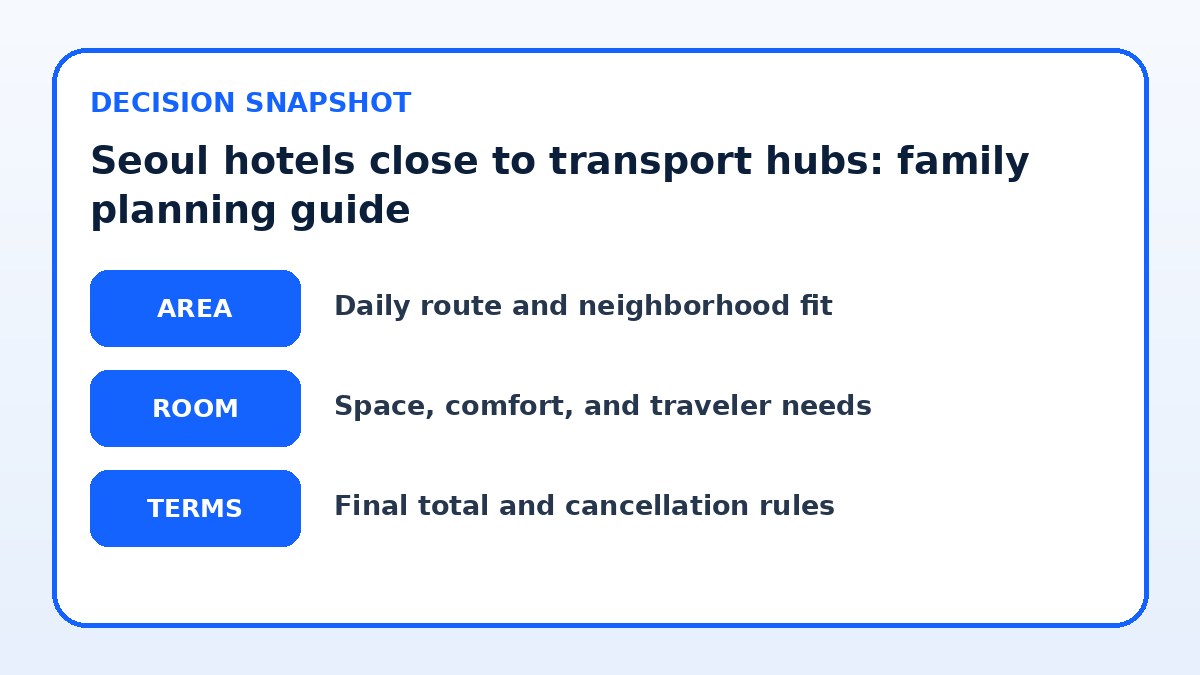
See current options before you compare the details
Availability and final conditions change. Open Trip.com now or keep reading for the practical comparison.
Prioritize subway access and station details
Subway access is the single most practical transport priority in Seoul for families. A hotel within a short walk of a station on a major line reduces time spent carrying luggage, lowers dependence on taxis during peak hours, and makes sightseeing simple because most tourist spots connect quickly by subway. When comparing properties, look beyond the claim “near station”: check which station exit is closest, whether the path includes stairs or long tunnels, and whether there are elevators or escalators—important if you have a stroller or small children.
Verify the lines that stop at the nearby station and whether transfers are needed for places you plan to visit, such as palaces, amusement parks, or Han River areas. If your itinerary includes shopping and cultural districts, hotels near transfer stations (two or more intersecting lines) give extra flexibility. However, remember transfer stations can be crowded; for young children, pick a station with clear signage and barrier-free paths to keep movement easy and reduce stress during rush hours.
Airport access and arrival logistics for families
How you arrive matters as much as where you stay. Families often prefer straightforward airport-to-hotel routes that minimize handling luggage and tired children. Look for hotels that advertise proximity to AREX express or all-stop trains, airport limousine buses, or properties that offer shuttle service. If a direct hotel shuttle isn’t available, choose a hotel close to a convenient bus stop or a station on the AREX line to cut transfers; always confirm schedules and pick-up points with the hotel before arrival because providers and times can change.
If you expect late-night arrivals, confirm 24-hour check-in and clear directions for late entry; similarly, if you rely on taxis, note local taxi ranks and any hotel guidance about fares. Never assume taxi lines are fast during peak times—compare transfer time, number of legs, and effort with public transit when deciding which neighborhood to book. For newborns or infants, check whether your chosen transport options can accommodate car seats or if the hotel can recommend reliable private transfer services.
| Approach | Best for | Tradeoff to check |
|---|---|---|
| Stay at a hotel beside a major transfer station | Families who want maximum route flexibility and faster access across the city | Busier streets, potentially smaller rooms, and more noise at night |
| Stay in a quieter residential neighborhood with one extra transfer | Families valuing space, parks, and calmer evenings | Longer daily transit and more planning for luggage or naps |
| Choose hotels close to AREX or airport bus stops | Families with heavy luggage, short trips, or late arrivals | May be farther from central sightseeing areas, requiring more transit for attractions |
| Prioritize hotels with family room layouts and on-site services | Families needing more living space, laundry, or kitchen facilities | Might be outside the busiest transport hubs, adding commute time |
Ready to check the option that fits your plan?
Use your exact dates and traveler details so the provider page can show the current total and conditions.

Neighborhood tradeoffs: convenience versus quiet
Central neighborhoods like Myeongdong, Jongno, and near Seoul Station place you close to major tourist routes and many subway lines, which is great when you want to minimize daily travel time. The tradeoff is that these areas can be busy and louder at night, and hotel rooms tend to be smaller. For families, assess whether proximity to shops, convenience stores, and eateries outweighs the desire for a quieter, more residential feel. A shorter commute can reduce frustration on days with heavy sightseeing or when returning to the hotel mid-day for naps.
Quieter districts—such as parts of Yeonnam-dong, Seongsu, or southern Gangnam neighborhoods—offer more spacious streets, parks, and slower evenings but may add a transfer or two to get to major sights. If you prefer a calmer base, aim for a hotel that balances quieter streets with a single, simple transfer to a main line. In every neighborhood, confirm the immediate surroundings (restaurants, pharmacies, playgrounds) and whether night-time walks feel safe and well-lit when choosing the right tradeoff for your family.
Before you book
- Confirm the nearest subway station name, exit number, and whether there are elevators or escalators on the hotel’s official page.
- Ask the hotel about airport transfer options, shuttle schedules, or recommended bus/train routes before booking.
- Request details on room configurations, crib availability, and fees for extra beds directly from the property.
- Verify elevator access to all floors and confirm door and corridor widths if you’ll use a stroller or wheelchair.
- Check on-site services such as laundry, kitchenette, 24-hour reception, and whether breakfast is served or booked separately.
- Map walking routes from the hotel to the station and nearby conveniences like convenience stores, pharmacies, and playgrounds.
Practical room and building features to check
Once transport location is settled, focus on room layout and building services that affect comfort. Look for rooms with flexible sleeping arrangements—sofa beds, rollaway options, or family rooms—and ask about crib availability if you travel with an infant. Confirm whether elevators serve all floors and whether corridors and doorways are stroller-friendly. These are details that often change; always verify them on the hotel’s official page or by contacting the property before you book.
Also check on laundry facilities, in-room kitchen or kitchenette availability, and the presence of a 24-hour front desk. For families, being able to do laundry, prepare light meals, or access help at any hour reduces friction. If breakfast service matters, see whether it’s included or offered on-site, and verify seating capacity to avoid early-morning waits. For any provider-specific claims—like shuttle times, lift dimensions, or meal service—confirm the current details directly with the hotel or on a reputable booking platform such as Trip.com.
Frequently asked questions
Is it better to stay near Seoul Station or a neighborhood subway stop for families?
Staying near Seoul Station gives rapid access to multiple lines and long-distance trains, which reduces transfer complexity when moving across the city. However, central hubs are busier and often noisier. A neighborhood stop on a single line can feel calmer and still provide easy access to main attractions if you plan routes with fewer transfers. Choose based on whether you prioritize shorter transit time or quieter evenings for children, and confirm station facilities such as elevators and accessible exits on the hotel’s site.
How should I evaluate hotel transfer claims and shuttle services?
When hotels mention shuttle or transfer services, ask for exact pick-up locations, schedules, and whether advance reservation is required. Verify if shuttles stop at airport terminals or require a fee. If schedules are crucial for late arrivals or early departures, request a written confirmation from the hotel or check the booking page. If a shuttle isn’t available, identify the nearest AREX stop or airport limousine bus stop and compare total transfer legs and effort for the family.
What transport options are easiest with young children and lots of luggage?
A single direct transfer from airport to hotel—preferably by airport train or airport limousine bus that stops near your hotel—reduces handling and waiting with children. Hotels within a short walk of a station with elevators are ideal for strollers. If using taxis, confirm typical pick-up points and whether luggage assistance is available, but don’t assume taxis will be faster during rush hour. Always contact the hotel to confirm accessibility and recommended arrival routes tailored to families.
Final planning note
Choosing Seoul hotels for a family trip means balancing transit convenience with comfort. Prioritize a short, easy walk to a subway station—ideally one with multiple lines or a clear transfer route—and confirm airport transfer options if arrival and departure logistics matter. Consider neighborhood character and room layout next: central hubs speed up sightseeing but can be busier, while quieter areas offer more space at the cost of extra commuting. Before booking, verify elevator access, stroller-friendly paths, crib and bed arrangements, and any shuttle details on the hotel’s official page or your chosen booking site. A bit of pre-trip checking will keep daily travel smoother and let your family focus on enjoying Seoul.
Continue planning
Check current options and final conditions
Use the provider page to confirm live availability, the final total, cancellation terms, and every condition that matters to your trip.
This evergreen planning guide was created with AI-assisted drafting and a structured quality review. It does not display live prices, schedules, availability, visa guidance, or provider rankings. Verify current details before booking. Some links are affiliate links; we may earn a commission at no additional cost to you.