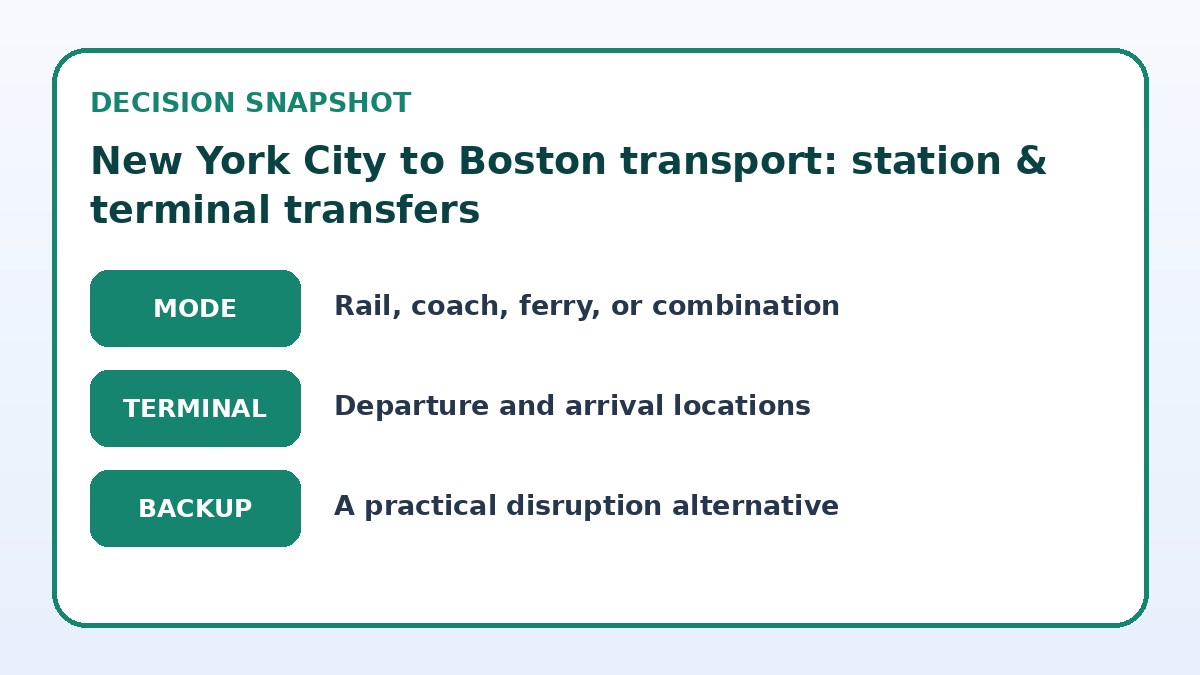
Practical answer: choose the mode that minimizes transfers and luggage handling for your family, then pick stations or terminals that match where you’ll start and end in each city. For many families that means favoring rail or express coach services that use large, centrally located terminals with easy subway or taxi connections. If a ferry or mixed route looks appealing for the scenery, factor in extra time for water-terminal check-in and tendering between transport modes. Before booking, map door-to-door time (hotel to origin terminal, scheduled journey, terminal to final accommodation) and compare how many times you’ll change vehicles, how many pieces of luggage you’ll manage, and how transfers work with small children or strollers. The rest of this guide breaks down terminal fit, luggage friction, timing flexibility, and disruption backups so you can pick a realistic, low-stress plan for your family trip.
Terminal fit: pick stations and terminals that match your family’s start and end points
Terminal fit means choosing the origin and destination that minimize complicated transfers once you arrive in each city. In dense cities like New York and Boston, some terminals sit closer to neighborhoods, hotels, or subway lines. For families, a longer but single direct ride that lands at a terminal adjacent to your hotel or a simple subway line is often better than a quicker route that requires multiple local transfers. Look for terminals with indoor waiting areas, family restrooms, and straightforward taxi or rideshare pickup zones to reduce stress when traveling with children and gear.
When comparing options, study the precise location of each station or terminal on a map and trace the practical route from your accommodation to the terminal and from the arrival terminal to your Boston lodging. Consider whether sidewalks, elevators, or escalators are needed for strollers and luggage. If the terminal connects directly to local rapid transit, that usually simplifies onward travel. If not, check typical taxi or rideshare pickup points and whether a single short car ride is a reasonable tradeoff to avoid walking multiple blocks with bags and kids.
Choose the end-to-end journey plan
| Journey approach | Best for | Friction to check |
|---|---|---|
| Direct intercity rail (single-seat rail) | Families who want low-physical-effort transfers and straightforward station facilities | May require traveling to major terminals that are less convenient to some neighborhoods |
| Express coach (direct bus service) | Families seeking simpler door-to-door routes and often lower complexity than mixed trips | Some coach terminals are outside dense cores, adding a local transfer for the last mile |
| Ferry or mixed ferry + rail/coach | Families who prioritize scenery and a relaxed travel experience over speed | Adds ticketing steps, boarding time, and potential weather-related disruption; plan extra buffers |
| Mixed-mode with short local transfer (train + subway or coach + taxi) | Families needing flexibility to match specific hotel locations or schedules | More handoffs increase luggage and stroller management; requires careful timing |
Check live intercity options
Look beyond the ride itself and compare terminals, transfers, luggage, and arrival fit.
Luggage and transfer friction: how many hands and steps will your bags see?
Families should count 'hands' and 'steps'—how many times a parent or child will lift a bag, fold a stroller, or move from vehicle to vehicle. Large rail terminals tend to have checked or carry-on luggage areas, level boarding, and staff to help, which reduces the physical burden. Coaches and ferries may require lifting bags up steps or onto racks; if your group includes toddlers or infants, prioritize options with level boarding or station staff assistance. Decide ahead whether you'll check large suitcases or keep items with you, and plan how to manage diapers, snacks, and entertainment during transfers so they stay accessible.
If you intend to combine modes—say, train to a ferry—you must budget time and physical energy for moving between terminals. Walk distances, stairs, and curbside transfers add fatigue and often extend the required connection window. For each potential itinerary, mentally rehearse the sequence from train car to platform, platform to taxi stand, taxi to ferry terminal, and so on. That rehearsal will reveal chokepoints where luggage or mobility limitations could slow you down and suggest whether you should swap to a simpler route or add time buffers.
Timing flexibility: pick schedules and buffers that match family rhythms
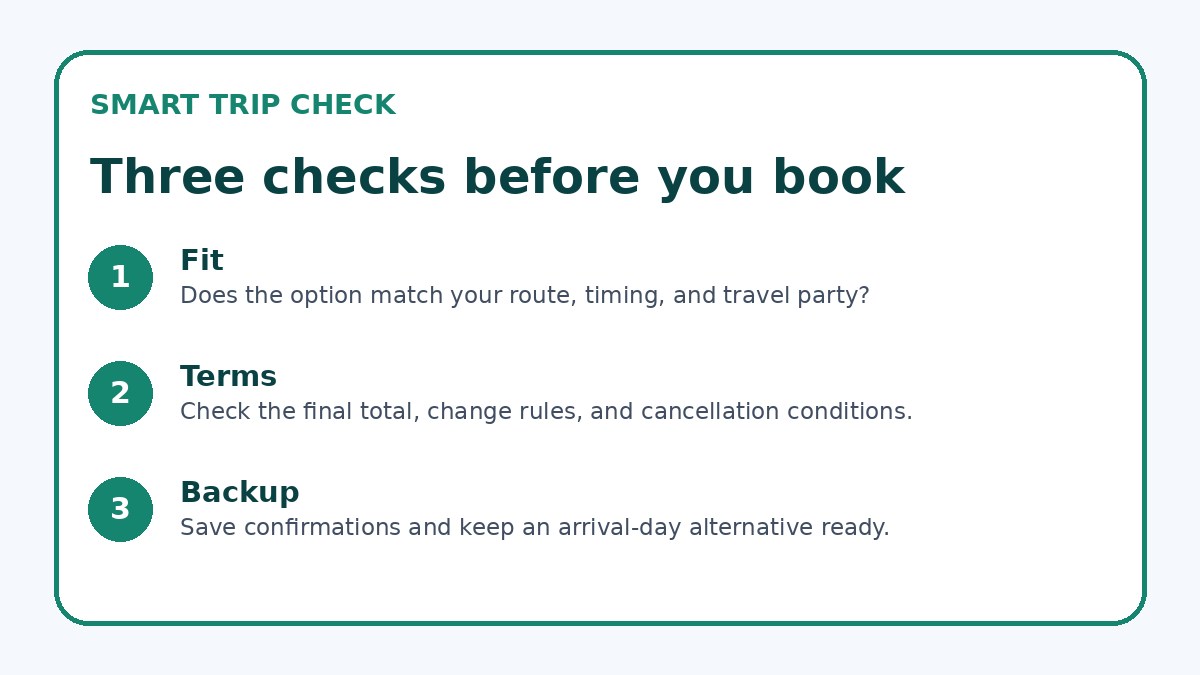
Families benefit from generous buffers and flexible schedules. Aim to build padding into departures and arrivals for restroom visits, snack breaks, and unexpected delays like traffic or long boarding lines. If you must travel at a tight time—say to meet a check-in window—choose itineraries that leave extra time at either end rather than ones that cut it close. When comparing services, consider the frequency of departures: a route with multiple daily departures usually lets you rebook a later option with less disruption than a single-daily service.
Plan transfers with realistic walking times and include extra minutes for stroller folds or luggage retrieval. Look at first- and last-mile options from each terminal: is there easy public transit if your ride is late, or are you reliant on scarce taxis? If your schedule is rigid—for example, arriving in Boston late afternoon so kids can rest before a morning activity—prioritize routes that land at terminals with reliable onward connections and minimal transfer complexity.
Compare the practical alternatives
Use the final page to confirm what is actually offered on your dates and save a workable fallback.
Intercity travel checklist
- Map door-to-door travel time from your home or hotel to the origin terminal and from the arrival terminal to your Boston accommodation.
- Choose the origin and arrival terminals that minimize transfers, stairs, and curbside distances for stroller and luggage handling.
- Pack a small, accessible bag with snacks, diapers, chargers, and entertainment to keep essentials during transfers.
- Build at least 30–60 minutes of buffer into each scheduled transfer for restroom stops, baggage retrieval, and late arrivals.
- Save screenshots of bookings, alternative return options, and customer-service contact info on your phone before travel.
- Verify on the provider’s booking page how rebooking, refunds, and boardings work so you can act quickly if plans change.
Disruption backup: simple plans to recover from delays or cancellations
Prepare a short disruption playbook: 1) identify a nearby alternative terminal or station, 2) note the next frequent departure options, and 3) know where to find station staff or customer service. For families, the easiest backup is a simple alternate route that requires no additional transfers—an alternative train or coach that also arrives close to your final destination. Keep key contacts, booking references, and screenshots of tickets in an easily accessible place to speed rebookings or refunds.
Also map realistic replacement options for the last mile: a local train that shares the same corridor, a reliable taxi stand, or a rideshare pickup zone near the terminal. If you rely on a single ferry departure each day, identify land-based alternatives in case of cancellations. Tell older children what to do in a busy terminal and assign simple roles (carry one small bag, hold the stroller handle) so a disruption doesn’t become chaotic. Finally, check the provider’s final booking page for current rebooking or refund policies before you buy—those rules change and matter during disruptions.
Rail & Intercity Transport questions travelers ask
How do I decide between train, coach, or ferry for a family trip from New York City to Boston?
Start with where you’ll start and end in each city: if either terminal is within easy walking or short transit distance of your hotels, favor the mode that lands there. Choose rail for bigger stations and level boarding, coaches for direct curbside drops, and ferries for scenery if you’re willing to accept extra boarding steps. Compare total door-to-door time, number of transfers, and how many times you’ll lift luggage or fold a stroller. Finally, check the provider’s booking page for baggage rules, boarding procedures, and any family-specific amenities before you book.
What timing buffers should a family allow for station and terminal transfers?
Allow extra time beyond scheduled departure and arrival times for toilets, snacks, stroller folding, and ticket lines. For simple single-transfer trips, build at least 30–60 minutes of buffer between connecting services. Mixed-mode trips or ones that use separate terminals (for example, train plus ferry) should have larger buffers because you’ll likely walk, climb stairs, or wait for separate boarding processes. If traveling during peak hours or on holiday dates, increase your buffer and verify terminal access and staff assistance options on the provider’s final booking page.
What is the easiest disruption backup when traveling with children between New York City and Boston?
The simplest backup is an alternative direct route that keeps you within the same corridor—another train or coach that arrives near your destination so you avoid extra local transfers. Also identify a straightforward taxi or rideshare pickup spot at each terminal and the next local transit option that connects to your hotel. Keep booking confirmations and provider contact details handy, and have a plan for immediate needs (snacks, medication, quiet space) so you can stabilize the family while you sort new travel arrangements.
Final decision note
When families plan New York City to Boston travel, think beyond the ride: prioritize terminals that match your neighborhood, reduce the number of transfers, and minimize luggage handling. Choose rail or express coach when they meaningfully shorten door-to-door hassles, and treat ferries as a scenic choice that requires extra time. Build buffers for family needs, rehearse the transfer sequence in your head, and prepare a simple disruption plan with alternate departures and local pickup points. Before booking, verify boarding procedures, baggage rules, and rebooking policies on the provider’s final page; you can also compare live availability on Trip.com as one optional reference. With a little mapping and a sensible backup plan, you’ll make the trip smoother and less stressful for everyone.
Continue planning
Check current options and final conditions
Use the provider page to confirm live availability, the final total, cancellation terms, and every condition that matters to your trip.
This evergreen planning guide was created with AI-assisted drafting and a structured quality review. It does not display live prices, schedules, availability, visa guidance, or provider rankings. Verify current details before booking. Some links are affiliate links; we may earn a commission at no additional cost to you.