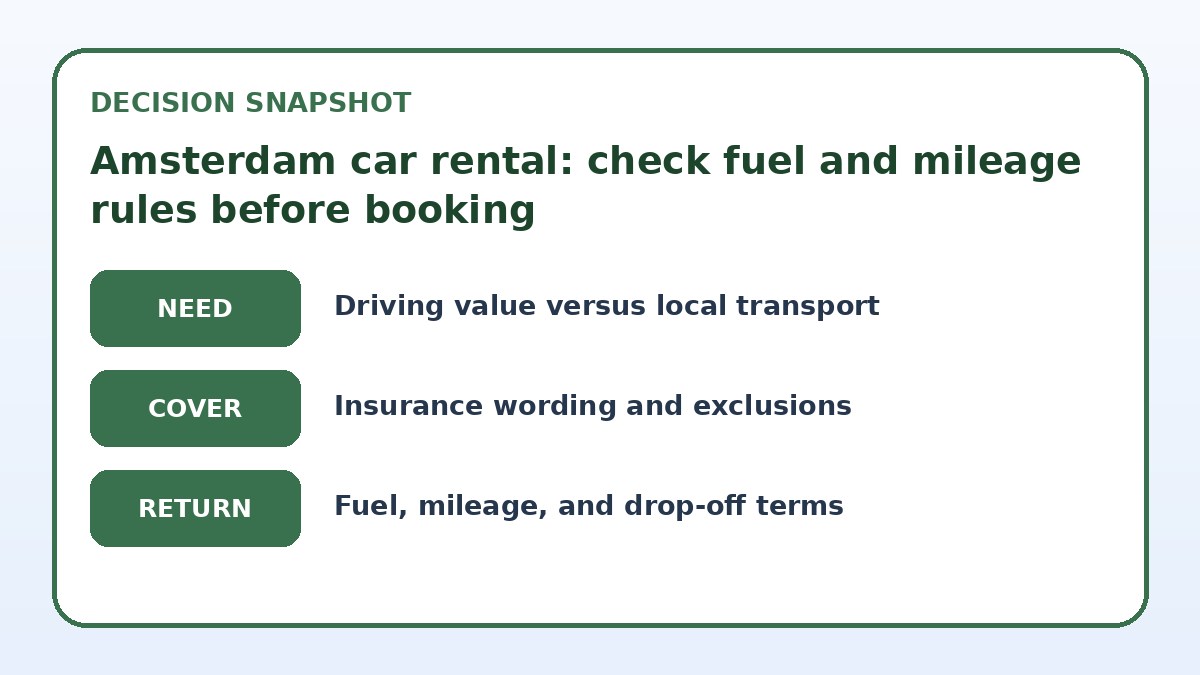
If you’re renting a car in Amsterdam for work, check the fuel policy, mileage allowance, and damage/liability terms before you finalize the booking. These three items determine both your out-of-pocket costs and how smoothly the car will serve your schedule—especially if you expect to leave the city for meetings in the Netherlands or neighbouring countries. Start by confirming whether the rental uses full-to-full, pre-purchase, or pay-on-return fuel; that affects how and when to refuel. Next, verify daily or total mileage caps to avoid excess charges. Finally, read the insurance and excess terms carefully: credit-card coverage, supplemental waivers, and local legal requirements can change how much you’ll be responsible for after an incident. Below I explain tradeoffs, what to ask the provider, and a checklist you can use at pickup and before signing.
See current options before you compare the details
Availability and final conditions change. Open Trip.com now or keep reading for the practical comparison.
Understand Amsterdam fuel policies and which to choose
Rental companies typically offer several fuel policies: full-to-full (you return the tank as you received it), pre-purchase (you buy a tank at pickup), and sometimes pay-on-return (the company refuels and charges you). For time-pressed business travelers, full-to-full is usually the clearest option because you only pay for the fuel you actually use. Pre-purchase can look convenient when you want to avoid a fuel stop at the end of a trip, but it often prices fuel above local pump prices and rarely refunds unused fuel, which can be expensive if your itinerary changes.
At pickup, check the fuel gauge in daylight and note the opening level on the rental contract or app photo. If the car isn’t full but you booked full-to-full, request that the vehicle be topped up or that the company correct the record. When returning the car, factor in city congestion and low-emission zones that can slow your route to the airport or depot; allow extra time to refuel at a public station rather than risk a premium refuelling charge from the rental company. Always keep receipts if you refuel independently—some companies require proof to contest refuelling invoices.
Mileage limits: calculate your real trip distance
Mileage rules vary: unlimited mileage is common for European rentals but not universal, and some corporate or promotional rates include caps per day or per rental. For business trips that include multiple meetings across the Netherlands or cross-border trips into Belgium or Germany, estimate your total kilometres using your planned locations and add a buffer for detours, traffic, and local driving. Multiply daily itineraries by the number of days and compare that to any stated daily or total limits to see if you’ll exceed them.
If a rate includes a mileage cap, check the excess-per-kilometre charge before you book so you can compare it to the cost of upgrading to an unlimited-mileage option. When traveling for work, it can be easier to opt for unlimited mileage to avoid admin later—excess charges are often applied after the fact and can be awkward to dispute. If unlimited mileage isn’t available, negotiate a higher cap or document your expected route in writing with the rental agent so there’s a shared understanding at pickup.
| Approach | Best for | Tradeoff to check |
|---|---|---|
| Full-to-full fuel | Travelers wanting transparent, usage-based fuel costs | Requires time to refuel before drop-off; must retain receipts if asked |
| Pre-purchase fuel | Those prioritizing quick returns and avoiding refuelling stops | Often higher effective fuel cost and no refund for unused litres |
| Limited-mileage rate | Short, city-only business trips with predictable distances | Excess-kilometre fees can be costly if plans change or routes detour |
| Unlimited-mileage rate | Multi-city or cross-border business travel with variable routing | May carry a higher base daily rate but reduces risk of surprise charges |
Ready to check the option that fits your plan?
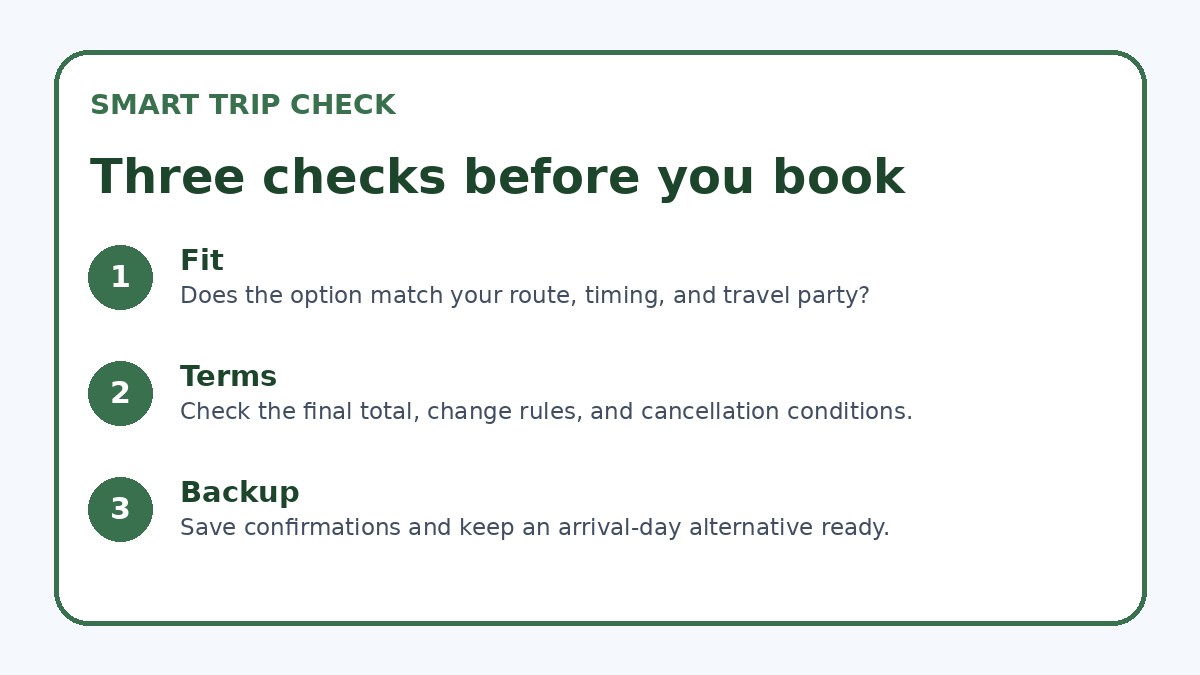
Use your exact dates and traveler details so the provider page can show the current total and conditions.
Insurance, excess, and paperwork business travelers must confirm
Insurance and excess terms determine how much you’ll pay after an accident or theft. Corporate policies, employer travel insurance, and some credit cards offer collision damage waiver (CDW) or theft protection, but coverage details differ widely. Before you rely on third-party coverage, ask the rental company to state the deductible (excess) and whether it applies to tyres, windscreen, undercarriage, or cross-border incidents. If you plan to drive outside the Netherlands, confirm that insurance and roadside assistance cover those countries and ask whether additional documentation or fees are required.
At pickup, verify the named insured drivers on the contract and ensure the contract matches the driver’s licence and company authorisation letter if your employer requires one. Take photos of existing damage and have the agent sign or timestamp images through the rental app. If you plan to waive the excess with the rental firm’s super CDW, get explicit terms and the exact amount charged—these fees can be daily and add up on longer trips. When in doubt, request written confirmation of cover limits and exclusions to send to your employer’s travel or expense manager.
Before you book
- Confirm the fuel policy (full-to-full, pre-purchase, pay-on-return) and have it written on the rental agreement at pickup.
- Estimate total trip kilometres, add a 20–30% buffer, and verify whether your rate includes unlimited mileage or a specific cap.
- Ask for the exact deductible (excess) amounts and what parts of the vehicle are excluded from basic CDW or TP insurance.
- Photograph the vehicle condition and fuel gauge with timestamps and request agent acknowledgement on any existing damage.
- Check cross-border permissions and whether insurance, roadside assistance, or additional fees apply when driving into neighbouring countries.
- Keep all fuel receipts, the signed rental contract, and any digital confirmations until your employer’s expense reconciliation is complete.
Practical pickup, return and cross-border tips for Amsterdam trips
Plan pickup at a location convenient for your itinerary—downtown Amsterdam, a Schiphol location, or near a conference venue—and allow at least 20–30 minutes for paperwork during busy periods. At pickup, confirm fuel policy, mileage allowance, insurance details, and any cross-border permissions; ask for the most recent copy of the rental contract terms you are signing and photograph the front and back of the signed document. If your meeting schedule is tight, ask whether the company provides digital check-in or an express lane, but confirm that digital check-in does not skip necessary contract clarifications.
For returns, check whether the drop-off point charges after-hours or remote drop fees, and plan fuel stops earlier if you need to return the car full. If you’ll cross into Belgium or Germany, ensure vignette or low-emission zone rules are addressed—some vehicles may be restricted or require additional stickers. Keep a scanned copy of the rental contract, fuel receipts, and photos of the car condition until the final rental charge posts to your card and your employer’s expense process clears. Use Trip.com or your company’s travel tool to compare real-time options but verify each provider’s fuel and mileage rules on their booking page before confirming.
Frequently asked questions
Can my corporate credit card cover rental insurance in Amsterdam?
Many corporate credit cards offer primary or secondary rental insurance, but coverage varies by issuer and card level. Before relying on it, contact your card provider to confirm whether collision damage waivers, theft protection, and cross-border incidents are included for rentals in the Netherlands and neighbouring countries. Ask about exclusions (such as luxury vehicles, drivers under a certain age, or specific countries), required activation steps at pickup, and whether the coverage is primary or secondary to the rental company’s insurance. If your employer has a dedicated travel policy, also check with them to ensure card coverage aligns with company requirements.
What fuel policy should I pick for a tight meeting schedule in Amsterdam?
If you can spare a brief fuel stop before returning the car, full-to-full usually gives the clearest costs because you only pay for fuel used. For tight schedules where stopping is impractical, pre-purchase fuel or an express return may seem appealing but often costs more and rarely refunds unused litres. Balance the time saved at drop-off against the likely higher per-litre price; if you do choose pre-purchase, estimate usage conservatively. Always document the fuel level at pickup and retain any refuelling receipts to contest unexpected charges.
How do I avoid unexpected mileage charges after a business trip?
Start by calculating the expected distance for your itinerary and adding a buffer for detours, traffic, and unplanned client visits. If your rental includes a mileage cap, compare the excess-per-kilometre fee to the cost of upgrading to unlimited mileage—often the upgrade is worth the predictable spending. Make sure the rental agreement records the cap and that you receive a copy. During the trip, track kilometres daily using your phone or vehicle odometer photos so you can present evidence if the final invoice looks higher than expected.
Final planning note
For business travelers in Amsterdam, the biggest levers to control rental costs and hassles are the fuel policy, mileage allowance, and insurance/excess terms. Read and document everything at pickup: note the fuel level, mileage, and any pre-existing damage; secure written confirmation of cross-border permissions if needed; and verify which insurance covers you. When in doubt, consider paying a modest premium for unlimited mileage or an explicit excess waiver to reduce post-trip disputes and unpredictable charges. Use your company’s travel policy and, if you compare commercial options, check live availability and provider terms on Trip.com or the provider’s booking page—but always confirm fuel and mileage rules on the final rental contract before you commit.
Continue planning
Check current options and final conditions
Use the provider page to confirm live availability, the final total, cancellation terms, and every condition that matters to your trip.
This evergreen planning guide was created with AI-assisted drafting and a structured quality review. It does not display live prices, schedules, availability, visa guidance, or provider rankings. Verify current details before booking. Some links are affiliate links; we may earn a commission at no additional cost to you.