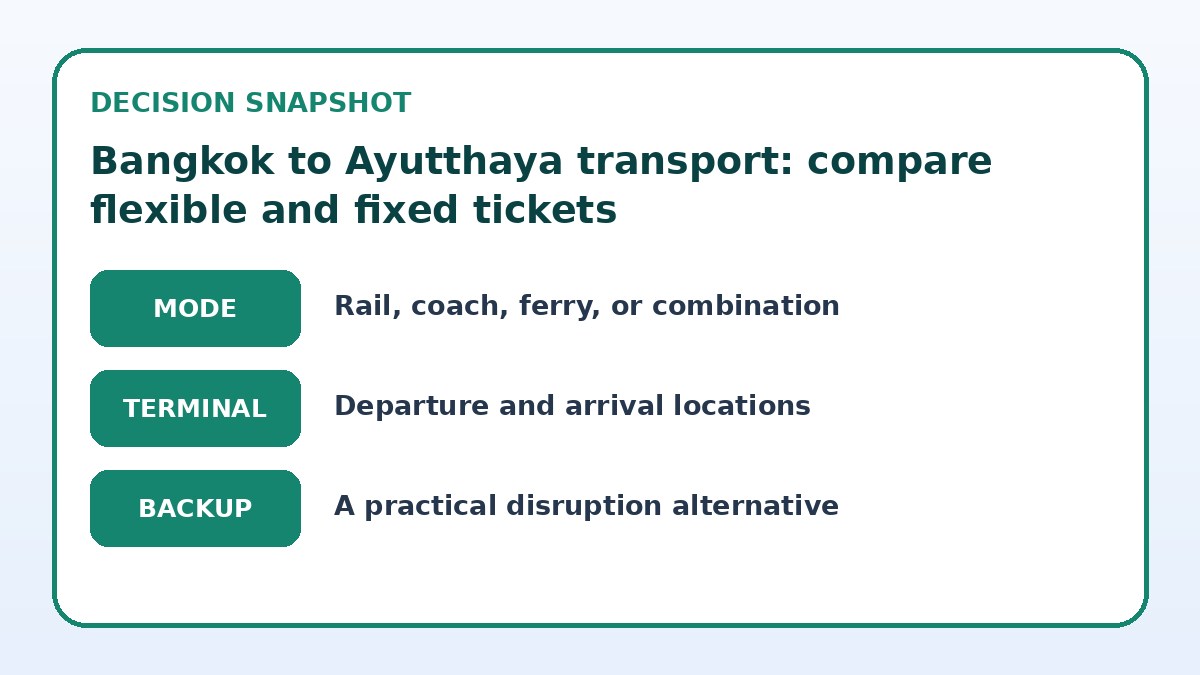
Practical answer up front: for most couples making a day trip from Bangkok to Ayutthaya, choose the most flexible train or tour ticket you can afford if you value relaxed timing and low stress; choose a less-flexible, fixed-time option only if you’ve locked down arrival/departure logistics and want a simpler, often lower-risk booking. Couples who prefer pacing the day together—sightseeing without watching the clock—will typically benefit from open or changeable tickets. If you have tightly scheduled onward travel, a fixed ticket with a confirmed time gives certainty. Below I’ll explain how to compare flexibility across train, private transfer, and combined tour options, what tradeoffs to expect, and exactly what to verify on each provider’s final booking page before you pay.
How ticket flexibility works on the Bangkok–Ayutthaya corridor
Ticket flexibility varies by mode: state or regional trains may offer walk-up fares, prepaid reserved seating, or open return options; private transfers and shuttle services usually use fixed time slots but some vendors allow changes for a fee. For couples, the practical difference is whether you can change departure or return times without paying a penalty, and whether the ticket ties you to a specific carriage, service, or meeting point. Flexibility is not binary—many providers offer tiers (fully changeable, partially changeable, non-changeable) that should be compared on the same criteria if you want to trade certainty for adaptability.
When comparing options, focus on three details that determine real flexibility: whether the ticket is linked to a specific departure time, what penalties or fees apply for changes or cancellations, and how straightforward the change process is (online, at station, or only by phone). Couples should also consider whether a ticket is refundable, transferable between names, or restricted to show up at a specific counter or platform. Always read the provider’s final booking page for exact change windows, required documentation, and any operational notes that affect whether you can alter plans together on short notice.
Comparing flexibility for couples: trains, private transfers, and tours
State train services often present a clear tradeoff: unreserved services allow couples to arrive and board together with minimal planning, while reserved seats guarantee paired seating but lock you into a specific train. If you both enjoy moving at a leisurely pace and are comfortable waiting for the next unreserved service, that flexibility keeps the day light. Couples who prefer to secure seats next to each other should weigh whether the reserved-seat booking allows free changes; if it doesn’t, a reserved seat bought close to departure might still be worth the certainty of sitting together.
Private transfer or car hire gives couples the strongest control over pickup time and routing, particularly useful if you want to visit multiple temple sites without adhering to train timetables. The downside is that many private options require a set pickup time and may charge for late changes; negotiation before booking can clarify whether small timing adjustments on the day are permitted. Group or guided tours often lock you into an itinerary with fixed departure and return times—handy if you want everything handled, less useful if you want to linger at a single site.
| Approach | Best for | Tradeoff to check |
|---|---|---|
| Unreserved train or walk-up service | Couples who want maximum spontaneity and flexible day pacing | No guaranteed seats together and potential wait times during busy periods |
| Reserved-seat train ticket | Couples who value sitting together and predictable departure times | Often stricter change policies and may incur fees to reschedule |
| Private transfer or hired car | Couples seeking door-to-door convenience and custom itineraries | Typically higher cost and possible penalties for late changes |
| Guided day tour with fixed schedule | Couples wanting a hands-off day with logistics and tickets handled | Less time to linger and reduced ability to alter the itinerary |
Decision criteria: what matters most for your relationship dynamic
Ask yourselves how you like to travel together: do you prioritize spontaneous exploration, or does one partner prefer a predictable schedule? If you both value spontaneity, choose options that let you delay, change, or return whenever you want; open-return train services or taxis you can hire for a full-day are good fits. Couples who share the need for predictability—maybe to meet a connecting train, a dinner reservation, or a family commitment—should prioritize fixed departures with clear refund or change policies so neither partner stresses over missed connections.
Consider energy and mobility differences between you: if one partner tires easily, a reserved-seat train or private transfer reduces time spent standing or searching for seats, improving the day for both. Also factor emotional costs: paying a small extra fee for flexibility can be worth it if it prevents arguments over timing. Finally, weigh practicalities like luggage, bathroom access, and how much of your day you’d rather spend together without haggling over transport logistics—those preferences will tilt you toward flexible or fixed options.
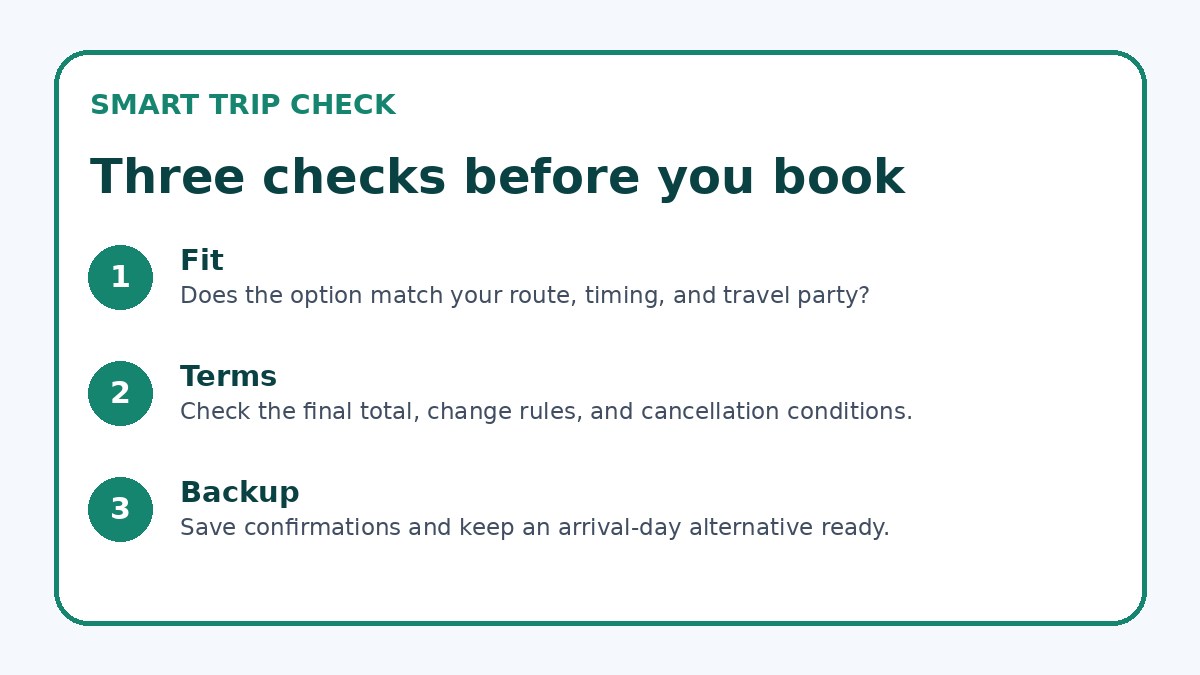
Before you book
- Confirm whether your chosen ticket is tied to a specific departure time or is open-return.
- Read the booking page for exact change and cancellation fees and the permitted change window.
- Verify whether reserved seats guarantee adjacent seating and if name changes are allowed.
- Check pickup or meeting point details for private transfers and any grace period for late arrivals.
- Ask whether refunds or credits are issued if services are canceled or delayed by the operator.
- Compare the final terms on the operator’s booking page, not just third-party summaries.
What to verify before you book any ticket or transfer
Before committing, check the provider’s final booking page for the exact change and cancellation terms: how far in advance you must notify, whether there are flat fees or percentage penalties, and whether changes can be made online or require in-person or phone contact. Look for any name-change or transfer restrictions—can one partner use a ticket booked under the other’s name?—and confirm seat assignment rules if sitting together matters. The page should also state meeting points, pickup windows, and what happens if you miss the scheduled departure.
Also verify operational details that affect your day: whether return tickets are date-specific or open, whether trains or transfers operate on the day(s) you plan to travel, and what documentation (booking confirmation, ID) is required for boarding. If using an aggregator or broker, confirm whether any additional service fees apply and whether the broker’s change policy differs from the carrier’s. You can check availability and current terms on comparison sites such as Trip.com, but always confirm the final conditions shown on the carrier or tour operator’s own booking page before you finalize payment.
Frequently asked questions
Can couples switch to a later train if they miss their reserved seats?
That depends on the provider’s rules. Some rail services allow ticket changes at the station counter for a fee or permit boarding the next unreserved service, while others require an official exchange or charge penalties. If sitting together is crucial, check whether reserved tickets can be exchanged for another departure and ask how the exchange is handled at the station versus online. The booking page should state whether walk-up rebooking is permitted, and if not, consider an open-return or a private transfer to avoid on-the-day stress.
Is it safer for couples to book a private car rather than rely on trains?
Private cars offer control and privacy, which many couples appreciate, but they come with tradeoffs: higher cost, potential change fees, and reliance on the driver’s punctuality. For couples with mobility concerns or tight schedules, a private transfer can reduce waiting and walking, making the day smoother. For flexible, low-cost travel that still suits couples, combining reserved seats for key legs with local taxis in Ayutthaya can be an alternative. Always confirm pickup windows, cancellation terms, and liability details on the transfer provider’s booking page before committing.
How should couples balance cost and flexibility when planning the day?
Start by ranking what would upset either partner most—unexpected delays, missing a reservation, or not sitting together—and then let that priority guide your spend on flexibility. If emotional comfort matters more than saving a small amount, prefer tickets that allow free or low-cost changes. If you both tolerate some uncertainty to save money, unreserved services and walk-up options can work well. Compare the specific change fees and procedures on booking pages so you know exactly how much flexibility costs, and whether the extra peace of mind is worth the premium for your trip.
Final planning note
For couples travelling Bangkok to Ayutthaya, the right ticket flexibility depends on how you balance togetherness and certainty. If your priority is relaxed exploration and shifting plans freely, open or unreserved options and full-day private hires will keep the day low stress. If your day connects to other fixed commitments or one partner prefers structure, choose reserved or fixed-time services with clear change rules. In every case, read the provider’s final booking page closely for change, cancellation, and seat-assignment rules before paying. That final check prevents surprises and helps you pick the option that keeps both partners comfortable and enjoying the trip.
Continue planning
Check current options and final conditions
Use the provider page to confirm live availability, the final total, cancellation terms, and every condition that matters to your trip.
This evergreen planning guide was created with AI-assisted drafting and a structured quality review. It does not display live prices, schedules, availability, visa guidance, or provider rankings. Verify current details before booking. Some links are affiliate links; we may earn a commission at no additional cost to you.