Practical answer first: if you need comfort and scenic travel with fewer changes, consider the long-distance train or an intercity coach; if you prioritise speed, compare flights; and if you want a slower, coastal experience, combine driving with ferries and overnight stops. Which option is right depends on trip length, how much luggage and flexibility you want, your tolerance for transfers, and whether you want to sightsee en route. First-time visitors should think beyond price: travel time, departure and arrival locations within each city, what’s included on board, and how late or early services run matter.
Read provider pages carefully before you book—check luggage rules, cancellation terms, stopover options, and whether a service is direct or requires connections. Trip.com can be a place to check availability, but always confirm the final terms on the supplier’s official booking page. Below, you’ll get clear tradeoffs, decision criteria, and a checklist to use when comparing train, coach, ferry, drive and flight options for Sydney to Melbourne.
Train: relaxed travel with scenic stretches
Taking the train appeals if you want to arrive relaxed, keep moving without airport hassles, and enjoy landscape views without driving. Trains tend to offer more room to stretch, on-board facilities for walking and a gradual schedule that suits travellers who prefer predictable timing without frequent security lines. For first-time visitors, trains can be simpler if the departure and arrival stations are conveniently located relative to your accommodation, but station locations vary—city-centre terminals are common, whereas some regional departures may require transfers.
Tradeoffs include trip duration and frequency. Long-distance trains may take longer than air travel, and departures might not run as often as coaches or flights. Also verify whether journeys are direct or require a connection; some routes offer through services while others require switching at intermediate hubs. Before booking, check the provider’s website for exact departure stations, on-board amenities, luggage allowances, and any seat reservations or tiered classes that affect comfort.
Coach: flexible schedules and lower barrier to entry
Coaches usually provide the highest frequency of scheduled departures between major cities and are widely used by budget-conscious travellers. Modern coaches can be comfortable and often include Wi‑Fi, power outlets, and recline; they also tend to stop at convenient suburban or central bus terminals that connect well with local transport. For first-time visitors, coach travel can be straightforward: you buy a ticket, arrive at a clearly marked terminal, and board. It’s also easy to find multiple providers and timetables to tailor departure times.
Consider the tradeoffs: coach trips typically mean longer travel times than flying and may feel cramped for some, especially on overnight journeys. Luggage policies vary and some operators limit the size or number of bags carried in the hold. If you value predictability, check the exact pick-up and drop-off points, the number of scheduled stops, on-board restroom availability, and the provider’s rules for changes or cancellations on their booking page before committing.
| Approach | Best for | Tradeoff to check |
|---|---|---|
| Train | Travellers valuing space, scenery and a relaxed pace | Usually longer journey times and fewer daily departures than flights |
| Coach | Budget-conscious travellers needing flexible departure times | Potentially less comfort and longer travel times compared with trains or planes |
| Drive & Ferry | Visitors wanting full route flexibility and scenic detours | Higher planning burden, driving fatigue, and vehicle/ferry restrictions |
| Flight | Those who prioritise speed and minimal door-to-door travel time | Airport procedures and transit to/from airports add time and complexity |
Drive and ferry combinations: control and coastline freedom
Driving yourself or hiring a car opens the route to side trips, coastal drives and flexible pacing. You can tailor stops to surf beaches, national parks, or small towns that aren’t on scheduled public transport routes, and combine car travel with ferries on coastal stretches if you prefer. This approach is excellent for travellers who enjoy road time and want to break the journey into multiple days, converting travel into part of the holiday experience rather than just transit between endpoints.
Downsides include the responsibility of driving long distances and potential vehicle restrictions when taking ferries. Fuel, tolls, parking and fatigue factor into total travel costs and convenience. If you rent, confirm the rental company’s rules about crossing state borders, taking the vehicle onto ferries, mileage allowances, and drop-off locations. Always verify ferry timetables, vehicle size limits, and boarding procedures on the ferry operator’s page before planning a combined drive-and-ferry itinerary.
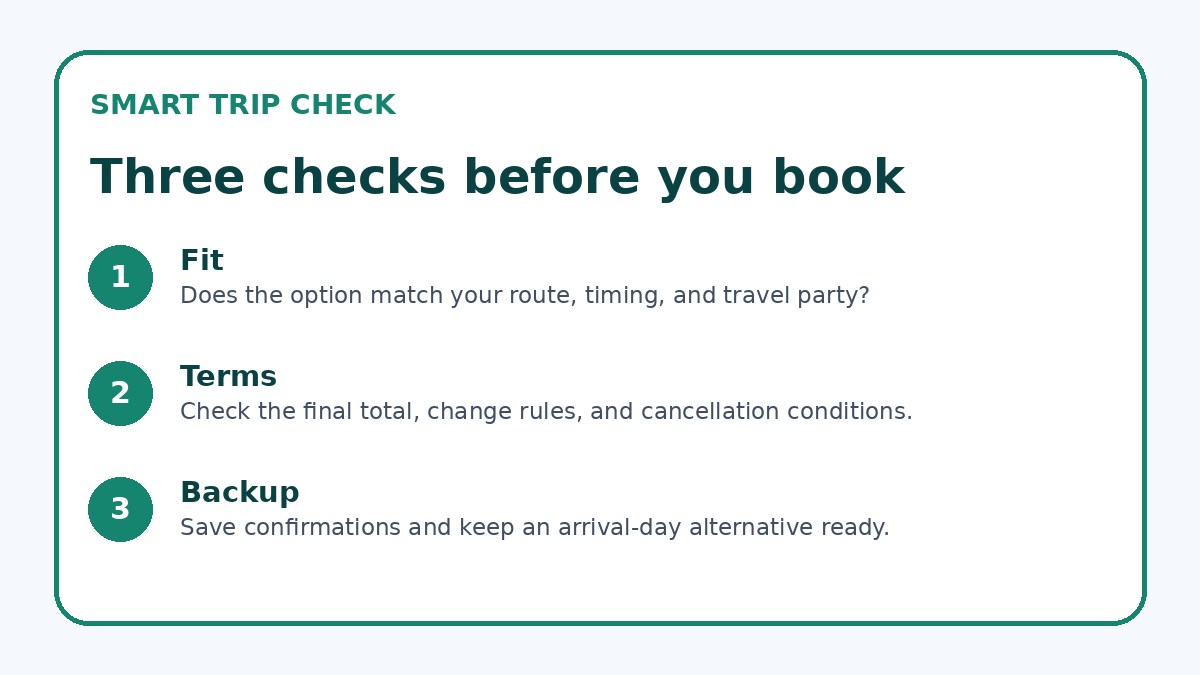
Before you book
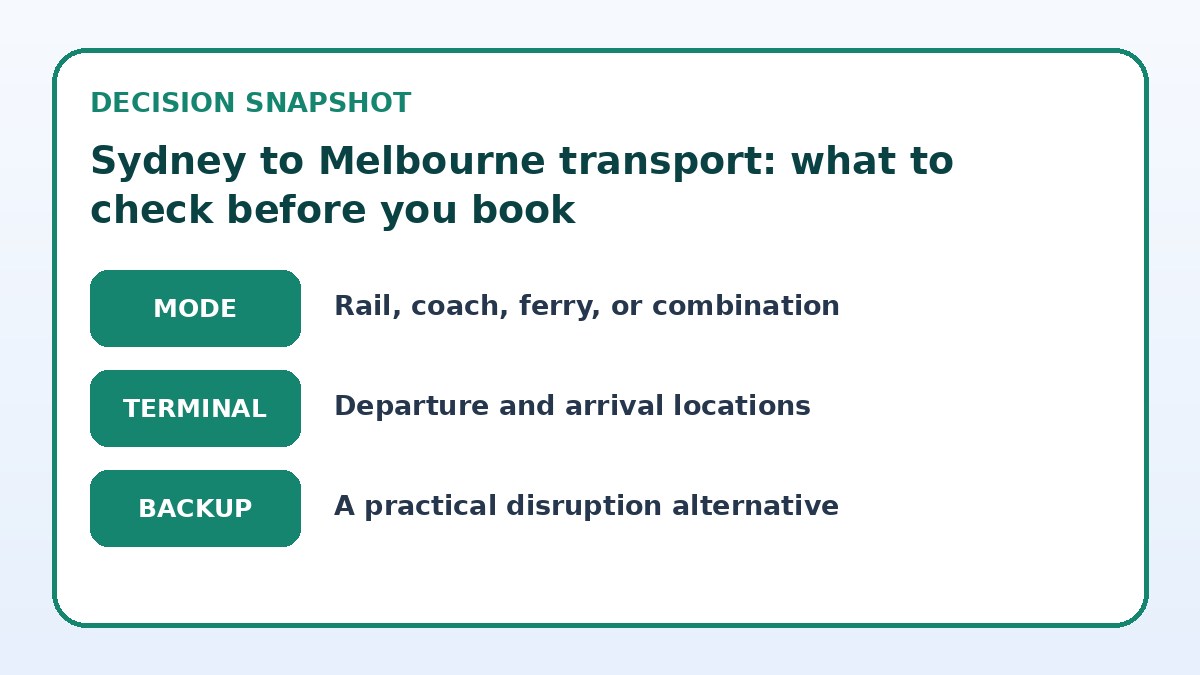
- Confirm whether the service is direct or requires connections and note transfer locations and minimum connection times.
- Check luggage allowances (carry-on and checked) and whether seat or vehicle reservations are included or need extra payment.
- Verify exact departure and arrival stations or terminals and how you will get between them and your accommodation.
- Compare total door-to-door time, adding transit to terminals, recommended pre-departure check-in or boarding times.
- Read the provider’s change, cancellation and refund rules on their official booking page before finalising payment.
- If renting a vehicle or using ferries, confirm vehicle size limits, cross-state rules, and whether additional insurance is required.
Flights: fastest point-to-point, with airport time overhead
Flying between Sydney and Melbourne is the quickest way to cover the distance and often the top choice for travellers prioritising time. Airports are well connected to city transit networks and multiple daily flights provide scheduling flexibility. For a first-time visitor on a limited schedule or who needs to maximize time in destination cities, a flight can make sense—particularly if your accommodation is near the airport or you have onward connections that align with arrival times.
The tradeoff is airport procedures and the aggregate door-to-door time once you include transit to and from airports and recommended check-in windows. Luggage limits, carry-on rules, and transfer logistics can also affect comfort and cost. When comparing flights, check whether options are direct or require connections, confirm terminal locations, and review the carrier’s baggage and change-cancellation policies on their official booking pages to avoid surprises.
Frequently asked questions
Should I take the train or fly between Sydney and Melbourne if I only have a weekend?
If you have only a weekend, total door-to-door time matters most. Flying may give you more time at your destination despite airport procedures; trains are comfortable but can reduce your time on the ground because the rail journey takes longer. Decide by calculating transit time to and from each terminal and station, plus recommended pre-departure time. Also consider how much time you want to spend moving versus exploring—choose flights for maximum city time, or trains if the journey itself is part of your plan.
Can I combine modes—like train plus ferry or coach plus car—to make the trip more interesting?
Yes. Combining modes is a great way to customise the experience: for example, take a train or coach for the main leg and add a rental car for coastal detours, or drive parts of the route and use a ferry for specific crossings. When combining, allow buffer time between services in case of delays and confirm separate booking rules, especially refund and change policies. For vehicle-ferry combinations, check size limits and boarding procedures on the ferry operator’s official page before purchasing tickets.
How do I pick between multiple providers or ticket classes when planning my trip?
Compare total travel time, included services (meals, Wi‑Fi, reclining seats), baggage rules, and flexibility for changes. Look at where each provider departs and arrives in the city to avoid extra transfer time. If price is similar, prioritise what improves your experience—space, guaranteed seat reservations, or refundable tickets. Always verify the exact terms on the provider’s booking page; for a quick availability comparison you can check sites like Trip.com, but confirm final rules and extras directly with the carrier.
Final planning note
Choosing how to travel from Sydney to Melbourne comes down to what you value most: speed, comfort, cost, or the journey itself. Flights win on raw travel time; trains offer relaxed comfort and scenery; coaches balance frequency and cost; driving and ferries give the most flexibility for side trips. Use the checklist to compare total door-to-door time, luggage rules, and cancellation policies. Before booking, review the provider’s official terms for baggage, transfers and vehicle or ferry restrictions. With those checks complete, pick the option that aligns with your schedule, comfort needs and appetite for discovery.
Continue planning
Check current options and final conditions
Use the provider page to confirm live availability, the final total, cancellation terms, and every condition that matters to your trip.
This evergreen planning guide was created with AI-assisted drafting and a structured quality review. It does not display live prices, schedules, availability, visa guidance, or provider rankings. Verify current details before booking. Some links are affiliate links; we may earn a commission at no additional cost to you.