If your flight or train gets you into Kyoto late at night, pick a hotel that minimizes friction: near a major station or airport shuttle stop, with a clear late check-in policy and easy luggage handling. For business travelers the priorities are quick transfer to the room, a reliable workspace, and a straightforward morning route to meetings. This article gives immediate choices you can evaluate on booking sites, then walks through tradeoffs—cost vs convenience, quiet vs proximity, and what to verify before you confirm. Read on for a practical checklist and comparison to make the right call when you only have a few hours to secure rest and prepare for the next day.
See current options before you compare the details
Availability and final conditions change. Open Trip.com now or keep reading for the practical comparison.
Immediate choices on arrival: station, airport shuttle, or neighborhood
When you land or arrive by late evening train, your first decision is the transfer: stay near Kyoto Station, choose an airport-shuttle-friendly hotel, or pick a quieter neighborhood near your morning meetings. Staying beside Kyoto Station simplifies late arrivals because multiple transport options, taxi ranks, and convenience stores are concentrated there. If you prefer fewer crowds and a shorter taxi ride to a suburban meeting, target hotels near the specific ward where meetings are scheduled. Each choice reduces a different risk: station hotels minimize transfer uncertainty, shuttle-friendly hotels reduce baggage handling, and neighborhood hotels shorten morning commutes.
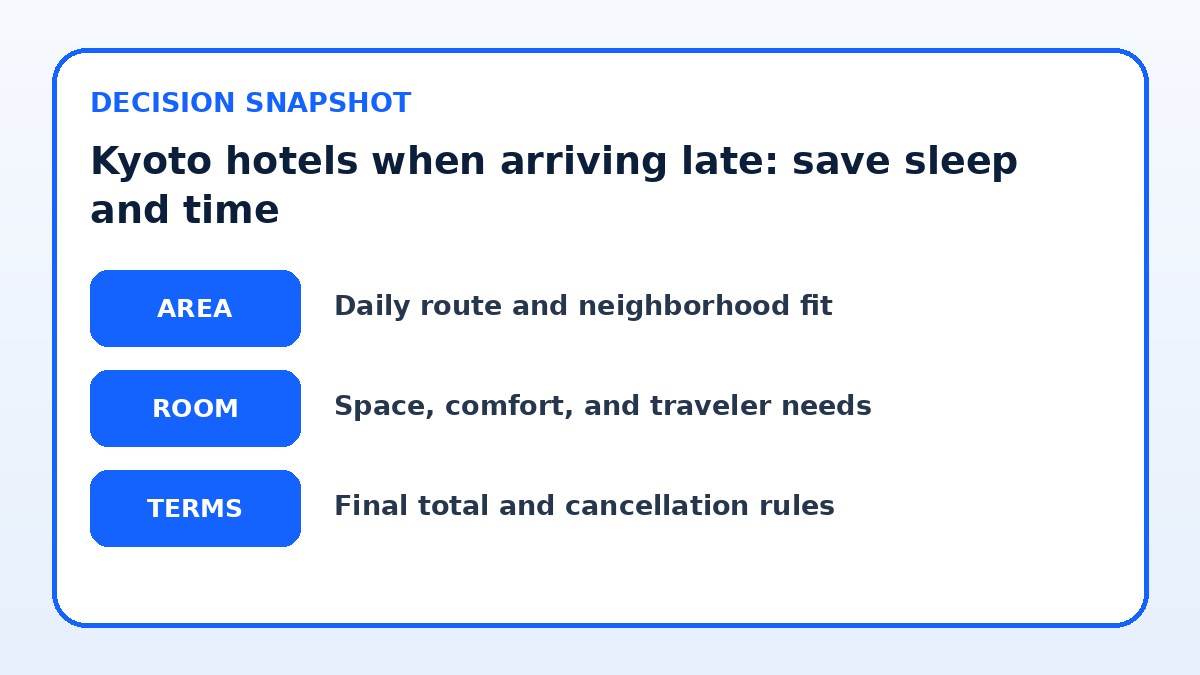
To decide quickly, map your first-night options against three fixed criteria: transfer reliability (taxi access, shuttle frequency), late-checkin clarity (listed policy or 24-hour desk), and morning route (how you’ll reach your first meeting). Use the hotel’s booking page to confirm check-in instructions and the nearest taxi stand or shuttle stop. If the provider’s details are sparse, contact the property directly by phone or message to confirm arrival logistics and any late-arrival check-in procedure; that short call can prevent an hour spent circling hotels after midnight.
What to verify on the booking page and before you go
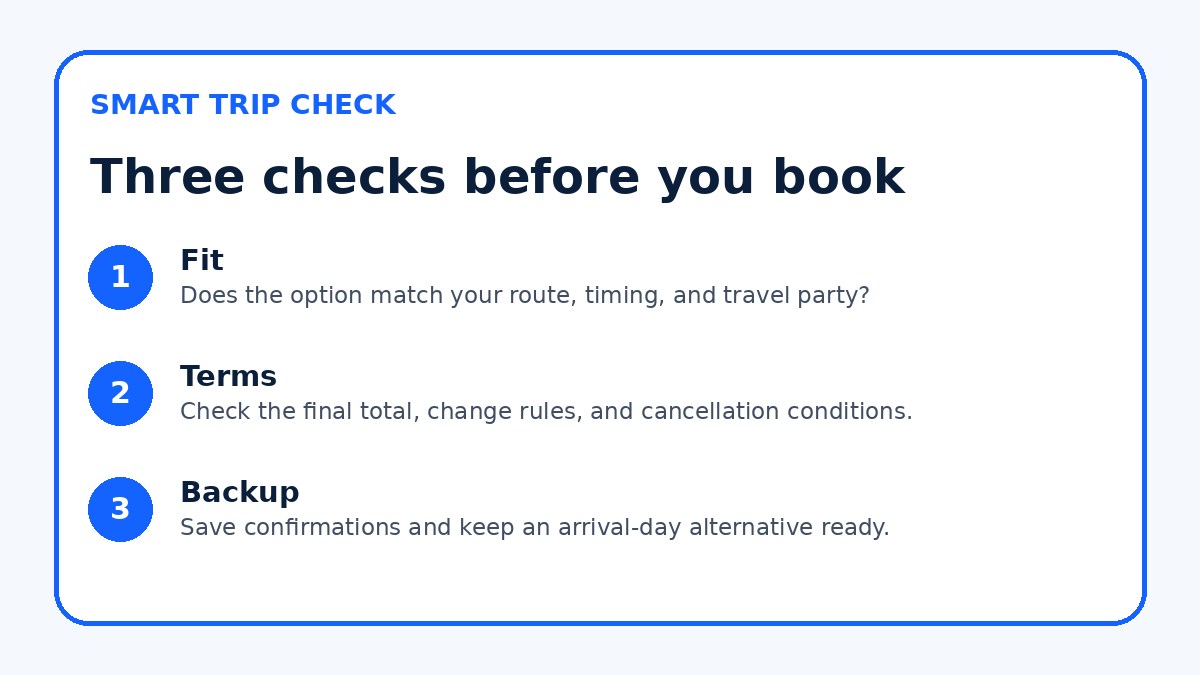
Before you click Confirm, verify a few specific, changeable items on the hotel’s booking page. Look for stated late check-in options, the timing and location of airport shuttles if you plan to use one, and whether self-service or staffed front desk check-in applies. Don’t assume a property will keep a room open without a clear late-checkin note—ask for written confirmation in the booking message field or by email. Also check cancellation and modification policies so you can adapt if your arrival slips later than planned.
Confirm practical on-the-ground details you’ll need on arrival: entrance hours, whether a night entrance code is used, the nearest 24-hour taxi rank or rail line, and luggage storage policies if you arrive before your room is ready. If you intend to work after arrival or early the next day, verify room amenities such as reliable Wi-Fi, available desk space, and whether they provide express or grab-and-go breakfast options. If supplier details could have changed, make a quick mention of the hotel name and policy to the booking agent or in your calendar note so the reception can expect you.
| Approach | Best for | Tradeoff to check |
|---|---|---|
| Stay near Kyoto Station | Minimizing transfer risk and finding 24-hour services quickly | Potentially more noise and higher rates than quieter neighborhoods |
| Choose a neighborhood hotel near your meeting area | Short morning commutes and better rest before meetings | More uncertainty and possible extra cost for late-night taxis |
| Book a hotel with explicit late check-in policy | Guaranteed arrival procedures and straightforward entry after midnight | May limit options and exclude smaller, character properties |
| Pick a business-oriented hotel with work amenities | Immediate access to desks, printing, and reliable Wi-Fi | Often closer to commercial zones, which can be noisier and pricier |
Ready to check the option that fits your plan?
Use your exact dates and traveler details so the provider page can show the current total and conditions.
Tradeoffs: convenience, cost, and sleep quality
The fastest option—booking beside Kyoto Station—reduces transport risk but can mean higher nightly rates and more street noise. A station-area hotel is ideal if you want a simple taxi or walking route after a late arrival, and it often provides better late-night services like convenience stores and 24-hour front desks. However, being near a hub can also mean living with the bustle of trains and taxis, which may be counterproductive if you need deep rest before meetings.
Choosing a quieter neighborhood hotel farther from the station often yields better rest and sometimes more character, but it adds uncertainty in late-night transfers and may require arranging an extended taxi or shuttle. Midpoint choices—hotels near primary subway stops or bus corridors—balance both. Ultimately weigh your priorities: if you must be fresh and will be in back-to-back meetings, favor sleep quality and short morning travel. If simplicity of arrival and flexible amenities matter more, favor proximity to major transport hubs.
Before you book
- Confirm late check-in policy and exact late-arrival instructions on the hotel’s booking page or by contacting the property directly.
- Map the hotel to your first-day meeting and save two transit options—public transport route and taxi route—with estimated departure times.
- Request in writing any room preferences that matter for rest: upper floor, away from the street, and a quiet corner if available.
- Ask the hotel to prepare an early or takeaway breakfast and confirm the earliest pickup time for the morning you depart.
- Verify luggage storage procedures if you expect to arrive before check-in or have a late departure after your meeting day.
- Test or confirm reliable Wi-Fi access for work and request a desk-facing room or access to a business center before arrival.
Practical day-after planning and extras to request
Plan the morning route to your first meeting the night before and save key directions or transport cards on your phone. Ask reception about the earliest breakfast or a packed breakfast option; many hotels can arrange a takeaway breakfast or early coffee if you notify them in advance. If you need printing, meeting rooms, or a quiet workspace, request these services at check-in to ensure availability. Preparing a simple itinerary—hotel to meeting address with transit options—saves time and limits decision fatigue after a short night.
Also use the arrival night to confirm quick conveniences: wake-up call or mobile alarm confirmation, luggage hold if you have a late flight the same day, and whether the hotel can arrange a taxi for an early departure. If you expect to join a virtual call from the room, test the internet speed and ask for a quieter corner or a business center. These small arrangements, resolved at check-in, transform a one-off late arrival into a reliable business travel routine.
Frequently asked questions
Is it better to stay near Kyoto Station or near my meeting location when I arrive late?
If you value simplicity arriving late, a hotel near Kyoto Station reduces transfer variables: taxis, shuttles, and late-night services are concentrated there. If your first meeting is far from the station and you need maximum rest and a short morning commute, staying near the meeting location can save time and stress the next day. Weigh the reliability of transport at your arrival hour against the morning travel you’ll need; prioritize what will cost you less time and cognitive load when tired.
How can I make sure the hotel will accept me late at night?
Don’t rely solely on a generic booking confirmation. Look for an explicit late check-in or 24-hour reception note on the booking page, then follow up with a message or phone call to the property confirming your arrival time. When you contact them, ask for the exact door/entrance procedure, any after-hours contact number, and whether a reservation name is sufficient for pickup at a taxi rank. Save any written confirmation in your travel notes to show the front desk if needed.
What amenities should I request for a productive start after a short night’s sleep?
Ask for a room with a desk and reliable Wi-Fi, and confirm whether the hotel provides printing or meeting-room access if you must finalize materials. Request an early or packed breakfast to avoid searching for cafes, and secure a wake-up call or set multiple alarms. If noise could affect your performance, request a quiet room away from the street and higher floors; ask reception about blackout curtains or a consistent temperature control for better rest.
Final planning note
A late arrival in Kyoto is manageable with a few straightforward decisions: pick a hotel that matches your highest priority—transfer simplicity, quality sleep, or immediate workspace—and then verify the small details that matter after midnight. Confirm late check-in procedures, request room conditions that support rest and work, and map a morning route to your first meeting before you travel. These steps remove unpredictability and let you focus on the business at hand. If you want to compare current availability and policies across hotels, consider a booking service like Trip.com to see up-to-date options, but always verify check-in particulars on the hotel’s own page or by direct contact.
Continue planning
Check current options and final conditions
Use the provider page to confirm live availability, the final total, cancellation terms, and every condition that matters to your trip.
This evergreen planning guide was created with AI-assisted drafting and a structured quality review. It does not display live prices, schedules, availability, visa guidance, or provider rankings. Verify current details before booking. Some links are affiliate links; we may earn a commission at no additional cost to you.