
If you’re traveling to Los Angeles with extra suitcases, the single most useful decision is to book a hotel that minimizes the number of hands and steps between transport and your room. Practical priorities are proximity to a reliable transit node (Metro, bus, airport shuttle), ground-floor or elevator-access rooms, and hotels that explicitly offer luggage storage or porter services so you can stagger arrival and departure. Choosing a hotel near a transport hub doesn’t require staying in the busiest part of town; many neighborhoods around Metro stations, transit centers and airport-connected corridors give easier drops, simpler rides, and fewer transfers. In this guide I’ll give the direct recommendation up front, then explain tradeoffs—cost, neighborhood feel, parking and how to check hotel pages and transport providers for the exact services you’ll rely on.
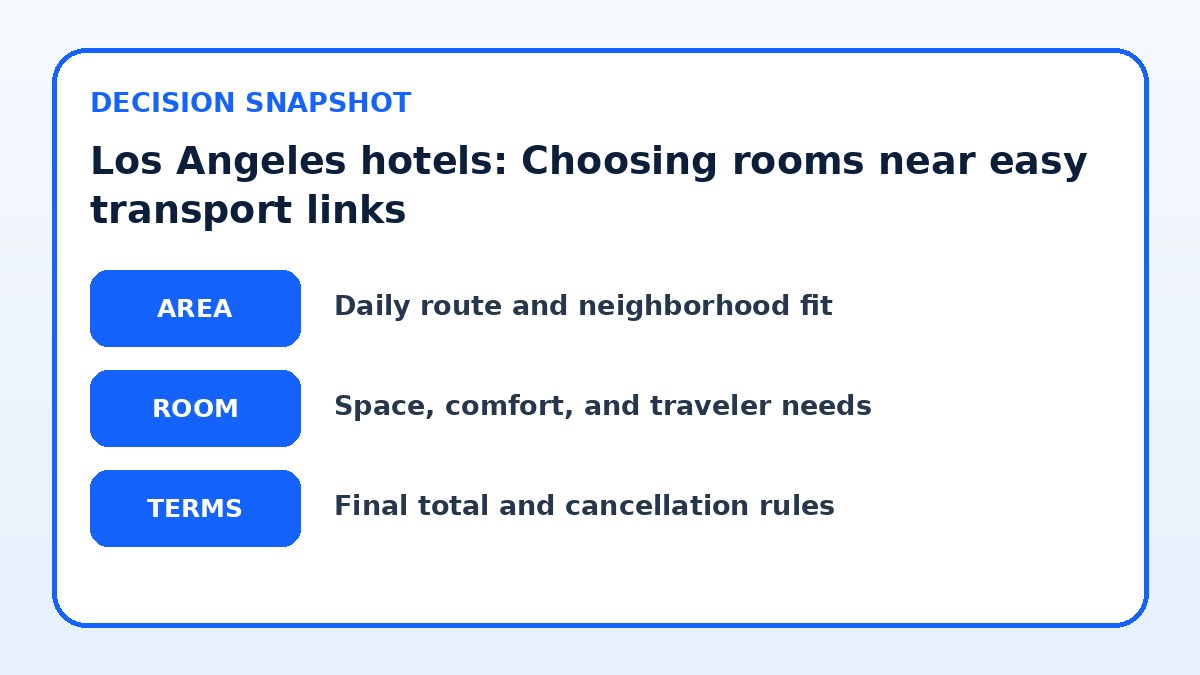
See current options before you compare the details
Availability and final conditions change. Open Trip.com now or keep reading for the practical comparison.
Immediate recommendation: where to book and why
For a traveler with extra luggage, book a hotel that places you within a short, flat walk of a major transport node—Metro rail stops, Bus Rapid Transit corridors, or airport shuttle points. Being close to a station reduces the number of transfers, doorways and curb cuts you must navigate, and it gives predictable options in case traffic or delays disrupt road travel. Hotels next to higher-capacity transport also improve flexibility: you can change arrival or departure routes if a flight is delayed, rather than being stuck with a complicated ride across the city.
When choosing a specific property, check its official booking page for key amenities: elevator access, luggage storage, and whether there’s a porter or bell service. If the hotel doesn’t list those items, call or message to confirm — wording on third-party sites can be incomplete. Also verify how the hotel handles early arrivals or late departures with large bags; some properties allow storage before check-in and after check-out but require identification or fees. Keep written confirmation if you require guaranteed storage or assistance.
Transport options to prioritize in Los Angeles
Los Angeles is car-oriented but its rail and bus network is useful for luggage-conscious travelers when used correctly. Prioritize hotels near Metro Rail lines (Red, Purple, Blue, Expo, Green, Gold) or major junctions where cross-town transfers are straightforward. Metro rail stations usually have elevators and escalators; confirm elevator availability at the exact stations you plan to use. Bus Rapid Transit corridors and dedicated airport shuttles are often easier for luggage because routes have fewer stops and more standing room; pick hotels adjacent to these services whenever practical.
If you plan to arrive by air, consider hotels served by airport shuttles or the LAX Airport Transit Center connections (including people movers and shuttle pickup areas). Hotels advertising scheduled shuttles may save you one taxi or rideshare leg. For intercity train or bus travel, book near Union Station or major Greyhound/FlixBus stops; they tend to offer baggage handling services and easier access to long-distance lockers and staff assistance. Always confirm on providers’ pages whether baggage assistance is provided, and whether there are restrictions such as size limits or additional fees.
| Approach | Best for | Tradeoff to check |
|---|---|---|
| Stay adjacent to a major rail station | Travelers who want minimal transfers and predictable elevator access | Higher rates and busier streets; some stations have stairs or long platforms |
| Choose a hotel with scheduled airport shuttle | Arrivals/departures timed around hotel shuttle windows | Shuttle schedules may not match delayed flights; confirm pickup rules and luggage limits |
| Pick a quieter neighborhood one block from transit | Travelers wanting lower noise while keeping easy access | Adds a short walk with bags; check sidewalks, curbs, and elevator availability at the station |
| Book near long-term parking or rent-a-car hubs | Travelers driving to Los Angeles with lots of luggage | Parking fees and traffic can negate convenience; verify parking rules and costs first |
Ready to check the option that fits your plan?
Use your exact dates and traveler details so the provider page can show the current total and conditions.

Tradeoffs: cost, neighborhood, parking and safety
Closer to major stations or airport corridors you’ll often pay more per night or encounter limited availability in boutique areas. That cost can be worth the time and stress saved when moving large bags, but it’s a tradeoff to weigh against staying in a quieter neighborhood and paying for a single door-to-door ride. If you drive, factor parking: hotels near transit hubs may have higher parking fees or limited spaces. Confirm rates and self-park versus valet options on the hotel’s official page before booking so that unexpected parking policies don’t erode the convenience you’re paying for.
Safety and comfort around pickup points matters if you’ll be handling luggage at odd hours. Busy transit stations have better lighting and more people, which can be reassuring, but also busier sidewalks and more street activity. If you prefer quieter streets, look for hotels one or two blocks from a station rather than directly on the main corner; that often balances safety with lower noise. Check recent guest reviews for notes about nighttime access, elevator reliability, and staff responsiveness—these operational details matter more to a luggage-heavy traveler than decor or breakfast options.
Before you book
- Map the hotel address to your arrival station or shuttle stop and measure the walking route in walking mode for stairs, hills, and curb crossings.
- Confirm elevator access and whether the specific room type offered has step-free entry or ground-floor options.
- Ask the hotel in writing if they provide luggage storage before check-in and after check-out, and note any size or time limits.
- Verify shuttle schedules, pickup locations, and luggage policies on the shuttle provider’s or hotel’s final service page before booking.
- Check current guest reviews for mentions of porter service, staff help with bags, and reliability of elevators or external stairs.
- Compare total door-to-door time and transfers for rideshare versus public transit during your expected arrival and departure windows.
How to compare hotels and confirm details before booking
Start by mapping hotels against the transit lines you intend to use. Use the hotel’s address and measure walking routes to the nearest station using a mapping app in walking mode to reveal stairs, hills, and crosswalks. Look for hotels that explicitly say “elevator,” “luggage storage,” or “porter/bell service”; if this language is absent, contact the property to confirm. Ask direct questions about morning/late-night access to elevators, whether staff will help carry bags from curb to room, and any storage limitations—get their answers in writing when possible.
Compare door-to-door times for rideshare versus public transit on your expected arrival and departure windows. For example, an hour-long rideshare may be easier with many bags than a 40-minute trip that requires two transfers and stairs. When providers’ facts could change—shuttle schedules, temporary elevator outages, or parking rules—verify those items on the provider’s final booking or service page just before you confirm. For a single comparison site, you may check Trip.com as one option to view availability and conditions, but always cross-check with the hotel’s own booking page.
Frequently asked questions
How can I tell if a Los Angeles hotel has accessible luggage-friendly routes from transit?
Look for explicit mentions of elevator access, ground-floor rooms, step-free entry, or porter service on the hotel’s official page. Use mapping apps in walking mode to check the exact walking path from the station: note curbs, stairs, and crossing complexity. If the route includes underpasses or elevated walks, call the hotel to confirm alternate accessible routes. Also check the station page for elevator operation notices; elevators on some transit lines can be out of service for maintenance, so verify elevator status with the transit authority close to your travel date.
Should I book a hotel with parking if I’m flying into LAX with lots of bags?
If you plan to rent a car or drive to Los Angeles, a hotel with on-site long-term parking reduces transfers when carrying luggage. However, parking rates, availability, and valet vs self-park policies vary widely; confirm those details on the hotel’s final booking page. If you prefer to avoid city traffic, consider parking near an airport shuttle-served hotel instead—this can save driving across the city. Balance the cost and time: a cheaper hotel farther away may increase rideshare or transit transfers that offset parking savings.
What should I verify about hotel shuttles and luggage limits?
Ask the hotel or shuttle provider whether the shuttle runs on-demand or a fixed schedule, where exactly the pickup point is at the airport or station, and whether there are limits on the number or size of bags per passenger. Confirm whether drivers will assist with loading and unloading heavy suitcases and whether oversized items require advance notice. Because shuttle operations and baggage policies can change, check the provider’s final service page and keep any written confirmation from the hotel; don’t rely solely on third-party listings for these operational details.
Final planning note
Traveling through Los Angeles with extra luggage is a lot easier if you let transport convenience guide your hotel choice. Prioritize properties close to major rail stations, reliable shuttle stops, or long-term parking hubs, and confirm elevator access, luggage storage and porter services before you book. Weigh the tradeoffs—higher nightly rates near transport, potential parking fees, and neighborhood noise—against the time and effort you’ll save on arrival and departure days. Do the simple checks: map walking routes, get written confirmation of services, and compare door-to-door times for rideshare and transit. Those few steps will turn a stressful transfer into a manageable start or finish to your trip.
Continue planning
Check current options and final conditions
Use the provider page to confirm live availability, the final total, cancellation terms, and every condition that matters to your trip.
This evergreen planning guide was created with AI-assisted drafting and a structured quality review. It does not display live prices, schedules, availability, visa guidance, or provider rankings. Verify current details before booking. Some links are affiliate links; we may earn a commission at no additional cost to you.