
If you want to travel from Melbourne to Queenstown with comfort on your first visit, focus on three things: the number and length of connections, aircraft and seat comfort, and sensible arrival timing for airport transfers and accommodation check-in. For many travellers a single well-timed connection beats multiple short hops — fewer transfers reduce the chance of missed connections, lost luggage, and exhaustion. Decide whether you prefer shorter total travel time (which often means a tighter connection) or a longer but more relaxed itinerary with an overnight in a transit city. Before finalizing a booking, check the flight operator’s on-time policy, baggage transfer rules, and whether the ticket protects you in case of missed connections; verify these details on the airline’s or booking page (you can also compare current options on Trip.com).
See current options before you compare the details
Availability and final conditions change. Open Trip.com now or keep reading for the practical comparison.
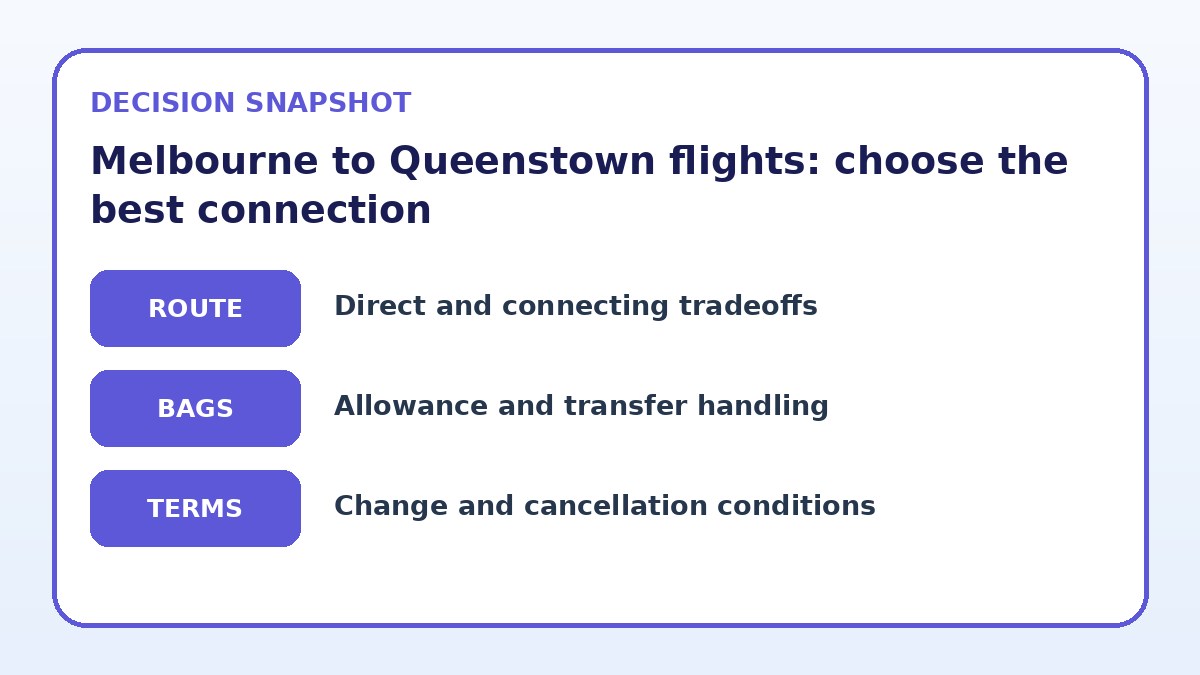
Direct versus connecting options: what to weigh
Although some travellers look for a direct route, Melbourne–Queenstown journeys commonly involve at least one connection depending on the carrier and time of year. When comparing options, weigh total door-to-door time against the convenience of fewer changes. A shorter total journey can be attractive, but very tight connections raise stress and may leave little margin if your inbound flight is delayed. Also consider whether an overnight stop makes sense—breaking the trip can improve comfort and allow you to arrive refreshed, especially after an evening departure from Melbourne.
Another factor is baggage handling: a single-ticket itinerary where the carrier guarantees baggage transfer simplifies arrival in Queenstown. If you piece together separate tickets, you may need to collect and recheck luggage at the transit airport, which adds time and uncertainty. Check the booking page or airline policy for whether bags are through-checked, and if that isn’t explicit, contact the carrier before you buy. Remember, operational realities like terminal changes or airport procedures will affect how comfortable a connection actually is.
Choosing connection length and transit cities
Aim for a connection window that matches the airport and whether you need to change terminals or pass immigration. For domestic-to-international transfers, lean toward longer windows to clear additional formalities. If your connection city is known for compact terminals and easy transfers, a shorter connection can be workable; where transfers require shuttle buses, security rechecks, or long walks, add extra buffer. Avoid connections that require sprinting across terminals or queuing through busy immigration checkpoints unless you have protected transfer arrangements.
Transit city selection also affects comfort: some airports offer better lounges, easier ground transport, and more reliable transfer times. If you pick a long layover intentionally, research sleep-friendly options near the transit airport or within the terminal. For overnight layovers, consider the added logistics of transport and whether arriving late will make it difficult to get to your hotel. Use airline and airport pages to confirm terminal maps and transfer flows so you can pick connection times that match the on-ground reality.
| Approach | Best for | Tradeoff to check |
|---|---|---|
| One-connection itinerary with longer layover | travellers who prefer low stress and baggage protection | adds overall travel time and may require an overnight stay in the transit city |
| Shortest total travel time with tight connection | time-sensitive travellers and light packers | higher risk of missed connections and little recovery time if delays occur |
| Split-ticket approach (separate bookings) | flexibility in carrier choice and potentially lower fares | you may need to collect and recheck luggage and lose protection for missed legs |
| Planned overnight transit stop | travellers who want to rest and explore a transit city | adds accommodation cost and extra travel logistics but boosts comfort |
Ready to check the option that fits your plan?
Use your exact dates and traveler details so the provider page can show the current total and conditions.
Seat, aircraft and comfort upgrades to consider
For first-time visitors who value rest, the aircraft type and seat layout matter. If you’ll be flying overnight or through the night sectors, prefer aircraft known for quieter cabins and more comfortable recline where possible. Compare seat pitch and width on the booking page or seat maps before you choose; sometimes purchasing a seat with extra legroom or bulkhead access transforms a long travel day. If you travel with carry-on only, prioritize seats near the doors to deplane sooner and reduce time standing in aisles during connections.
Think about in-flight amenities that matter to you: power outlets, Wi-Fi, and meal timing. If you need sleep, avoid flights with late-night meal services or noisy galleys. Lounge access at your connection airport can make a long layover genuinely restful — check if your fare or a credit card grants lounge entry, or plan a paid lounge visit. Always confirm seat and amenity details on the airline’s final booking page because these items can vary by aircraft and route.
Before you book
- Confirm whether your ticket includes through-checked baggage; if unclear, call the airline before booking.
- Compare aircraft seat maps and select a seat with extra legroom or aisle access if sleep or mobility is important.
- Allocate a buffer in your connection window for possible terminal changes, immigration, or security rechecks.
- Save your arrival hotel address and local transfer contact in both phone and printed form for easy access.
- Pack essential items and a change of clothes in your carry-on in case checked luggage is delayed.
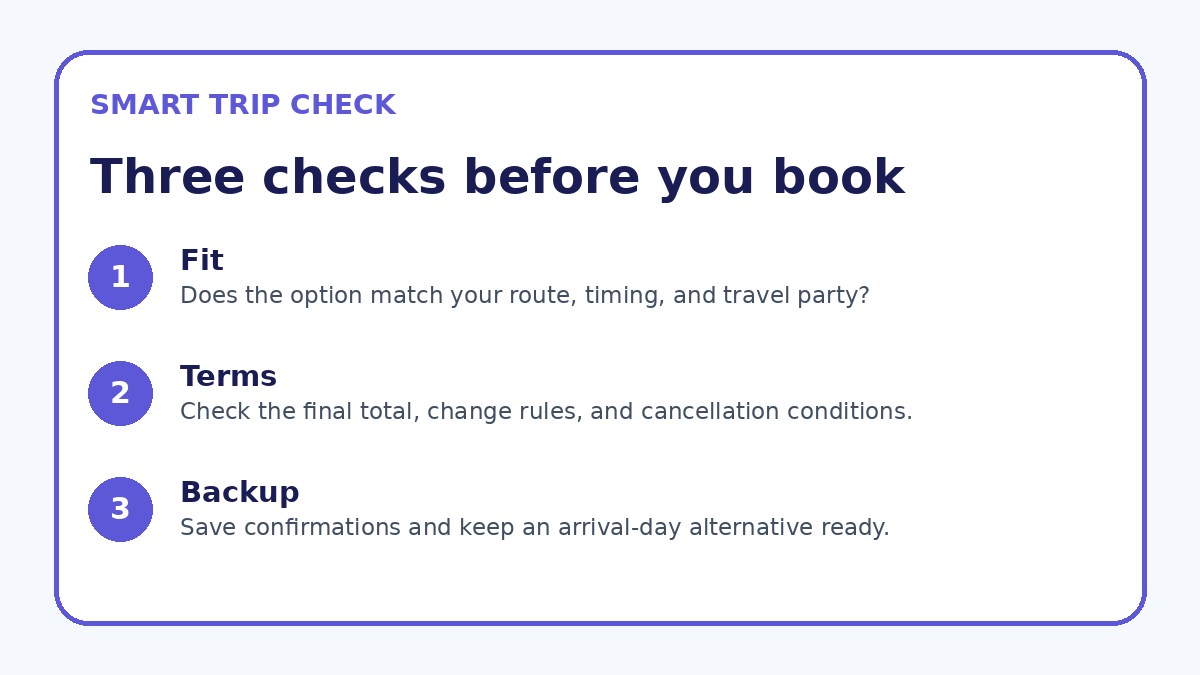
- Verify change, cancellation, and missed-connection policies on the final booking page before you pay.
Practical pre-booking checks and day-of-travel tips
Before you hit purchase, verify baggage inclusions, baggage transfer assurances, and change/cancellation policies on the airline or OTA booking page. If you’re booking separate tickets, see whether the transit airport requires you to pass immigration to recheck luggage; factor that time into your connection planning. Also check whether your fare allows free seat selection and whether paying for priority boarding or transfer protection is available; these options can reduce stress on travel day. If uncertain about specifics, contact the airline directly rather than relying on third-party descriptions.
On travel day, arrive at Melbourne’s airport with ample time for check-in and security, especially if you have checked luggage. Keep essential items and a change of clothes in your carry-on in case of luggage delays. For tight connections, know the terminals and transfer routes in advance and notify gate agents if your inbound flight is delayed. Save local emergency contacts, your accommodation details in Queenstown, and any transit visa requirements in one accessible place. Use real-time flight status tools and the airline’s app to stay updated during travel.
Frequently asked questions
Is it better to fly direct or connect from Melbourne to Queenstown?
Whether to fly direct or connect depends on your priorities. Direct or single-connection itineraries reduce complexity and the chance of luggage mishaps, making them better for travellers prioritising ease and minimal stress. If you value the shortest elapsed travel time and can tolerate tight transfers, a quicker itinerary might appeal. For first-time visitors who want a comfortable arrival, a single well-timed connection or planned overnight stop usually provides a smoother experience. Always check whether baggage is through-checked and whether the ticket includes missed-connection protection on the airline’s booking page.
How long should I make my connection in the transit city?
Connection time depends on the transit airport, whether you must pass immigration, and whether terminals are shared. For straightforward domestic transfers, shorter windows can work; for international or cross-terminal connections, build more time. As a rule of thumb, allow extra buffer beyond the airline minimum if you have checked bags or are unfamiliar with the airport layout. If you need to change terminals or clear immigration, add at least an hour or more depending on expected queues. Check terminal maps and transfer procedures on the airport or airline website before booking.
What should I pay for to make the journey more comfortable?
Prioritise a few targeted upgrades: a seat with extra legroom or aisle access if you need to sleep or move frequently, and lounge access during a long layover to rest and charge devices. Consider priority boarding if you want to stow carry-on quickly and avoid aisle congestion during connections. If your itinerary includes a very late or early arrival in Queenstown, arrange reliable airport transfer or an early-check-in option with your hotel. Confirm amenities and seat details on the airline’s final booking page since options vary by aircraft and fare class.
Final planning note
Planning a comfortable Melbourne to Queenstown trip for a first-time visitor means balancing travel time, connection complexity and in-flight comfort. Start by deciding whether you value fewer connections and guaranteed baggage transfer or a shorter total journey. Factor in aircraft comfort and the specifics of the transit airport when choosing connection lengths. Use the airline’s booking page to verify baggage, seat, and missed-connection policies, and consider paying for focused upgrades—extra legroom, lounge access, or a planned overnight—if they reduce stress. With a little time spent comparing connection options and verifying provider policies, you can arrive in Queenstown refreshed and ready to explore.
Continue planning
Check current options and final conditions
Use the provider page to confirm live availability, the final total, cancellation terms, and every condition that matters to your trip.
This evergreen planning guide was created with AI-assisted drafting and a structured quality review. It does not display live prices, schedules, availability, visa guidance, or provider rankings. Verify current details before booking. Some links are affiliate links; we may earn a commission at no additional cost to you.