Practical answer first: before you click Book, add up all direct and indirect costs—flight or train options, airport-to-city transport, the nightly rate after taxes and fees, local transit, expected meals, museum or attraction fees, and a buffer for incidentals. For a solo traveler, small daily costs and one-off charges (resort fee, luggage fees, attraction reservations) can shift a trip from comfortable to tight. Use that total to compare realistic alternatives: different neighborhoods, travel dates, and modes of arrival. This gives you an apples-to-apples basis to decide whether a deal is truly a bargain for your needs. The sections below explain what to check, how to compare options, typical tradeoffs, and a checklist to use while you shop.
See current options before you compare the details
Availability and final conditions change. Open Trip.com now or keep reading for the practical comparison.
Assemble the real trip cost
Start by building a single-line total for your trip instead of treating flight, hotel, and activities separately. For each component, note the headline number, then immediately check for mandatory extras that often appear later in the checkout flow: taxes, per-night service fees, baggage charges, and one-time reservation or facility fees. Don’t forget transportation between arrival point and your accommodation—whether that’s an airport shuttle, taxi, rideshare, or commuter rail—the cheapest flight could end up costing more if transfer options are limited.
Add routine daily expenses that are not always obvious in a listing: breakfasts, lunches, coffees, public transit passes, small groceries, and tips. For museums, historical sites, and guided tours, check whether reservations are required and whether the listed ticket price includes audio guides or timed-entry surcharges. Finally, include a contingency buffer—around 10–20% of your subtotal—to cover unexpected costs or planned splurges; for a solo traveler, that buffer safeguards both comfort and flexibility without overcomplicating the plan.
Compare travel options and their hidden costs
When evaluating flights or trains into Boston, map out door-to-door time and extra transport needs. A seemingly cheap airfare with an overnight connection or odd arrival time can force a paid late-night transfer or an extra hotel night. For rail or bus journeys, factor in transfers and the cost of getting from the station to your accommodation. If you’re considering alternate airports or terminals, check typical transfer options and any luggage transfer complexities; these practical details change the competitiveness of a deal.
Also compare the convenience and cost of arriving earlier or later in the day: arrival time can affect how much you’ll pay for first-day meals and whether you need to buy an extra transit pass. Balance travel time against money saved—sometimes a slightly pricier, faster route reduces overall trip cost by eliminating the need for extra nights, taxis, or lost sightseeing hours. Keep a short table of door-to-door options with estimated times and added costs to make side-by-side comparisons straightforward.
| Approach | Best for | Tradeoff to check |
|---|---|---|
| Lowest headline price (flights/hotels) | Travelers with fixed dates who can accept connections and early/late arrivals | Often adds hidden transfer costs, luggage fees, or extra nights that raise total trip spend |
| Faster, pricier arrival | Travelers prioritizing time and convenience over marginal savings | Higher upfront cost but may reduce need for extra nights or expensive last-mile transfers |
| Central, higher-rate lodging | Solo travelers who value walking access to sights and evening safety | Less savings on nightly rate but smaller daily transport and time costs |
| Budget lodging farther out | Those who plan long days on tours and don’t mind commutes | Saves nightly cost but increases daily transit spending and time lost to travel |
Ready to check the option that fits your plan?
Use your exact dates and traveler details so the provider page can show the current total and conditions.
Choose lodging with total-stay thinking
Beyond the nightly rate, look for included extras that matter to a solo traveler: breakfast, Wi‑Fi, laundry, and luggage storage. Properties in central neighborhoods may charge more per night but reduce daily transport and time spent commuting to sights, dining, or evening activities. Conversely, cheaper rooms farther out can eat into savings through daily transit costs, so calculate how many transit rides you’d need and their costs over your stay. If staying in a shared apartment or a small hotel, read cancellation and refund terms and confirm any additional cleaning fees that may appear at booking.
If you plan to cook or prepare simple meals, check whether the listing includes kitchen access and whether there are grocery options nearby. When comparing lodging, also consider safety, flexibility of check-in, and luggage policies—some lower-cost places have strict check-in hours that may force paid storage or late arrivals. For each shortlisted property, verify the final price and all included services on the provider’s booking page before committing; that final screen is where many fees are revealed.
Before you book
- Add the headline flight or train cost plus baggage, seat selection, and any required connection accommodation to your total.
- Verify the final lodging price on the booking page, confirming taxes, per-night fees, and included amenities like breakfast or Wi‑Fi.
- Estimate airport-to-city transfer costs for your arrival times and compare taxi, rideshare, shuttle, and public transit options.
- List must-see attractions and check whether timed tickets or reservations are required and what the refund/change policies are.
- Calculate expected daily expenses for meals and transit and include a contingency buffer of at least 10% for incidentals.
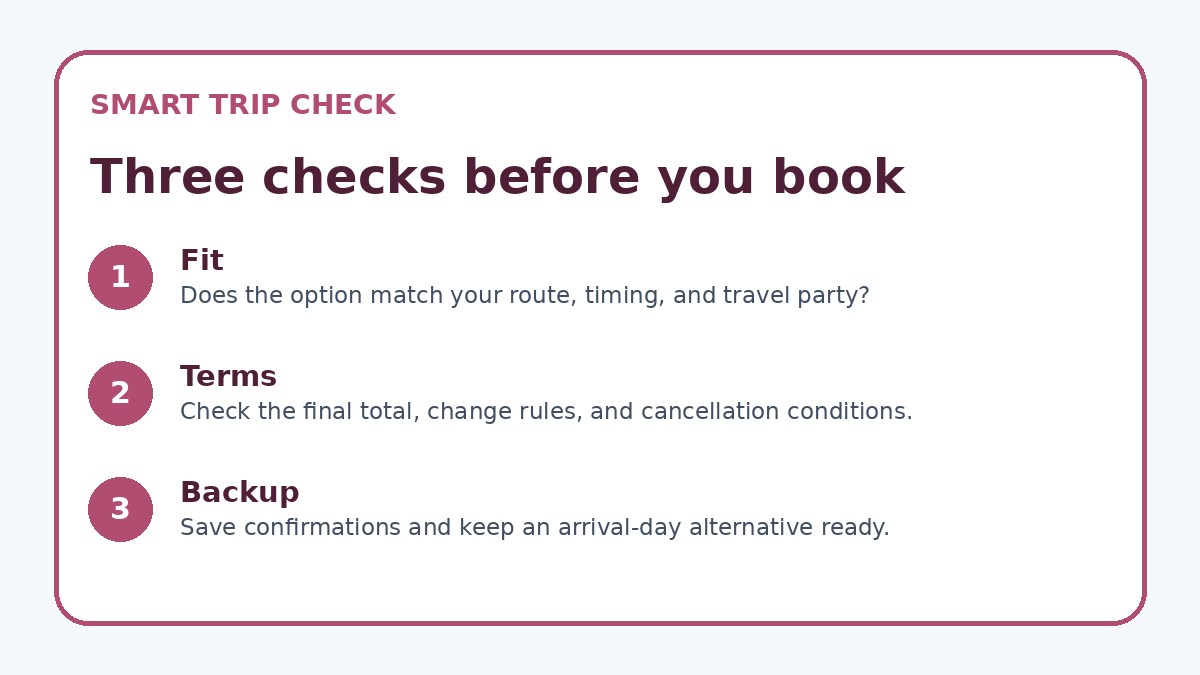
- Confirm cancellation and change policies on the seller’s checkout screen and snapshot the final price before payment.
Plan daily spending and reservation strategy
Decide which attractions and neighborhoods are must-dos and which are optional. Research whether popular museums or tours require timed entries or advance reservations; last-minute tickets can be limited or priced differently. Factor in whether you’ll use single tickets, day passes, or reloadable transit cards, and calculate expected rides per day to decide the most cost-effective option. Solo travelers often benefit from picking a few priorities and being flexible with everything else to avoid overpaying for convenience.
Consider meal patterns: if you plan to eat at sit-down restaurants for every meal versus combining casual options and groceries, your daily food budget will vary substantially. Look for free or low-cost activities—parks, self-guided walks, and public markets—that provide cultural value without high entry fees. Finally, review refund and change policies for major purchases; flexible tickets and refundable accommodations cost more upfront but may save you if plans shift. Always confirm the final terms and fees on the supplier’s checkout page before payment.
Frequently asked questions
How can a solo traveler spot hidden fees before booking Boston travel deals?
Work through a simulated checkout for each booking: add the flight or hotel to a basket and proceed until the final page where taxes and mandatory fees appear. Look for baggage or seat selection add-ons for flights, per-night service or facility fees for hotels, and any city or tourism levies. Check transport sections for quoted transfers, and review attraction pages for reservation fees. If the site is unclear, contact customer support or compare the same itinerary on a second booking platform—Trip.com can be used as a comparison point but verify all fees on the provider’s own checkout page.
Should I prioritize location over price when choosing where to stay in Boston?
Prioritize based on your daily plan: if most of your activities are concentrated in a compact area, paying more for central lodging can save time and transit costs, particularly as a solo traveler who may value evening safety and walkability. If you expect full days on organized tours or will be out early and return late, a budget place farther out may be sensible. Always calculate estimated daily transit expense and lost sightseeing time when deciding—sometimes a higher nightly cost still lowers your overall trip spend.
What’s the best way to compare direct versus connecting travel routes for Boston?
Build two door-to-door cost columns: one for direct options and one for connecting ones. Include advertised fare, likely baggage or seat fees, extra transfer or overnight needs caused by schedules, and the value of your time—an extra connection may add hours or require an extra night. For trains or buses, include station transfers and luggage handling. Consider flexibility and refund rules too; a cheaper connecting route with strict change penalties could cost more if plans shift. Use this full comparison to judge whether the time saved by direct travel justifies its price.
Final planning note
For solo travelers, a Boston deal is only a deal when you account for all costs and practical tradeoffs. Assemble a single total that includes advertised fares plus baggage, transfer, and mandatory lodging fees, then layer in daily expenses and a reasonable contingency. Compare door-to-door times and costs for different arrival methods and evaluate lodging by total-stay impact rather than headline rate alone. Use the checklist to vet each option and always verify final fees and cancellation terms on the provider’s booking page before you pay. A clear total cost gives you the confidence to choose the option that fits your budget and travel style.
Continue planning
Check current options and final conditions
Use the provider page to confirm live availability, the final total, cancellation terms, and every condition that matters to your trip.
This evergreen planning guide was created with AI-assisted drafting and a structured quality review. It does not display live prices, schedules, availability, visa guidance, or provider rankings. Verify current details before booking. Some links are affiliate links; we may earn a commission at no additional cost to you.