Practical answer up front: for most couples visiting central Washington, DC who plan to stay in or near the National Mall, Dupont Circle, or Georgetown and want easy access to museums, monuments, and dining, skip a car and rely on Metro, buses, walkable neighborhoods, and on-demand rides. Rent a car if you plan day trips outside the urban core—Virginia wine country, Shenandoah foothills, or suburban family visits—or if one partner needs mobility flexibility. Your decision hinges on where you’ll sleep, how mobile you want to be, and whether you prefer a single hassle-free vehicle or mixing transit, walking, and occasional rideshares. Below I explain the tradeoffs, how to estimate real costs and time, and what to check before you book a rental or buy transit passes.
See current options before you compare the details
Availability and final conditions change. Open Trip.com now or keep reading for the practical comparison.
When couples should favor public transport
Public transit is the sensible baseline for couples staying inside or close to DC’s core. The Metrorail, Metrobus network, and the compact layout around the National Mall mean many landmarks are reachable without driving. Walking between museums, monuments, restaurants, and some neighborhoods is often faster than circling for parking. For couples enjoying a leisurely city pace—museums by day, restaurants and bars by night—transit reduces the friction of urban driving, letting you both relax and enjoy shared time without one person tasked with navigation or parking.
Relying on transit also gives you flexibility: buy reloadable fare cards or short-term passes, combine trains with buses and scooters for first/last-mile connections, and use app-based rides for late-night returns when transit frequency dips. If mobility or luggage demands are low, and you prefer a spontaneously changing schedule where walking between neighborhood shops and dining options is part of the experience, public transport keeps logistics simple and lets you focus on planning activities rather than vehicle logistics.
When renting a car makes more sense for couples
Rent a car when your plans extend beyond the compact center or include several day trips to suburban destinations. Trips to destinations such as Virginia wineries, Maryland shore towns, or larger parks around the region are faster and more convenient with your own vehicle. A car is also helpful if one partner needs frequent access to mobility aids, if you’re carrying bulky equipment, or if your schedule is tightly timed and you don’t want to coordinate transfers or wait for less-frequent bus routes outside the city core.
Another common reason couples choose a rental is lodging logistics—staying in a suburban hotel, an Airbnb without good transit links, or visiting family where transit options are limited. In those cases, calculate door-to-door travel time, not just distance, and compare it to the added costs and effort of parking and traffic. A car can also make early-morning airport runs or late-night departures smoother, but remember to verify long-term parking options and any hotel parking rules before booking.
| Approach | Best for | Tradeoff to check |
|---|---|---|
| Rent a car for the trip | Couples planning multiple day trips or staying outside central neighborhoods | Higher costs for parking and tolls; potential stress in city traffic and restricted streets |
| Use Metro, buses, and walking | Couples staying in the District who prioritize museums, dining, and short strolls | Limited convenience for day trips and late-night travel; may require transfers |
| Mix transit with occasional rideshares | Couples who favor transit for daytime and want flexibility at night or for short hops | Moderate cost; requires planning to combine fare types and waiting for rideshares |
| Book a car for part of the trip | Couples splitting a city stay with a few days of regional driving | Extra logistics switching between rental and lodging; might incur additional rental fees |
Ready to check the option that fits your plan?
Use your exact dates and traveler details so the provider page can show the current total and conditions.

Tradeoffs: cost, convenience, and stress
Cost comparisons aren’t straightforward because driving carries many components beyond the rental rate: fuel, parking (street meters, garages, hotel fees), potential tolls, and the time cost of searching for parking in busy neighborhoods. Public transit costs are more predictable: fares, occasional rideshares for late nights, and possible short scooter or bike trips. Couples should tally expected daily parking and tolls against the convenience of a single vehicle when deciding—include how much you value avoiding traffic and the time spent dealing with parking.
Convenience and stress levels differ. Driving offers door-to-door control and privacy for conversations and storage, but navigating DC traffic and restricted lanes can add stress. Transit requires planning around schedules and transfers but removes the burden of parking and driving in congestion. For some couples, the stress of city driving outweighs the small monetary savings, especially when you factor in the time lost circling for parking or dealing with restricted streets near events and rush hours.
Before you book
- Map every planned destination and note the closest Metro station or bus route to estimate transit coverage.
- Confirm hotel or Airbnb parking availability, nightly parking rules, and whether reservations are required for parking spaces.
- Compare door-to-door travel times for transit versus driving at the specific hours you expect to travel.
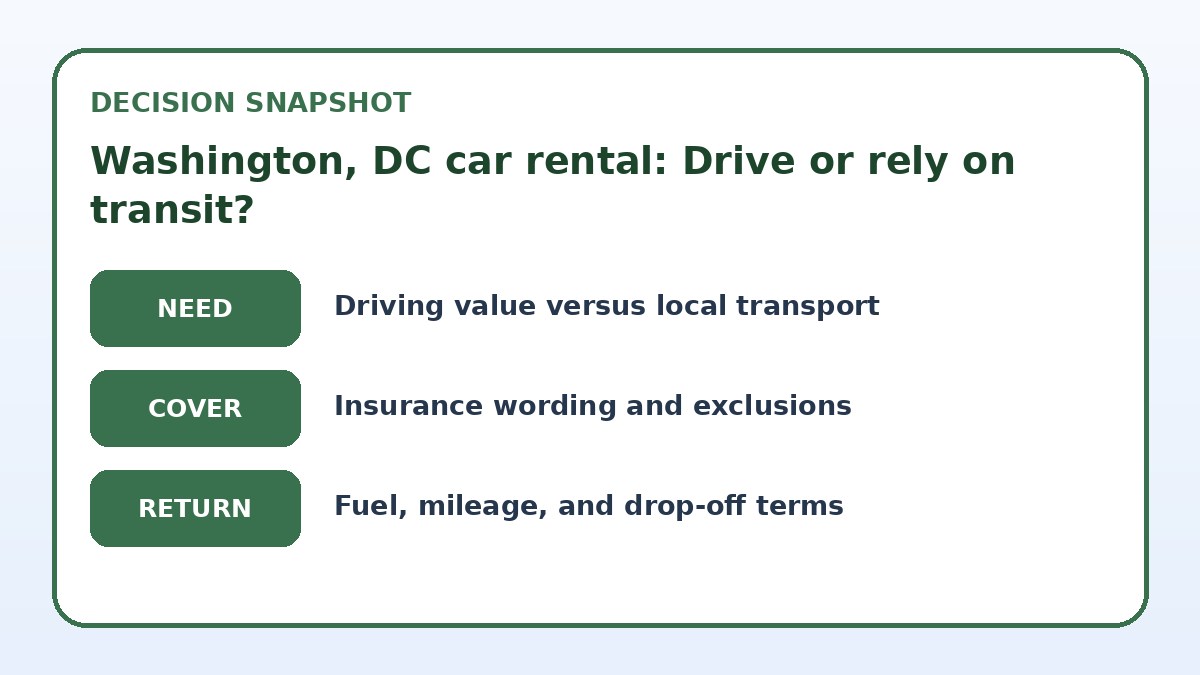
- Check rental terms on the provider’s final booking page for mileage, fuel policy, insurance options, and extra-driver rules.
- Estimate daily parking and toll costs and add them to the rental rate to compare with transit fares and occasional rideshares.
- Plan for late-night returns: verify Metro/bus hours for your nights and have a rideshare fallback for low-frequency times.
How to decide and practical checks before booking
Start by mapping your planned activities and overnight location. Mark the nearest Metro stations, bus lines, and parking garages or hotel parking policies. Estimate travel times with transit options and compare them to driving times at your planned times of day. If most points of interest cluster within a few miles and around Metro lines, transit wins. If you see multiple 45–90 minute drives to far-flung destinations, a car is likely the better fit. Couples should also consider evening plans—late-night transit frequency and safety perceptions can influence whether a car or rideshare is preferable.
Before booking a rental, verify the rental company’s final terms on its booking page: pickup/drop-off rules, mileage limits, insurance options, and age or credit requirements. For public transit, check the provider’s fare policies and station accessibility from official pages or local transit apps. You can use Trip.com to compare current rental availability as a starting point, but confirm any specific fees, fuel policies, and cancellation terms directly with the rental company or hotel to avoid surprises.
Frequently asked questions
Can a couple rely entirely on public transit for a week in Washington, DC?
Yes—many couples can rely entirely on public transit if they stay in or near central neighborhoods and plan mostly museum, monument, and dining activities. The Metrorail and buses cover the core and connect to several neighborhoods; walking fills short gaps. However, if your itinerary includes frequent trips outside the District, early departures, or late-night excursions where transit is less frequent, add budget for occasional rideshares or consider a short-term rental for the days you need a car. Map your specific itinerary first to be sure.
How should couples factor parking into the decision to rent a car?
Treat parking as a line-item expense and time cost. Look up hotel parking rules and nearby garage prices, estimate street meter availability near key stops, and consider the hassle of finding parking during peak hours. Some neighborhoods have limited street parking or resident-only restrictions. If the places you plan to visit commonly levy garage fees or timed restrictions, those costs can quickly negate any perceived savings from renting. When possible, get concrete parking rates from hotel or garage pages before you book the car.
Are one-way car rentals or renting for only part of the trip viable for couples?
Yes, renting for only part of a trip can work well when you want city convenience without committing to a vehicle throughout. Book a short rental for the days of planned regional travel and use transit while in the city. If considering a one-way rental, verify drop-off locations and any extra fees on the rental company’s final booking page. Coordinate pick-up and drop-off times with your lodging and allow buffer time for traffic. This hybrid approach balances cost and flexibility but requires careful coordination.
Final planning note
For most couples staying within central Washington, DC and focusing on museums, monuments, neighborhood dining, and walking, public transit combined with occasional rideshares is the simplest, lower-stress choice. Rent a car if your plan includes multiple day trips beyond the city limits, if lodging lacks reliable transit access, or if you need the convenience of a private vehicle for mobility reasons. The right decision comes from mapping your nights and days, tallying parking and rental terms, and checking late-night transit availability. Double-check rental policies and hotel parking on providers’ final pages—use Trip.com or similar services to compare availability, but confirm fees and rules directly before you book.
Continue planning
Check current options and final conditions
Use the provider page to confirm live availability, the final total, cancellation terms, and every condition that matters to your trip.
This evergreen planning guide was created with AI-assisted drafting and a structured quality review. It does not display live prices, schedules, availability, visa guidance, or provider rankings. Verify current details before booking. Some links are affiliate links; we may earn a commission at no additional cost to you.