If your trip to Sydney is for work, the practical step before you click Confirm is to total every expected cost and time impact. A low headline fare often hides airport transfers, luggage fees, meal incidental rates, local transport cards, business-class seat supplements, or mandatory taxes that your company account may not cover. Equally important are hidden time costs: overnight connections, early-morning departures, and local transit times that affect meeting readiness and productivity. Start with a simple spreadsheet or booking checklist that captures direct booking charges and the invisible extras—transfer logistics, ground transport, Wi‑Fi availability, per diem alignment, and potential overtime or evening work allowances. Doing this lets you compare apples to apples across flight classes, hotels, and package offers and present a clear, defensible request to a manager or travel department.
See current options before you compare the details
Availability and final conditions change. Open Trip.com now or keep reading for the practical comparison.
Flights: totalize out-of-fare charges and time impacts
When evaluating flight options for Sydney, treat the base fare as the starting point, not the whole story. Add ancillary fees such as checked or overweight baggage, advance seat selection (which matters for working inflight), in‑flight Wi‑Fi, and any airline surcharges listed on the booking page. Also factor in the real door-to-door time: airport transfer, check‑in windows, security lines, and likelihood of delays. For a business traveler, an extra ninety minutes at the airport or an overnight connection can mean rebooking meetings, paying for an extra night at a hotel, or losing productive hours.
Compare the productivity value of different cabin options rather than assuming price alone. A marginally higher fare for a seat with power, more privacy, or guaranteed middle-seat-free may save time and maintain focus on arrival; if your company allows upgrades, document the expected benefit and total incremental cost. When you see connecting itineraries, list the connection airports and minimum connection times, and check whether you would need transit visas or long transfer bus rides. Verify connection guarantees and change/refund rules on the airline’s final booking page before relying on those options.
Accommodation: location, meeting needs, and incidental costs
A hotel’s nightly rate is only part of the accommodation cost. Check the distance and travel time to your meeting venues, availability of meeting rooms or business centers, breakfast policy, and whether the property charges for internet access, printing, or late checkout. Self-catering or cheaper rooms away from the CBD might look like savings until you add daily cab fares, longer commutes, and the value of arriving relaxed and on time for important appointments. Also confirm what the rate includes on the booking page—breakfast, local taxes, and any mandatory tourism levies that appear at checkout.
For invoicing and expense approval, note the hotel’s cancellation and amendment terms as shown on the provider’s final page and whether the property can provide corporate invoicing or direct billing. If you need meeting space or AV equipment, request written confirmation of availability and costs before booking; these services are often charged separately. Finally, weigh loyalty program benefits and corporate rates against immediate cost: a small nightly discount plus benefits like guaranteed late checkout or free Wi‑Fi can be worthwhile for a back-to-back schedule.
| Approach | Best for | Tradeoff to check |
|---|---|---|
| Lowest headline fare | When strict budget limits override flexibility | Often adds baggage, transfer, and schedule costs that increase total trip expense and reduce reliability |
| Higher fare with flexible change terms | Uncertain schedules or last‑minute meeting shifts | Higher upfront cost but lower risk and fewer unexpected amendment fees |
| Midrange fare plus efficient transfers | Maximizing productive time with controlled spend | Slightly higher price for time savings; needs verification of transfer availability |
| Cheaper hotel outside CBD | Lower nightly cost when on-site presence isn't required | Longer commutes, increased daily transport costs, and potential fatigue |
Ready to check the option that fits your plan?
Use your exact dates and traveler details so the provider page can show the current total and conditions.
Ground transport and daily mobility: practical cost comparisons
Sydney offers multiple ground transport choices—train, ferry, rideshare, taxi, and airport express services—but which saves time and money depends on your schedule and meeting locations. For early or late meetings, a pre-booked private transfer or rideshare may be the only practical option; during daytime hours, trains and ferries can be faster and cheaper. Estimate both money and time: a longer cheap rail trip might cost less but reduce productive hours. Confirm on the provider’s site whether the service includes baggage handling or extra stops that could add time.
If you will use public transport, check whether an Opal card or equivalent is required and whether daily caps or employer travel cards apply. For frequent local trips, calculate a realistic daily mobility budget rather than assuming single-trip fares; look at peak vs off-peak pricing and whether your company reimburses contactless or app-based payments. Always verify transfer times from the airport to your hotel on the provider’s final booking page and check if there are company-approved shuttle services or negotiated corporate rates that reduce headache and cost.
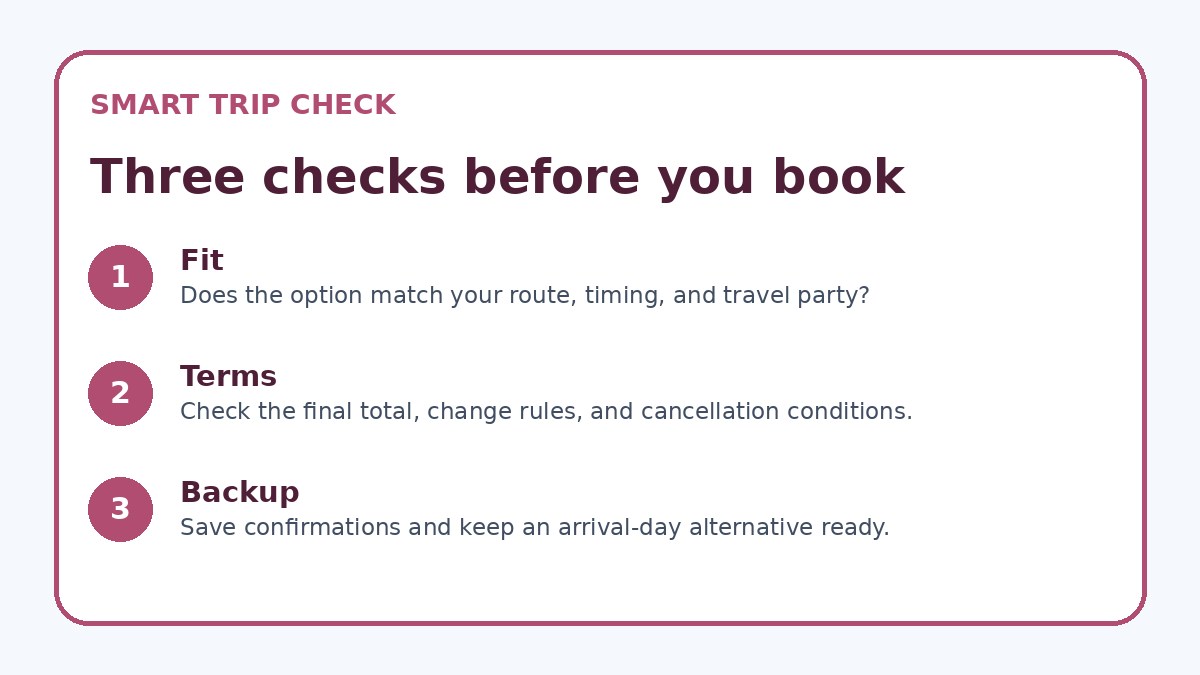
Before you book
- List each expense line (fare, baggage, seat fee, Wi‑Fi, taxes, transfer, hotel extras, meeting room, meals) in a single spreadsheet row for side-by-side comparison.
- Confirm transfer time and cost from Sydney airport to your hotel and add it to total trip time and budget before choosing a flight.
- Open the airline and hotel final booking pages and copy the cancellation, change, and refund terms into your approval request.
- Estimate daily mobility expenses (taxis, trains, ferries) based on meeting locations and add a contingency buffer for evening runs.
- Request written confirmation of any meeting-room, AV, or catering charges from the hotel before selecting a property.
- Prepare a short memo for approvers showing total trip cost, time impact, and why the chosen option meets company policy.
Policy, reimbursements and presenting a clear cost case
Before booking, align the proposed itinerary with your employer’s travel policy. Different companies have rules on cabin class, meal allowances, preferred hotels, and acceptable total trip durations. Prepare a concise cost comparison that includes all line items—fares, baggage, transfers, hotel extras, meals beyond per diem, meeting-room charges, and an estimate of lost productive time. That lets a manager approve the lowest‑disruption option rather than just the lowest headline price. Document any non-refundable elements or penalties and highlight options with flexible change terms if schedules are uncertain.
When requesting approval, provide the booking page screenshots or links and list exactly what needs checking on the provider’s final page: total price with taxes and fees, change and cancellation penalties, baggage rules, and any ancillary services included or offered at checkout. If you consult an online aggregator, remember to cross-check terms on the airline or hotel page itself; Trip.com can be useful to compare current availability, but always verify final conditions on the actual provider’s booking confirmation page before you commit.
Frequently asked questions
Should I always pick refundable fares for Sydney business travel?
Refundable fares provide flexibility if your schedule is likely to change, but they usually cost more upfront. Balance the probability of change against the premium: if your meetings are tentative, a refundable or changeable ticket can avoid larger amendment costs and administrative hassle later. If your employer reimburses only the lowest allowable fare, document the change risk and propose the refundable option as a contingency, noting the exact change and refund rules shown on the airline’s booking page so approvers see the tradeoff.
How do I decide between a hotel in the CBD and a cheaper suburban option?
Start by mapping your main meeting locations, conference venue, and any client sites. Calculate door-to-door travel time from each candidate hotel and estimate daily transport spend; multiply by the number of days to reveal the hidden cost of distance. Consider whether early starts or late returns make proximity valuable for sleep and preparation. If the hotel offers business amenities that save time—on-site printing, meeting rooms, reliable Wi‑Fi—those can justify a higher rate, but always verify inclusion and cancellation terms on the booking page.
What’s the fastest way to present a clear cost case to my travel manager?
Create a one-page comparison showing the total landed cost for two or three realistic itineraries: include ticket fare, baggage, transfers, hotel rate with taxes, meal expectations, and estimated local transit. Add a short line about flexibility (refund/change terms) and time impact (total travel hours). Attach screenshots or links to the airline and hotel final booking pages highlighting key terms. This transparent approach makes it easy for a manager to approve the option that balances cost, risk, and productivity.
Final planning note
For business travel to Sydney, the cheapest headline deal is rarely the best decision unless you’ve added every extra cost and time implication. Treat bookings as a small project: inventory costs, verify provider terms on the final booking page, and measure the time tradeoffs against meeting importance. Presenting a concise, itemized comparison to your travel approver reduces back-and-forth and avoids post-trip surprises on expense reports. Use the checklist to avoid missed fees and verify non-price terms, and remember to reconfirm any critical services—transfers, meeting rooms, and flexible ticket options—before you commit.
Continue planning
Check current options and final conditions
Use the provider page to confirm live availability, the final total, cancellation terms, and every condition that matters to your trip.
This evergreen planning guide was created with AI-assisted drafting and a structured quality review. It does not display live prices, schedules, availability, visa guidance, or provider rankings. Verify current details before booking. Some links are affiliate links; we may earn a commission at no additional cost to you.