
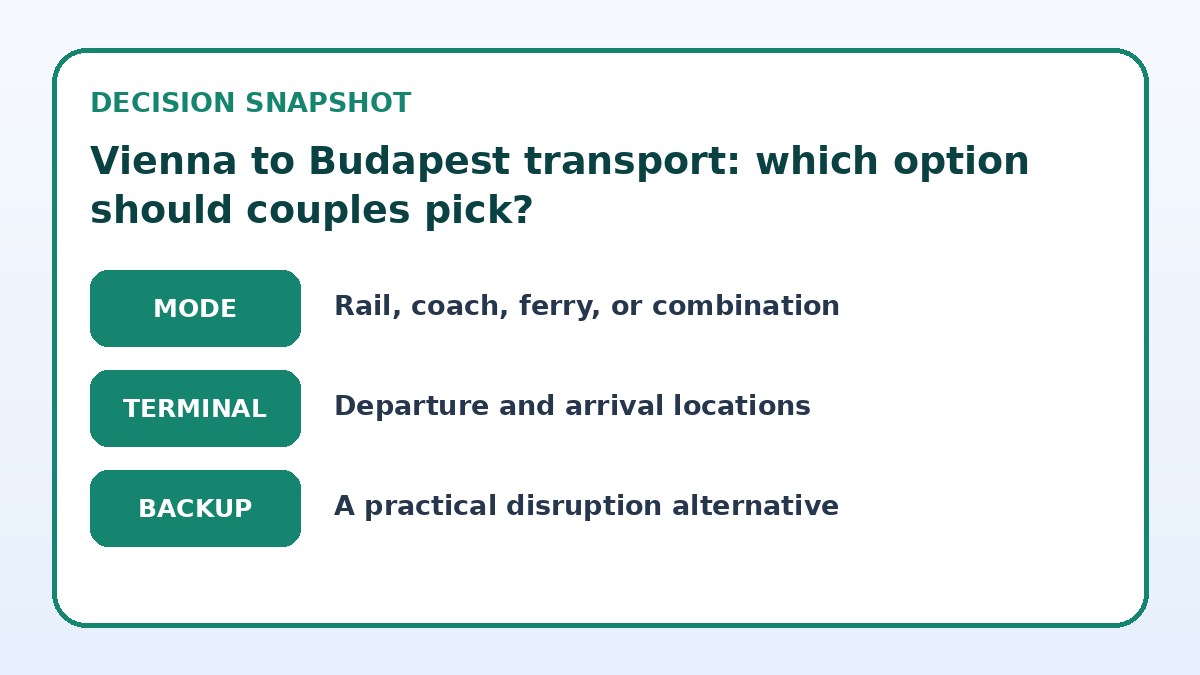
Practical answer up front: for most couples the train will be the most practical option between Vienna and Budapest because it balances comfort, city-center stations and straightforward luggage handling. Trains let you relax, talk over plans, and arrive directly in central Budapest without airport transfers; they also avoid the stress of driving or the variability of coach comfort. That said, a quick drive or low-cost flight might make sense for couples with tight schedules, special mobility needs, or a desire to combine the transfer with a scenic detour. Read on to weigh the tradeoffs — including how to compare direct and connecting options, what to check before you book, and the specific decision criteria couples should use to pick the most practical intercity transport for their trip.
Why the train is usually the practical choice for couples
Trains typically deliver a simple, low-stress travel experience that pairs nicely with shared trip planning. Station-to-station travel often means you step off in the heart of Vienna and arrive in the center of Budapest, reducing the need for extra transfers. For couples who like to talk, read together, or divide tasks like maps and navigation, a train’s open seating and possibility to stroll to a café car make the journey part of the trip rather than a chore. Luggage handling on trains is usually straightforward: store bags near your seat or in a compartment and avoid the repetitive curb-side pick-up common at airports.
Comfort considerations that benefit couples include the opportunity to book adjacent seats, to reserve a table if available, and to move around when needed without disturbing a driver. Trains also reduce concerns about who drives, who parks, and who navigates — travel responsibility can be shared or rotated during the trip. If one partner dislikes driving or long security queues, a train’s predictable entry and exit process removes several common sources of travel friction and helps keep both travelers relaxed and focused on enjoying the destination together.
When driving or renting a car makes more sense
Driving becomes practical when a couple plans multiple stops, countryside detours or needs door-to-door flexibility that public transport cannot provide. A car lets you set your schedule, detour to small towns, and carry larger items without worrying about strict luggage limits. Couples should consider whether one partner prefers to drive or if they are comfortable sharing long driving stretches; the ease of travel will depend on who handles navigation, tolls, parking and local traffic conditions. If either person finds driving stressful, that can outweigh the benefits of freedom and privacy a car provides.
Before choosing to drive, consider pick-up and drop-off logistics, parking availability at both ends, and whether you will need only one vehicle for your whole stay. Evaluate roadside assistance, fuel policy and whether either partner is comfortable with cross-border rental restrictions or added drop-off fees. Remember that a car shifts travel tasks onto the couple: someone must pay attention to directions and local rules, so factor that into your decision. For a romantic short trip where convenience is paramount and both prefer to relax, driving may be less practical than a train unless you value flexibility above all.
| Approach | Best for | Tradeoff to check |
|---|---|---|
| Train | Couples who prioritize central arrivals, relaxed travel and easy luggage handling. | May be slower than flying for door-to-door travel if airport transfers are short. |
| Driving (rental or private car) | Couples wanting flexibility, scenic stops or off-the-beaten-path side trips. | Adds driving responsibility, parking hassles, and potential cross-border rental complications. |
| Flight | Couples on tight schedules where airport transfers are quick and seats are acceptable. | Extra steps for check-in and security can erase flight time savings for short routes. |
| Bus/Coach | Couples seeking lower-cost travel and direct routes when comfort and space are acceptable. | Comfort and luggage rules vary widely; check seat space and board/arrival locations first. |
When flights or buses might be the better pick
Flights can be time-saving for couples who value minimizing travel hours and are near airports with fast transfers, but they introduce extra steps: check-in, security, and travel to and from airports. For partners with tight onward connections or limited time, flying can be justified, but couples should compare total door-to-door time—not just flight duration. If either partner has mobility limitations, assess the airport’s assistance services and the ease of moving between terminals to ensure the trip remains comfortable for both of you.
Buses sometimes offer a straightforward and economical route and can be practical when schedules match your plans and both travelers accept less personal space. Some coaches have outlets and Wi-Fi, but seat comfort and luggage allowances vary a lot between operators. For couples, a bus works best when you’re comfortable sitting for the journey and when you’ve checked luggage rules and planned for arrivals at city-center or near-central stops. Always verify the boarding point and exact arrival location so your onward plans stay smooth and stress-free.
Before you book
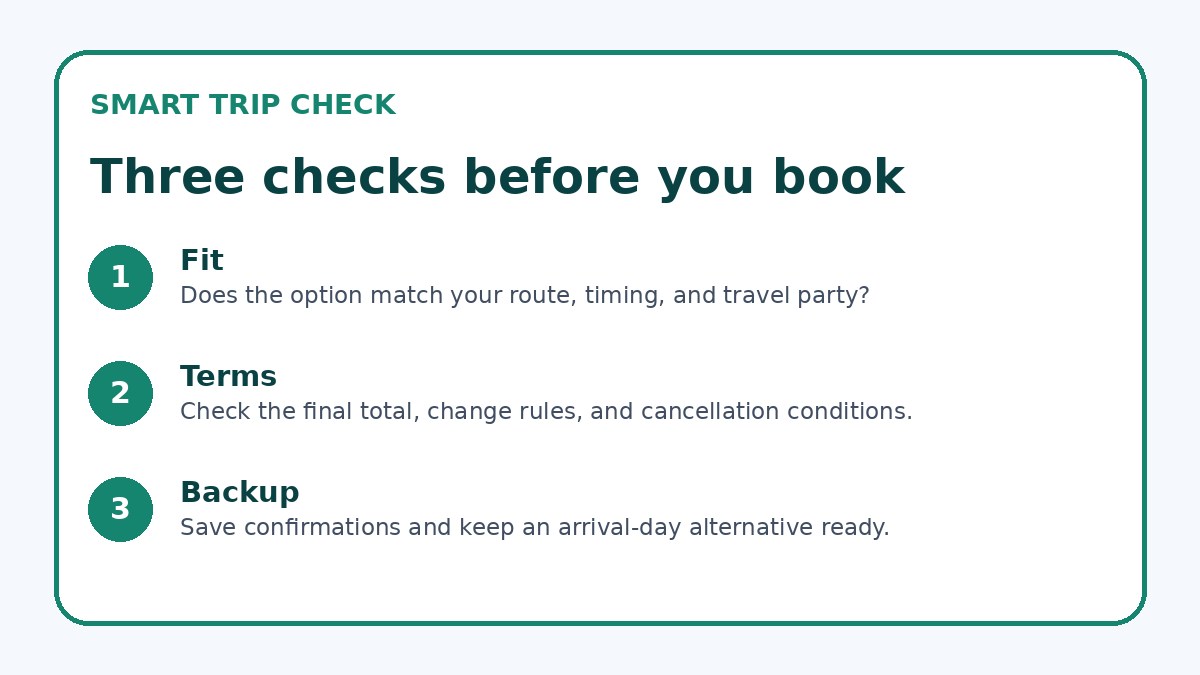
- Decide together what matters most: total door-to-door time, comfort, flexibility, or cost before you start comparing options.
- Compare total travel time including transfers and walk/connect times, not just scheduled duration of the main leg.
- On the provider’s booking page, confirm seat reservation rules, baggage allowance, and whether seats are adjacent or can be reserved together.
- If considering a car, check pick-up/drop-off locations, parking availability at your Budapest accommodation, and any cross-border rental restrictions.
- For flights, verify airport transfer options on arrival and departure to ensure the flight actually saves time overall.
- If choosing bus, confirm exact boarding and arrival addresses, luggage policy, and available onboard amenities for comfort.
Decision criteria couples should use before booking
Start by listing what matters most jointly: minimizing door-to-door time, comfort, flexibility, privacy, or cost. Compare total journey time including transfers, expected wait times, and how each option fits with your accommodation location. Ask practical questions: Will one partner be responsible for driving? Do either of you need frequent restroom access or mobility support? Does either person travel better with more space or the ability to walk around? Your answers will narrow options fast and reveal whether the theoretical fastest choice actually suits both travelers’ comfort and enjoyment.
Next, verify provider-specific details on the booking page before you buy: seat reservation rules, baggage allowance and sizing, cancellation and change policies, and whether the service is direct or involves connections. If a service offers both direct and connecting options, compare the inconvenience and layover times; a short direct service may be worth a small premium for stress reduction. For comparison shopping, you can check Trip.com among other booking sites, but always confirm specifics — such as exact departure/arrival locations and included services — on the carrier’s official page to avoid last-minute surprises.
Frequently asked questions
Is it better for a couple to book train seats in advance or buy tickets on the day?
Booking train seats in advance is usually the safer option for couples who want to sit together and avoid last-minute stress. Advance reservations let you pick adjacent seats, ensure space for luggage nearby, and reduce uncertainty at the station. If your travel dates are flexible and you don’t mind the risk, you can sometimes buy on the day, but that requires both travelers to be comfortable splitting up or hunting for two seats together. Always check the operator’s reservation policy on their official site before assuming seats can be changed or guaranteed at boarding.
How should couples balance cost versus convenience between trains and budget flights?
Balance cost versus convenience by calculating total door-to-door time and the non-monetary costs of stress and transfers. A budget flight may look cheaper on paper but can add time and hassle with airport transfers, security, and luggage restrictions. For couples, convenience often trumps a small fare difference if one partner dislikes airport routines or driving. If you prioritize saving money, compare bus and train options as well; if you prioritize ease and time together, a direct train might offer the best compromise. Verify final rules and fees on the carrier or booking page before deciding.
What should couples check about luggage rules when comparing options?
Check the exact luggage allowances, size and weight limits, and whether fees apply for additional bags on the provider’s final booking page. Trains usually allow more flexible carry-on and larger bags stored near seats, while budget carriers and some coaches may have strict weight and size restrictions or charge for hold luggage. Also confirm whether you can access your luggage during the journey, how luggage is loaded and unloaded, and whether oversized items require advance notice. These details affect comfort and who will manage the bags during the trip.
Final planning note
Choosing the most practical Vienna to Budapest transport for a couple comes down to shared priorities. If you value relaxed travel, central arrivals and easy luggage handling, trains are often the best practical choice. If your itinerary needs flexibility, driving can be ideal — provided both partners accept the added responsibilities — while flights or buses make sense only when you’ve weighed total travel time, transfer logistics and comfort preferences. Make the decision together, verify seat, baggage and transfer details on provider pages (you can cross-check availability on Trip.com or similar sites), and pick the option that minimizes friction so both of you can enjoy the trip rather than worrying about the journey.
Continue planning
Check current options and final conditions
Use the provider page to confirm live availability, the final total, cancellation terms, and every condition that matters to your trip.
This evergreen planning guide was created with AI-assisted drafting and a structured quality review. It does not display live prices, schedules, availability, visa guidance, or provider rankings. Verify current details before booking. Some links are affiliate links; we may earn a commission at no additional cost to you.