
For families traveling between Vienna and Budapest, ticket flexibility is the single most practical factor to weigh before you book. Flexible tickets (refundable, changeable, or that include reserved seats) reduce stress when plans shift: a sick child, a delayed flight into Vienna, or an unexpected extra night. Fixed, non-changeable fares can be cheaper on paper but can quickly cost more if you need to swap times or add a passenger. Start by deciding how likely your itinerary is to change, how important a guaranteed seat or family compartment is, and whether you need the simplicity of a single purchase that covers everyone. Below are clear tradeoffs, decision steps and what to verify on provider booking pages so you can choose the right mix of price and peace of mind.
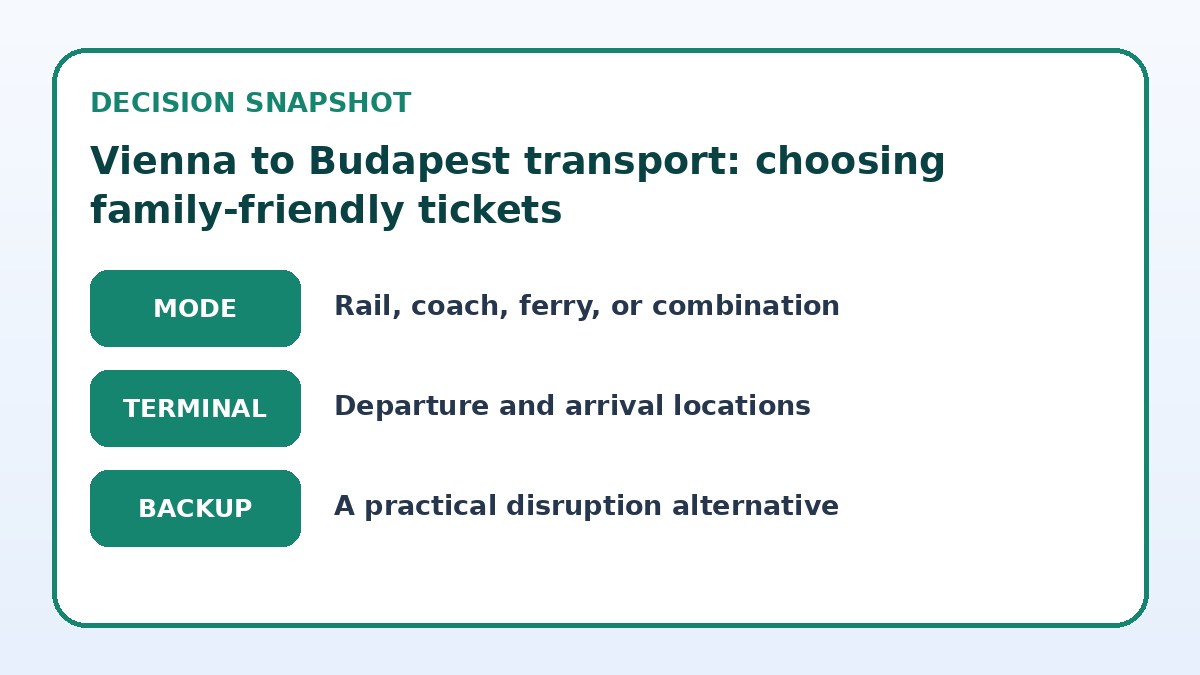
See current options before you compare the details
Availability and final conditions change. Open Trip.com now or keep reading for the practical comparison.
Types of tickets and what flexibility means
Ticket flexibility usually falls into a few clear categories: refundable, changeable with a fee, and non-changeable/non-refundable. Refundable tickets let you cancel for a partial or full refund; changeable tickets allow switching travel times or dates for a fee; non-changeable fares are fixed and often cheapest. Some providers also offer optional seat reservations or family-seat guarantees that are separate from the ticket’s refundability. For families, a changeable ticket plus reserved seats can be the most practical combination because it protects both schedule and comfort.
When comparing options, read the fine print on what counts as a permitted change. Some tickets allow only a change of time within the same day, others permit a date swap up to a set time before departure. Fees can be flat or a percentage of the fare, and a ‘voucher’ instead of a cash refund is common with some operators. Always confirm whether children travel free, require a discounted child ticket, or need their own reserved seat—policies vary and affect total cost and flexibility.
How to weigh flexibility against cost for families
Start by mapping how likely you are to change plans. If someone in your group has a medical appointment, unpredictable connections, or the trip follows external events, prioritize refundable or changeable fares. Families with very fixed stays—school holiday rentals already paid for, for example—can accept stricter tickets to save money. Also consider hidden costs: paying separately for seat reservations for each child, needing to buy a last-minute replacement ticket if you can’t change a non-refundable fare, or arranging childcare if travel shifts unexpectedly.
Another factor is travel rhythm: younger children need more predictable on-board space and quick access to toilets, so a guaranteed family seat reduces stress. If taking an overnight connection or late arrival is possible, flexible tickets let you switch to an earlier or later train without starting a new booking. Evaluate whether travel insurance or third-party protection (which may reimburse some non-refundable costs) makes more sense than buying the most flexible ticket available—insurance can be a cost-effective hedge for certain risks, but verify what it covers before relying on it.
| Approach | Best for | Tradeoff to check |
|---|---|---|
| Refundable or fully flexible ticket | Families who need maximum schedule freedom or have uncertain plans. | Higher upfront cost but minimal stress and easy cancellations or rebookings. |
| Changeable ticket with fees and seat reservation | Families wanting balance between lower fare and ability to adjust plans. | Moderate cost; changes possible but may incur fees and administrative steps. |
| Non-changeable, low-cost fare | Families with fixed travel dates and strong certainty about plans. | Lowest initial price but high risk of expensive last-minute rearrangements. |
| Separate tickets for each leg or provider | Flexible routing or mixing train/bus operators to match schedules. | May save money or improve timing but increases risk for missed connections. |
Ready to check the option that fits your plan?
Use your exact dates and traveler details so the provider page can show the current total and conditions.
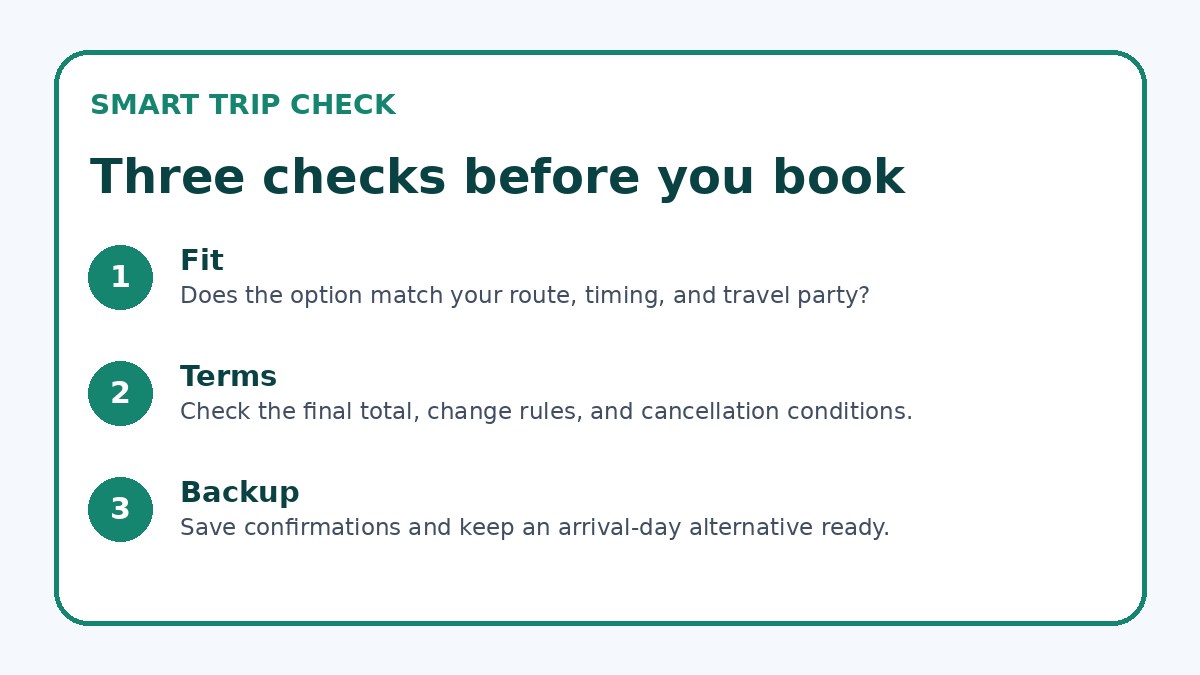
Practical booking steps and what to verify
When you reach the provider’s booking page, check these live details: exact change and cancellation fees, how refunds are processed (cash, card reversal, or voucher), whether seat reservations are included or optional, and whether children need their own ticket or qualify for a family fare. If you’re using a third-party site, always cross-check the operator’s official terms because the reseller may apply different rules or fees. Trip.com can be used as a comparison place to see options and availability, but verify penalties and seat allocation details on the train or bus operator’s final booking page before you pay.
Also confirm logistics that intersect with ticket flexibility: boarding procedures for families, platform information, luggage allowances and availability of accessible spaces or baby-changing facilities. For multi-leg journeys or connections, check if a single ticket covers the entire route or if you’ll need separate tickets for each leg—single-ticket itineraries can offer through-ticket protection for missed connections, whereas separate tickets may leave you responsible for missed transfers.
Before you book
- Confirm on the final booking page whether the ticket is refundable, changeable, or non-refundable and note exact deadlines and fees.
- Check whether advance seat reservations are included, optional, or required for families and add them for every passenger if needed.
- Verify child age rules and whether children need their own seat or qualify for a discounted or free ticket.
- If your route has connections, check whether one ticket covers all legs or if separate tickets are required for each operator.
- Compare the provider’s refund processing method (card reversal, cash, or voucher) and how long refunds take.
- Consider whether travel insurance or a third-party policy covers non-refundable train/bus tickets for reasons important to your family.
Making the decision on the day-to-day family tradeoffs
Match the ticket type to your family’s tolerance for stress. If you prefer spontaneity—want the freedom to extend a stay in Vienna or take a different time home—spend more on flexible fares and seat reservations. If your travel dates are locked by school breaks or pre-booked tours and you’ve confirmed no foreseeable changes, a stricter ticket plus careful contingency planning (travel insurance, clear cancellation clauses) could save money without adding hassle.
Think about secondary conveniences: the ability to change online vs. in person, availability of family or group discounts, and whether the carrier offers a mobile boarding pass that can be reissued easily. Finally, keep a short decision rule: if changing or cancelling would cost more than the flexibility premium you’d pay now, buy the cheaper ticket; if uncertainty would cause real disruption or significant extra expense, buy flexibility and sleep easier.
Frequently asked questions
Should I reserve seats for my whole family on Vienna–Budapest trains?
Reserving seats is recommended when traveling with children, especially during peak times or on popular departure times. A reserved seat keeps your group together and avoids the stress of standing or splitting across the carriage. Some operators include reservations with flexible fares, while others sell them separately; confirm whether the reservation fee is per person or per booking. If you don’t reserve, arrive early to secure adjacent seats, or choose a departure time with lower demand to reduce the risk of being separated.
If I buy a cheap, non-changeable ticket and need to change plans, what are my options?
If your original ticket is non-changeable, typical options include buying a new ticket at current rates, requesting a discretionary refund (rare) or checking whether your travel insurance covers cancellation for covered reasons. Some operators allow voluntary exchanges for a fee plus fare difference, but that depends on the ticket’s rules. Before you buy a non-changeable fare, estimate the maximum potential cost of a forced change and compare it to the premium you’d pay for a changeable ticket.
How do I handle family travel when the journey includes multiple operators or a bus leg?
When an itinerary involves more than one operator, try to buy a single through-ticket that explicitly covers missed connections; if that’s not available, you may need separate tickets and should plan longer transfer times. Separate tickets typically place the risk of missed connections on you, so allow extra buffer time, especially with children. Verify each operator’s baggage and seat policies and whether a combined booking offers better flexibility. Always check the final policy terms on each operator’s booking page before completing payment.
Final planning note
Choosing the right ticket for a family trip between Vienna and Budapest comes down to balancing cost against the real risk of schedule changes and on-board comfort. If your plans are firm and you want to minimize upfront spend, non-changeable fares can work—just accept the potential downstream costs. If uncertainty, children's needs, or tight connection windows matter, favor changeable or refundable tickets and reserve seats for everyone. Before you click pay, use the checklist above, confirm live terms on the provider’s final booking page, and consider whether a targeted travel insurance policy gives better value than an expensive flexible fare.
Continue planning
Check current options and final conditions
Use the provider page to confirm live availability, the final total, cancellation terms, and every condition that matters to your trip.
This evergreen planning guide was created with AI-assisted drafting and a structured quality review. It does not display live prices, schedules, availability, visa guidance, or provider rankings. Verify current details before booking. Some links are affiliate links; we may earn a commission at no additional cost to you.