Practical answer first: pick the neighbourhood that supports the kind of days you want together, then match the room to privacy and comfort needs. For couples, that often means prioritising either proximity to sights, a beach or harbour for romantic walks, or a quieter hillside or resort setting with in-room relaxation features. Jeju’s spread makes a single “best” spot impossible, but you can narrow options quickly by deciding: do you want to spend mornings wandering sites and afternoons driving, or do you want minimal transit and more in-room time? Once you choose the area, compare hotels for room size, view, bed configuration, sound insulation and in-room extras (bath, balcony, soaking tub, kitchenette) and check cancellation and change terms before booking. Verify the hotel’s stated location, room photos, and any listed amenities on the provider’s final booking page.

Check live stays in the areas that fit
Use your dates and party size to compare current rooms after you narrow the neighborhood fit.
How to pick the right neighbourhood for your couple trip
Start by listing the two or three things you most want to do together — for example, coastal walks, a sunrise hike, cafes and galleries, or long drives to volcanic sights. If most activities cluster on one side of the island, choose a neighbourhood that reduces daily transfer time. Staying in Seogwipo (south) is convenient for southern coast trails and waterfalls; Jeju City or near the airport is useful for short stays and access to northern attractions. Jeju’s east side suits couples who want quieter roads and seaside drives.
Also consider the rhythm you want each day. Couples who want late starts and slow hotel mornings should prioritise quieter districts with fewer late-night services; those who want nightlife or dinner options on foot should pick busier centres near restaurants and bars. Think about transport: if you’ll rent a car, parking and road access matter; if you rely on public transport, pick a district with good bus links or proximity to main transfer points.
Choose an area-selection strategy
| Area approach | Best for | Tradeoff to check |
|---|---|---|
| Base in a major town (Jeju City/Seogwipo) | Couples wanting restaurants, nightlife and short errands | More activity and noise; less secluded atmosphere for privacy |
| Stay near the airport or central north | Short trips and minimal transit after arrival/departure | Less scenic seaside walking and fewer evening attractions within easy reach |
| Choose a beachside or east-coast rental | Couples prioritising sunrise views, quiet seaside time and scenic drives | Longer daily distances to southern and western attractions |
| Pick a resort hillside or rural guesthouse | Privacy, in-room relaxation features and slower rhythms | Fewer nearby dining options and more careful transport planning required |
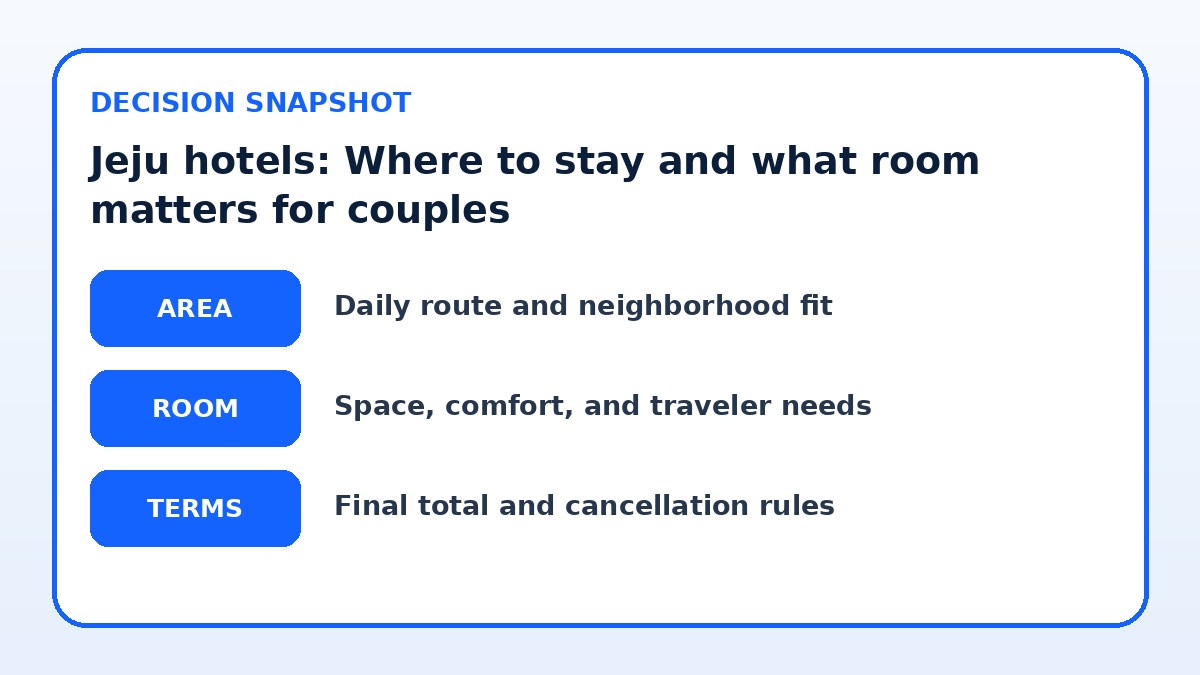
Daily-route friction: how neighbourhood choice affects your days
Estimate average transfer time from your hotel to your top three activities and imagine doing those trips twice a day. Even 20–30 minutes of extra driving each way accumulates into a lot of time spent on the road, which changes how much of the day you actually spend together exploring. Prioritise reducing transfer time for shorter trips (2–4 nights) to keep the pace relaxed. For longer stays, you might accept longer drives on some days to reach more remote attractions while returning to a restful base.
Also map typical evening plans. If you want to stroll to dinner after a full day, choose a hotel in a lively town or near a promenade; if you prefer quiet nights in, pick a place with room features that support that plan (in-room dining, comfortable sofa, blackout curtains). Consider practical friction too: availability of nearby convenience stores, ease of refuelling for a rental car, and evening public transport frequency — all small frictions shape the couple experience.
Now compare like with like
Keep the same dates, guests, room needs, and cancellation preferences while you compare the final choices.
Room and party needs: what to check before you book
For couples, room layout choices matter more than the hotel brand. Start by confirming bed configuration — double, queen, king — and whether the room offers a sofa bed or separate living area if you want space to read or work without disturbing your partner. Look for room photos that show actual proportions; small pictures or staged shots can mask tiny rooms. Prioritise noise control: ask about building orientation, floor level, and whether windows face a road, courtyard, or open sea, since sound makes or breaks restful nights.
Next, decide which in-room features are non-negotiable: a soaking tub or deep bath for a romantic soak, a balcony with sea views for sunrise coffee, good blackout curtains for late sleepers, or a minibar and kettle for evenings in. Also confirm heating and cooling controls, Wi‑Fi reliability if you plan to stream, and whether housekeeping frequency is negotiable for privacy. On-group practicalities, check whether the room has sufficient luggage space and safe storage for valuables.

Hotel booking check before payment
- List your top three shared priorities (sightseeing, beach time, dining out, or relaxation) and rank them to decide the neighbourhood focus.
- Map transfer times from shortlisted neighbourhoods to your top three activities to estimate daily driving or bus time.
- Confirm bed type, room layout, view orientation (road/sea/courtyard), and noise insulation on the hotel’s final booking page.
- Request or confirm any in-room features you need (soaking tub, balcony, kitchenette, blackout curtains) and note how the hotel responds.
- Compare cancellation and change terms across your shortlisted hotels and save screenshots or confirmations of policies shown at checkout.
- Verify practical amenities: parking availability, breakfast hours, late check-in options, and proximity to evening dining or convenience stores.
Final booking terms and what to verify on the hotel page
Before you click reserve, review and compare the hotel’s stated cancellation policy, whether changes are permitted, and any deposit requirements. Because policies and fees change, verify them on the final booking page — don’t rely on third‑party summaries. Also confirm whether taxes, resort fees, or parking charges are shown at checkout, and check the exact bed type and smoking/non-smoking status for the room you selected.
Double-check the specifics that most affect a couples’ stay: whether breakfast is included and its serving times, whether the property lists room cleaning frequency and whether special requests (late check-in, honeymoon arrangement, crib) are accepted and where to confirm them. If you use a booking platform to compare options, you can mention Trip.com once as a place to compare live availability and policies, but always verify specifics on the hotel’s direct page or final booking confirmation.
Hotel Guide questions travelers ask
Which Jeju neighbourhood is best if we want long romantic walks and quiet evenings?
If your priority is long seaside walks and quiet evenings, lean toward beachside or east-coast neighbourhoods and smaller bays outside the main towns. These areas typically have less night traffic and more open coastline for sunrise or sunset walks, which helps build a relaxed couple rhythm. The tradeoff is fewer restaurants or late-night options within walking distance, so plan at least some evening meals at the hotel or reserve a table in advance if a specific restaurant is important.
Should we prioritise a hotel room with a bathtub or a better location for sightseeing?
Decide by trip rhythm: for shorter stays focused on sightseeing, a central location that reduces daily travel will usually give you more time together at attractions. For a honeymoon-style or relaxation-focused visit, an in-room feature like a bathtub, balcony or private sauna can transform downtime into a main activity. Weigh how many days you’ll spend in the room versus out; if the room will be the emotional centre of the trip, prioritise comfort features over proximity to every attraction.
How can we reduce the risk of noisy or cramped rooms when booking in Jeju?
Look for recent guest photos and explicit information about room size, floor level and whether windows face a road or open space. When details are vague, message the property directly to ask about sound insulation and typical noise sources. Choose rooms on higher floors away from street-facing sides when possible, and request a quiet room or a room with a courtyard/sea orientation. Always confirm the exact room type and bed configuration at checkout and keep a screenshot of the booking page showing those specifics.
Final decision note
Choosing where to stay in Jeju as a couple comes down to a clear tradeoff: neighbourhood equals how you will spend your days together; room equals how you will spend your private hours. Start by matching the island area to your activity map, then shortlist hotels that offer the room features you care about most. Before booking, verify bed type, noise orientation, required in-room amenities and the exact cancellation and change terms on the final booking page. With those checks done, you can shortlist confidently and open live inventory to compare options and secure the room that fits your shared pace and priorities.
Continue planning
Check current options and final conditions
Use the provider page to confirm live availability, the final total, cancellation terms, and every condition that matters to your trip.
This evergreen planning guide was created with AI-assisted drafting and a structured quality review. It does not display live prices, schedules, availability, visa guidance, or provider rankings. Verify current details before booking. Some links are affiliate links; we may earn a commission at no additional cost to you.