If you’re a solo traveler weighing whether to rent a car in Las Vegas, the practical question is not just whether you can drive, but whether the insurance language makes that drive sensible. Driving unlocks day trips to Red Rock, Hoover Dam viewpoints, and flexible arrival times, but rental contracts use wording that affects liability, loss, and roadside assistance in ways most people miss until an incident occurs. Read the basic insurance terms before you book, because the final booking page or rental agreement will tell you whether a coverage line truly waives your liability, reimburses the rental company, or only covers collision damage to the vehicle. This article gives a clear go/no-go decision, explains key policy phrases, compares four mobility approaches, and offers a non-driving backup plan so you can pick the right option for your Las Vegas itinerary.
Decide whether driving genuinely improves your Las Vegas trip
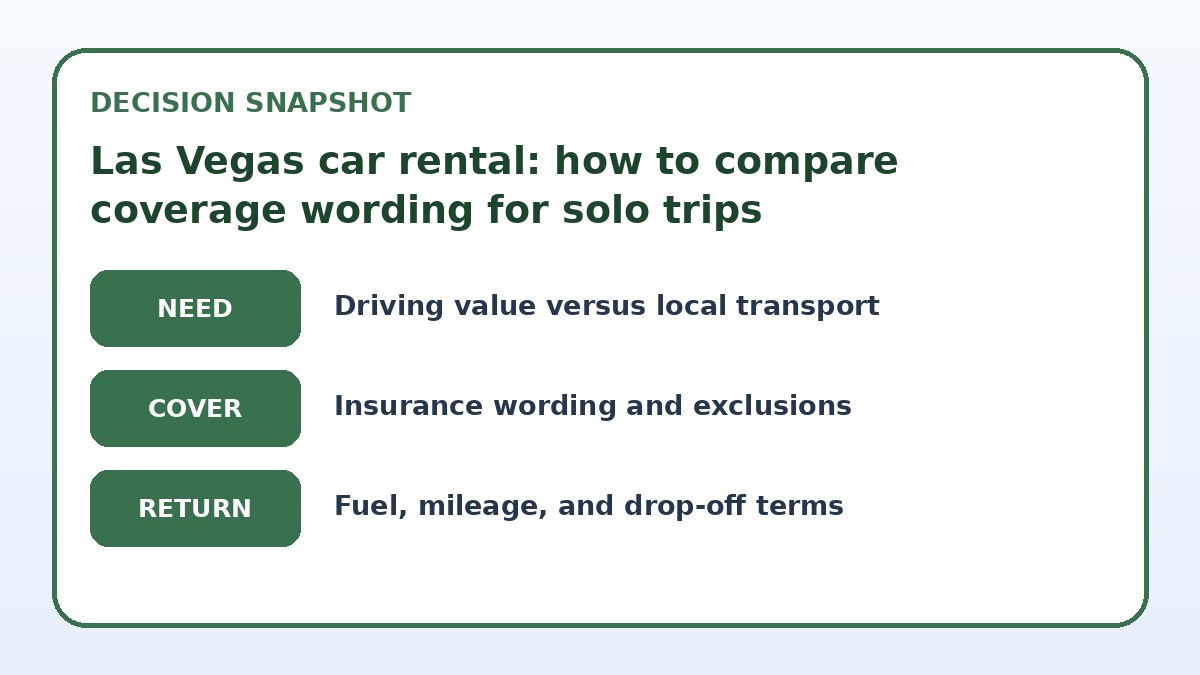
Start by matching your itinerary to what a car actually buys you. If your plan is to stay mostly on the Strip, visit casinos, shows, or museums, driving offers little advantage: parking takes time and fees add up. If you intend day trips beyond the urban core—to Red Rock Canyon, Valley of Fire, or the Hoover Dam area—a car gives you schedule freedom and access to scenic pullouts and trailheads that transit or group tours might not reach. Consider the distance, how often you’ll need the car, and whether driving alone will make you comfortable dealing with desert roads at dusk or in heavy traffic.
Next weigh convenience against costs and risk. Solo drivers bear all responsibility for navigation, fuel, parking, and any damage or incidents that insurance wording might expose them to. If your trip includes long drives or remote routes, confirm whether the rental contract permits those routes and whether roadside assistance is included or limited. Many solo travelers find a hybrid approach helpful: rent for a single day to do an out-of-town loop, then return the car and use alternatives for city time. This reduces exposure to extensive coverage gaps while still getting the mobility you need.
Decide whether driving earns its place
| Mobility strategy | Best for | Cost or friction to check |
|---|---|---|
| Full-day personal rental with CDW | Solo travelers wanting a private schedule for day trips | Higher responsibility for reading exclusions, potential large security holds, and possible deductibles despite CDW. |
| Short hourly/daily shared rental | Quick errands or single excursion without long-term commitment | Limited vehicle choice and possible stricter mileage or area restrictions in the policy wording. |
| Rideshare and taxis | City-only travel with minimal insurance complexity | Can be expensive for long day trips and offers less flexibility for remote sites. |
| Guided day tours or private transfers | Stress-free access to major attractions without handling vehicle insurance | Fixed schedules and less spontaneous flexibility compared with driving yourself. |
Check live rental choices only after the route test
Use the exact driver, dates, pickup point, and return plan to compare current conditions.
How to read insurance wording: the lines that change your liability
Insurance sections use a few recurring phrases that determine who pays what. Familiarize yourself with Collision Damage Waiver (CDW) or Loss Damage Waiver (LDW), which often limits or eliminates your financial responsibility for damage to the rental vehicle if accepted. However, careful reading is essential: some waivers exclude loss from negligence, unauthorized drivers, off-road use, or driving under the influence. Look for precise language about whether the waiver is optional, what deductible remains, and whether it covers replacement, diminished value, or administrative fees charged by the rental company.
Also verify liability coverage and third-party collision wording for bodily injury and property damage to others. Rental agreements sometimes include supplemental liability insurance (SLI) or offer it as an add-on; the wording will show whether it raises the provider’s limit and whether it sits on top of or instead of your personal auto policy. Read exclusions closely: many contracts carve out incidents when you’re using the vehicle for commercial purposes, towing, or driving in restricted areas. On the final booking page and at the counter, confirm exact deductible amounts, whether roadside assistance is a separate charge, and whether the rental company requires a credit card hold or deposit.
Compare the full rental conditions
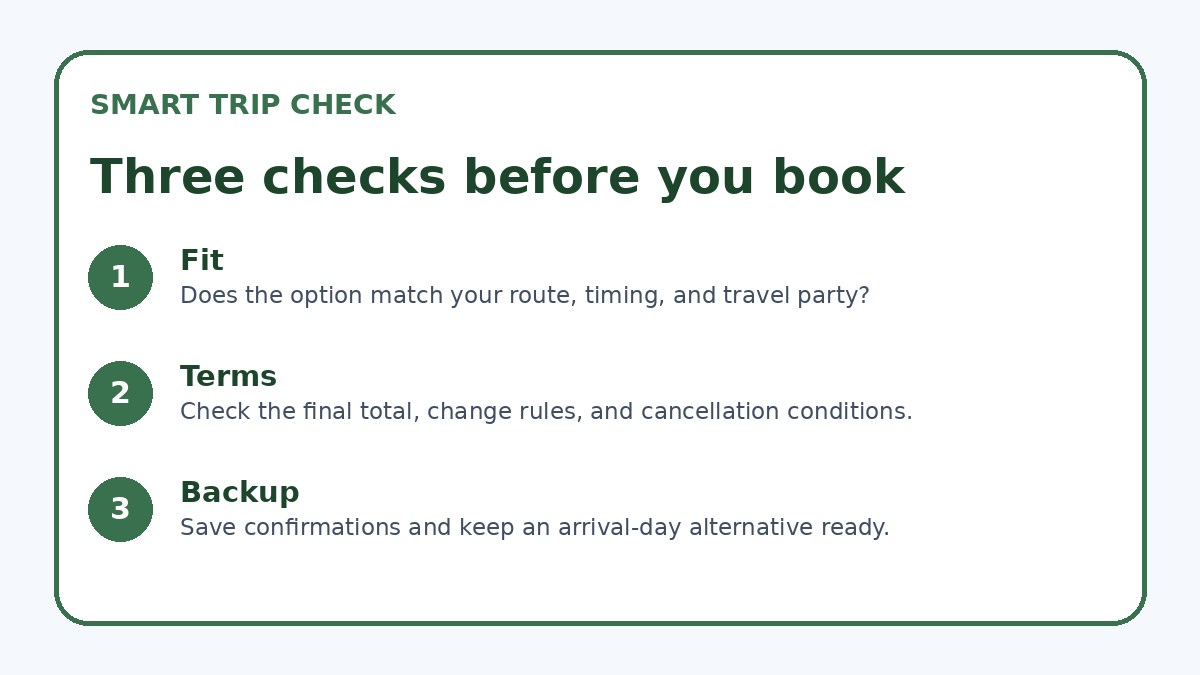
Confirm insurance wording, exclusions, deposit, fuel, mileage, and return terms on the final page.
Pickup and return friction: what wording means at the counter
Pickup and return are the moments when insurance wording becomes practical. Expect to present the same driver’s license and payment method listed on the booking, and watch for wording that requires a credit card pre-authorization for a security hold. The contract will state the hold amount and whether the company can charge for damage discovered after you return the car; some providers keep the right to bill your card later for repair costs, loss-of-use charges, or administrative fees. Solo travelers should budget for these holds and understand how long it takes for the hold to release after return.
Ask the counter agent to point you to the exact clauses about roadside assistance and what counts as an excluded incident. If the wording requires using the rental company’s recovery services after a breakdown to maintain coverage, write down that requirement or photograph the relevant page. When returning at night or offsite, verify any procedures for recording the car’s condition—take comprehensive photos of the exterior and interior with timestamps if possible, and get a written or digital receipt that notes fuel level and mileage to avoid later disputes tied to the insurance wording.
Car rental terms to verify
- Read the rental agreement’s CDW/LDW language and note any stated exclusions like off-road use or drivers not listed on the contract.
- Confirm deductible amount, whether damage waivers eliminate it, and whether the company can bill you later for loss-of-use or administrative fees.
- Verify liability coverage limits and whether supplemental liability is included or sold separately; compare those limits to your personal auto policy.
- Ask the counter how much the security hold will be, whether it’s a pre-authorization or charge, and how long it typically takes to release after return.
- Document the vehicle condition at pickup and return with time-stamped photos and obtain a written or digital return receipt noting fuel level and mileage.
- If you plan remote driving, confirm roadside assistance wording and any geographic or usage exclusions that could void coverage on certain roads.
Non-driving fallback: effective alternatives for solo travelers
If insurance wording or counter requirements make you hesitate, several reliable non-driving options keep your itinerary intact. Rideshare apps cover most intra-city travel with door-to-door convenience and no rental contract worries; for day trips, private transfers or shuttle services offer predictable routes and prices. Guided day tours can reach Red Rock, Valley of Fire, and Hoover Dam without you needing to navigate or worry about rental insurance wording. Compare tour itineraries for pickup points and departure times to ensure they fit your schedule.
A hybrid plan is often the least risky: book tours for distant sites and use rideshares, public buses, or monorail services for the Strip and downtown. When you do need a car for a specific excursion, short-term hourly or daily rentals from shared-mobility platforms can sometimes offer simpler insurance terms—though always read their policy wording carefully. If you want one place to check multiple providers before booking, Trip.com can be used as an option to compare current availability and conditions, but verify every coverage detail on the provider’s own final booking page.
Car Rental & Road Trip questions travelers ask
Does a rental company’s waiver always protect me from paying for damage?
No. A waiver like CDW or LDW often reduces or removes your financial responsibility for damage to the rental vehicle, but waivers commonly include exclusions. For example, damage from unauthorized drivers, negligence, driving under the influence, or off-road use may be excluded. The rental agreement will also state whether a deductible applies and whether the waiver covers loss-of-use or administrative fees the company might charge. Always read the exact waiver wording on the final booking page and confirm at pickup to understand what incidents are covered.
Can my personal auto insurance or credit card cover a Las Vegas rental?
Possibly, but it depends on the policy wording. Many personal auto insurers extend coverage to rental vehicles, and some credit cards offer secondary or primary rental coverage if you pay for the rental with the card. Important details to verify include whether the coverage applies in the U.S., whether it is primary or secondary, what exclusions exist (for example, business use or certain vehicle classes), and how deductible treatment works. Check your insurance policy’s rental-vehicle section and the credit card’s benefits guide, and confirm any limits on claim reporting.
What should I do at pickup and return to avoid disputes later?
At pickup, read the insurance and damage clauses aloud with the agent, note any exceptions, and photograph the vehicle’s exterior and interior from several angles with timestamps. Keep a copy or photo of the signed rental agreement and any verbal confirmations. At return, refuel if required by the contract, have the agent inspect the car in your presence if possible, and get a written or digital return receipt showing mileage and fuel level. These steps make it much easier to contest unexpected charges that reference the rental agreement’s wording.
Final decision note
For solo travelers in Las Vegas, the smart decision is based less on whether driving is possible and more on what the rental insurance wording actually obliges you to pay. If your plans focus on the Strip, rideshares, public transit, and tours often save time and reduce insurance exposure. If you want one or two day trips into surrounding parks, a short rental can be the best option—provided you confirm CDW/LDW terms, deductibles, liability limits, and any geographic exclusions on the final booking page. Use the checklist to verify the key lines at booking and pickup, carry evidence of the car’s condition, and choose a hybrid approach if you want flexibility without unnecessary risk.
Continue planning
Check current options and final conditions
Use the provider page to confirm live availability, the final total, cancellation terms, and every condition that matters to your trip.
This evergreen planning guide was created with AI-assisted drafting and a structured quality review. It does not display live prices, schedules, availability, visa guidance, or provider rankings. Verify current details before booking. Some links are affiliate links; we may earn a commission at no additional cost to you.