If you’re flying from Seoul to Bali alone, the most practical first step is to decide how much flexibility you need — and then book a fare that matches. For many solo travelers, the choice comes down to three priorities: avoiding large change fees, securing a refundable option for sudden plans, or saving on a restricted ticket while accepting tighter rules. Read the airline’s full fare rules, note what qualifies as a free change (schedule change, illness, airline waiver), and check whether taxes and fare differences are refundable or credited. When an airline’s page is ambiguous, use the booking page or contact customer service to confirm exactly how credits, reissue fees, and vouchers work. Also compare direct versus connecting itineraries: each can carry different carrier change rules and partner penalties.
See current options before you compare the details
Availability and final conditions change. Open Trip.com now or keep reading for the practical comparison.
Understand the core elements of change and cancellation rules
Airlines’ policies typically break down into several components: whether the fare is refundable, whether changes are allowed and at what fee, who pays any fare difference, and how taxes and surcharges are handled. For Seoul to Bali travel that may cross carriers or include connections, the governing rule is usually the issuing carrier’s fare conditions or the operating carrier’s policy for each flight segment. Look for explicit language on involuntary changes (like schedule changes or cancellations made by the airline), voluntary changes initiated by you, and force majeure clauses that cover government action or health emergencies.
Also pay attention to the timing rules: when changes are allowed without penalty, how many times you can reissue, and cut-off times before departure. Some fares permit same-day changes but charge a higher fare difference, while others allow free changes only within a 24-hour booking window. For cancellations, distinguish between full refunds, travel credit/vouchers, and unpaid taxes returned — each outcome affects how you can reuse value for a future Seoul to Bali trip.
How to compare direct and connecting itineraries for flexibility
Direct flights are usually simpler: one carrier controls the ticket and one set of rules applies. That can make changes and refunds easier to manage when you’re traveling solo and prefer fewer points-of-contact. However, direct options may have fewer fare classes or more restrictive lowest fares. Connecting itineraries can be cheaper or offer more schedule choices, but they often involve separate operating carriers and interline rules that complicate changes. If a connection is on a separate ticket, you risk losing protections like rebooking assistance if you miss a connection due to a delay on the first carrier.
When comparing itineraries, check which airline issues the ticket and whether the connection is on a single ticket or multiple tickets. A single-ticket connecting itinerary generally provides better protection: the issuing carrier must rebook you if their schedule disrupts connections on partner segments. But partners may still impose their own reissue fees. If avoiding complexity is a priority, pay a small premium for a single-carrier or fully protected partnership itinerary; if saving money matters more, be prepared to handle separate changes for each ticketed leg.
| Approach | Best for | Tradeoff to check |
|---|---|---|
| Buy refundable or fully flexible fare | Travelers who need the ability to cancel and get a cash refund quickly | Higher upfront cost but minimal hassle if plans change |
| Purchase a flexible fare with free changes but no refund | Solo travelers who may reschedule but prefer credit over cash | Lower cost than refundable fares but retains restrictions on refunds |
| Take the cheapest restricted fare | Those confident their travel dates are final and prioritizing savings | Change fees and fare differences can make modifications costly |
| Book connecting segments on separate tickets | Price-driven travelers who can manage separate carrier rules | Greater risk and complexity if schedules shift or connections fail |
Ready to check the option that fits your plan?
Use your exact dates and traveler details so the provider page can show the current total and conditions.
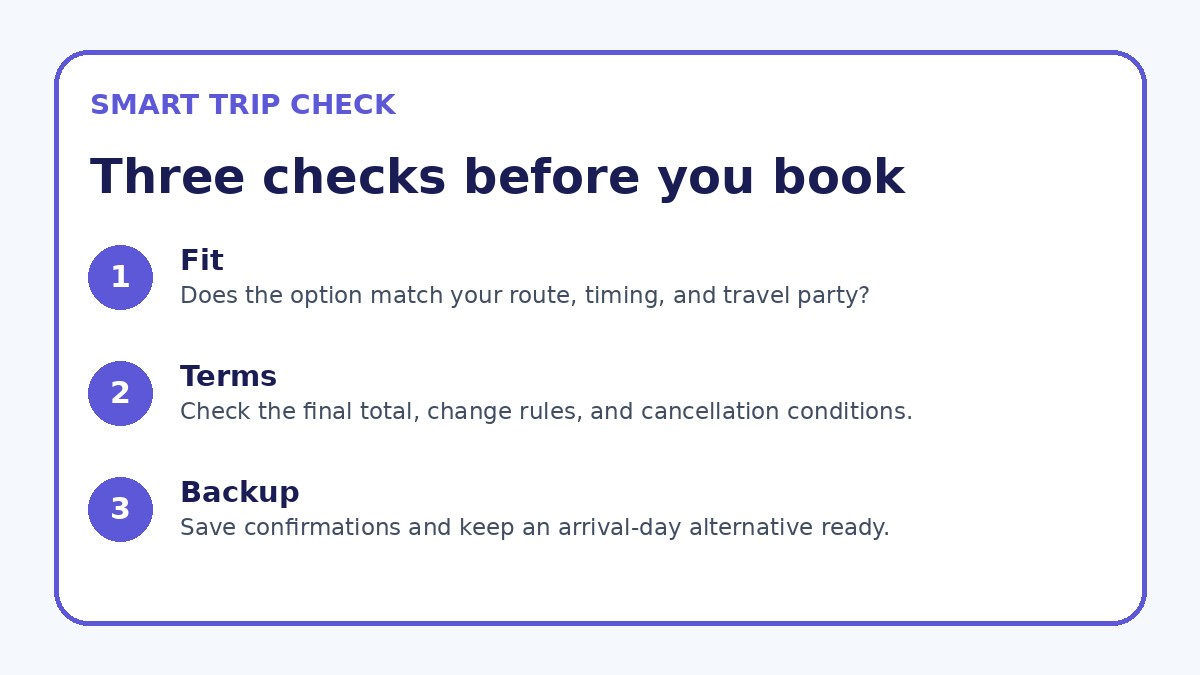
Decision criteria for solo travelers: flexibility, cost, and peace of mind
Ask yourself three questions before picking a fare: how likely are your plans to change, how much are you willing to spend for flexibility, and how comfortable are you handling ticketing issues solo? If you expect schedule fluidity — work changes, family matters, or uncertain onward plans in Bali — prioritize refundable or flexible fares even if the upfront cost is higher. For solo travelers who value peace of mind, a fare with free change or generous credit rules can save hours of customer-service calls and emotional stress if plans shift.
If you’re trying to minimize cost and can tolerate risk, choose a restricted fare with a clear understanding of reissue fees and fare differences. Make contingency plans: buy travel insurance that covers cancellations for the reasons you care about, or leave room in your budget for a potential change fee. Also factor in the connection complexity; solo travelers who dislike managing multiple rebookings should avoid itineraries that require separate tickets or different issuing carriers unless they are confident in handling partner policies.
Before you book
- Open the fare rules link on the booking page and save a screenshot or PDF showing change and cancellation language.
- Confirm whether the ticket is refundable, refundable to original form of payment, or refundable only as credit/voucher.
- Note which carrier issued the ticket and whether all segments are on a single ticket or multiple tickets.
- Ask the airline or agent to confirm in writing any waivers, 24-hour risk-free windows, or temporary change policies.
- Compare the total cost of a flexible refund option versus potential change fees plus fare differences for your likely scenarios.
- Buy travel insurance that covers your specific cancellation reasons or ensure the fare rules cover those circumstances.
Practical steps to verify rules before and after booking
When you’re ready to book, don’t rely solely on summary labels like “flexible” or “standard.” Expand the fare rules link on the booking page and copy the exact text about change and cancellation fees, refundability, and reissue procedures. If the booking engine doesn’t show full fare conditions, call the airline or your booking agent and ask them to email the fare rule text. For codeshare flights, confirm whether the marketing carrier or the operating carrier controls reissues and refunds.
After booking, save a PDF of the confirmation and the fare rule text, and note any timestamps for waiver eligibility (for example, 24-hour risk-free windows some carriers offer). If you need to change or cancel, use the airline’s official channels first and request a reference number for any waiver or exception. If an airline page is unclear about a refund or the value of a voucher, verify on the provider’s final booking or manage-booking page — that page is where the carrier’s terms and any fees shown to you are binding.
Frequently asked questions
If I book the cheapest fare for Seoul to Bali, can I always pay later to make it flexible?
Not always. Many low-cost or deeply restricted fares block changes or charge a reissue fee plus any fare difference. If the fare allows changes, you’ll usually pay the published change fee plus any increase in fare. Some airlines sell an add-on flexibility product at booking that allows changes; others don’t. Check the fare rules to see if changes are permitted and whether a paid upgrade to a flexible fare is available. On the provider’s final booking page, verify the exact fee amounts and whether taxes are refundable.
Who decides which carrier’s rules apply when I have a connection on a partner airline?
Generally the issuing carrier’s fare rules govern the ticket, but each operating carrier may have its own conditions for flights they operate. For example, if one airline sells the ticket but a partner operates a segment, the ticket will list the governing fare rules and who handles reissues. If you need to change an operating-carrier segment, the partner’s rules may still apply and could require coordination. Before booking, confirm whether the itinerary is on one ticket and ask which carrier you must contact to change or cancel any segment.
If an airline changes a Seoul to Bali flight schedule, what rights do I have to change or get a refund?
Airlines commonly offer rebooking or refunds for significant schedule changes or cancellations they cause, but definitions of “significant” vary. If the carrier changes departure or arrival times beyond their published threshold, you should be entitled to rebook on equivalent flights or request a refund according to that airline’s policy. Always obtain written confirmation of the schedule change and the remedy offered. Verify the remedy on the carrier’s manage-booking page and keep any reference numbers; if the change affects connections booked on the same ticket, the carrier typically assists with alternatives.
Final planning note
Solo travelers booking Seoul to Bali flights should balance flexibility against cost in a way that matches their tolerance for schedule risk. Start by deciding whether you need refundable cash, reusable travel credit, or are comfortable with a restricted fare and potential change fees. Verify the issuing carrier, read and save the exact fare rules shown on the booking page, and confirm how changes are handled for connecting or codeshare segments. When in doubt, pay a little more for clarity and single-carrier protection — that simplicity can be worth the premium if you’d rather avoid managing partner policies while traveling alone.
Continue planning
Check current options and final conditions
Use the provider page to confirm live availability, the final total, cancellation terms, and every condition that matters to your trip.
This evergreen planning guide was created with AI-assisted drafting and a structured quality review. It does not display live prices, schedules, availability, visa guidance, or provider rankings. Verify current details before booking. Some links are affiliate links; we may earn a commission at no additional cost to you.