If you’re traveling to Sydney with extra luggage, the practical move is to set price alerts but treat them as data — not a prompt to book immediately. Use alerts to identify a realistic fare or room range, then compare those alerts against luggage policies, baggage allowances, and true door-to-door costs (airport transfer size limits, baggage fees, tram access). Keep a short checklist for any alert that looks attractive: carrier baggage rules, refundable vs non-refundable fare terms, hotel storage options, and the size/weight limits for airport shuttles or trains. This approach stops impulse bookings that look cheap until you add the real-world extras that matter when you travel with oversized or multiple bags.
See current options before you compare the details
Availability and final conditions change. Open Trip.com now or keep reading for the practical comparison.
How to set useful price alerts without encouraging impulse buys
Create alerts across a few trusted platforms and stagger their thresholds: a conservative alert near your target budget, a wider alert that flags bigger swings, and a ‘watch only’ alert that emails you less frequently. Avoid alerts that push immediate booking notifications (flash notifications, push messages) unless you’ve decided in advance what baggage terms would make that fare acceptable. Use email digests or a dedicated folder so alerts don’t create a reflex to click and buy. Treat alerts like a weather forecast for prices — useful for planning, not for last-second panic decisions.
When an alert hits, pause and run a quick checklist rather than booking. Open the airline or hotel’s official page and verify baggage policies, refundability, and seat/room upgrade options. If the alert or aggregator links to a third-party reseller, confirm the final baggage allowance and change/cancellation policy on the provider’s booking page before entering payment details. For clarity, record the alert’s price, date, and provider in a simple spreadsheet; that makes it easier to spot genuine deals versus isolated drops or promotional mistakes.
Compare true trip costs when you’re bringing extra or oversized luggage
A low headline fare or room rate can disappear once baggage fees, transfers, and handling charges are added. Make a habit of calculating the total door-to-door expense: include checked-bag fees per bag and per sector, charges for oversized items, and costs for pre-booking extra baggage. Also factor in how you’ll travel from the airport — taxis and private shuttles may have carry limits or surcharges for large luggage, while public trains and buses may be cheap but less convenient. If you need special handling (bike boxes, surfboards, large suitcases), check the carrier’s published policies and note any cargo or advance-notification requirements.
Hotels and short-term rentals can vary widely on luggage assistance and storage. A slightly more expensive hotel that offers complimentary luggage storage, carts or porter service and an accessible lift can be worth the premium if it removes logistical headaches. When comparing stays, verify on the property’s booking page whether there are narrow staircases, street-level access, or restrictions for oversized vehicles making drop-offs. If you rely on rideshare, check typical pickup spots in the neighborhood for space to load multiple suitcases safely.
| Approach | Best for | Tradeoff to check |
|---|---|---|
| Book immediately when alert hits | Travelers who must secure fixed dates and already know baggage rules. | You may miss a lower nominal fare later and risk paying non-refundable penalties if plans change. |
| Wait for a pattern of consistent alerts | Flexible travelers willing to watch markets and adjust dates or times. | Requires time monitoring and may miss small windows if you wait for perfect pricing. |
| Set strict buy thresholds including baggage costs | Budget-conscious travelers who want a disciplined decision-making rule. | May reject offers that are inconvenient but acceptable, losing spontaneous savings. |
| Prefer refundable/flexible fares and book early | Travelers who prioritize flexibility with heavy or oversized luggage. | Higher upfront cost but lower risk of surprise fees or forced rebooking later. |
Ready to check the option that fits your plan?
Use your exact dates and traveler details so the provider page can show the current total and conditions.
Timing and flexibility: how to use alerts to your advantage
Flexibility in travel dates and times is the single most powerful tool when using alerts. If you can shift arrival or departure by a day or fly at off-peak hours, alerts can show whether moving dates removes baggage surcharges tied to specific flights. Set alerts for both exact dates and a +/- 1–2 day window to see variations. For hotels, set alerts for similar neighborhoods and compare room types that allow more space for bags, such as suites or rooms with entry foyers, which can make handling baggage easier despite higher nightly rates.
Use alerts to learn patterns rather than chase every dip. After a few alerts, you’ll see whether prices are volatile or stable for your route and travel period. That knowledge lets you set a realistic personal buy threshold that already accounts for baggage costs and transfers. If you need to lock a plan, prefer refundable or flexible tariffs that permit changes; verify change fees and baggage rebooking policies on the carrier’s official charging page so you aren’t surprised by small print.
Before you book
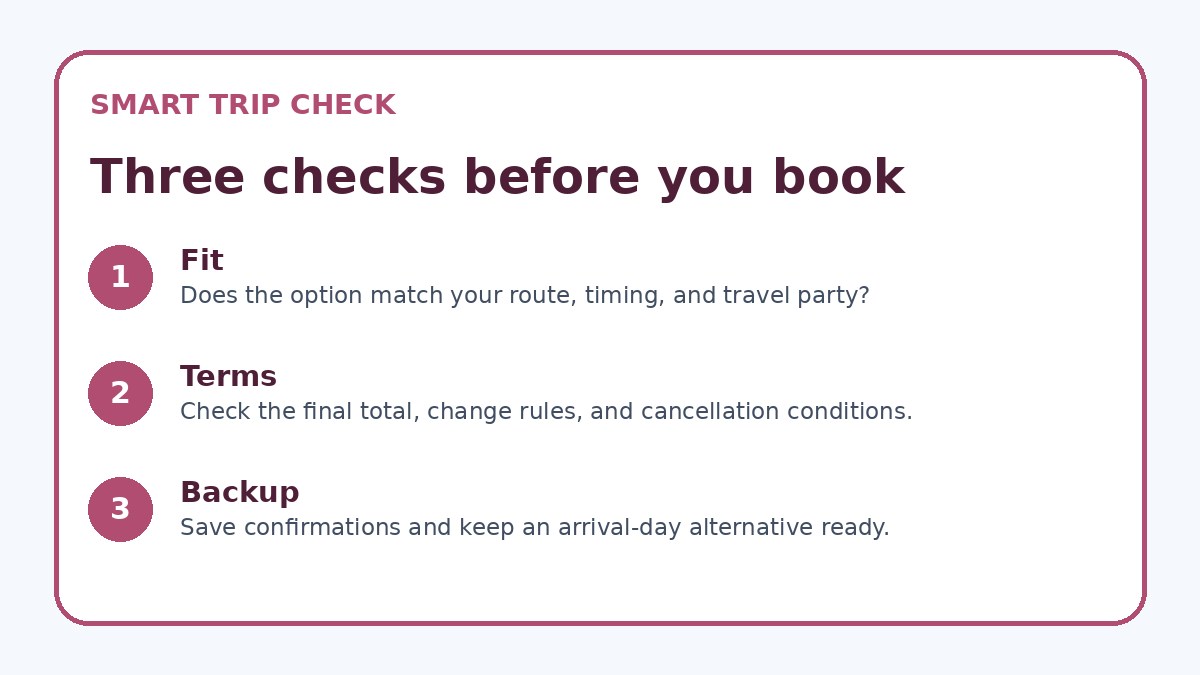
- Open the carrier’s official booking page immediately after an alert and confirm baggage allowances and fees for every flight segment.
- Calculate total door-to-door cost including airport transfer, porter fees, and any hotel luggage storage charges.
- Check vehicle and terminal pickup restrictions for chosen transfer options to ensure they can handle oversized luggage.
- Compare refundable vs non-refundable fare terms and note change fees and baggage rebooking policies on the provider’s final page.
- Contact your hotel to confirm accessible delivery/drop-off points, lift access, and luggage storage policies before booking.
- Record alert details (date, provider, headline price) and your maximum acceptable total cost including baggage to avoid impulse purchases.
Practical steps for the week before travel and at booking time
Seven to fourteen days out, re-check alerts but focus on logistics over pennies. Confirm baggage measurements and weight limits for each flight segment, including local or regional connections, and check airport transfer options capable of handling your luggage volume. If you’ve used an aggregator to find a fare, open the airline’s booking page to confirm seat selection and baggage allowances; if adding paid baggage later, compare the airline’s pre-book fee versus baggage at the counter. Also reach out to your accommodation to confirm early check-in or luggage hold policies when arrival times are odd.
At the moment of booking, pause to verify every line-item that affects your travel with extra luggage: baggage fare type and price, seat selection for ease of boarding, transfer vehicle size, and property access notes. If you’re booking through a third party, read the final page carefully to confirm who handles baggage disputes or refunds. If you prefer an aggregated view before purchase, Trip.com can be used as one of several places to compare availability and conditions, but always verify the baggage and change rules on the provider’s official page before paying.
Frequently asked questions
How many price alerts should I set for a Sydney trip with extra luggage?
Set three complementary alerts: one narrow alert at your target total cost (including estimated baggage fees), one wider alert to catch larger market swings, and one low-priority digest that sends summaries rather than instant push notifications. This mix gives you quick warnings, pattern recognition, and space to make a rational choice instead of impulsive buying. Make sure at least one alert is linked to the airline’s or hotel’s official page so you can easily verify baggage rules and change policies when an alert triggers.
If an alert shows a great price, what immediate checks should I do for luggage compatibility?
First, open the official booking page and read the baggage allowance for each fare class and flight leg. Check weight and size limits, fees for extra or overweight items, and any need to pre-book special items. Then examine airport transfer options and hotel access: ensure shuttles or taxis can accept your bag count and that the property has lifts or ground-floor drop-off. If any detail is ambiguous, call the airline or property and get confirmation in writing or a clear policy link before paying.
Should I ever rely solely on a third-party alert aggregator when traveling with oversized bags?
No — third-party aggregators are useful for spotting price movement, but they sometimes omit or misrepresent baggage inclusions and change rules. Always verify final baggage allowances and fees on the official provider’s booking or terms page before booking. If an aggregator links to a reseller, confirm who manages refunds or baggage disputes. Use aggregators as a starting point, then confirm logistics and policies on the airline’s or hotel’s own site to avoid unpleasant surprises at check-in or the airport.
Final planning note
Travelers to Sydney who carry extra or oversized luggage can benefit from price alerts — if they treat alerts as planning signals rather than booking prompts. The key is to build a decision framework: monitor multiple alerts, calculate the full door-to-door cost including baggage fees and transfers, and always verify baggage and change policies on the provider’s official booking page before paying. With a shortlist of acceptable total prices and a pre-made checklist, you’ll avoid impulse buys that cost more in the long run, and you’ll pick options that actually make travel with extra luggage smoother and less stressful.
Continue planning
Check current options and final conditions
Use the provider page to confirm live availability, the final total, cancellation terms, and every condition that matters to your trip.
This evergreen planning guide was created with AI-assisted drafting and a structured quality review. It does not display live prices, schedules, availability, visa guidance, or provider rankings. Verify current details before booking. Some links are affiliate links; we may earn a commission at no additional cost to you.