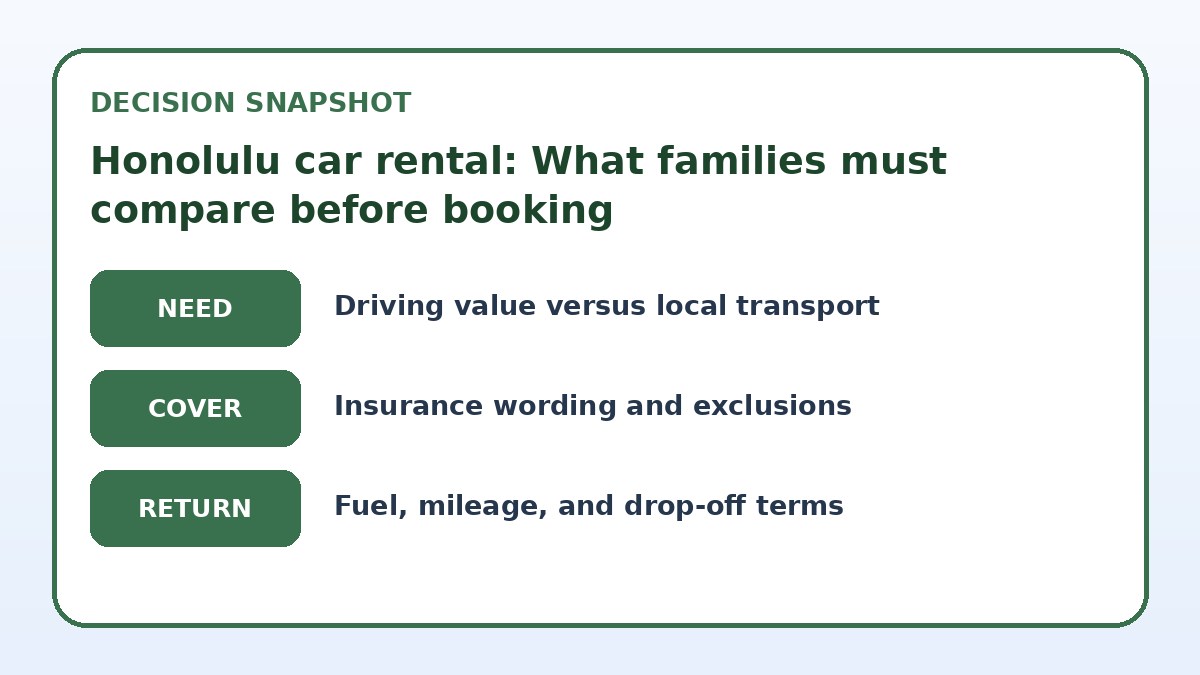
Practical answer first: many families visiting Honolulu don’t need a rental car if they plan to stay in Waikiki and rely on buses, rideshares, and occasional taxis; but a car becomes useful if you want flexible island days, carry beach gear for infants, or reach less-served spots like the North Shore or windward beaches. Think of a rental as a time- and convenience-choice: it converts the island into a self-directed road trip and simplifies moving toddlers, strollers, coolers and surfboards. It also adds planning for parking, child seats, fuel, and occasional traffic congestion. Start by listing the neighborhoods and activities you really want—if your itinerary includes several long drives or remote beaches, a car will likely pay off. If your schedule centers on a single neighborhood with easy transit, you can save money and stress by relying on local transport and renting a car for just one day when needed.
See current options before you compare the details
Availability and final conditions change. Open Trip.com now or keep reading for the practical comparison.
Assessing your itinerary and travel style
Start by mapping every major place you want to visit and mark whether it’s centrally located (Downtown, Waikiki) or spread across the island. Families who want beach days in Waikiki, a Pearl Harbor visit, a botanical garden, and a few hotel-based activities will find most of those reachable without a car. Organized tours, shuttles and public buses cover many popular sites and remove the hassle of driving, finding parking and fitting car seats. If your plan includes multiple beaches on different coasts, waterfalls, or a long day on the North Shore, transit times multiply and a car becomes more attractive for flexibility and comfort.
Think about how you travel with kids: are you comfortable managing strollers and beach gear on buses or maximizing convenience with a trunk for chairs, coolers, and toys? Consider also nap schedules—having a car lets you retreat anywhere for a quiet drive or short nap, which can turn a challenging outing into a smooth family day. Finally, note the ages of children: infants and toddlers require properly fitted car seats. If you’d rather not bring your own, plan where to rent seats and confirm availability before booking to avoid surprises.
Costs, parking, and hidden logistics
Rental daily rates are only part of the math. Add airport pickup logistics, parking at your accommodation, parking at beaches and attractions, fuel, tolls if any, and the cost or rental of car seats. Many Waikiki hotels and private rentals charge for parking or have limited spaces; some vacation rentals include off-street parking while others don’t. If your chosen lodging has expensive or restricted parking, savings from avoiding a car can be significant. Ask your host or hotel to confirm on-site parking, overnight rules, and exact fees before you book a vehicle.
Also plan where you will park at places you want to visit. Popular beaches and trailheads have limited lots that fill early, meaning extra time circling or using paid lots. Consider how much time you’re willing to spend searching for spaces versus the convenience of rideshares that drop you at the entrance. If you decide to rent, verify the rental company’s airport pickup process, shuttle timings, and final booking conditions on their reservation page. You may also check Trip.com or similar sites to compare options, but always confirm details on the provider’s page.
| Approach | Best for | Tradeoff to check |
|---|---|---|
| No rental: rely on buses, trolleys and rideshares | Families staying in Waikiki or central Honolulu who prioritize low cost and minimal parking hassle | Less schedule flexibility and more dependence on tour schedules or paid rides for off-site days |
| Full-time rental for the whole stay | Families planning multiple day trips across the island or traveling with lots of gear | Higher overall cost from parking, fuel, and potential rental extras, plus more planning |
| Short-term rental (1–2 days) hybrid approach | Families who want to visit the North Shore or windward beaches without paying for a full rental | Requires precise planning for pick-up/drop-off and may limit spontaneous stops |
| Guided day tours and point-to-point rideshares | Families who prefer hands-off logistics and guided interpretation without driving | Less privacy and schedule control; can become pricey for multiple full-day outings |
Ready to check the option that fits your plan?
Use your exact dates and traveler details so the provider page can show the current total and conditions.
Safety, child seats, and local driving conditions
Hawaii driving is generally straightforward, but you’ll encounter narrow coastal roads, occasional congestion near tourist sites, and defensive local driving. For families, the top safety concern is using the correct child restraint. Rental agencies usually offer car seats, but stock can be limited and fit varies by child age and size. If you have strong preferences for a particular model or brand, bring your own, or book seats in advance and confirm fit on the provider’s final booking page. Also, check whether your chosen rental allows boosters if your child needs one.
Driving outside Honolulu adds elevation changes and winding stretches—North Shore coastlines and windward ridges can be scenic but require attentive driving, especially with unfamiliar turns and single-lane bridges. If you plan to drive at sunset or after long beach days when kids are tired, factor in safer daylight windows. Make sure the driver is comfortable with longer stretches and that you know where emergency services are located along your planned route. Always carry water, sunscreen, and a simple first-aid kit—practical items that make spontaneous stops less stressful.
Before you book
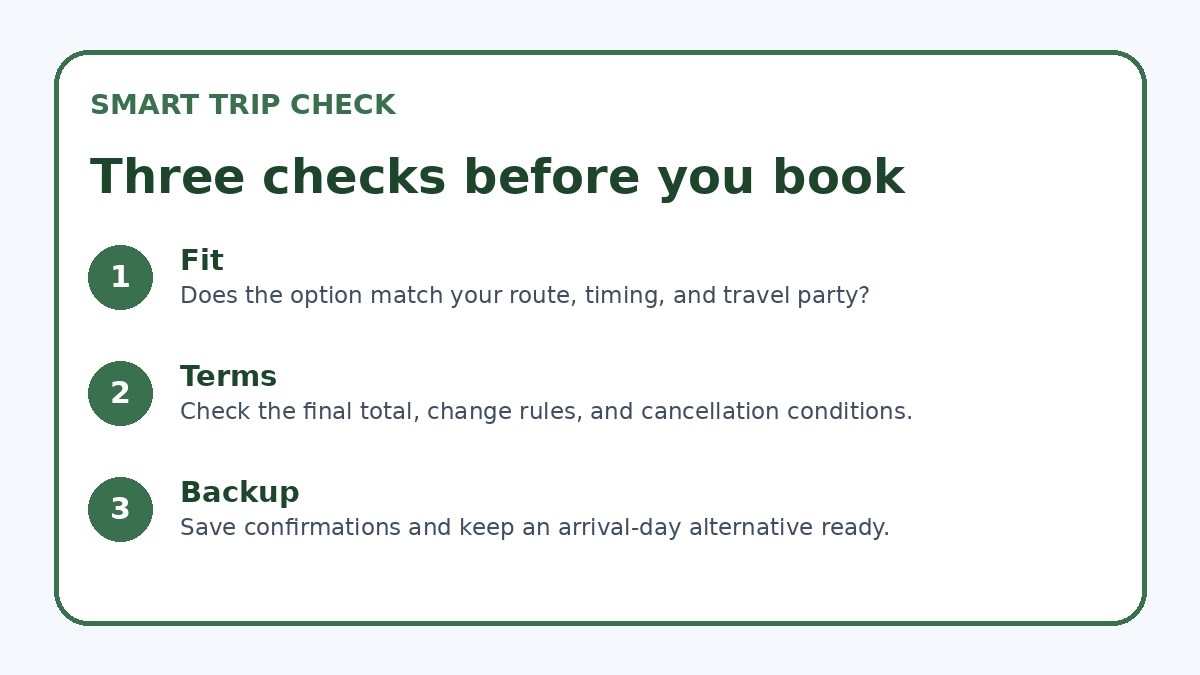
- List every attraction and beach you plan to visit and mark which require long drives or limited transit connections.
- Ask your hotel or rental host about exact parking availability, nightly fees, and any size restrictions before booking a car.
- Decide on car seats: bring your own approved seat or reserve one from the rental agency and confirm type and fit.
- Price a full-time rental package against one- or two-day rentals plus rideshare costs for shorter trips.
- If renting, confirm pickup/dropoff hours, airport shuttle details, fuel rules, and final booking terms on the provider page.
- Plan one flexible day for driving to a farther beach so you can test traffic, parking, and child comfort before more long days.
Alternatives and hybrid approaches
You don’t have to choose an all-or-nothing approach. Many families pick a hybrid plan: skip a full-time rental, stay central, and rent a car for one or two full days to reach farther beaches or make a cross-island loop. This keeps hotel parking and daily costs down while granting the flexibility for a few big outings. Another option is relying on point-to-point rideshares for short hops and booking guided day trips for longer excursions—this removes driving stress and often includes logistics like entry or parking, though you’ll lose the privacy and schedule control a car gives.
When using a hybrid plan, coordinate pickups and returns carefully: airport logistics, luggage, and any car-seat transfers need planning. If you plan a one-day rental, book with an agency that offers flexible pick-up and drop-off hours, confirm child seat availability, and know where to refill fuel before return. Compare what you’d pay for one or two rental days against the convenience saved by having a car for those specific excursions. This middle way is often the best compromise for families who want both savings and the ability to explore beyond Honolulu’s central neighborhoods.
Frequently asked questions
Is parking easy in Waikiki and should I expect to pay for it?
Parking in Waikiki is available but often limited and can carry nightly or daily fees depending on hotels and private lots. Many family-friendly hotels charge for parking or restrict space; vacation rentals vary. If avoiding parking costs matters, choose lodging that includes off-street parking or plan to rely on transit and rideshares. Before you finalize accommodation or a rental, ask the host or hotel for the exact parking rules and costs, as those details can change and will affect whether a rental is worth it.
Can I rent a car just for a day to visit the North Shore or other beaches?
Yes—many visitors rent a car for just one or two days to reach parts of Oahu that are harder to access by bus, including the North Shore and windward beaches. A short-term rental gives flexibility without the expense of keeping a car for your whole stay. When planning a day rental, book early for child seats if needed, confirm pickup and return windows, and factor time for parking and traffic. Compare the short rental total to the cost and convenience of a guided tour or round-trip rideshare before deciding.
Are rental car child seats safe and readily available?
Agencies typically offer rental child seats, but availability and brands vary; some sizes fit better than others for specific child weights and ages. If you have strict safety or fit preferences, bring your own certified seat or check the exact seat model the agency supplies by confirming on the booking page. Reserve seats well in advance when traveling with young children, and on arrival inspect the seat for wear and proper installation or request help from the rental counter to ensure it is safely installed in the vehicle.
Final planning note
Deciding whether to rent a car in Honolulu depends on the shape of your family’s itinerary and tolerance for parking logistics. If your trip stays mainly in central Honolulu and you prefer lower daily hassles, skip a full-time rental and use local transit, rideshares, and guided tours. If you want to chase beaches across the island, travel with bulky gear, or prioritize flexible nap-and-stop schedules, a car will likely improve the trip. A hybrid approach—renting for just one or two days—often delivers the best balance: steady savings and the freedom for a few big family outings. Whatever you choose, confirm parking rules, child seat availability, and pickup/drop-off details on the provider’s final booking page before you commit.
Continue planning
Check current options and final conditions
Use the provider page to confirm live availability, the final total, cancellation terms, and every condition that matters to your trip.
This evergreen planning guide was created with AI-assisted drafting and a structured quality review. It does not display live prices, schedules, availability, visa guidance, or provider rankings. Verify current details before booking. Some links are affiliate links; we may earn a commission at no additional cost to you.