For business travelers leaving Amsterdam, the single most useful planning move is to choose an airport transfer approach early and align it with your departure time, luggage needs and meeting schedule. Whether you prefer a hassle-free private car, a reliable train, a taxi, or a ride-hailing service, deciding in advance prevents last-minute stress and missed flights. This guide gives the direct answer up front—how to pick the right transfer for your priorities—then walks through the tradeoffs, what to verify, and how to time each option so you can work or prepare without watching the clock. Read on for clear criteria you can use right now to narrow choices and a short checklist to finalize your booking.
See current options before you compare the details
Availability and final conditions change. Open Trip.com now or keep reading for the practical comparison.
Choose by priority: time, cost, or convenience
Start by ranking what matters most for this trip. If minimizing travel time and avoiding transfers tops your list, a private car or taxi booked early will deliver point-to-point service; you can work en route and keep devices and documents close. If cost-efficiency and predictability of schedules are prime concerns, the train is a strong contender because it runs frequently from major stations and often avoids road congestion. For a balance—lower cost than private cars but more convenience than public transport—consider shared airport shuttles or premium ride-hailing options if available.
Factor in luggage and team size when you choose. A single business traveler with a carry-on has more flexibility to use the train or a small ride-share; a group with large cases will find a private transfer or taxi more comfortable. Also reflect on your ability to walk between meeting locations and stations, mobility needs, and willingness to handle transfers or lifts. Deciding the priority first makes the rest of the choices—timing, booking channel, and contingency planning—much easier.
Timing and the commute: avoid last-minute risk
Work backwards from your flight’s recommended airport arrival time, not the departure time on your ticket. For business travel, add margin for security lines, document checks, and any last-minute work you need to finish. If you plan to travel during morning or evening peak hours, add extra time for road traffic. Trains can be more predictable during peak hours, but check for planned engineering works or service adjustments that could affect your route.
Leave a buffer for meetings that overrun and for small delays at the pickup point. When booking a private transfer or taxi, confirm the pickup window and how the driver will contact you. If you choose public transport, pick a service with frequent departures so a single missed connection doesn’t derail your schedule. Keep a backup option—such as a pre-saved ride-hailing app or the phone number for a taxi company—so you can switch plans quickly if things change.
| Approach | Best for | Tradeoff to check |
|---|---|---|
| Private transfer or car service | Travelers needing door-to-door service, privacy and working time en route | Less flexible in heavy traffic; must confirm pickup window and luggage capacity |
| Train to Schiphol | Those prioritizing schedule predictability and avoiding road congestion | Requires transfer to/from stations and handling luggage on board |
| Taxi or airport shuttle | Groups or travelers with lots of luggage needing direct transport | Subject to traffic variability and potential delays at peak times |
| Ride-hailing apps | Last-minute bookings and flexible pickup points in the city | Vehicle size and cancellation terms vary; verify capacity and cost on booking |
Ready to check the option that fits your plan?
Use your exact dates and traveler details so the provider page can show the current total and conditions.
What to verify before you book
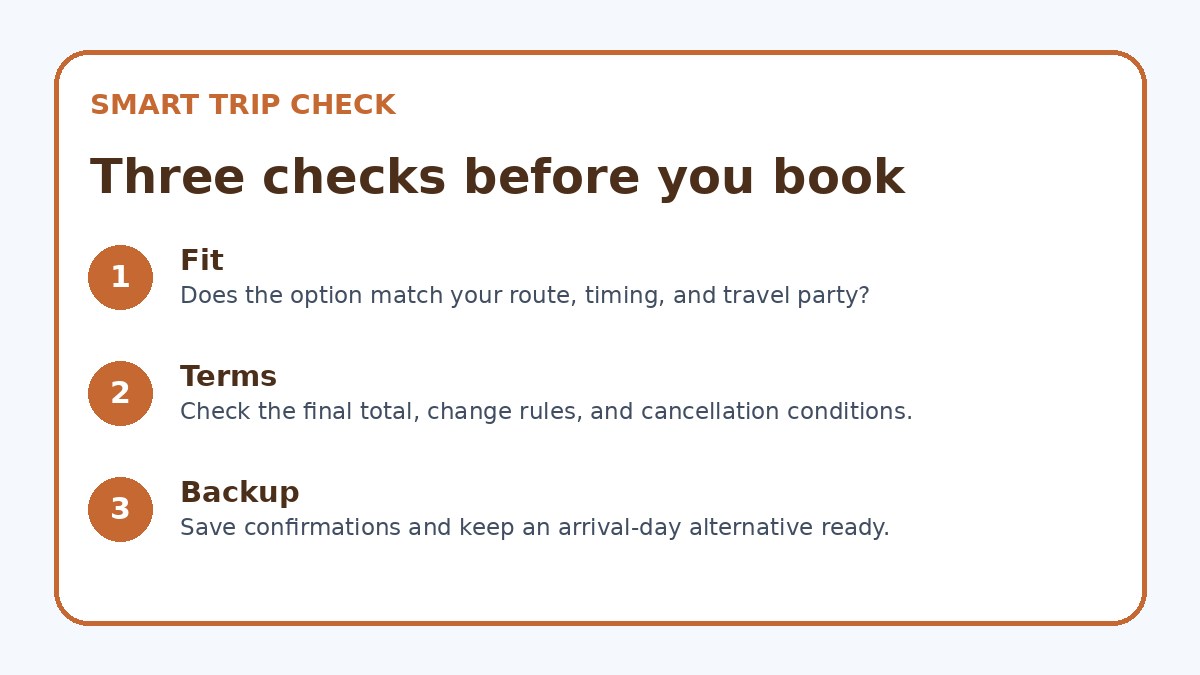
Always check the provider’s final booking page for the exact pickup location, luggage allowances, cancellation policy, and how drivers will contact you. Do not rely on perceived reputations or third-party summaries for these operational details because they change. If you need an invoice for company expenses, confirm billing and payment methods in advance. For trains and airport express services, verify which station you must board, whether reservations are required, and whether there are additional steps to reach the airport terminal once you arrive at Schiphol.
For road-based transfers, compare door-to-door routing and whether the driver can wait if your meeting runs over. If you plan to use a corporate account or expense system, check how to add that information during booking and what receipts you’ll receive. When using apps, screenshot or save the booking confirmation and driver details. If mobility assistance, a child seat, or extra cargo capacity is needed, request it explicitly on the booking page and reconfirm with the provider by phone or message.
Before you book
- Confirm your flight’s recommended arrival time and work backwards to set a transfer departure window.
- Compare transfer options (train, private car, taxi, ride-hail) against your ranked priorities: time, cost, convenience.
- On the provider’s booking page, verify pickup location, luggage policy, wait time, driver contact method, and cancellation terms.
- If using public transport, check service notices for planned works and identify the exact station and platform options.
- Save booking confirmations and driver contact details to your phone and share ETA with your office or assistant.
- Have a secondary transfer plan (different provider or the next train) and allow extra time for city traffic or meeting overruns.
Contingencies and on-the-day tips
Prepare a short contingency plan: a secondary transfer option, the nearest train station or tram stop, and a contact method for your travel coordinator or assistant. Save your boarding pass and important travel docs on your phone and have a power bank handy so you can communicate if plans change. If your primary transfer is road-based, track traffic conditions and leave earlier if there are alerts for incidents or major events in the city that day.
On the day, keep meeting documents and a toiletry kit in your carry-on to avoid returning to the hotel or office. Communicate an exact meet point with your driver and confirm when they are en route. If you choose the train, head to the correct platform early and note any announcements; on busy services, position yourself near the carriage doors to minimize transfer time at Schiphol. Finally, allow a few extra minutes at the airport for navigation between arrival rail platforms and airline check-in counters.
Frequently asked questions
Is the train to Schiphol a reliable option for business travelers?
The train often appeals to business travelers because it avoids road congestion and runs frequently from central stations. Reliability depends on the specific service and any planned engineering work, so check the operator’s service notices before you leave. Also consider the distance between your meeting location and the station, luggage handling needs, and whether you prefer a guaranteed seat; if you need consistent door-to-door convenience or have heavy cases, a private transfer or taxi may better suit your needs.
When should I book a private transfer versus taking a taxi or ride-hailing app?
Book a private transfer when you want a confirmed pickup window, a specified vehicle type, and an invoice ready for company expenses—especially if timing is tight or you arrive late to the airport. Taxis and ride-hailing are useful for flexibility and last-minute needs but can vary in vehicle size and pricing. If you opt for an app, verify luggage capacity and cancellation rules on the booking screen, and allow extra time in case of driver reassignments or surge periods.
How much extra time should I add for Amsterdam traffic or busy travel periods?
Add buffer time when planning a road transfer: if your flight is during morning or evening peaks, leave earlier than usual to absorb potential delays. Trains can reduce exposure to traffic but may be affected by service changes. Consider what you cannot compromise—boarding time, document checks, or final email responses—and pad your schedule so a minor delay won’t cascade into a missed flight. Always have a backup option ready that you can switch to on short notice.
Final planning note
Planning your Amsterdam airport transfer becomes straightforward when you rank what matters—time, cost, or convenience—then match that priority to the transfer type that best fits it. Decide early, verify operational details on the provider’s booking page, and build a modest buffer into your schedule to handle meetings that overrun or urban traffic. Keep confirmations and driver contact information at hand, and prepare a fallback option so you can change plans quickly. For quick availability checks and comparisons, you can look at services including Trip.com, but always confirm final pickup, luggage allowance, and cancellation terms on the provider’s own page before you commit.
Continue planning
Check current options and final conditions
Use the provider page to confirm live availability, the final total, cancellation terms, and every condition that matters to your trip.
This evergreen planning guide was created with AI-assisted drafting and a structured quality review. It does not display live prices, schedules, availability, visa guidance, or provider rankings. Verify current details before booking. Some links are affiliate links; we may earn a commission at no additional cost to you.