If you’re traveling alone in Vancouver, the practical question is simple: will renting a car actually improve this itinerary, or will transit and walking let you move faster, cheaper, and with less hassle? For most solo visitors staying in central Vancouver (Downtown, West End, Yaletown) the answer often leans toward public transit, biking, and occasional rideshares—especially for sightseeing inside the city and for avoiding parking headaches. But if your plan includes day trips to the Sea-to-Sky corridor, remote parks, or a flexible multi-stop loop on nearby islands and mountain roads, a rental can be justifiable. This guide gives the short decision first, then breaks down route value, insurance wording, pickup and return friction, and a clear non-driving fallback you can use if you decide not to rent. Use the checklists and comparison rows to match a mobility strategy to your exact route and comfort level.
Route value: when driving adds clear benefit
Start by mapping each day’s origin and destination and ask whether public transit or shuttle services already serve those legs. Within the Vancouver city core—stretching from Granville Island to Stanley Park and along the False Creek corridor—TransLink buses, SkyTrain, and frequent SeaBus crossings reach most attractions, and travel times are competitive because parking and traffic slow cars. Driving becomes more valuable when your schedule includes early-morning access to trailheads, flexible multi-stop loops to Sea-to-Sky Highway viewpoints, or visits to places with infrequent transit schedules like some Sunshine Coast and Fraser Valley sites.
Also weigh opportunity cost: a car gives flexibility to leave on your own timetable, carry gear without packing and repacking, and detour to less-visited spots. That freedom matters for photography, sunrise hikes, or dispersed outdoor activities. But that benefit only translates into better travel if you actually plan to use the car for those exact legs; if most days are downtown museum visits, neighborhoods, and restaurants, renting becomes more a convenience you won’t fully use.
Decide whether driving earns its place
| Mobility strategy | Best for | Cost or friction to check |
|---|---|---|
| Public transit + walking + bike share | Urban sightseeing, museums, and short-distance days | Fast and inexpensive in the core but limited for remote nature or multi-stop rural routes. |
| Rent a car for full trip | Flexible multi-stop itineraries, mountains, and remote day trips | Greater convenience offsets parking, fuel, and pickup/return friction only if used frequently. |
| Mixed approach: transit in-city, rent for select days | City base with planned day trips to Sea-to-Sky or Fraser Valley | Requires extra planning and possible one-way or short-term rental complexity. |
| Transit plus shuttles/tours/rideshare | Solo travelers who want guided access to remote sites without driving | Less independence and fixed timing, but avoids parking and insurance hassles. |
Check live rental choices only after the route test
Use the exact driver, dates, pickup point, and return plan to compare current conditions.
Insurance wording: what to read before you pay
Insurance language in rental contracts is where costs and exposure hide. Look for explicit wording on collision damage waiver (CDW), loss damage waiver (LDW), liability limits, deductibles, and whether third-party insurance is accepted. Some credit cards include primary or secondary rental coverage—check the card’s policy wording for geographic coverage, excluded vehicle types, drivers’ age limits, and whether it covers damage to undercarriage or tires, which some rental contracts exclude. Don’t rely on a summary; download the insurer’s actual contract language and compare it to the rental agreement.
Also verify permitted driver names and any additional driver fees, as forcing only the renter to drive can be risky. Confirm whether insurance covers cross-border travel if you plan to drive into adjacent provinces or the U.S. If the rental company’s insurance wording conflicts with your credit card benefits, contact both providers and get written confirmation where possible. On the booking page and at pickup, ask to have the final insurance inclusions and deductible amounts shown in print before signing.
Compare the full rental conditions
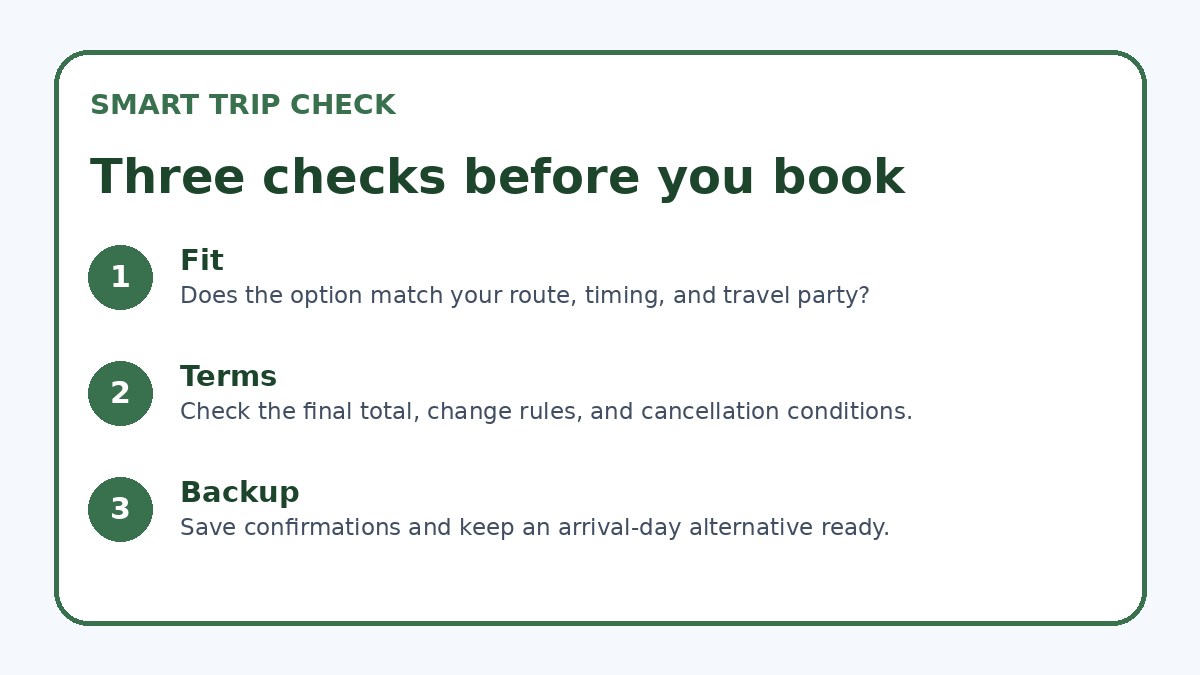
Confirm insurance wording, exclusions, deposit, fuel, mileage, and return terms on the final page.
Pickup and return friction: practical hassles that matter
Pickup and return can consume much more time than driving itself, especially for solo travelers who juggle luggage and schedules. Airport car counters may be convenient but often have longer waits and additional fees for airport service. City pickup locations can be faster, but some require off-site vendor shuttles or remote lots. Think about how you’ll handle transit from your arrival point to the rental desk, how long the shuttle wait might add, and whether you’re comfortable returning a car after a late flight or long day.
Also plan for fuel, tolls, and parking logistics. Vancouver has paid parking zones, limited overnight street parking in some neighborhoods, and many attractions with limited lots that can fill. Returning a car with a full tank or paying a refueling fee are common sources of frustration—confirm the fuel policy on the rental page. For solo travelers, friction increases if the return requires long waits for staff, or if you’ll be left arranging transport back to your accommodation after dropping the car.
Car rental terms to verify
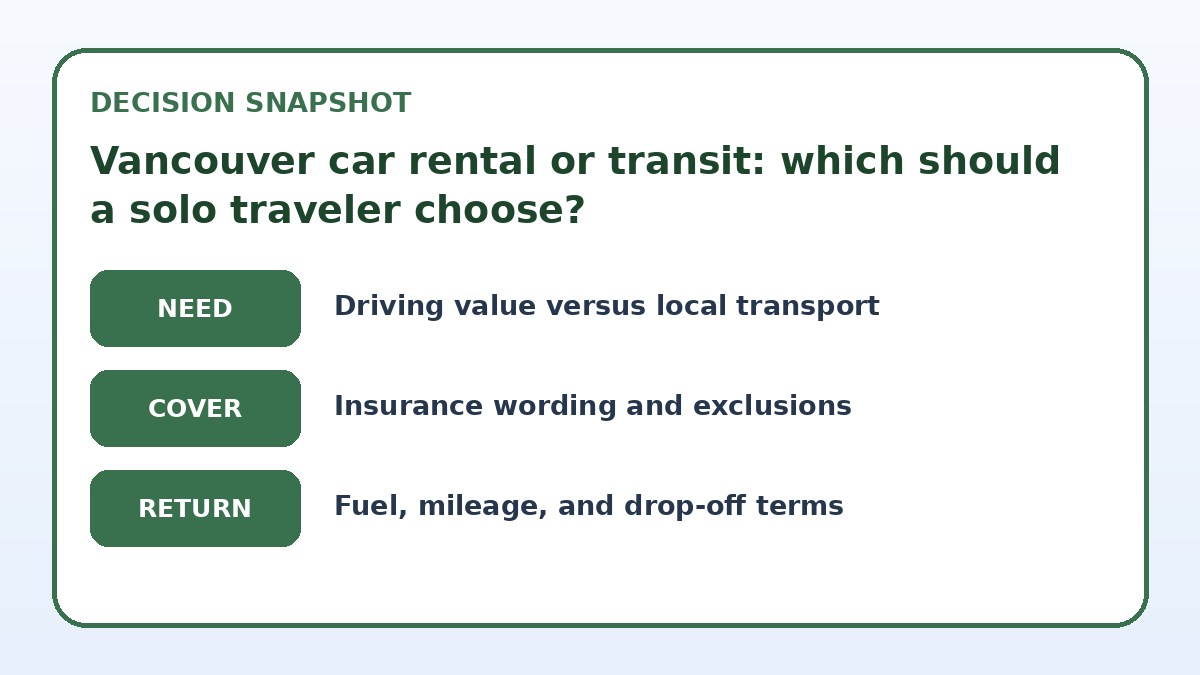
- Map every day’s start and end points and note transit or car travel time door-to-door to compare real convenience.
- Download and print the rental company’s full insurance wording; compare deductible amounts and exclusions with your credit-card coverage.
- Confirm pickup and return location logistics, shuttle needs, and estimated wait times on the supplier’s booking page before reserving.
- Identify emergency contacts for roadside assistance and confirm whether the rental includes 24/7 support and its geographic limits.
- Plan a backup non-driving day for each planned rental day—book a shuttle, guided tour, or intercity bus in advance when possible.
- Reserve any necessary ferry or park access windows if a day trip depends on timed crossings or limited parking.
Non-driving fallback: how to travel reliably without a car
Create a non-driving plan that mirrors your most likely driving days so you can cancel a rental without losing access. Identify the closest SkyTrain or SeaBus routes to your accommodation, note main bus routes to parks and ferry terminals, and bookmark schedule pages. For day trips beyond transit reach, research private shuttles, guided day tours, or intercity buses that stop at popular trailheads. Rideshares and taxis are practical for short gaps, but factor surge pricing and limited nighttime coverage in some areas.
Also build a gear and timing plan: pack light so you can walk between stations and attractions, reserve early-morning shuttles or tour spots that fill, and confirm ferry reservation windows when applicable. Keep contact numbers for shuttle operators and a map of last-mile options (bike-share docks, e-scooters, or local taxi ranks). With a concrete fallback you’ll feel less pressured to rent, and you’ll have a reliable alternative if weather, traffic, or availability changes your original plan.
Car Rental & Road Trip questions travelers ask
Is Vancouver easy to drive in as a solo traveler?
Driving in central Vancouver is straightforward in terms of roads, but congestion, limited parking, and paid zones can add stress and time. For short solo trips inside the city, driving often costs more in parking and fuel and can be slower than using SkyTrain, buses, SeaBus, and walking. However, solo travelers comfortable with tight parking and who need early starts or heavy gear may still prefer driving. Verify parking options at each stop and the rental’s fuel and return policies before deciding.
What specific insurance language should I check on a Vancouver car rental page?
Look for wording on collision damage waiver (CDW) or loss damage waiver (LDW), liability coverage limits, deductible amounts, whether theft protection is included, and any exclusions such as off-road or tire/undercarriage damage. Also check permitted driver rules, age surcharges, cross-province or cross-border permissions, and whether third-party or credit-card insurance is accepted. Don’t rely on summaries—download the full terms on the booking page and, if needed, request written confirmation from both your card issuer and the rental company.
If I decide not to rent, what’s the simplest way to reach popular nearby natural areas?
Many popular natural sites are reachable without a personal car via a combination of transit, private shuttles, and organized day tours. Sea-to-Sky Corridor access points and some trailheads are served by seasonal shuttles or intercity buses; guided day trips cover major parks with pickup options. For last-mile gaps, rideshares or taxis can bridge from transit hubs. Before cancelling a rental, check shuttle and tour schedules and book any guaranteed seats; the Trip.com platform can help compare current availability, but always confirm directly with the operator.
Final decision note
For most solo travelers staying in central Vancouver, public transit combined with walking, bike share, and occasional rideshare will be the least stressful and most cost-effective choice. Rent a car only when your itinerary includes repeated early starts, multiple dispersed rural stops, or destinations poorly served by transit. If you do rent, read insurance wording in full, confirm pickup/return logistics, and budget for parking and fuel. If you opt not to drive, construct a non-driving fallback using shuttles, day tours, and transit connections. Use the checklist items to verify the critical details on provider booking pages before you finalize anything.
Continue planning
Check current options and final conditions
Use the provider page to confirm live availability, the final total, cancellation terms, and every condition that matters to your trip.
This evergreen planning guide was created with AI-assisted drafting and a structured quality review. It does not display live prices, schedules, availability, visa guidance, or provider rankings. Verify current details before booking. Some links are affiliate links; we may earn a commission at no additional cost to you.