If you and a small group arrive in Amsterdam with more bags than usual, the first-hour decision is how to get everyone and their luggage together from the airport to your accommodation without creating a bottleneck. Practically, decide before landing whether you want a door-to-door vehicle that fits people and suitcases, or a stepped plan relying on public transport plus a short taxi for last-mile heavy bags. That initial choice will shape where you meet, how long you wait, and how easily you handle late or disrupted flights. This guide gives the straightforward answer up front, then explains tradeoffs, key checks when booking, and simple contingencies to keep movement smooth even if plans change.
Check options for your arrival details
Use your flight, luggage, party size, and accommodation address to compare current choices.
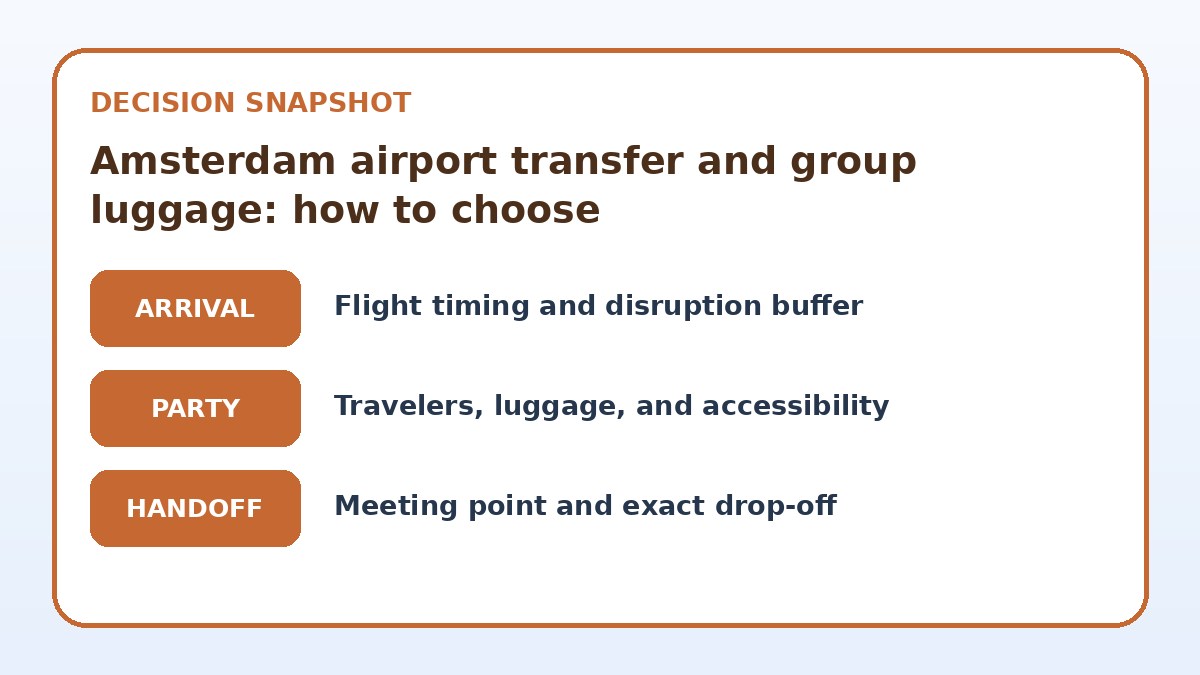
Luggage and party size: match vehicle to what you actually bring
Start by listing people and bags: count checked suitcases, oversized items (sports gear, instruments), and carry-on pieces. A small group of three to five people can quickly fill a standard taxi if everyone has large suitcases. Think in terms of both passenger seats and the real physical space those cases take. If any item is awkwardly shaped or needs an extra seat, factor that into your requirement early so you can request an appropriately sized vehicle when you contact providers.
When searching options, describe your load precisely — number of passengers, number of large suitcases, and any special items. Providers often offer different vehicle classes (regular car, estate/wagon, MPV, van) and each class handles luggage differently. Ask whether the quoted price covers your exact luggage plan or if there is an extra-fee rule for roof boxes, oversized bags, or additional suitcases. This prevents surprises at pickup and keeps the group together from the first stop.
Arrival details to have ready
- Count people and every suitcase; list any oversized or fragile items before you contact transfer providers.
- Ask each provider to confirm vehicle type, exact luggage allowance, and whether special items need advance notice.
- Share a photo and precise description of the airport meeting point and the driver’s contact with everyone in your group.
- Tell your accommodation about expected arrival time and ask whether drivers can stop at the entrance or must use a nearby curb.
- Choose a single communication lead in your group to handle driver messages, rebookings, and flight updates.
- Compare cancellation and delay policies on the provider’s booking page and verify pickup flexibility before you pay.
Late or disrupted arrival: pick flexible pickup and clear contingency plans
Your plan must survive delays: choose a transfer solution with clear late-arrival procedures and straightforward rebooking or waiting policies. Before you commit, ask the provider how long the driver will wait, how they monitor flight arrivals, and how they communicate changes. If a flight connection is possible, make contingency choices: either allow a generous buffer and keep the same booking or avoid tight pre-paid timed pickups that can become costly when flights shift.
Also prepare a human contingency: assign one person to manage communication (driver messages, flight notifications) and another to keep the group together at the appointed meeting point. Share the driver’s phone number and a local contact at your accommodation. If the operator’s terms are restrictive, consider a refundable booking or choose a meeting-point arrangement where you can switch to a local taxi or rail option with minimal penalty.
Match the transfer to your arrival
| Arrival approach | Best for | Detail to verify |
|---|---|---|
| Reserved private van or large taxi | Groups wanting door-to-door service with all luggage together | Higher upfront cost but simpler logistics and no luggage transfers |
| Public transport plus taxi for last mile | Groups on a tighter budget who can handle short walks with light loads | Cheaper overall but requires splitting luggage handling and may be awkward with oversized items |
| Shared shuttle or minibus service | Groups with moderate luggage willing to join other passengers for lower cost | Lower per-person cost but potential waits and multiple stops; luggage capacity varies |
| Multiple regular taxis (one per car) | Groups that prefer flexibility and staggered departures | Simple to book ad hoc but risks higher total cost and coordination challenges at pickup |
Make the meeting plan clear
Check the final pickup instructions, waiting conditions, and exact drop-off coverage.
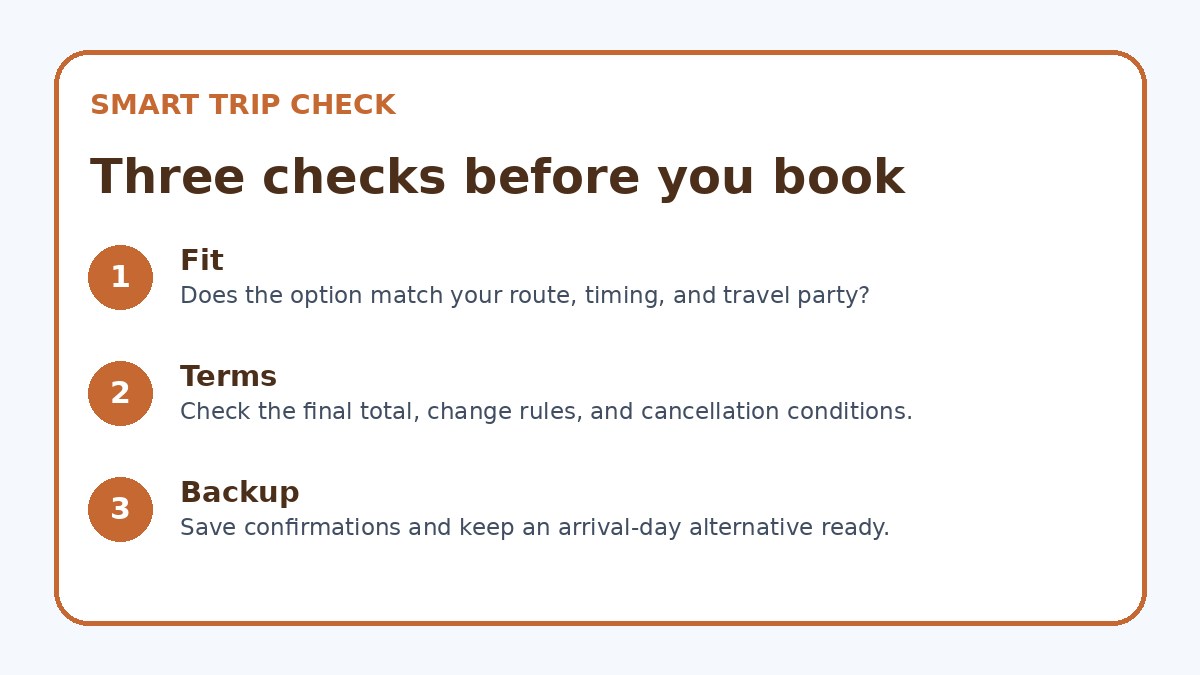
Meeting-point clarity: avoid confusion in a busy airport
Amsterdam’s airport terminals have multiple pickup zones and crowded public areas, so specify an unambiguous meeting point in advance. Use fixed landmarks like the arrivals hall exit, a named information desk, or a clearly numbered curbside zone. Exchange a photo of the pickup point or landmark with all group members and the driver to eliminate uncertainty; include gate or baggage belt numbers where the group will likely emerge if you expect baggage to slow you down.
Set a clear window for pickup rather than a single minute — factor in time to clear passport control and collect luggage. Clarify how the driver will identify the group: name on a sign, vehicle make and color, or a call/text when the flight lands. This reduces wasted time circling busy areas and keeps the group together, preventing split pickups that multiply time and cost.
Drop-off fit at your destination: parking, access, and luggage handling
Confirm whether the vehicle can stop at your building entrance, or whether you need to navigate stairs and narrow streets. Amsterdam’s historic center often has limited car access, pedestrian zones, and narrow canalside streets that affect where drivers can pause. Ask the driver in advance whether they can reach the front door, or whether you should plan for a short walk from a legal stopping point — this affects the practicality of large suitcases and whether you need porters or luggage carts.
If your accommodation has stairs, small elevators, or restricted loading hours, alert them and the transfer provider ahead of time so someone can meet you at the curb. For apartments or hotels with tight access, consider booking assistance for moving luggage from vehicle to room. Verifying drop-off specifics in writing prevents last-minute juggling and ensures your team knows whether to expect a door-to-door handover or a short last-mile carry.
Airport Transfer & Local Mobility questions travelers ask
Can a single taxi take a small group with several large suitcases from Amsterdam airport?
Yes, many operators offer larger vehicles (estate cars, MPVs, or vans) that can accommodate multiple passengers and large suitcases. When you request a booking, describe the exact number and size of bags so the operator can assign an appropriate vehicle class rather than a standard sedan. On the provider’s booking page, verify vehicle model or class, explicit luggage limits, and whether any extra charges apply for oversized items. If in doubt, book the next larger vehicle to avoid being split across two cars on arrival.
What should we do if our flight is delayed and the pre-booked pickup window is missed?
First, check the provider’s stated late-arrival and waiting policies on their booking page so you know the options before the flight gets delayed. Many operators monitor flight arrivals and will wait or reassign a driver for a reasonable delay, but terms differ. Immediately message or call the contact number you were given and share your new arrival time. If the operator cannot accommodate the change, be ready with a backup: a local taxi app, a short public-transport option from the airport, or a shuttle alternative. Keep the group together at the agreed meeting point while you sort the replacement.
How do we handle drop-off in Amsterdam’s narrow streets and pedestrian zones with lots of luggage?
Confirm access details with both your accommodation and the transfer provider ahead of arrival. Many central streets are restricted or have narrow curbside space; drivers may only get close enough for a short unload. If the driver can’t reach the door, plan a manageable short carry and ask the accommodation whether staff can help with luggage. For heavy or awkward items, consider booking a vehicle that can approach the nearest permitted drop-off point, or arrange a porter service separately to avoid multiple trips and reduce stress on arrival.
Final decision note
For a small group in Amsterdam with extra luggage, the most practical choice is usually a single reserved larger vehicle that takes everyone and their bags directly to your address. That option keeps coordination simple, reduces handling of heavy items, and keeps the group together — but it comes at a higher per-booking cost and requires precise luggage details when you reserve. If budget or central drop-off constraints matter, consider combining public transport with a short taxi, or a shared shuttle if you can tolerate stops. Before you book, verify vehicle capacity, luggage terms, pickup and late-arrival policies on the provider’s booking page, and confirm drop-off access with your accommodation. For up-to-date availability and comparisons, you can check Trip.com as one practical place to review current options.
Continue planning
Check current options and final conditions
Use the provider page to confirm live availability, the final total, cancellation terms, and every condition that matters to your trip.
This evergreen planning guide was created with AI-assisted drafting and a structured quality review. It does not display live prices, schedules, availability, visa guidance, or provider rankings. Verify current details before booking. Some links are affiliate links; we may earn a commission at no additional cost to you.