If you want family-friendly Toronto travel deals that stretch your travel budget and minimize crowds, book with shoulder seasons in mind—late spring (after the school-ski break) and early fall (before deep-student term) typically offer a balance of milder weather, more daytime activities, and looser hotel availability. Practical tradeoffs matter: some attractions have reduced hours, ferries and tours may run on limited schedules, and weather can be changeable, so plan flexible activities and a layered wardrobe. Use the shoulder window to prioritize neighbourhoods with easy transit and family services rather than the absolute cheapest option far from sights. Before booking, compare refundable and changeable rates, family-room configurations, and which attractions need advance reservations; verify service hours and seasonal schedules on each provider’s official page, and check a travel site such as Trip.com for current availability if you want a quick market snapshot.
See current options before you compare the details
Availability and final conditions change. Open Trip.com now or keep reading for the practical comparison.
When shoulder seasons make sense for families
Shoulder seasons are useful when you want fewer crowds without sacrificing too many services. For families, that can mean shorter lines at kid-focused attractions, quieter museums, easier table availability at family restaurants, and more comfortable urban strolling. Families who value relaxed pacing, simpler carriage/stroller navigation, and the ability to swap indoor attractions for outdoor ones as weather changes will find shoulder windows especially handy. The key is choosing dates outside major school breaks, long weekends, and large festivals, because those can erase the crowd benefits and push prices higher.
Think of shoulder seasons as a tradeoff between availability and operational footprint. Some seasonal operators and special events reduce schedules or close for maintenance outside peak months, so you might face fewer tour options on a given day. That’s manageable if you plan alternatives — neighbourhood playgrounds, indoor science centres, and flexible food options — and verify attraction hours before committing. For families who prefer a calm base and plan to move at a child-friendly pace, shoulder seasons often provide the best overall value and experience balance.
What to compare when hunting Toronto travel deals
When comparing deals, focus on three family-specific variables: room configuration, transit access, and refundable terms. A room that sleeps parents and children comfortably can save on restaurant and laundry costs; look for suites, adjacent rooms, or hotels advertising family rooms with a small kitchenette. Closeness to a subway station or frequent streetcar lines reduces transit time and stress, especially during short trips. Refundability and free changes are vital with little ones—opt for flexible rates when possible and read the provider’s final booking page to confirm exactly what’s allowed for changes and cancellations.
Also compare what’s included versus what you’ll actually use: breakfast, parking, stroller storage, and laundry facilities can change daily convenience and total cost. If a deal highlights ‘free breakfast,’ verify whether it covers children and what the service hours are. For attractions packaged with accommodation, check redemption windows, reservation requirements, and child age cutoffs. When looking at flights, compare direct versus one-stop options by factoring connection duration, total door-to-door time, and the extra stress of transfers with children.
| Approach | Best for | Tradeoff to check |
|---|---|---|
| Book deep discount nonrefundable rates | Families with fixed plans and low risk of changes | Lower price but little flexibility if plans change due to sickness or weather |
| Choose flexible refundable rates | Families needing schedule adaptability | Higher upfront cost or smaller advertised savings compared with nonrefundable deals |
| Stay centrally for walking access | Families prioritizing short transit times and easy returns for naps | Potentially smaller rooms and higher nightly rates than suburban options |
| Stay farther out with more space | Families wanting suites, kitchens, or multiple bedrooms | More time spent on transit and possible added transport costs |
Ready to check the option that fits your plan?
Use your exact dates and traveler details so the provider page can show the current total and conditions.
Choosing neighbourhoods and family-friendly lodging
Decide where to base your family by balancing walking access, transit, and nearby services. Downtown neighborhoods close to parks, museums, and the waterfront reduce transit time and allow easy returns for naps or stroller breaks. If you prefer quieter evenings, consider a short transit hop to a family-oriented residential neighbourhood with playgrounds and local grocery options. Check how late transit runs on your selected dates and whether stations have elevators if you bring a stroller or have mobility needs.
For lodging, prioritize practical amenities over style: in-unit laundry or on-site facilities, kitchen or kitchenette, and space for kids to sleep without disrupting adults’ sleep are high-impact features. Hotels that advertise family rooms or suites can simplify logistics, but do verify bed configurations and any extra-bed fees on the booking page. Consider booking a place with an easy cancellation policy if you’re timing your trip around shoulder-season weather; flexibility allows you to shift dates if a weather system or event changes local conditions.
Before you book
- Check school holiday calendars and local event listings for your intended dates to avoid crowded weekends and festival overruns.
- Confirm room layout and bedding options on the hotel’s booking page and request a rollaway or adjoining rooms if needed.
- Compare refundable versus nonrefundable fare rules and note deadlines for free changes or partial refunds.
- Verify attraction operating hours and reservation requirements on official sites before purchasing bundled tickets.
- Pack layered clothing and a compact rain jacket for each family member to handle variable shoulder-season weather.
- Map transit lines near your lodging and confirm elevator/stroller access for any stations you plan to use frequently.
Practical booking tips and what to verify before paying
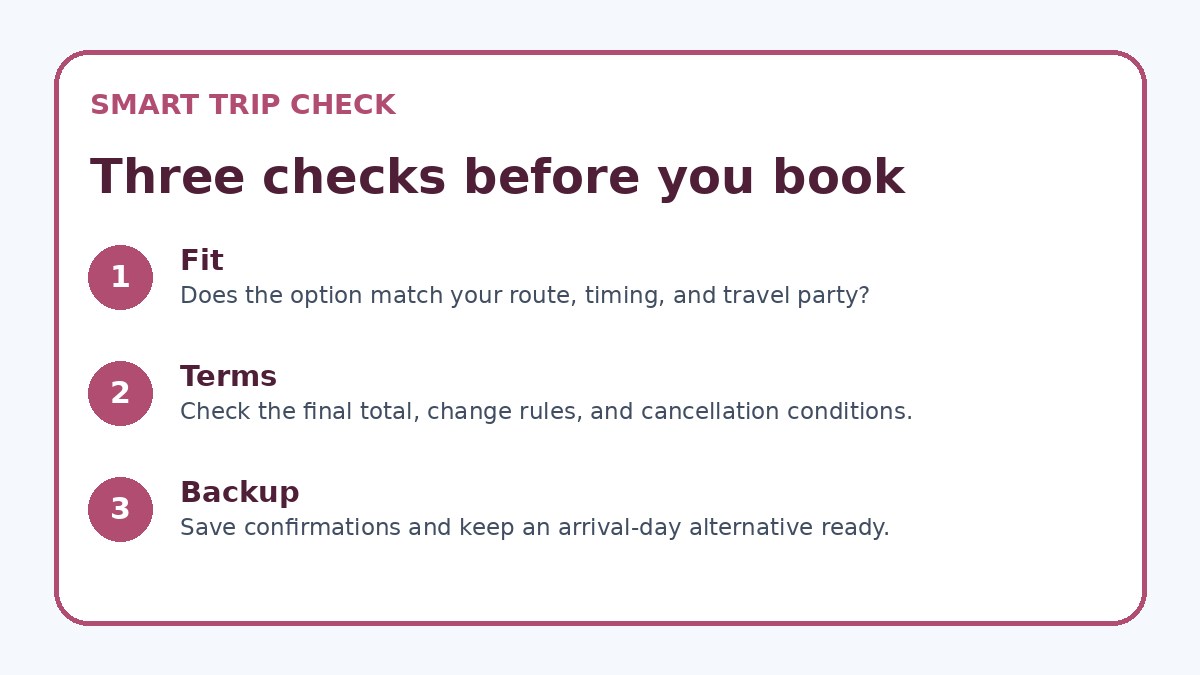
Before you finalize any Toronto travel deals, confirm three things on the provider’s final booking page: exact cancellation/change policy language, whether quoted meals or credits include children, and the operational schedule for any included attractions. Don’t rely on promotional copy alone—look at the terms and conditions, note blackout dates, and flag any mandatory resort or facility fees that might not appear until checkout. If a package includes tickets or tours, check the redemption window and whether you must reserve specific time slots in advance.
If flights are part of your plan, compare total door-to-door travel time and the stress level of connections when traveling with children. Direct flights reduce transfer-related hassles, but sometimes a well-timed connection lowers overall cost with minimal inconvenience. For anything provider-specific that could change, such as cruise or ferry schedules, attraction opening hours, or shuttle services, go to the provider’s official page to verify current hours and booking requirements. Trip.com can be used to compare live availability quickly, but always confirm key facts on the supplier’s own booking page before paying.
Frequently asked questions
Are shoulder seasons in Toronto good for children’s outdoor activities?
Yes—shoulder seasons often mean milder temperatures and fewer crowds, which can be ideal for parks, playgrounds, and shorter ferry runs. However, some seasonal outdoor programs and boat services may operate reduced schedules outside the peak season. That makes it important to have backup indoor options—museums, indoor play centres, and family-friendly cafes—ready for unpredictable weather. Always check the operator’s schedule on their official page, and confirm whether reservations or time-slot bookings are needed for popular outdoor experiences.
How can I balance cost and convenience when choosing where to stay?
Balance cost and convenience by prioritizing what saves time or stress for your family: proximity to transit and attractions often outweighs a small nightly savings that adds commuting time. If you need space, compare suburban or outer-city apartments with kitchenettes to downtown hotel rooms; calculate extra transit expenses and travel time into the overall cost. Look for deals that list precise room configurations and cancellation terms, and verify those details on the booking page—what looks cheaper on the surface can become more expensive when you factor in taxis, meals, and lost time.
Should I buy attraction packages in the shoulder season?
Attraction packages can be convenient, but in shoulder months they sometimes include offerings that run on limited schedules or require advance bookings. Before you buy, confirm which specific experiences are included, whether child pricing applies, and the redemption or reservation window. If a package requires a fixed time slot, ensure your family’s daily rhythm fits that schedule. For flexible itineraries, buying admission a la carte as you go can sometimes be better, but if a package saves time and guarantees entry for a must-do activity, it may be worth the tradeoff—verify the provider’s terms on the final booking page.
Final planning note
Planning Toronto travel deals around shoulder seasons can deliver quieter attractions, better room availability, and a more relaxed family pace—if you accept reduced schedules and variable weather as part of the bargain. Make decisions by weighing flexibility, transit convenience, and lodging layout: refundable rates and centrally located accommodations reduce risk and stress, while larger suburban units can save money if you’re willing to trade transit time. Verify all provider-specific rules—cancellation policies, attraction hours, and included meal or child pricing—on the supplier’s booking page before paying. With a short checklist and contingency plans for indoor alternatives, shoulder-season trips often give families their most pleasant balance of value and experience in Toronto.
Continue planning
Check current options and final conditions
Use the provider page to confirm live availability, the final total, cancellation terms, and every condition that matters to your trip.
This evergreen planning guide was created with AI-assisted drafting and a structured quality review. It does not display live prices, schedules, availability, visa guidance, or provider rankings. Verify current details before booking. Some links are affiliate links; we may earn a commission at no additional cost to you.