If you’re traveling from Amsterdam to Rome with extra luggage, the most useful planning step is to decide whether you value a simple airport experience (fewer pieces, shorter connections) or the lowest fare with more handling risk. For many travelers, the route-versus-fare tradeoff centers on how many checked bags you need, how tight you’re willing to set connections, and whether you prefer one carrier that handles baggage through to Rome or a self-transfer that saves money but adds work. Start by noting your exact travel dates, the number of checked pieces, carry-on size, and whether any of your bags require special handling. With that information you can compare direct and connecting options, find flights whose minimum connection times match your comfort level, and pick fare conditions that let you adjust baggage at booking or shortly after without surprise penalties.
See live routes for your exact travel day
Compare direct and connecting choices with the same baggage and traveler details.
Routing: direct vs connecting and what it means for luggage
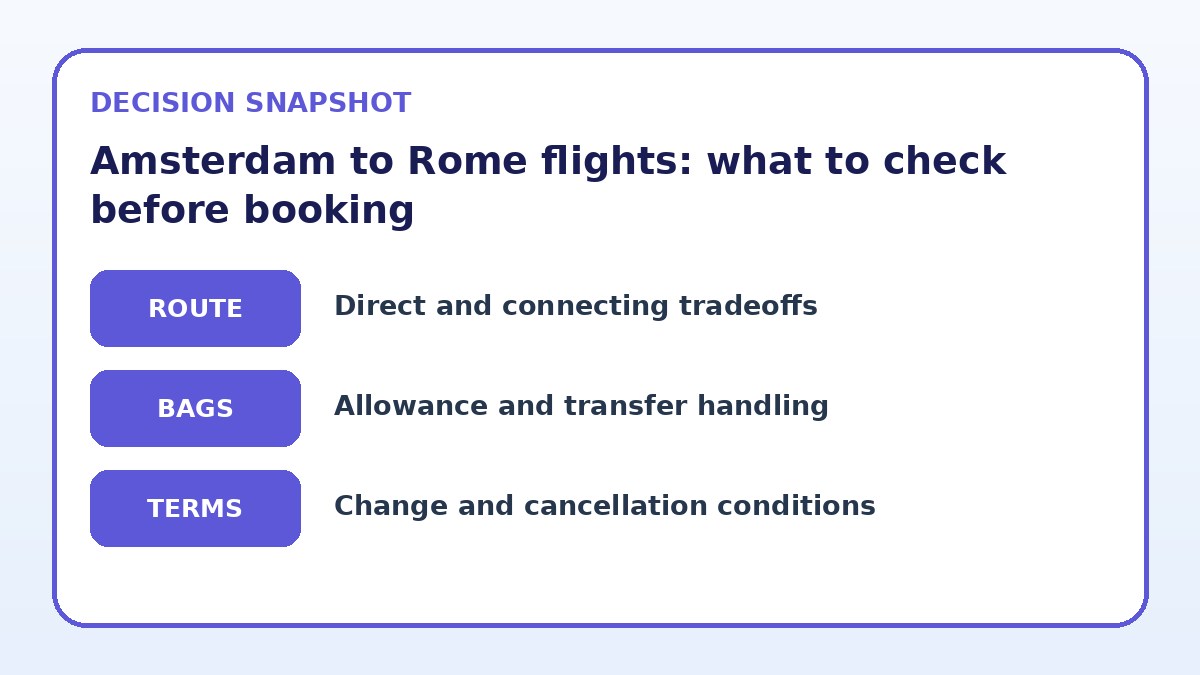
Direct flights simplify baggage logistics: check your bags in Amsterdam and collect them in Rome without needing to recheck during a connection. If direct options are available on your dates, they reduce the risk that bags are left behind or mishandled by missed connections. However, direct flights can be less frequent or priced differently than connecting itineraries. When comparing options, look for the wording on the booking page that confirms whether checked luggage is through-checked to your final destination, especially if a connection appears on a single ticket.
Connecting itineraries can save money but often increase baggage handling: with a single ticket and minimum connection time, the airline usually transfers your bags automatically. But when connections are on separate tickets or involve different carriers not in the same alliance, you may need to collect and recheck luggage, which requires extra time and often an airport transfer between terminals. Read fare rules and transfer conditions carefully and prepare for the possibility of paying extra for excess or oversized baggage on the second leg if the second carrier’s rules differ.
Baggage rules and where to verify them
Airlines and ticket types define what counts as included baggage, and the differences matter: weight versus piece policies, size limits, and fees for additional or oversized items. Before you book, gather the exact passenger details (age, frequent flyer status, and ticket class) and confirm the included allowance on the carrier’s final booking page. If you use an aggregator or travel agent, verify baggage allowance on the airline’s site after selecting a flight because fare bundles and promotional fares sometimes display differently before purchase.
Special items — sports gear, musical instruments, extra-large suitcases — usually require pre-booking and may have handling restrictions or time windows for acceptance at the airport. When you have bulky or heavy items, look for the airline’s rules about advance notification and packing requirements. If you plan to buy an extra checked bag at the airport, expect longer check-in lines and potential higher fees. For additional verification and to compare live options, Trip.com can be used to view current availability and baggage conditions, but always confirm policy specifics on the airline’s official page before paying.
Compare flight-selection strategies
| Flight strategy | Best for | Risk to check |
|---|---|---|
| Book a direct flight with checked baggage included | Travelers wanting minimal handling and smoother baggage transfer | Often higher base fares or fewer schedule options compared with multi-leg itineraries |
| Choose a single-ticket connection with through-checked luggage | Passengers seeking lower fares while keeping airlines responsible for transfers | Short connections increase risk of delayed baggage or rerouting if delays occur |
| Buy two separate tickets to lower fare but self-transfer luggage | Budget-focused travelers who accept manual baggage management | You must collect and recheck bags; no protection if you miss the onward flight |
| Purchase a higher-tier fare or add baggage at booking | Those who want flexible baggage allowances and fewer surprises at the airport | Higher upfront cost, but often saves time and stress on travel day |
Recheck the complete itinerary
Confirm airports, connection handling, baggage, and change conditions before deciding.
Schedule fit: building realistic airport time for extra luggage
Standard check-in and drop-off windows can be tight when you have multiple or oversized bags. For international travel from Amsterdam to Rome, give yourself extra margin beyond the airline’s minimum: arrive earlier for check-in if bags need repacking or inspection, and allow time to pay extra baggage fees and obtain special receipts. Consider the time of day: early morning or late evening flights often have reduced staffing, which can slow down baggage processing. Plan ground transport accordingly so last-mile delays don’t cut into your airport buffer.
If you expect to transfer in another city, pad the connection time well above the published minimums to allow for baggage transfer hiccups and passport control queues. For self-transfer itineraries, treat each flight as independent: you must collect, clear border formalities if required, and recheck luggage — so schedule ample transit time and know the minimum time needed to move between terminals or terminals and local transport. Build in an extra 60–120 minutes on top of minimum connection times when large or fragile baggage is involved.
Flight details to verify
- Record exact travel dates, full passenger names, birthdates (if required), and contact details before searching for fares.
- Count all bags and measure dimensions and weight for each item; verify each airline’s size and weight rules on their booking page.
- Decide whether to book single-ticket connections or separate tickets and calculate minimum connection time plus an extra 60–120 minutes for baggage handling.
- Compare the price of adding checked bags during purchase versus expected airport fees; add baggage at booking if terms are cheaper or clearer.
- Print or download receipts for paid baggage allowances and special-handling requests and keep them with boarding passes and ID.
- Confirm terminal maps, check-in desk opening times, and luggage drop-off cutoff times the day before travel to avoid last-minute surprises.
Fare conditions and ticketing choices that affect baggage risk
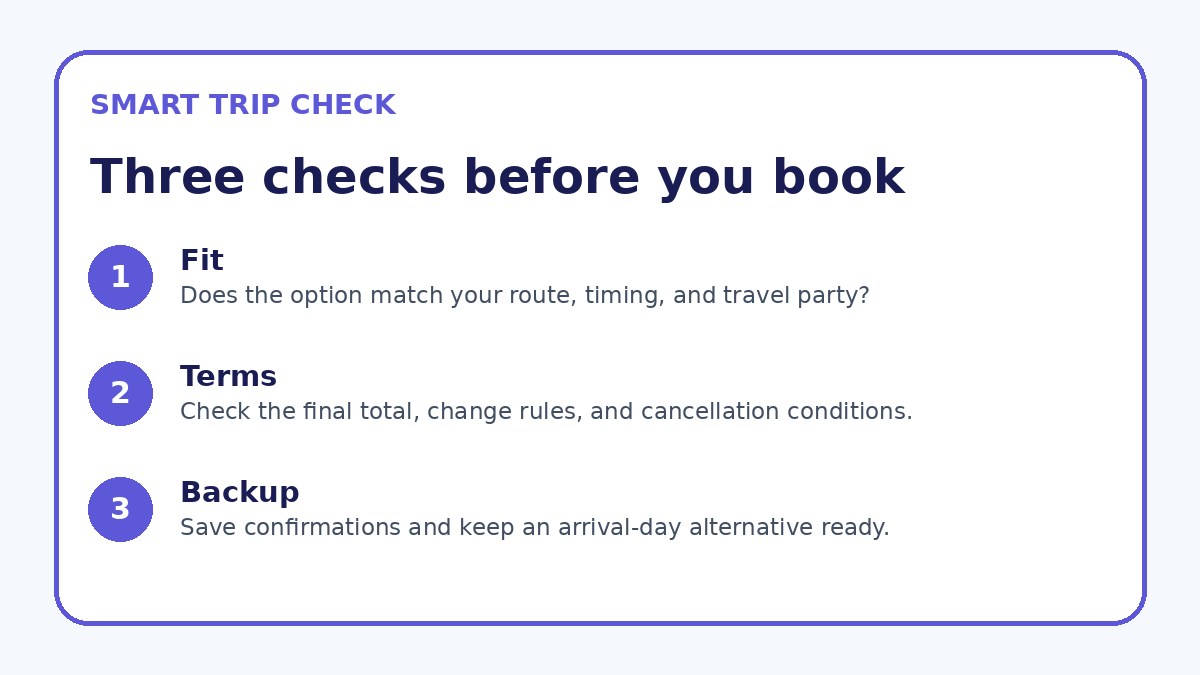
Fare types govern change and cancellation flexibility, which matter when you anticipate adjustments to baggage needs. Lower-cost fares often disallow free checked bags and restrict refundability; upgrading to a bundled fare or adding baggage at booking can be cheaper and less stressful than paying airport fees. Compare the cost of adding one or two checked pieces at purchase with the potential hassle and time required to buy them at the airport — and confirm whether journies booked on a single ticket include through-checked luggage and protection in case of missed connections.
When considering separate tickets on different airlines, weigh the savings against the loss of through-checked baggage and the absence of missed-connection protection. If you choose separate tickets, factor in the extra ground time and the possible need to store or transfer luggage independently. Check the precise fare rules on the airline’s booking page: look for terms on baggage allowances, change fees, deadline for free seat or baggage upgrades, and whether the fare allows name changes or reissue for unforeseen schedule shifts.
Flight Guide questions travelers ask
How early should I arrive at Amsterdam Schiphol with extra checked luggage?
Aim to arrive earlier than the airline’s stated minimum when you have multiple or oversized bags. For standard checked luggage, many travelers find arriving 90–120 minutes before international departures gives breathing room to check oversized bags, pay for extras, and pass security without rushing. If you need special handling, documentation, or customs inspections, allow additional time. Always verify the airline’s check-in and baggage drop deadlines on the carrier’s booking page and adjust your arrival time to include an extra buffer for queues or transport delays.
Can I trust a single-ticket connection to transfer my heavy or oversized bags?
Single-ticket connections typically include through-checking of luggage, meaning the airline handles transfer to the final flight. This reduces physical handling on your part but doesn't eliminate risk: very short connection times can still cause delays that leave bags behind. For oversized or non-standard items, carriers may require pre-notification or special handling that changes how the item moves between flights. Confirm baggage transfer rules and any required advance notice on the airline’s official booking page before you finalize the purchase.
What’s the safest way to mix carriers if I need a cheaper itinerary?
If mixing carriers to save money, recognize you may need to collect and recheck luggage between flights; plan for sufficient time, and factor in costs for storage or recheck fees. Choose airports and layovers that minimize terminal transfers and verify baggage pickup procedures in your connection airport. Whenever possible, buy flexible fares or travel insurance that covers missed connections due to delays. After selecting flights on an aggregator, always recheck baggage allowances and transfer rules on each carrier’s site — and consider reserving the extra time and budget needed to move your luggage safely.
Final decision note
Packing and airport time decisions matter more than the last euro saved when you travel from Amsterdam to Rome with extra luggage. Decide first whether you prefer the simplicity of direct or single-ticket routing, or the savings that come with self-transfers and extra baggage handling. Verify exact baggage allowances, special-item rules, and check-in deadlines on the airline’s official booking page before you pay. Build generous buffer time into departures and connections, and weigh the cost of adding baggage at booking versus the stress and fees you may face at the airport. With precise traveler details in hand and a clear routing preference, you can pick the option that balances price, convenience, and risk.
Continue planning
Check current options and final conditions
Use the provider page to confirm live availability, the final total, cancellation terms, and every condition that matters to your trip.
This evergreen planning guide was created with AI-assisted drafting and a structured quality review. It does not display live prices, schedules, availability, visa guidance, or provider rankings. Verify current details before booking. Some links are affiliate links; we may earn a commission at no additional cost to you.