If you’re traveling from Toronto to Vancouver with extra luggage, the most practical departure airport is usually the one that reduces handling complexity and connection risk, even if fares differ. For many travelers that means prioritizing airports with more nonstop or single-carrier options, predictable baggage allowances, and fewer opportunities for transfer-related mishaps. The tradeoff is familiar: you may pay more in fare or time for the convenience of simpler baggage handling. Before you book, line up your exact travel dates, number of checked pieces, preferred arrival window in Vancouver, and whether you’ll need oversized or special-item handling. With those details on hand you can directly compare flight routing (direct vs. connecting), baggage policies on the carrier(s) involved, connection tightness, and fare conditions that affect changes or refunds. This article walks through the routing, baggage and connection risks, schedule fit, and fare conditions so you can choose the departure airport that minimizes stress and surprises.

See live routes for your exact travel day
Compare direct and connecting choices with the same baggage and traveler details.
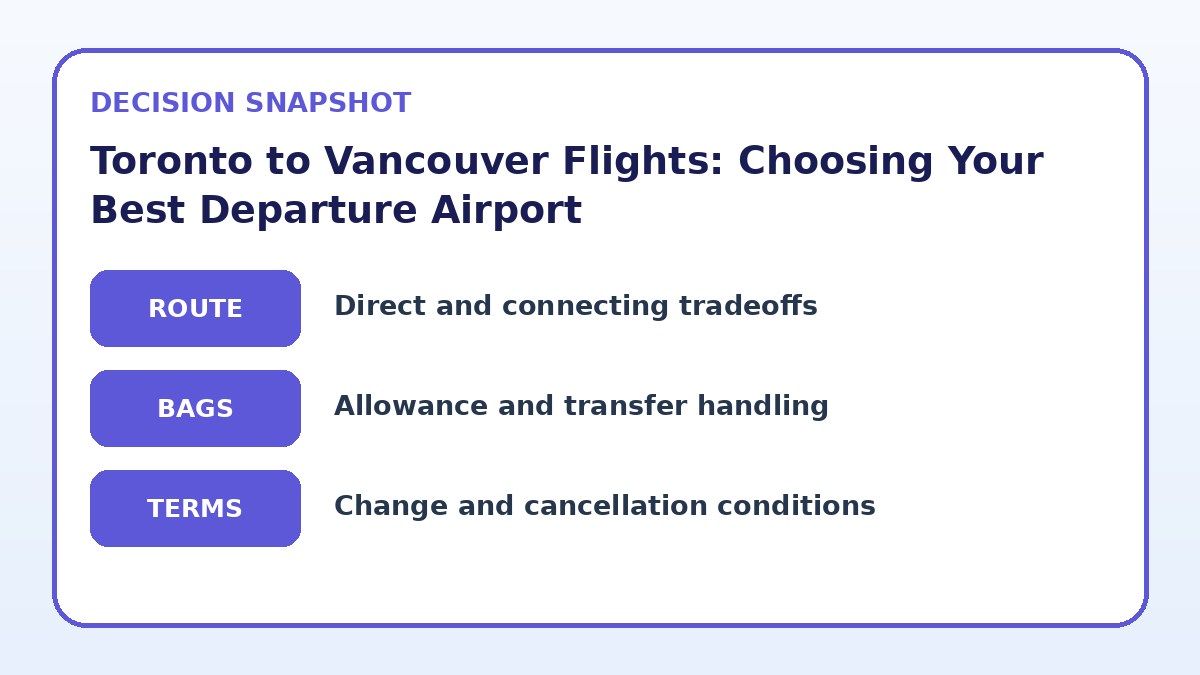
Routing: direct flights versus connections from different Toronto airports
When you’re carrying extra luggage, routing matters more than the small fare differences between Toronto airports. A nonstop or single-carrier itinerary from either Pearson (YYZ) or Billy Bishop/other Toronto-area options cuts out transfer points where checked bags can be delayed or rechecked. If your chosen airport offers nonstop service to Vancouver, that typically reduces handling stages to one check-in and one claim, which is simpler and usually safer for extra or oversized baggage. However, nonstops may run at peak hours and have stricter aircraft weight limits, so confirm the airline’s carry-on and checked limits for your aircraft type on the booking page.
Connecting itineraries can sometimes be cheaper or offer better departure times, but every connection is an added handoff for your bags. If you must accept a connection, check whether both segments are on the same ticket and carrier; single-ticket itineraries generally provide better through-checked baggage protection. Also look for same-plane or single-plane routings that keep you physically on board while the aircraft continues — those eliminate reboarding, though they are less common. Always verify routing details and whether the carrier will check bags through to Vancouver before finalizing your purchase.
Baggage and connection risk: why airport choice affects your luggage
Airports differ in how often bags are mishandled, simply because more transfers equal more risk. Departing from an airport with a higher proportion of nonstop flights to Vancouver reduces the number of times your luggage passes between handlers and terminals. Also consider the ground transport layout: if your Toronto departure requires an off-site shuttle or long transfer within the airport between terminals or airlines, luggage movement steps increase. For travelers with heavy, bulky, or fragile items, minimizing handling by choosing the airport and flights with the fewest transfer points is usually the wisest bet.
If your itinerary includes multiple carriers or interline transfers, verify baggage transfer agreements: some low-cost or regional partners don’t accept through-checked baggage on a single ticket and will require you to collect and recheck at the connection. That’s a big inconvenience when you’re managing many bags. Before booking, use the airline’s booking page to confirm whether bags are checked through and to what extent liability is assumed for delays. If this information is unclear, call the carrier to get confirmation in writing or screen capture the confirmation during booking for your records.
Compare flight-selection strategies
| Flight strategy | Best for | Risk to check |
|---|---|---|
| Pick the airport with most nonstop flights to Vancouver | Travelers wanting the fewest baggage handoffs and simplest logistics | May involve higher base fare or less flexible departure times |
| Choose the cheapest ticket regardless of airport | Budget-focused travelers who can accept connection risk and self-manage bags | Higher chance of additional baggage fees or transfer complications |
| Depart from the airport with better ground access and check-in services | Families, seniors, or travelers with oversized or many items needing easy curb-to-counter service | May limit flight options or require earlier arrival at the airport |
| Book single-ticket connections on one carrier from any Toronto airport | Passengers who prioritize through-checked baggage protection and rebooking coverage | Potentially higher fares but reduced risk of self-managing transfers |
Recheck the complete itinerary
Confirm airports, connection handling, baggage, and change conditions before deciding.
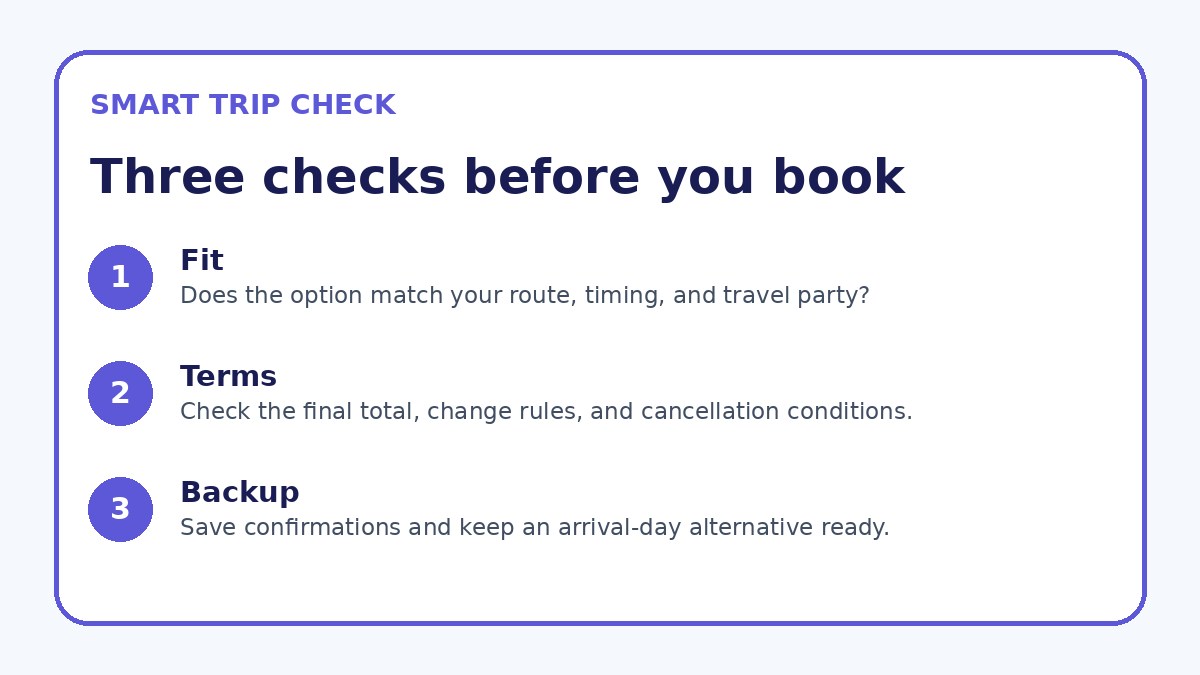
Schedule fit: departure times, connection windows, and airport logistics
Your preferred travel time can make one Toronto airport far more practical than another. If you need an early arrival in Vancouver, check which airport offers the most suitable departure windows without forcing a tight connection. Late-night flights may reduce traffic and terminal congestion but can complicate baggage service hours and ground handling; verify whether ground services (baggage handling, oversized-item desks) operate at your planned arrival and departure times. Also factor in ground travel time to each Toronto airport and the reliability of your route to the airport—time saved on ground travel can be reinvested into safer connection buffers.
When comparing schedules between Toronto airports, add realistic transfer buffers for large parties or families with many bags. Short gaps between flights leave no margin for late check-in, security lines, or sorting oversized baggage. Prefer itineraries that allow you to check in early and use curbside or priority check-in for heavy luggage if available. Confirm on the booking page whether the fare class includes early check-in options, priority baggage tagging, or any expedited processing that saves time and reduces risk of misrouting.
Flight details to verify
- Write down exact travel dates, number of passengers, and total checked and carry-on pieces before starting search comparisons.
- On the airline booking page, expand fare rules and baggage policy; screenshot or save the page that lists included pieces and fees.
- Confirm whether bags will be checked through to Vancouver when your itinerary includes a connection or mixed carriers.
- Compare departure times and allow an extra 60–90 minutes for check-in and oversized item processing if you have large baggage.
- Check airport terminal maps and inter-terminal transfer requirements in Toronto so you know if transfers add handling steps.
- If in doubt, call the carrier and request confirmation that your specific baggage configuration is permitted and will be through-checked.
Fare conditions: fees, changes, and how they interact with baggage needs
Fare conditions determine how flexible your booking is and how much unexpected baggage costs will affect the trip. Lower fare buckets sometimes exclude checked bags, impose strict size/weight penalties, or restrict changes — all important if your luggage needs change. Always expand the fare rules on the carrier’s final booking page to read the exact baggage allowances, carry-on rules, and any third-party package restrictions for your itinerary. If you’re comparing airports, note whether certain carriers operating out of one airport include a checked bag in the base fare while others at a different airport charge extra.
Also look at change and refund terms: if flight changes are likely, a more flexible fare from a higher-volume airport might be worth the premium because it reduces rebooking stress for a group traveling with many bags. If you plan to prepay for additional pieces, confirm how refunds or transfers are handled if you reschedule. When in doubt, take screenshots of the fare rules and baggage policy pages or save transaction confirmation emails so you can reference the exact conditions if an issue arises at check-in or baggage claim.
Flight Guide questions travelers ask
Is it safer to fly nonstop from Toronto to Vancouver if I have extra luggage?
Yes—nonstop flights generally reduce the number of times your luggage changes hands, lowering the chance of delay or misrouting. If you can book a nonstop departure from your preferred Toronto airport, that typically means one check-in and one baggage claim, which is simpler for extra or oversized items. However, nonstops may have their own limits on checked weight or number of pieces, so always verify the airline’s exact baggage allowances on the booking page before purchasing. If you can’t find a nonstop at acceptable times, prioritize single-ticket connections on the same carrier to keep baggage protection.
How do I find out whether my bags will be checked through on a connecting itinerary?
The carrier’s booking confirmation and fare rules usually state whether bags are checked through to the final destination. When booking, look for language about interline or through-checked baggage. If segments are on the same ticket and the carrier’s system shows the final destination for your checked bags, that’s a good sign. If it’s unclear, contact the airline’s customer service with your proposed itinerary and ask them to confirm in writing or note the booking. Save any written confirmation and screen captures from the booking page showing baggage transfer details for later reference at check-in.
Should I prepay for extra bags or wait to pay at the airport for Toronto to Vancouver travel?
Prepaying for checked bags online is usually cheaper and gives you a clear record of the allowance tied to your reservation, which is helpful when traveling with many items. Prepayment secures a confirmed fee at the time of booking and avoids potential airport lines or limited payment options. However, if you expect changes to your itinerary or are unsure about final piece counts, verify the airline’s change/refund policy for prepaid baggage on the booking page; some airlines don’t refund unused prepaid bags. If you anticipate schedule changes, consider flexible fare options with included bags instead.
Final decision note
Choosing the most practical Toronto departure airport for a Toronto to Vancouver flight boils down to minimizing baggage handling and matching schedule needs. For travelers with extra luggage, prioritize routings that reduce handoffs—nonstops or single-ticket same-carrier itineraries—and verify baggage allowances, through-checking, and fare rules on the airline’s final booking page. Balance the fare difference against the potential costs of misrouted or oversized baggage and the stress of tight connections. Prepare your exact dates, bag counts, and any special requirements before checking live options, and keep screenshots or confirmations from the carrier. If you want a third-party comparison of available flights and baggage rules, consider checking Trip.com alongside carrier pages but always verify conditions on the airline’s official booking screen before completing purchase.
Continue planning
Check current options and final conditions
Use the provider page to confirm live availability, the final total, cancellation terms, and every condition that matters to your trip.
This evergreen planning guide was created with AI-assisted drafting and a structured quality review. It does not display live prices, schedules, availability, visa guidance, or provider rankings. Verify current details before booking. Some links are affiliate links; we may earn a commission at no additional cost to you.