
If you want a practical rule of thumb: for most solo trips to Tokyo, start seriously searching 8–14 weeks before departure and lock key reservations 4–8 weeks out depending on flexibility. That gives time to watch fares and room types, compare midweek versus weekend options, and avoid last-minute stress without tying you to an inflexible plan. Your exact window shifts with seasonality (cherry blossom and autumn leaf windows are busier), event timing, and whether you value the cheapest fare, a specific neighborhood hotel, or flexible change policies. This article walks through the tradeoffs, the decision criteria that matter to solo travelers, and how to compare common booking approaches so you can choose a realistic, low-regret booking window for Tokyo travel deals.
See current options before you compare the details
Availability and final conditions change. Open Trip.com now or keep reading for the practical comparison.
How season and events change your booking window
Tokyo’s demand patterns aren’t uniform through the year. Peak cultural seasons—like cherry blossom viewing in spring and the foliage period in autumn—draw both domestic and international travelers, tightening hotel availability and making earlier booking prudent. Weekends and holiday stretches (Golden Week, New Year) locally drive up demand as well. For a solo traveler intent on specific neighborhoods or a particular capsule or boutique hotel, an earlier window reduces the chance of limited room types forcing a less-preferred pick.
Conversely, the quieter shoulder months and midweek stays often let you wait longer. If your dates are flexible, monitoring fares and room rates for several weeks before committing can reveal price trends; airfare and hotel aggregators or alerts help. But bear in mind that some event-based spikes are announced months in advance (major conventions, music festivals, or exhibitions), so if your trip overlaps a named event you should verify dates and consider booking earlier to avoid constrained choices.
Balancing price versus flexibility for solo travelers
Solo travelers commonly weigh saving a bit of money against preserving flexibility. Nonrefundable fares and prepaid hotel rates are often cheaper but carry the risk of losing value if plans change. If you’re on a tight schedule or booking around specific dates—train reservations, tours, or a single-day event—locking in reservations earlier reduces stress even if it costs more. Prioritize what you cannot move: if a museum reservation or a concert date is fixed, secure surrounding logistics first.
If your dates are fluid, you can give yourself more time to hunt deals. Using flexible search tools and price alerts allows you to pounce when a lower fare or a newly released hotel inventory appears. But because prices can swing, decide ahead how much variation you will accept; set a target fare or nightly rate that prompts booking. Always review fare rules, change fees, and any provider-specific terms on the final booking page so you understand the cost of shifting plans afterward.
| Approach | Best for | Tradeoff to check |
|---|---|---|
| Book early (10–16 weeks) | Travelers with fixed dates, wanting specific neighborhoods or single rooms. | Higher upfront cost or less flexibility if plans shift. |
| Standard window (6–10 weeks) | Balance between availability and reasonable fares for most solo trips. | Moderate chance of missing peak inventory or the very cheapest fare. |
| Late book (4–6 weeks) | Flexible solo travelers hunting mid-season dips or last-minute deals. | Risk of limited room types and fewer direct flight options. |
| Wait-and-pounce (2–4 weeks) | Highly flexible travelers aiming for short-notice savings. | Greater chance of paying more for convenience or losing preferred options. |
Ready to check the option that fits your plan?
Use your exact dates and traveler details so the provider page can show the current total and conditions.
Practical tactics for watching Tokyo travel deals
Use a mix of strategies: set alerts on flight and hotel platforms, compare alternate airports (Haneda vs. Narita) and nearby neighborhoods, and check midweek travel options for lower demand. Solo travelers benefit from smaller-room inventory like single rooms or guesthouse bunks, so monitor those specific room types rather than general hotel categories. Also, consider refundable versus nonrefundable rates side-by-side and factor in the monetary value of flexibility relative to your tolerance for last-minute change.
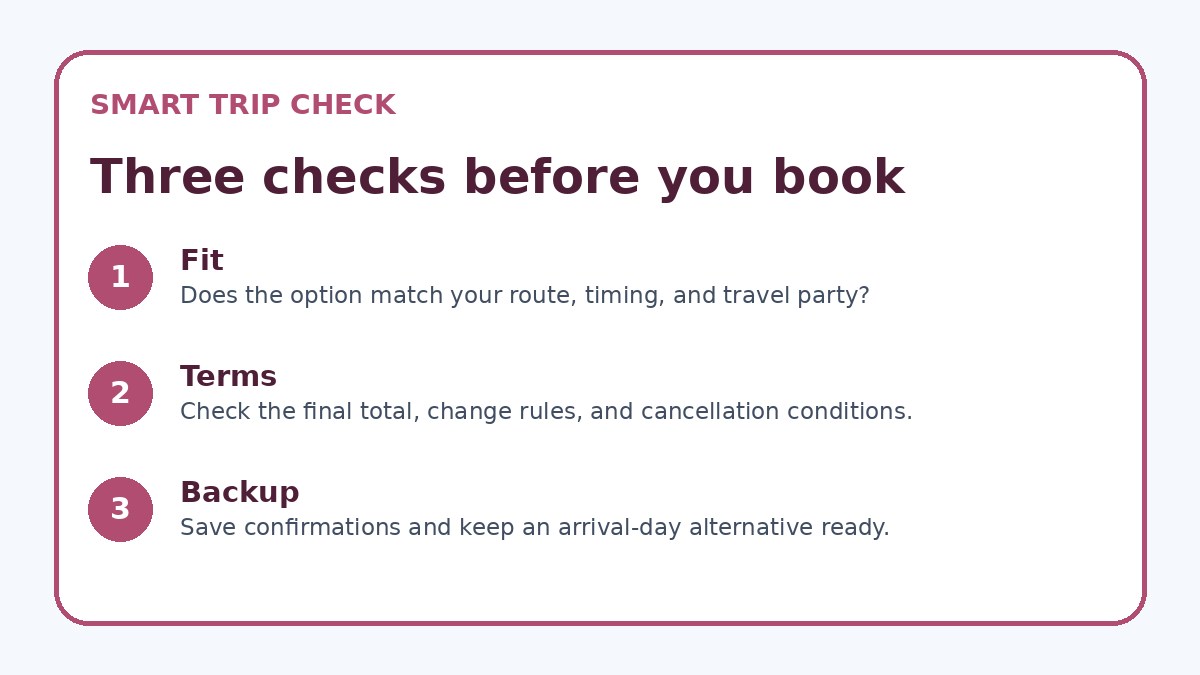
When comparing options, check what the supplier’s final booking page says about cancellations, change fees, and refund timing; don’t rely on summary snippets or third-party descriptions alone. For trains and internal travel that require seat reservations, confirm booking windows and whether you can reserve online in advance. Trip.com is one place you can use to compare availability and policies, but always verify terms on the provider’s own booking page before committing.
Before you book
- Set price and availability alerts for your exact travel dates and preferred neighborhoods to monitor Tokyo travel deals.
- Decide a concrete booking deadline (calendar date) to avoid endless price-watching and make a final choice.
- Compare refundable and nonrefundable rates side-by-side and calculate the real cost of change fees before booking.
- Verify cancellation and change policy details on the provider’s final booking page before confirming any reservation.
- Check alternate airports, arrival times, and likely transfer options to ensure logistics match your comfort level.
- Reserve at least one firm item (flight or first-night accommodation) early if your dates are fixed or during peak season.
Choosing your firm booking triggers
Define triggers that make you commit: price threshold, calendar deadline, or inventory warning. A price threshold is a concrete fare or nightly rate you won’t let go below; set it based on your budget and book when an option meets it. A calendar deadline means you decide to finalize bookings a certain number of weeks before departure—handy for solo travelers who want a clear decision point to stop monitoring and start packing.
Inventory warnings are less precise but useful: if the hotel shows limited single rooms, or multiple flights are disappearing, act sooner. Pair triggers with contingency plans: if you miss the lowest price, what premium are you willing to pay for convenience? Finally, factor in transfer logistics between airports and your planned Tokyo activities—locking in a centrally located hotel earlier can save time and transport cost during a short solo trip.
Frequently asked questions
How far ahead should I book flights to Tokyo if I’m traveling solo and want both value and options?
A practical balance for flights is to begin monitoring fares about three months out and consider booking around 8–12 weeks before departure for typical travel. That timeline often preserves a good mix of seat availability and competitive pricing without committing too early. If your travel dates coincide with local holidays or major events, or if you need a specific departure time, move that decision earlier. Use fare alerts and check alternate arrival times and airports, and always confirm ticket change and cancellation rules on the carrier’s booking page.
Should I book my Tokyo hotel before locking a flight, or vice versa as a solo traveler?
For most solo travelers it’s sensible to lock the flight first to secure your arrival date and airport, then book accommodation once you know arrival and departure logistics. However, if a particular small hotel, guesthouse, or capsule has very limited single-room inventory, reserve it early and then fit flights to those dates. The key is identifying which element is least flexible for your trip—seat availability on a preferred flight or the exact room type at a chosen property—and securing that first.
What are safe booking practices if I want to keep options open while looking for Tokyo travel deals?
Choose refundable or changeable fares and hotel rates when you value flexibility, and monitor price drops after booking—some providers offer free changes or will match lower rates with minimal fee. Keep records of cancellation deadlines and make small, refundable commitments (like reserving the first night) while you continue hunting deals for the remainder of your stay. Always verify final terms on the supplier’s booking page, and consider travel insurance that covers cancellations or disruptions if nonrefundable fares are part of your plan.
Final planning note
Choosing a realistic booking window for Tokyo travel deals means matching your personal flexibility, the season, and what you can’t compromise. Solo travelers who need specific dates or rooms should trend earlier—two to four months out—while those with flexible schedules can wait longer to watch for dips. Use concrete triggers (price threshold, calendar deadline, or inventory warnings) to avoid decision fatigue. Combine alerts, refundable options, and a clear contingency plan so you can act when a deal meets your criteria. Verify all fees and policies on the provider’s final booking page, and if you want one place to compare availability, consider checking Trip.com alongside direct supplier sites before you commit.
Continue planning
Check current options and final conditions
Use the provider page to confirm live availability, the final total, cancellation terms, and every condition that matters to your trip.
This evergreen planning guide was created with AI-assisted drafting and a structured quality review. It does not display live prices, schedules, availability, visa guidance, or provider rankings. Verify current details before booking. Some links are affiliate links; we may earn a commission at no additional cost to you.