If you're planning Tokyo to Sapporo flights with kids, start by deciding whether convenience or flexibility matters most. Direct flights mean fewer airport transfers and simpler logistics, which can save energy with young children and reduce the chance of missed connections. Connecting itineraries can offer lower fares, more departure times, or better seat availability for families needing extra flexibility or specific schedules. Before you book, compare total door-to-door travel time, the number and length of airport transfers, and how connections affect luggage handling and potential delays. Also verify cancellation and change policies for the fare class you choose, because families benefit from flexible rebooking. This guide walks through the practical tradeoffs, decision criteria, and a checklist so you can pick the option that keeps your family comfortable and your travel day predictable.
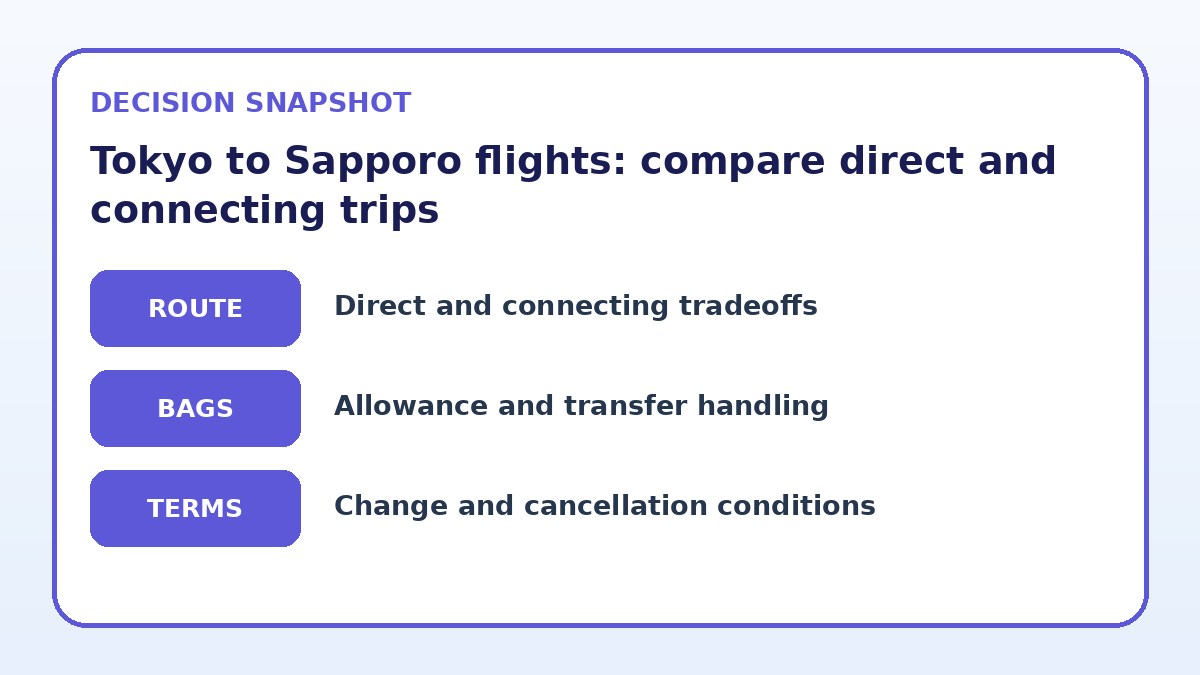
See current options before you compare the details
Availability and final conditions change. Open Trip.com now or keep reading for the practical comparison.
How direct and connecting options differ for families
Direct flights eliminate intermediate airport arrivals and departures, which simplifies travel logistics: one takeoff, one landing, and usually a single checked-luggage transfer. For families that value predictability—napping infants, strict mealtimes, or avoiding late arrivals at a hotel—a direct itinerary reduces the number of moments when things can go wrong. It also lowers the mental load of coordinating gates, rechecking luggage, or rushing between terminals. If you have bulky gear or a young child who needs special handling, fewer handoffs can be a real advantage.
Connecting itineraries trade that simplicity for more options. They may unlock cheaper fares, better seat combinations for larger families, or departure times that better match your schedule. But connections introduce extra steps: retrieving and rechecking luggage (in some cases), moving between gates or terminals, and spending additional time in airports. For families, transfers can mean disrupted naps, longer security lines, or the need to find places for kids to burn off energy while waiting. Decide which inconvenience you can tolerate in exchange for schedule or cost benefits.
Comfort and logistics to weigh before booking
Think about what makes travel comfortable for your family: seat continuity, ability to book adjacent seats, in-flight restrooms, and the cabin layout. Direct flights make it easier to keep the same seats for the whole journey and reduce the chance of seat changes during connections. Also consider airports: some terminals are more family-friendly with play areas, nursing rooms, and easy transfers, while others may involve long corridors or shuttle buses. Factor in whether you can pre-board, use priority lanes, or reserve bassinets; those features can swing the balance toward a direct option.
Logistics also include baggage rules, stroller handling, and the potential need to re-clear security at a connecting airport. Verify on the carrier’s booking page whether you must collect and recheck bags at the connection or if they transfer automatically. For checked strollers and car seats, some airlines gate-check these items while others require them at bag drop. If connecting leads to tight transfer windows, consider the added risk of missed connections and whether the airline’s protection policy or an extended layover is needed to keep the trip smooth for children.
| Approach | Best for | Tradeoff to check |
|---|---|---|
| Direct flights | Families prioritizing simplicity, fewer transfers, and less chance of missed connections | Often fewer schedule choices and sometimes higher base fares or limited seat availability |
| Connecting flights with long layovers | Families wanting lower fares or specific departure times while avoiding tight transfers | Longer total travel time and more time spent in airports needing activities for children |
| Connecting flights with short layovers | Travelers confident in airline connection protection and who value faster overall routing | Higher risk of stress and missed connections, especially with young children or lots of luggage |
| Mixed-carrier or self-transfer itineraries | Families seeking the lowest possible fares or unique timing options | Usually more complex rebooking and baggage processes; verify protection and baggage transfer rules |
Ready to check the option that fits your plan?
Use your exact dates and traveler details so the provider page can show the current total and conditions.
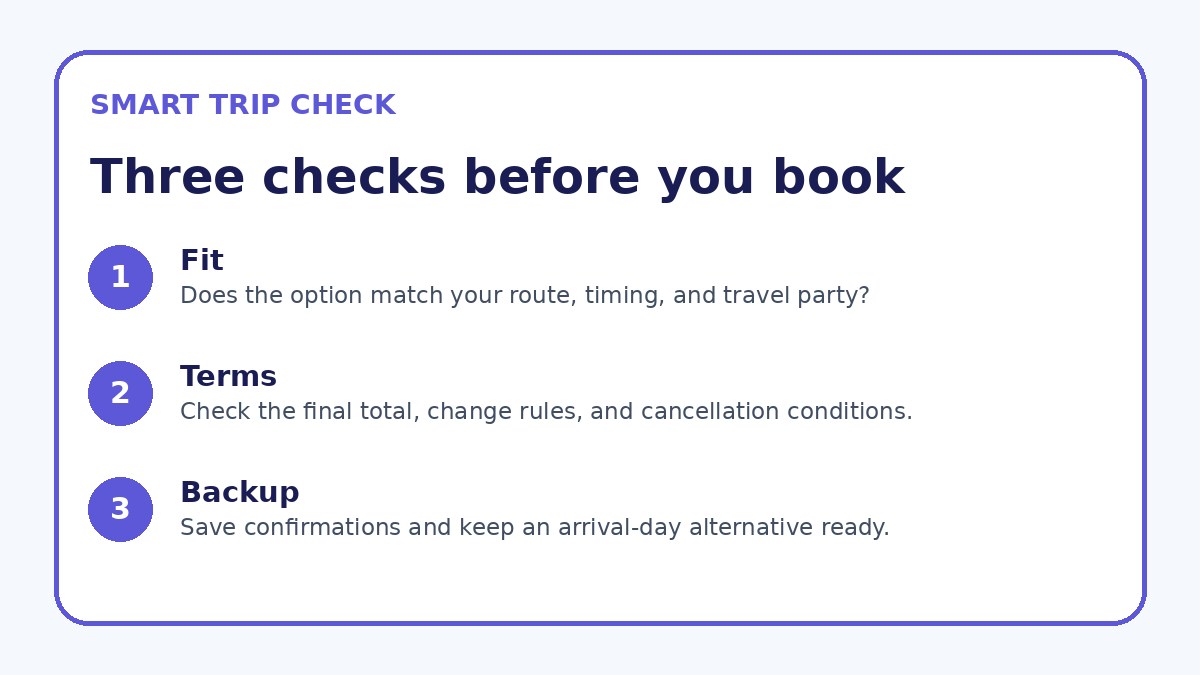
Time, cost, and flexibility tradeoffs
Assess total door-to-door time rather than only flight duration. A direct flight with a longer wait at a distant airport might still beat a connecting itinerary that adds substantial layover time and a second takeoff. For families, travel energy—preparing snacks, changing diapers, or pacing with restless kids—often translates to a hidden cost. Conversely, connecting flights can let you depart at a better time (early morning or late evening) that aligns with naps or overnight sleep, potentially making the longer itinerary feel shorter.
On price and flexibility, consider fare rules and change fees. Connecting itineraries sometimes appear cheaper but may be less flexible if they’re sold as separate legs or operated by different carriers. If you need to change plans, a single-cabin direct booking usually simplifies rebooking and customer service interactions. When looking at combinations, check whether protective fares, family bundles, or refundable options are available and how cancellation and change fees apply—verify these details on the airline’s final booking page before purchase.
Before you book
- Confirm whether the fare includes checked baggage and how many pieces are allowed for your family’s luggage.
- Verify stroller and car-seat handling rules on the airline’s final booking page, including gate check versus check-in procedures.
- Compare total door-to-door time, including transfers to and from airports and required layover buffers.
- Check seat maps to ensure seats together or bulkhead/bassinet availability before purchasing tickets.
- Review change and cancellation policies for the specific fare class and confirm any family-friendly exceptions.
- If planning a connection, choose a layover that allows time for delays, immigration, and slow gate transfers.
Practical tips for making the final choice
Start by listing absolute requirements: number of children, stroller or car-seat needs, and whether you need seats together. Use those filters first when searching. Next, run a direct-versus-connecting comparison for the same travel window: note total travel time, number of transfers, and the layover length. For connections, prefer layovers that allow time for unexpected delays—long enough to move between gates, handle immigration if applicable, and let kids stretch. Avoid itineraries with very tight transfer times unless the carrier explicitly protects connections.
Before you book, check seat maps and baggage rules on the airline’s final page, and read the fine print for infant and child policies. If traveling with grandparents or someone with limited mobility, prioritize fewer transfers and ask about special assistance at both departure and arrival airports. Consider travel insurance that covers missed connections and flight disruptions if your itinerary uses multiple carriers. Finally, keep one backup plan: a later direct flight or an overnight stay option at the transfer city if connections look risky.
Frequently asked questions
Is a direct flight always the better choice for families flying Tokyo to Sapporo?
Not always. Direct flights reduce transfers and simplify logistics, which many families prefer, but they can be less flexible on timing or more expensive. If a direct option fits your schedule and budget, it often minimizes stress. However, connecting flights can offer useful departure times or better seat availability for larger groups. Evaluate total door-to-door time, seat arrangements, and whether the carrier automatically transfers baggage. Use those criteria to decide which option will actually feel easier on the day of travel.
How much layover time should families allow when choosing a connecting itinerary?
Allow enough layover time to account for gate-to-gate transfers, bathroom or diaper breaks, and unexpected delays—especially when traveling with young children. If both flights are within the same terminal, a shorter layover may be fine, but if you need to change terminals, collect baggage, or pass through security, add more buffer. Also consider whether you need time for feeding, stroller retrieval, or calming a restless child. When in doubt, pick a longer layover to reduce rushing and stress.
What should I verify on the airline’s booking page before booking for my family?
On the carrier’s final booking page, confirm seat availability (and the ability to reserve seats together), checked baggage allowances, infant or child policies, and rules for strollers or car seats. Check change and cancellation fees for the fare class you’re buying, and whether any protective policies cover missed connections. If the itinerary includes multiple carriers, verify how baggage transfer is handled and who is responsible if a connection is missed. Confirming these details prevents surprises that can be hard to resolve once travel begins.
Final planning note
Choosing between direct and connecting Tokyo to Sapporo flights for a family trip is a balance between simplicity and flexibility. Direct flights reduce transfers, making travel days more predictable and easier with small children or bulky gear. Connecting itineraries can open helpful departure times and price options, but they add transfers, potential baggage handling, and longer door-to-door time. Focus your decision on what reduces stress for your family: guaranteed adjacent seats, minimal transfers, or a specific schedule. Carefully verify baggage, stroller, and fare-change rules on the airline’s booking page before purchasing, and consider a slightly longer layover if you choose connections so the trip stays manageable for everyone.
Continue planning
Check current options and final conditions
Use the provider page to confirm live availability, the final total, cancellation terms, and every condition that matters to your trip.
This evergreen planning guide was created with AI-assisted drafting and a structured quality review. It does not display live prices, schedules, availability, visa guidance, or provider rankings. Verify current details before booking. Some links are affiliate links; we may earn a commission at no additional cost to you.