Practical answer first: for most couples, bundled packages (flight + hotel + a ticket or two) can save time and simplify planning, but separate bookings often win on flexibility and personalization. The right choice depends on what you must have included, how fixed your dates are, whether you need refundable or changeable options, and how much time you want to spend researching. Start by lining up the same dates, identical traveler names, and the same room type and seating class for an apples-to-apples comparison. Check cancellation and change policies, baggage and transfer inclusions, and whether any attraction tickets are timed or nonrefundable. This guide walks through the tradeoffs couples face in New York City travel deals, what to verify on supplier pages, and how to avoid false savings so you pick the option that fits your relationship style, budget tolerance, and must-see list.
Test package value fairly
| Booking approach | Best for | Tradeoff to check |
|---|---|---|
| Full bundled package (flight+hotel+extras) | Couples who want one confirmation, simpler logistics, and minimal trip planning time | Less flexibility for changes and potential difficulty isolating refunds or modifications for individual components |
| DIY separate bookings (flight, hotel, attractions) | Couples who prioritize customization, refundable options, and seat/room selection | Requires more time and care to compare totals and avoid missing bundled savings or coordinated services |
| Hybrid (buy flight+hotel but add activities separately) | Couples wanting core convenience while keeping attraction choices flexible | May lose some package savings and creates split-provider responsibilities for problems |
| Package for some nights only (short bundle) | Couples with mixed itineraries—part guided or fixed, part independent exploration | Can complicate transfers and arrival timing; savings may not cover added coordination or separate transport costs |
Check current package and separate options
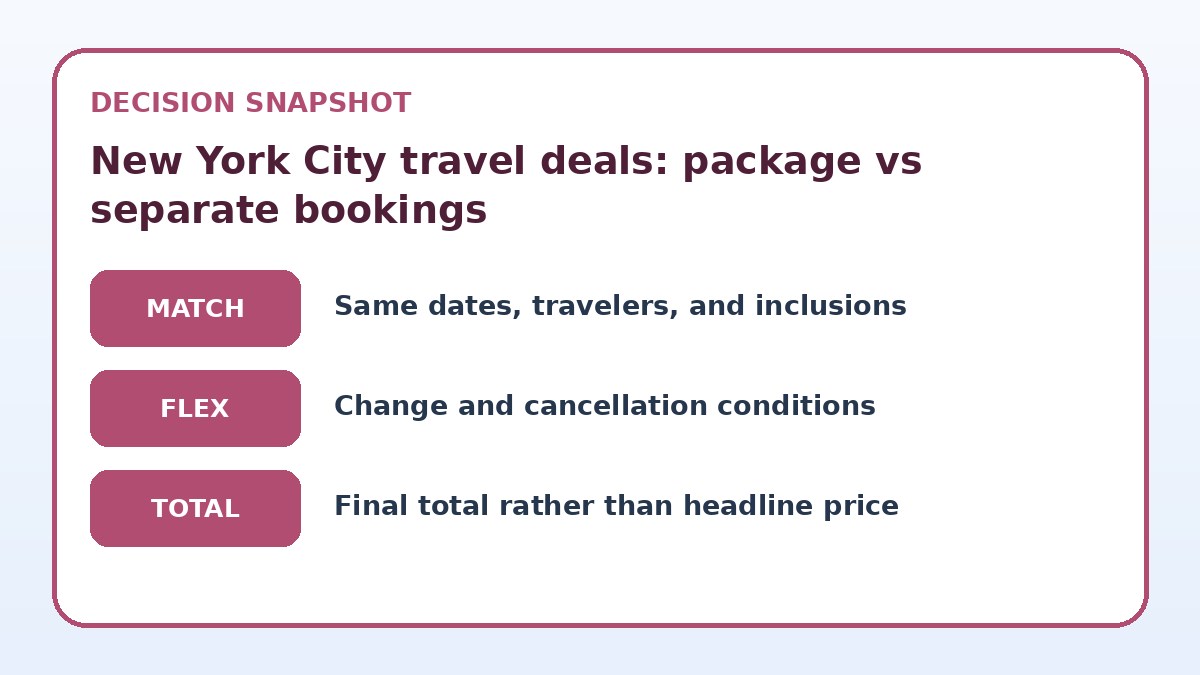
Use identical dates, travelers, room needs, baggage, and flexibility so the comparison stays meaningful.
What to compare first: the essentials before pricing
Before you decide whether a bundle is useful, list the non-negotiables for your trip. For couples, those might include travel dates tied to an event, a preferred neighborhood, bed configuration, airport choices, and must-see attractions (Broadway, museums, a specific rooftop, etc.). Write down whether you need refundable tickets, late check-out, or airport transfers. Having these fixed comparison points prevents being swayed by a headline price that omits something important—like baggage fees or timed attraction entries.
With those essentials in hand, assemble identical test bookings: same dates, same number of travelers, same room type, same seat class, and the same attraction inclusions. Compare total out-the-door costs including taxes, service fees, and mandatory extras. Note which options are refundable or changeable and which are final sale. This apples-to-apples approach reveals true differences in convenience, flexibility, and what you actually get for the money.
Inclusions: what packages typically bundle and what they may hide
Packages often build convenience into the price: flights, hotel nights, and sometimes an attraction or transfer. For couples that value a single confirmation, this can reduce coordination stress. However, inclusions vary widely—some packages include only base airfare without seats together, others add attraction vouchers that are timed or restricted. When reviewing a package, identify exactly which elements are covered, whether transfers are private or shared, and if any included attraction has a specific date or time that you must commit to at booking.
Don’t assume bundles include baggage, seat selection, or taxes. On the separate-booking side, you choose each element but must add fees that packages may have absorbed. If an included attraction appears in a bundle, check whether it’s a flexible voucher or a hard ticket with an assigned entry time. On provider pages, verify what changes are permitted, who handles refunds if part of the trip is canceled, and whether the package allows splitting components without penalties.
Look past the headline total
Compare inclusions and change conditions before deciding whether a package is genuinely useful for this trip.
Deal comparison checklist
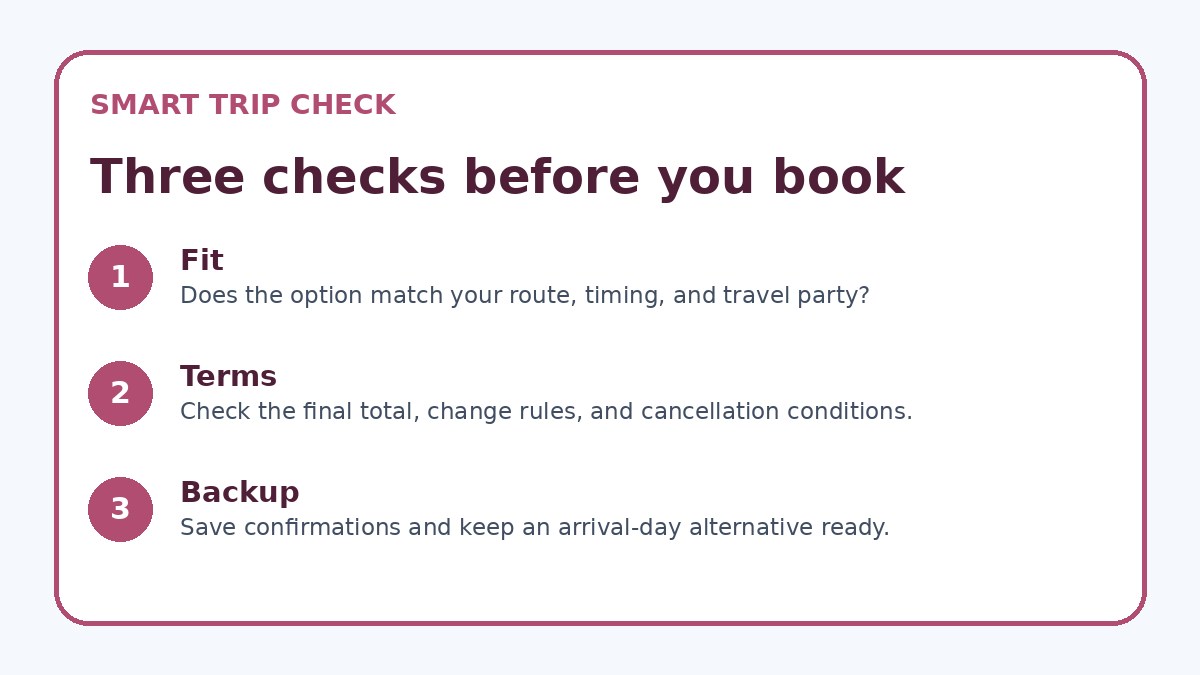
- Confirm the exact travel dates, traveler names, room type, and seat class are identical when comparing package and separate totals.
- Print or save the final terms page from each provider showing cancellation fees, change rules, and refund windows before paying.
- Compare the out-the-door total: base price, taxes, mandatory fees, baggage, transfers, and attraction tickets for all options.
- Check whether included attraction tickets are timed or open-dated and whether they can be refunded or exchanged.
- Verify who will be your point of contact for day-of problems and confirm their business hours and escalation process on the supplier page.
- Consider buying trip insurance for nonrefundable elements and confirm the policy covers cancellations, medical issues, and supplier insolvency if important to you.
Flexibility: how change and cancellation rules affect couples
Couples often need flexibility—one partner’s work assignment can shift, or a medical appointment might force a change. Packages can simplify communication because you deal with one vendor, but that vendor’s change rules may apply to the whole bundle. If a package’s flight is nonrefundable but the hotel is flexible, changing dates could still trigger fees or require rebooking the entire package. Read the provider’s terms to understand which elements can be modified independently and which cannot.
Separate bookings let you tailor flexibility: choose refundable hotel rates, buy changeable or refundable tickets, or purchase trip insurance selectively. That granular control usually costs more upfront but reduces risk when plans change. For couples deciding between flexibility and convenience, estimate potential change costs: add likely change fees and compare them to any package savings to see which route reduces financial risk under plausible scenarios.
Traveler-specific value and final contract terms to verify
Couples bring different priorities—comfort, romance, activity pace, and accessibility needs. Ask whether packages let you select room views, guaranteed adjoining rooms, or specific seat assignments. If one partner needs accessible room features or dietary accommodations, confirm those are available and documented in the final booking. Verify who is responsible for resolving on-the-ground issues: the package provider, the airline, or the hotel. The provider’s contact and escalation process should be visible before you hit purchase.
On the final booking page, confirm the exact refund and change policy language, cancellation windows, what taxes and fees are included, and any blackout dates for included attractions. If you plan to mix-and-match—booking flight separately but hotel via a package—check whether the package requires arrival or departure windows. Finally, ask about insurance options and what is covered, and ensure traveler names match government ID to avoid issues at check-in or security. Where helpful, compare live availability and terms on Trip.com as one reference point, but always verify on supplier pages.
Travel Deals & Booking Strategy questions travelers ask
How do I spot a false saving when comparing New York City travel deals?
A false saving appears when a package’s headline price excludes mandatory items you’d buy separately—baggage, seat selection, resort fees, or timed attraction surcharges. Always calculate the final price including taxes and mandatory fees for both package and separate options. Verify whether a package’s included attraction is nonrefundable or has a strict entry time you can’t change. Finally, confirm before booking whether change fees or the provider’s cancellation policy could erase apparent savings if you need to alter travel plans.
If one partner needs flexible dates and the other prefers locked-in plans, which booking approach should we choose?
If flexibility is the priority for even one partner, separate bookings usually offer clearer options: refundable hotel rates and changeable flight fares can be purchased independently. A hybrid approach can also work—book a refundable hotel and buy flights through a package only if the package permits independent changes. Before choosing, model a likely change scenario and compare its cost under both approaches so you can make a decision based on potential change fees rather than headline prices.
What specifics should couples verify on the provider checkout page before confirming a package?
On the checkout page, confirm the full list of included items (baggage, transfers, attraction tickets), the refund and change policy language, exact taxes and service fees, and whether seating or room preferences are guaranteed. Check cancellation windows and whether refunds are credited to the original form of payment. Note the provider’s customer service contact and hours, and whether any included attraction requires a timed reservation on arrival. If anything is unclear, contact the provider and get confirmation in writing before completing payment.
Final decision note
Couples planning a New York City trip should start by listing non-negotiables—dates, room and seat types, must-see attractions—then compare like-for-like totals. Packages can save time and bundle conveniences, but their value depends on which items they include and how they handle changes and refunds. Separate bookings give granular control and easier modifications but demand more planning time. Use the checklist to verify final terms, model plausible change scenarios, and confirm inclusions on supplier checkout pages. That careful comparison will help you choose the balance of convenience and flexibility that best suits your relationship’s travel style.
Continue planning
Check current options and final conditions
Use the provider page to confirm live availability, the final total, cancellation terms, and every condition that matters to your trip.
This evergreen planning guide was created with AI-assisted drafting and a structured quality review. It does not display live prices, schedules, availability, visa guidance, or provider rankings. Verify current details before booking. Some links are affiliate links; we may earn a commission at no additional cost to you.