Practical answer first: for most solo travelers on the Tokyo to Osaka route, the Shinkansen (high‑speed train) or a budget domestic flight will be the best options depending on how you balance time, cost, luggage and comfort. Choose the Shinkansen if you want a predictable, city-center-to-city-center journey with easy baggage handling and a relaxed boarding process. Pick a flight if your priority is shorter door-to-door time with light luggage and you can accept extra steps like airport transfers and security. Intercity buses and night options can save money but add travel time and reduce flexibility. Below I’ll explain when each approach makes the most practical sense for a solo traveler, what to compare before booking, and a concise checklist so you leave with a confident choice.
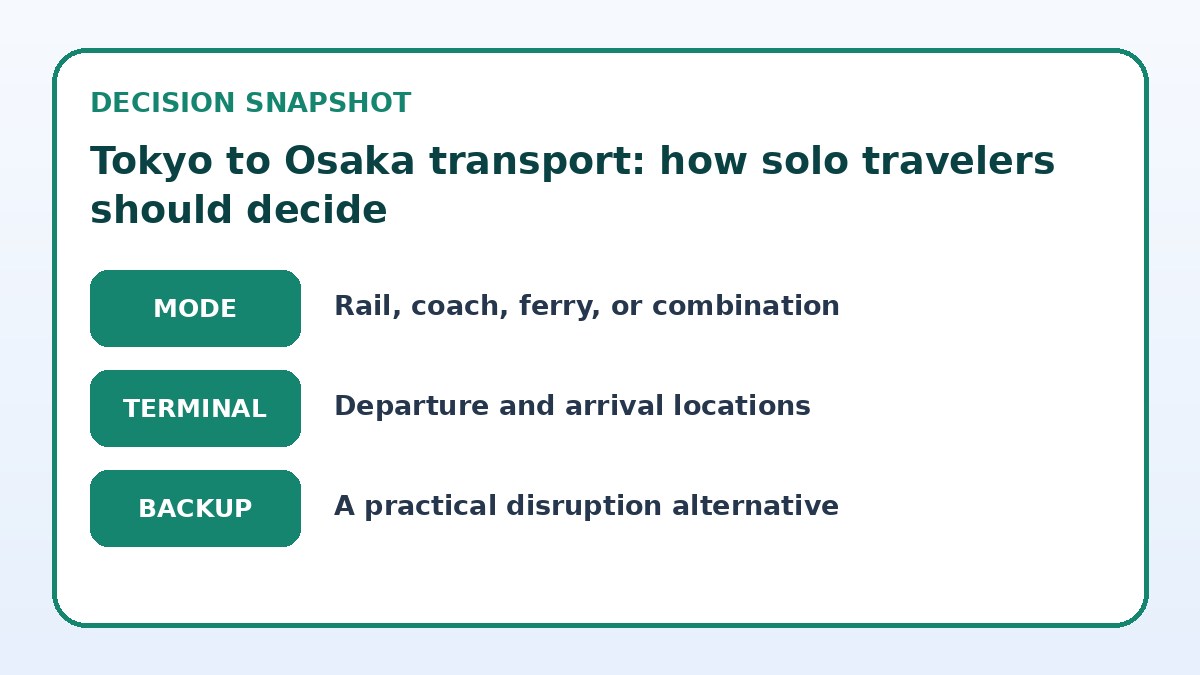
See current options before you compare the details
Availability and final conditions change. Open Trip.com now or keep reading for the practical comparison.
Why the Shinkansen often wins for solo travelers
For a solo traveler who values a straightforward experience, the Shinkansen is frequently the practical choice because stations are central, boarding is orderly, and you avoid airport transfers. Seating is individual, security is minimal compared with flying, and you can work, read or rest without the hassle of going through a terminal. Luggage is handled in-carriage or in designated storage areas, which reduces the stress of moving bulky bags through crowded checkpoints.
Decide on the Shinkansen when your priority is predictable timing and convenience rather than squeezing the last bit of cost savings. If you have flexible dates and prefer to travel between city centers with minimal logistics, trains reduce many of the small decisions and waits that add friction when traveling solo. Before booking, check whether you prefer a reserved seat for peace of mind or non-reserved cars if you want maximum flexibility.
When flying makes practical sense
A flight can be sensible when you’re traveling very light and can make airport transfers quickly; it may reduce airborne time and give you more daytime hours at your destination. If you’re staying near airports or using fast transit links, flying can be competitive on total travel time. For solo travelers who prefer fewer train transfers or who are combining this leg with longer domestic travel, a flight can fit more efficiently into a tight itinerary.
Before you book a flight, compare total door-to-door time including check-in, security, baggage claim and transfers to and from the airports. Also check luggage allowances, what’s included in the ticket, and the cancellation or change policies on the carrier’s booking page. If you plan to book with an aggregator or Trip.com, use the final provider page to confirm baggage rules, seat selection options, and any additional fees that affect your choice.
| Approach | Best for | Tradeoff to check |
|---|---|---|
| Shinkansen (high‑speed train) | Predictable city‑center travel, easy baggage handling, business‑style comfort | Usually higher base fare than buses and requires booking decisions for reserved seats |
| Domestic flight | Light packers needing shorter airborne time and willing to manage airport transfers | Adds airport transfer time and security steps that can negate airborne time savings |
| Highway bus / overnight | Budget-conscious travelers who accept longer travel time and reduced privacy | Longer door-to-door time and more exposure to road delays; less personal space |
| Self-drive or mixed modes | Travelers wanting side trips or flexible schedules off major corridors | Adds navigation, parking, tolls and administrative tasks that solo travelers must manage alone |
Ready to check the option that fits your plan?
Use your exact dates and traveler details so the provider page can show the current total and conditions.
Saving money: buses and overnight options
Intercity highway buses and overnight sleeper services can be the practical option for solo travelers on a strict budget who don’t mind longer travel times and want to save on accommodation. Buses often depart at multiple times, sometimes overnight, and let you travel while skipping a hotel night. For many solo travelers, this tradeoff is practical if you’re comfortable with reduced privacy, limited space and the unpredictability of road traffic.
When considering a bus, evaluate departure and arrival locations relative to where you’ll stay, bus company luggage allowances, and how comfortable you are with onboard facilities. If reducing cost is the main goal, also compare combined train fares and regional passes, since a pass may make multiple Shinkansen trips or local travel more economical depending on your wider itinerary.
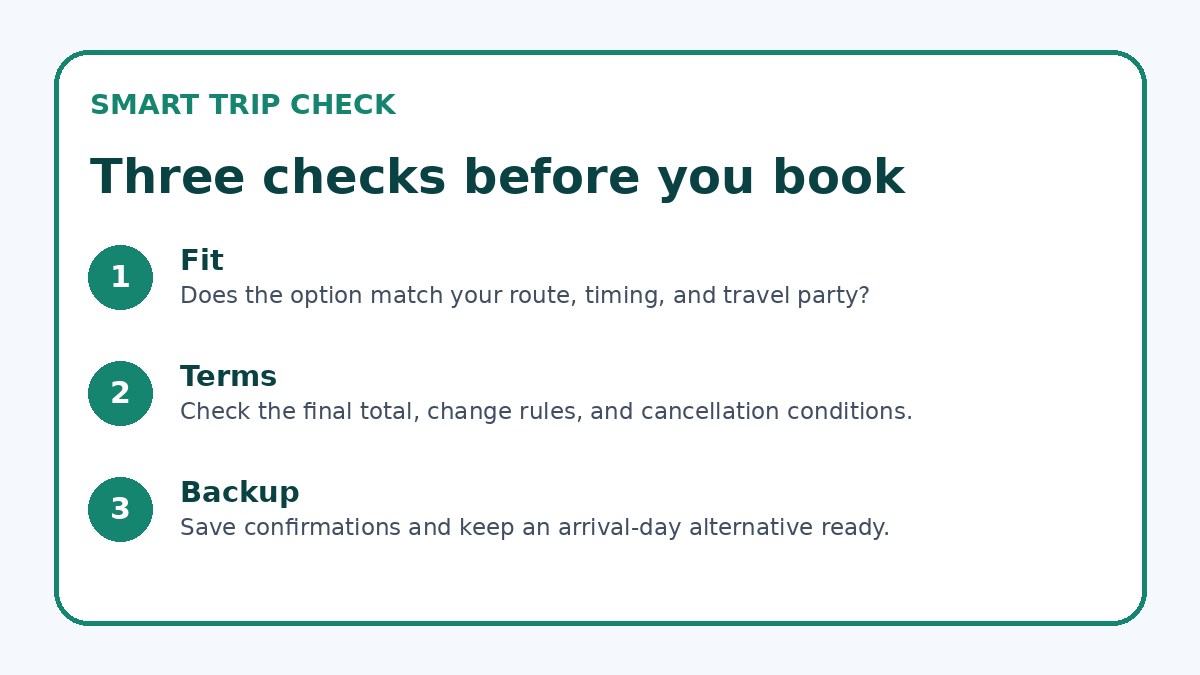
Before you book
- Compare total door-to-door travel time (including transfers and security) for trains, flights and buses before choosing.
- Check baggage allowances and where luggage is stored on each option; confirm on the carrier’s official booking page.
- Decide if you need a reserved seat or flexibility without reservation and book accordingly.
- Map arrival and departure locations against your accommodation to avoid long or costly transfers.
- Confirm cancellation, change policies and any extra fees on the provider’s final booking page.
- If using a pass, verify which segments require reservations and whether the pass covers the services you plan to use.
Self-drive and mixed approaches: when they fit
Renting a car or combining transport modes can work if your Tokyo–Osaka plan includes side trips or off-the-beaten-path stops where public transport is limited. For a solo traveler, driving adds flexibility but also responsibilities: navigation, parking, tolls and dealing with unfamiliar road rules. Consider whether you feel comfortable driving in congested urban areas and handling parking in both cities before choosing this approach.
A mixed approach — for instance, flying one way and taking the train the other — can balance speed and experience. Solo travelers should map the logistics: where each option drops you, how you’ll handle luggage, and how connections align with your accommodation check-in times. Always verify rental terms, insurance coverage, and cancellation rules on the provider’s booking page to avoid surprises.
Frequently asked questions
Is the Shinkansen the fastest way between Tokyo and Osaka?
Shinkansen offers consistently quick, city-center-to-city-center travel and frequent departures, which often makes it the fastest practical option door-to-door for many travelers. However, a flight can be faster airborne time but may not be faster overall once you add check‑in, security, baggage claim and transfers to and from airports. To decide, calculate the total door-to-door time for your departure and arrival locations and factor in luggage handling and transfer durations rather than comparing airborne or track times alone.
Are overnight buses a good choice for solo travelers?
Overnight buses can be practical if you want to save on accommodation and travel on a tight budget, but they trade privacy, space and predictable sleep quality for cost savings. Solo travelers should assess seat type, luggage rules, and how comfortable they are sleeping in a bus. Also consider arrival time and whether you’ll need immediate access to your accommodation; an inexpensive overnight option can become less practical if it leaves you stranded at an inconvenient hour.
How should I decide between a flight and a train if I’m short on time?
When time is tight, compare the entire journey: time from your lodging to the departure point, minimum check‑in and security time for flights, transfer time at the other end, and any wait for luggage or connections. If both endpoints are near major stations, the Shinkansen often minimizes total time and hassle. If you can get to and from airports quickly and travel very light, a flight may save time. Run both scenarios with realistic transfer times to see which option truly shortens your day.
Final planning note
For solo travelers deciding how to travel Tokyo to Osaka, the practical choice depends on your priorities: convenience and predictability point to the Shinkansen, while a flight can be practical for light packers focused on shorter airborne time. Buses and overnight services stretch budgets at the cost of time and comfort, and driving suits those adding side trips who are comfortable handling extra logistics. Use the checklist to compare door-to-door time, baggage rules and cancellation terms on provider pages before booking. If you want a quick comparison of current options, aggregators like Trip.com can help surface availability, but always verify details on the carrier or operator’s final booking page.
Continue planning
Check current options and final conditions
Use the provider page to confirm live availability, the final total, cancellation terms, and every condition that matters to your trip.
This evergreen planning guide was created with AI-assisted drafting and a structured quality review. It does not display live prices, schedules, availability, visa guidance, or provider rankings. Verify current details before booking. Some links are affiliate links; we may earn a commission at no additional cost to you.