If your flight or train gets you into Tokyo late—think after 10pm—the priority is reliable access to your room, a smooth transfer, and a sleep-friendly environment so you can be ready for meetings. Practical choices depend on where your morning commitments are: near Narita or Haneda, close to Tokyo Station, or in a business hub such as Shinjuku, Shibuya, or Ginza. For a short overnight between transport and a morning meeting, opt for a hotel with 24-hour front desk, easy late check-in, and flexible cancellation. If you expect airport transfer hassles, prioritize hotels with straightforward taxi or train access and clear late-arrival instructions on the booking page. Below you’ll find decision criteria, tradeoffs, and a simple checklist so you can book confidently and sleep well before your first workday in Tokyo.
See current options before you compare the details
Availability and final conditions change. Open Trip.com now or keep reading for the practical comparison.
Decide by morning location, not just arrival time
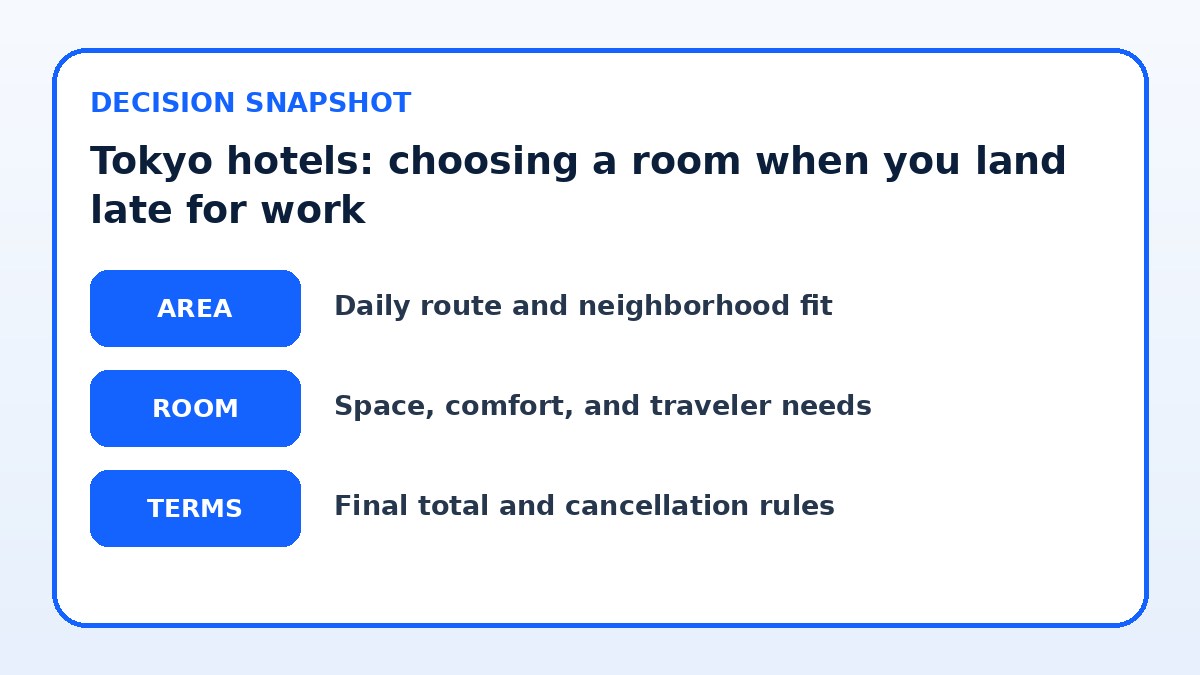
Start by mapping where your earliest commitment is. If your first meeting is near a Tokyo business district, staying centrally (for example around Tokyo Station, Shinjuku, or Ginza) reduces morning transit stress. If you have an early domestic connection or an early morning international flight, an airport-area hotel near Haneda or Narita minimizes transfer risk. Balancing travel time against late-night convenience is the core tradeoff: a downtown hotel may mean a longer night transfer but easier morning travel, while an airport hotel offers a short onward trip but can add ground time to reach central meetings.
When comparing hotels, measure door-to-door time from arrival terminal or final train to the hotel entrance, not just advertised distances. For late arrivals you’ll also want to consider service factors: a staffed 24-hour desk, luggage storage when you arrive before official check-in, and late-night food options. If your travel involves an unfamiliar terminal or late-night public-transport gaps, choose a property with clear, written late-arrival instructions and a phone number that accepts calls in English.
Transfer options and late-night logistics
Tokyo’s airport transfer choices change at night. Between Haneda and central Tokyo you’ll often find taxis and some late trains; Narita has fewer late public-transport options, so a dedicated shuttle or taxi may be necessary. If you prefer predictability, pre-arrange an airport transfer or confirm taxi availability with the hotel. Taxis in Tokyo are reliable but can be expensive from Narita; estimate time and alternatives before booking. For train arrivals, identify the nearest station exit and check whether stairs, elevators, or escalators will be available late at night—this matters with heavy luggage or tight connections.
Ask the hotel exactly how they handle late check-ins: is there an after-hours desk, a key safe, or a night porter? Verify on the booking page whether the property will hold your reservation if you arrive after a stated time and what identification or payment they require at arrival. If you plan to arrive by bus or overnight service, confirm the drop-off point and the fastest walking route to the hotel. These seemingly small logistical details remove uncertainty and help you prioritize hotels that align with how you actually arrive in the city.
| Approach | Best for | Tradeoff to check |
|---|---|---|
| Stay at an airport-area hotel | Travelers with early flights or minimal morning travel needs | Short onward travel but longer commute to downtown meetings and fewer late-night city conveniences |
| Book near a major train station (Tokyo Station, Shinagawa) | Those with morning meetings across central Tokyo or onward Shinkansen departures | Easier morning transit but potentially longer late-night transfer from airports |
| Choose a neighborhood business hub (Shinjuku, Nihonbashi, Ginza) | Business travelers who need quick access to meetings, restaurants, and evening networking | More nightlife noise in some areas and variable late-night transport depending on your arrival point |
| Pick a branded business hotel with 24-hour reception | Visitors prioritizing predictable service, late check-in, and business facilities | Standardized comfort and services but sometimes higher nightly rates and fewer local quirks |
Ready to check the option that fits your plan?
Use your exact dates and traveler details so the provider page can show the current total and conditions.
Room features and rest quality for business readiness
After a late arrival the most important hotel-room features are quiet, a comfortable bed, blackout shades, and reliable climate control to ensure restorative sleep. If you need to prep for an early meeting, a desk with good lighting, accessible outlets, and fast internet are essential. Consider whether you’ll want wake-up service or an alarm; many hotels offer a wake-up call or mobile app controls. If you travel with jet lag concerns, a room on higher floors or away from streets and busy intersections will be quieter—and hotels can often note preferences ahead of arrival.
Business travelers who may work late into the night should also assess 24-hour vending or in-room dining options, nearby late-night convenience stores, and the hotel’s noise policy. If privacy and secure document handling matter, check whether the hotel provides in-room safes or secure business centers. For tight schedules, a breakfast option that opens early or a grab-and-go service accelerates your morning routine—confirm breakfast hours and whether an early meal can be arranged on arrival.
Before you book
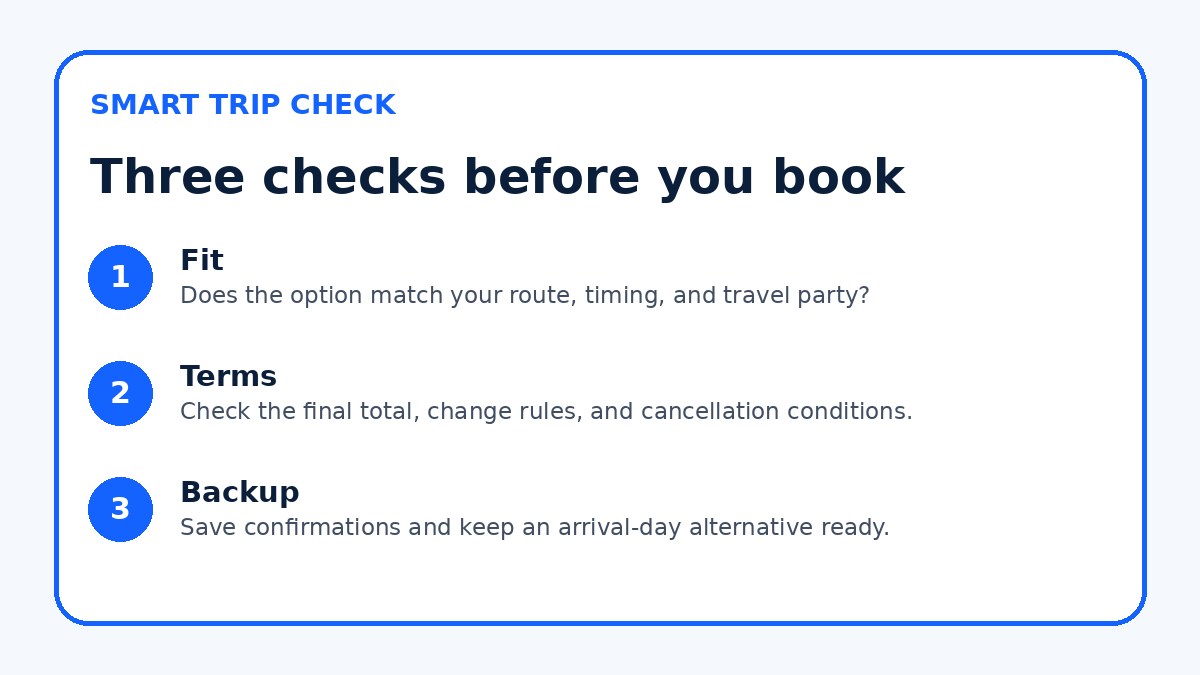
- Confirm the hotel’s late check-in policy and whether a 24-hour front desk or after-hours key pick-up is available.
- Verify transfer options from your arrival point—taxi, hotel shuttle, or late train—and note estimated door-to-door time.
- Email or call the property to reconfirm your arrival time and request written late-arrival instructions.
- Check for noise factors and request a quiet room location, plus confirm wake-up or early-breakfast arrangements.
- Save the hotel confirmation, contact phone number, and arrival instructions as screenshots on your phone.
- Plan a backup: identify a nearby 24-hour convenience store, taxi stand, or alternate hotel in case of extreme delay.
What to verify on the booking page and at confirmation
Before you commit, read the hotel’s published arrival and cancellation terms carefully. Confirm whether the property guarantees late check-in, what identification and payment are required at arrival, and whether a credit card must be presented to hold the room. If any airport shuttle or pick-up service is listed, check the provider’s written schedule and whether a reservation is needed; these provider-specific facts can change, so verify them on the hotel or booking provider’s final page. Trip.com can be used as an option to compare availability and current conditions, but always double-check details on the hotel’s official page.
Send the hotel a quick email or call to reconfirm your late arrival and ask for written instructions: the exact entrance to use after hours, a contact number for night staff, and luggage-hold arrangements if you arrive before check-in. Keep screenshots or a PDF of the confirmation and any correspondence handy on your phone. If your flight might arrive much later than planned, notify the hotel again with your updated arrival time so they will hold the room and avoid releasing it to other guests.
Frequently asked questions
Can I rely on taxis late at night from Narita or Haneda to a Tokyo hotel?
Taxis are available at both Narita and Haneda airports, but availability and cost differ. From Haneda into central Tokyo taxis are common late at night and often faster than public transport; from Narita the distance is greater and fares and travel times increase. If you plan to use a taxi after a long international flight, get a hotel estimate or ask the hotel to pre-arrange one. Always verify on the hotel’s booking page whether they offer or can book airport transfers and whether a shuttle operates at your arrival hour.
What if my flight is delayed past the hotel’s stated check-in time?
Many Tokyo hotels expect guests to notify them of late arrivals; policies vary. If the property has a 24-hour desk, late arrival is typically manageable, though some smaller hotels may release rooms if they think guests are a no-show. To avoid losing a reservation, contact the hotel as soon as you know you’ll be late, and request written confirmation that your room will be held. Check the hotel’s cancellation and no-show policy on the booking page so you understand financial implications of arriving very late or not at all.
Should I book refundable rates for late-arrival nights?
Refundable rates give flexibility when arrival times are uncertain, reducing the stress of missed check-ins or major delays. The tradeoff is often a higher rate or different terms compared with nonrefundable offers. If your schedule is fixed and you’ve confirmed a hotel’s late-arrival handling, a prepaid or nonrefundable rate may be acceptable. If connections or flight schedules are unpredictable, a refundable booking or one with flexible modification terms provides peace of mind—confirm refund rules and modification windows on the provider’s final booking page.
Final planning note
For business travelers arriving late in Tokyo, the simplest rule is to prioritize where you must be the next morning and then choose the hotel that minimizes risk and time. Airport hotels reduce early-morning transfer stress; station-area properties minimize downtown commute time; branded business hotels offer predictable late-check-in and facilities. Before booking, verify late-arrival policies, transfer options, and any special instructions on the hotel’s confirmation page, and contact the property to confirm they’ll hold your room. With those checks done, you’ll reduce uncertainty, protect your sleep, and be able to perform at your best the following day.
Continue planning
Check current options and final conditions
Use the provider page to confirm live availability, the final total, cancellation terms, and every condition that matters to your trip.
This evergreen planning guide was created with AI-assisted drafting and a structured quality review. It does not display live prices, schedules, availability, visa guidance, or provider rankings. Verify current details before booking. Some links are affiliate links; we may earn a commission at no additional cost to you.