If you’re a first-time visitor to Tokyo planning a family road trip, start by picking a base in the city that minimizes daily driving and gives easy access to both urban sights and accessible day routes. For most families the practical answer is to mix a centrally located Tokyo hotel or serviced apartment for a few nights with a larger vehicle rented for day trips or a short overnight loop out of the city. Choose a compact or mid-size car for Tokyo’s streets, make sure the rental includes child seats if you need them, and confirm parking options at your accommodation before booking. Verify all vehicle, driver-age, insurance, and toll-payment details on the rental provider’s booking page (you can compare availability on Trip.com but check the supplier for final terms). Below I explain how to weigh tradeoffs—where to stay, when driving helps, how to plan routes, and what to check before hitting the road.
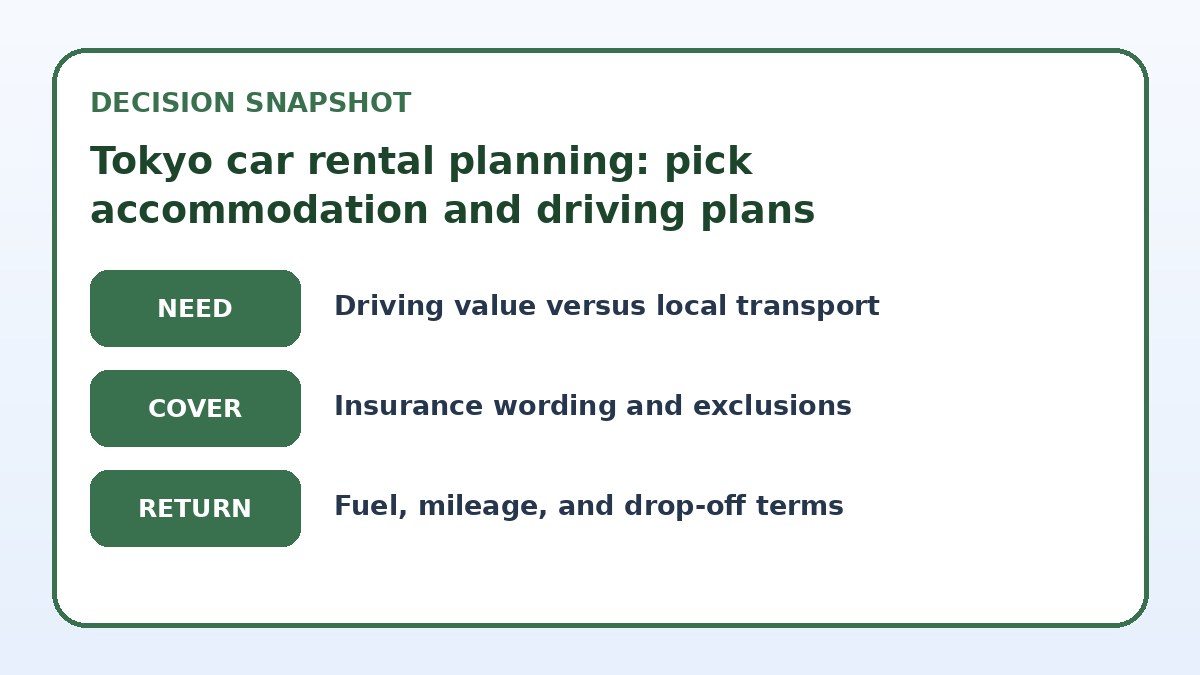
See current options before you compare the details
Availability and final conditions change. Open Trip.com now or keep reading for the practical comparison.
Where to stay in Tokyo for a family road trip
Choose accommodation with two priorities: easy access to public transit for exploring central Tokyo and reliable parking if you’ll use a rental car. Neighborhoods near major rail lines or close to the megacity’s ring roads let you park at your hotel when staying in the city, then collect the car for half-day or overnight escapes. Consider a serviced apartment or family room that accepts luggage and provides flexibility for naps and mealtimes; hotels with private or guaranteed parking save time and uncertainty when returning from day trips.
If you’re planning to drive out to nearby towns or coastal areas, staying near an expressway entrance or outer station reduces time crawling through inner-city traffic. Factor in the location of attractions you most want to visit—museums and central parks are easier to reach by train, while mountain or seaside day trips favor a hotel positioned to the northwest or south of the city. Always confirm on the booking page whether parking is reserved, charged per night, or needs advance registration, because those policies vary widely and can affect your daily routine.
Choosing the right vehicle and extras
For families, vehicle choice is a balance of interior space, maneuverability, and parking convenience. Compact hatchbacks and small crossovers are easier to park on narrow Tokyo streets and in multi-storey garages, while mid-size SUVs or minivans provide extra legroom and luggage capacity for longer drives. Think about how often you’ll be inside the city—if most sightseeing is on foot or by train, a smaller car is often better for urban parking; if you plan multiple overnight trips with luggage, step up to a larger model.
Don’t forget essential extras: child seats appropriate for your children’s ages and weights, GPS with English-language support or a mobile navigation plan, and an ETC (electronic toll collection) card or equivalent to speed through expressway toll gates. Ask the rental company about insurance options and roadside assistance coverage—make sure you understand deductible levels and what is included for cross-prefecture travel. Always verify the exact vehicle model, seating configuration, and included extras on the supplier’s booking page before you confirm.
| Approach | Best for | Tradeoff to check |
|---|---|---|
| Stay central and rent for day trips | Families who want easy access to trains and short driving escapes | Extra time to pick up/drop off car and potential parking charges at the hotel |
| Base on city outskirts near expressways | Families planning multiple overnight drives outside Tokyo | Less convenient for central sightseeing and more dependence on the car |
| Rent a compact car | Urban maneuverability, cheaper parking, and light luggage loads | Less interior space for family comfort on long drives |
| Rent an SUV or minivan | Long drives, more luggage, and extra comfort for children | Higher parking difficulty and potentially higher tolls or fuel use |
Ready to check the option that fits your plan?
Use your exact dates and traveler details so the provider page can show the current total and conditions.
Planning routes, parking and tolls
Plan day routes that minimize time in Tokyo’s densest traffic, especially during weekday morning and evening peaks. Identify one or two realistic targets per day so the family has time for breaks and play; long driving days can be tiring for younger children. Use apps or rental GPS to estimate driving times but build in buffer time for rest stops and local congestion. For popular outside-the-city destinations, find parking options in advance—municipal lots, attraction garages, and shopping-center parking often have family-friendly spaces, but availability and rules vary.
Tolls on Japan’s expressways can add up; decide whether the faster, tolled route is worth the time saved compared with slower national roads. If you plan to use expressways frequently, ask the rental agent about an ETC device or card for automatic toll payment and check how toll charges will be billed. For each route, identify fuel stops and convenient places to change drivers and stretch. Verify any provider restrictions on crossing prefectural borders or returning the car to a different location on the booking page.
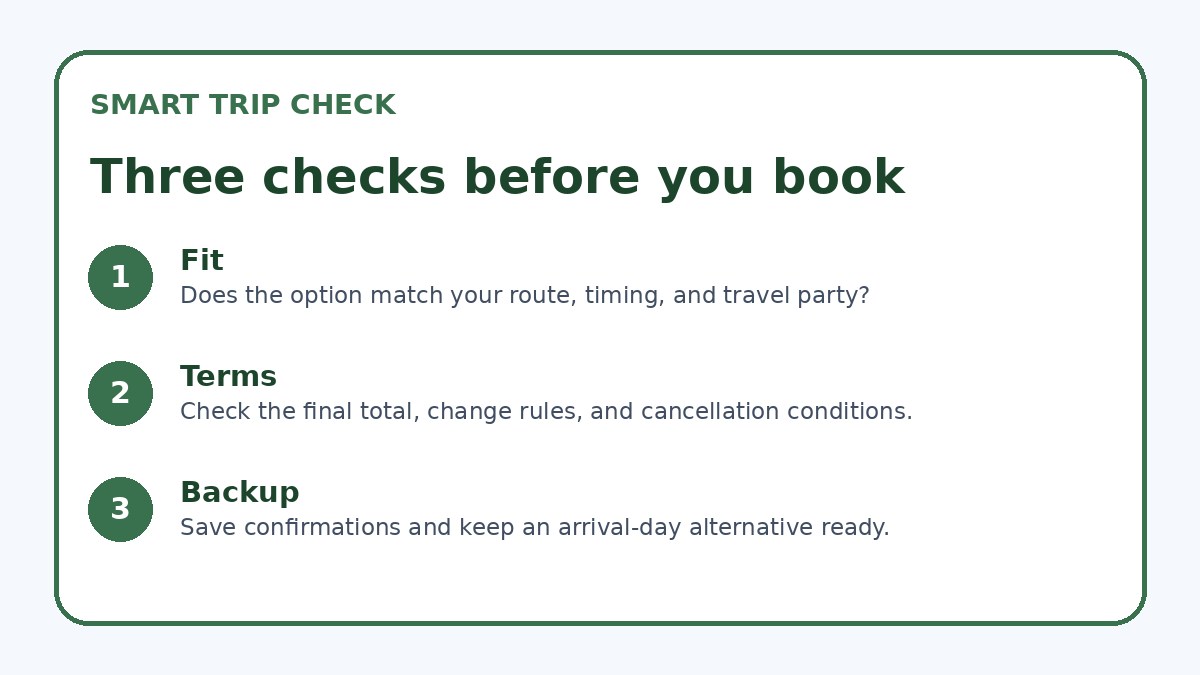
Before you book
- Confirm whether your driver’s license needs an international driving permit or translation and prepare it before travel.
- Book a vehicle size that fits car seats, luggage, and a stroller if needed; confirm exact vehicle model and seating layout.
- Reserve child seats through the rental company and verify weight/height compatibility with your children.
- Check the rental company’s insurance coverage, deductible amounts, and roadside-assistance procedures on the booking page.
- Ask the hotel or apartment about on-site parking, reserved spots, costs, and evening drop-off rules before you finalize accommodation.
- Download offline maps or set up a rental GPS with English support and arrange an ETC toll device if you plan to use expressways.
Practical checks before booking and driving
Before you book, check driver eligibility rules—age minimums, additional driver fees, and whether an international driving permit (IDP) or translated license is required for your country. Confirm child-seat availability and any extra costs. Read the rental supplier’s fine print about insurance, deposits, fuel policy, mileage limits, and cross-prefecture travel. When in doubt, contact the provider directly to clarify anything you depend on for safety and family comfort.
On pick-up day, inspect the vehicle with the agent and photograph any existing damage. Ask about local traffic patterns and toll payment logistics, and get instructions for emergency contact numbers and roadside assistance. If you’ll return the car after a late ferry or train connection, verify after-hours drop-off procedures. Finally, make copies of important documents—rental agreement, driver’s license, passport, and insurance—stored separately from originals in case you need them while on the road.
Frequently asked questions
Do I need an international driving permit to drive in Tokyo?
Whether you need an international driving permit (IDP) depends on your home country’s agreements with Japan. Many visitors must present an IDP plus their national driver’s license, while some countries have reciprocal arrangements or require a certified translation. Check your government’s guidance and confirm the rental company’s driver requirements before booking. Verify accepted documents and any age restrictions on the rental supplier’s final booking page to avoid surprises at pickup.
Is driving in Tokyo with kids stressful compared with using trains?
Driving in Tokyo can be more stressful than using trains due to dense traffic, narrow streets, parking searches, and local signage, but it offers flexibility for door-to-door travel and day trips that trains may not serve easily. For central sightseeing, trains are often faster and more predictable; for destinations outside the city—coastal towns, mountain areas, or family attractions—having a car can make logistics simpler. Consider a blended approach: rely on trains in the city and a rental car for specific day or overnight trips.
How do tolls and parking typically work on family routes out of Tokyo?
Expressway tolls are charged at booths or electronically via an ETC device; using ETC speeds passage through toll gates. Parking at attractions and in town centers ranges from coin-operated lots to covered garages; some offer hourly or daily rates, while others may require reservations for large vehicles. Since policies and payment options vary, check toll and parking payment methods for each leg of your planned route, and confirm billing or deposit procedures with the rental provider and accommodation before you travel.
Final planning note
Planning a family road trip from Tokyo means balancing the convenience of public transit with the flexibility of a rental car. Base your family where you can easily switch between walking, trains, and driving; pick a vehicle that matches your luggage and seating needs; and plan routes that limit city traffic and allow regular breaks. Verify driver document requirements, child-seat availability, insurance terms, and parking arrangements on the rental and accommodation booking pages before you commit. For current availability and comparisons you can look at general marketplaces like Trip.com, but always confirm final terms directly with the supplier so your family’s time on the road is comfortable and predictable.
Continue planning
Check current options and final conditions
Use the provider page to confirm live availability, the final total, cancellation terms, and every condition that matters to your trip.
This evergreen planning guide was created with AI-assisted drafting and a structured quality review. It does not display live prices, schedules, availability, visa guidance, or provider rankings. Verify current details before booking. Some links are affiliate links; we may earn a commission at no additional cost to you.