If your trip includes both Sydney and Canberra and you want to move mostly by land, the practical answer is to choose one primary travel spine—train, coach, or car—and layer local transfers and overnight stops around it. Decide first whether you prioritize speed, cost certainty, or sightseeing flexibility; that choice shapes which combination of services you book. For many first-time visitors, a single-seat train or a coach for direct point-to-point travel plus a short local taxi, rideshare, or public bus in each city minimizes complexity. If you prefer flexible routing or want to stop mid-route, plan a car leg or a combination of coach segments. Always verify live schedules, baggage rules, booking-change policies and pickup/drop-off locations on the provider’s official pages; you can also compare current availability on Trip.com before finalizing.
See current options before you compare the details
Availability and final conditions change. Open Trip.com now or keep reading for the practical comparison.
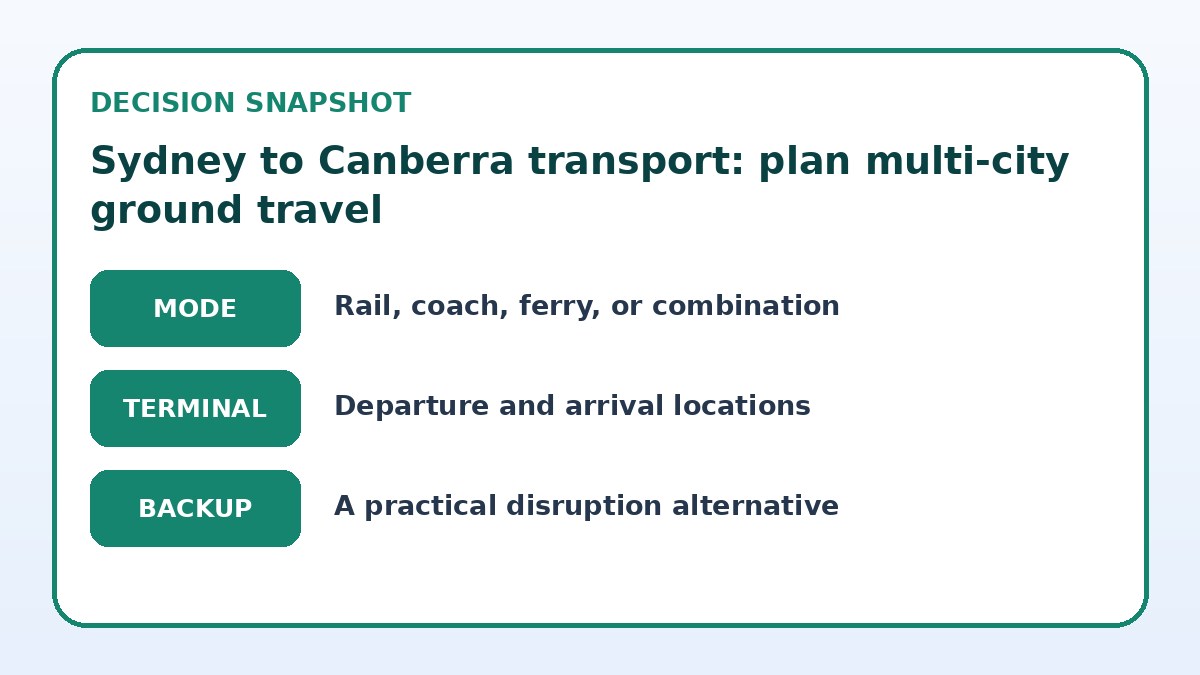
Choose the spine: train, coach, or car
Pick one dominant mode for the main Sydney to Canberra leg, then add complementary local transfers. Trains and coaches give you set departure points and fixed arrival terminals, which simplifies planning if you prefer fewer decisions on travel day. A private car or rental brings flexibility for stops and detours but introduces tasks—route choices, parking, and fuel—that need active on-the-ground management. Think of the spine as the decision that shapes the rest of your ground-transport plan: it determines where you start and finish each travel day, the likely travel rhythm, and how many separate tickets you need.
When evaluating options, list the criteria that matter most to you—comfort, luggage handling, sightseeing opportunities, or the ability to change plans mid-journey. For example, if you value predictability and minimal navigation, a scheduled coach or train reduces decisions and potential stress. If you want to break the route into smaller stops and chase views or regional towns, a car spine is more suitable. After choosing the spine, map out required local transfers in Sydney and Canberra so you’re not surprised by how you’ll get from the station or terminal to your accommodation.
Compare practical tradeoffs and booking checks
Each approach has tradeoffs: scheduled services are easier to replace if you miss a connection within the same provider’s network, but they limit your ability to deviate; driving lets you control schedule and stops but adds navigation, parking, and fatigue risks. When comparing options, focus on verifiable booking details: the provider’s published baggage allowance, change and cancellation policies, exact pickup/drop-off addresses, and any required ID or boarding procedures. These items change frequently, so pull them from the official provider pages during booking and save screenshots or confirmation emails.
Also account for how flexible your overall itinerary needs to be. If hotel reservations in Canberra have rigid check-in windows, choose a spine that aligns with those times or allow a buffer for arrival. If you plan side trips from Canberra, check whether a day trip would be easier by coach or by driving yourself. For mixed-mode journeys—such as train to a regional town then car hire—identify the transfer point’s parking or rental desk locations in advance and verify operating hours before committing.
| Approach | Best for | Tradeoff to check |
|---|---|---|
| Train spine with local transfers | Travelers who want comfort and fewer driving decisions | Less flexibility to stop en route; must coordinate local transfers at fixed stations |
| Coach spine (scheduled bus services) | Budget-conscious travelers seeking direct point-to-point movement | Potentially less legroom and fewer luggage options compared with other modes |
| Self-drive (rental or private car) | Those prioritizing flexible sightseeing and multiple stops | Adds navigation, parking, fuel planning, and potential city-center parking costs |
| Mixed-mode (train/coach plus short car hire) | Visitors who want a stable long leg with local exploration capability | Requires careful timing and more individual bookings to manage connections |
Ready to check the option that fits your plan?
Use your exact dates and traveler details so the provider page can show the current total and conditions.
Practical day-of-travel planning and buffers
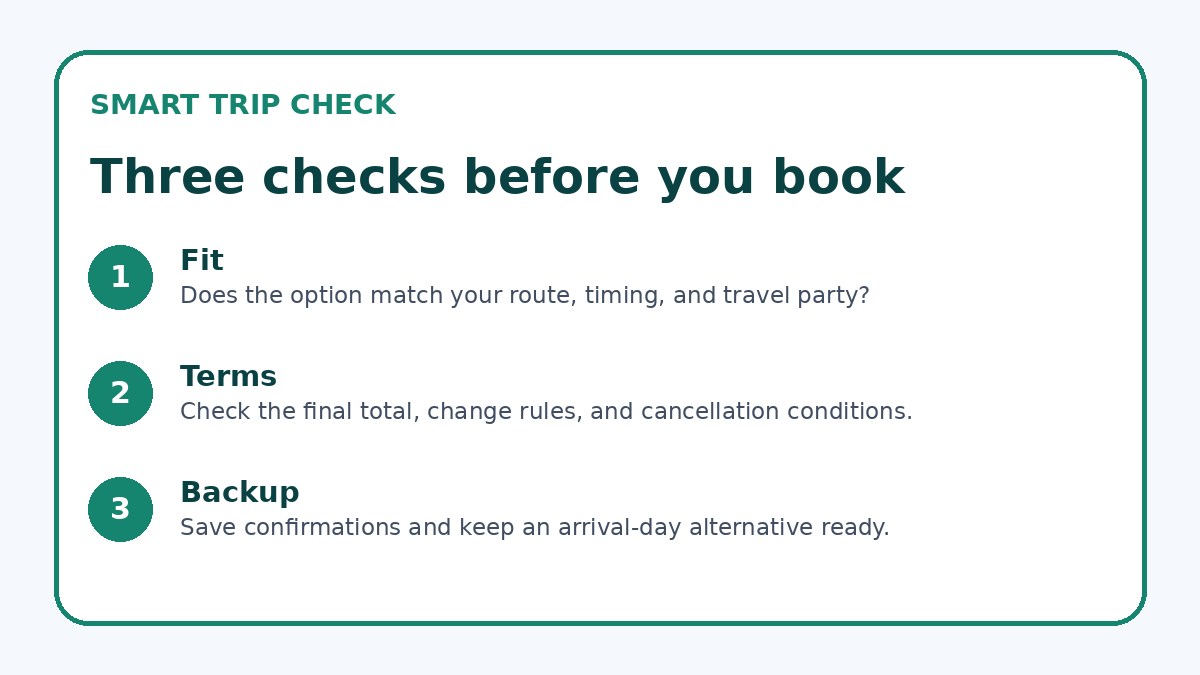
Build explicit buffer time into your plan for arrivals and departures. Whether you’re transferring from a Sydney hotel to a station, waiting for a coach, or collecting a rental car, unexpected delays happen: traffic, longer luggage checks, or local transit changes are common. A rule of thumb is to allow extra time at each handover—enough to recover from a modest delay without forcing last-minute transport changes. For mixed bookings, leave at least one or two hours between independently purchased services unless you can rebook easily.
Prepare clear, accessible documents: digital tickets, provider contact numbers, terminal maps or addresses, and a simple timeline of your connections. If you’ll rely on public transport in either city, download the local transit app or store a screenshot of the route map. If you’re driving, ensure you have a realistic plan for mapping the route and knowing where to stop for food, fuel, or short sightseeing breaks; look up parking options near your intended stops so you aren’t hunting when you arrive.
Before you book
- Verify exact pickup and drop-off addresses and terminal names for every booking on the provider’s official confirmation page.
- Confirm baggage allowances, carry-on rules, and any fees directly with the carrier before you pack.
- Allow buffer time between independently booked services—plan at least one to two hours for connections.
- Save digital tickets and provider contact numbers offline in case mobile coverage is poor en route.
- If renting a car, check opening and closing times for collection and return locations to avoid being stranded.
- Identify local transfer options at both ends (taxi ranks, rideshare pickup points, or bus stops) and note their addresses.
Local transfers, luggage, and overnight strategies
Decide where you want to break the journey. Some travelers prefer a single overnight in a regional town to split back-to-back travel days; others travel straight through. If you pick overnight stops, choose accommodations with flexible check-in or luggage storage. Confirm whether your main transport bookings accommodate carry-on and checked luggage, and whether transfers require you to move bags between vehicles. If you plan several single-night stays, consider packing a compact overnight bag to avoid repeatedly handling large luggage.
Plan local transfers around arrival and departure flows. For both Sydney and Canberra, identify reliable first- and last-mile options—licensed taxis, rideshare pickup points, or bus routes. Note that some terminals sit outside city centers, so budget and time for that last leg. If you’ll use public transport, check whether you need a local travel card or app; if you prefer door-to-door convenience, pre-book airport-style transfers or confirm taxi ranks at arrival terminals. Always verify pickup points and terminal addresses on provider pages before you leave.
Frequently asked questions
How do I decide whether to take a train, coach, or drive from Sydney to Canberra?
Start by ranking what matters most: speed, control, cost, or sightseeing. If you want minimal navigation and predictable boarding, scheduled trains or coaches reduce decisions on travel day. If you plan multiple stops, scenic detours, or flexible timing, driving or a mixed-mode plan offers that freedom. Also consider luggage needs, how many travelers are in your party, and whether you’re comfortable driving between cities. Finally, check current schedules, baggage rules, and vehicle availability on provider pages before committing.
Can I mix different providers and still have a smooth journey?
Yes, but mixing providers increases planning responsibilities. When you book independently, build explicit buffer times for delays and confirm baggage rules for each segment—some services may not hold or transfer luggage. Keep contact details and cancellation/change policies for each booking, and consider travel insurance if timing is tight. If a missed connection would be critical, choose options with guaranteed same-company transfers or buy more buffer between segments to reduce risk.
What should I check about pickup and drop-off locations in Sydney and Canberra?
Don’t assume terminals use the same colloquial names you see online—verify precise street addresses and entrance points on the booking confirmation. Check whether the pickup point is at a central station, separate coach terminal, or airport satellite stop and whether transfers to city centers are needed. If using rideshare, identify the official pickup zone as some terminals restrict roadside pickups. Always confirm operating hours for transfer desks and whether late arrivals require pre-arranged pickup.
Final planning note
Building a multi-city ground-transport plan for Sydney to Canberra starts with one clear choice: your travel spine. Choose the spine that matches your priorities—predictability (train or coach), flexibility (car), or a hybrid solution—and then design local transfers, overnight stops, and luggage arrangements around it. Verify all provider details on official booking pages, save confirmations offline, and give yourself realistic buffer time for transfers. With a simple timeline and the right checks in place, you’ll turn a multi-leg ground journey into a low-stress part of your trip rather than a logistical headache.
Continue planning
Check current options and final conditions
Use the provider page to confirm live availability, the final total, cancellation terms, and every condition that matters to your trip.
This evergreen planning guide was created with AI-assisted drafting and a structured quality review. It does not display live prices, schedules, availability, visa guidance, or provider rankings. Verify current details before booking. Some links are affiliate links; we may earn a commission at no additional cost to you.