
If a couple wants control and low stress while traveling between Dubai and Abu Dhabi, prioritize ticket flexibility over the single cheapest fare. Flexible tickets let you change departure times, swap names, or get a refund with clearer penalties — useful when one partner feels unwell, plans shift, or you want to combine spontaneity with a backup plan. Start by deciding which level of flexibility matters most: free changes, partial refunds, or simple date swaps with fees. Then compare options for the same route side‑by‑side, checking exactly which changes are allowed, how fees are applied, and whether both travelers must change together. Wherever you book, verify the provider’s final terms — especially who can make changes, the process for refunds, and any identity or seat restrictions. Trip.com can be a place to compare live availability and policy summaries, but always confirm on the operator’s booking page before paying.
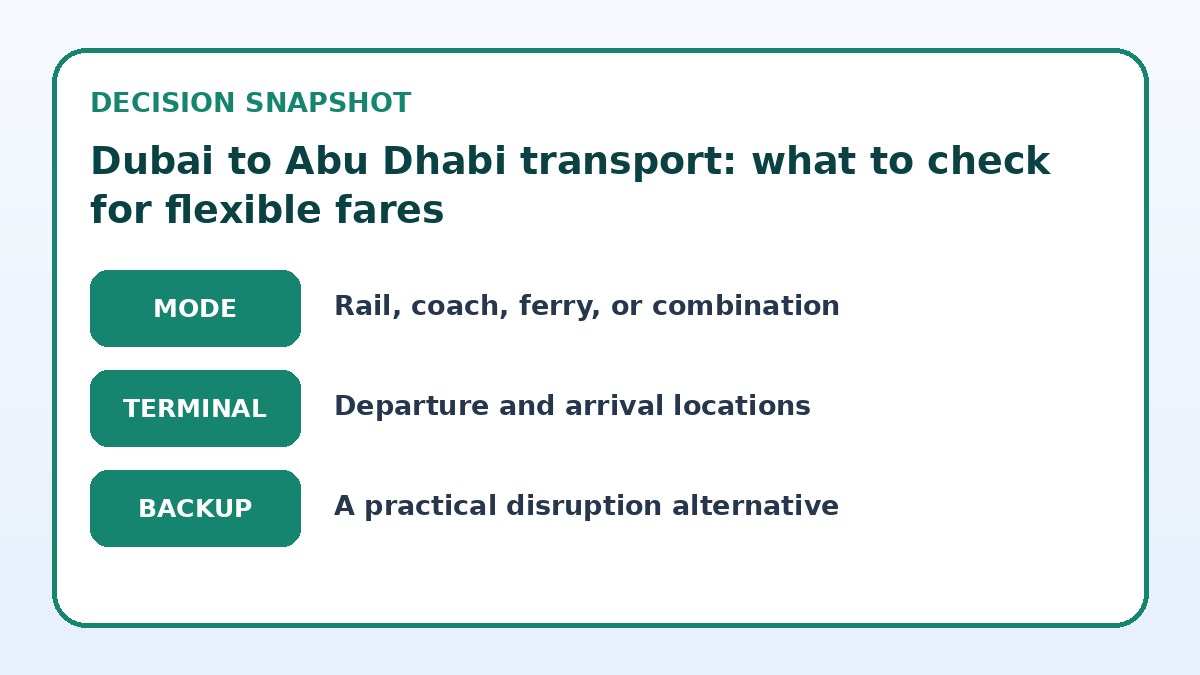
See current options before you compare the details
Availability and final conditions change. Open Trip.com now or keep reading for the practical comparison.
Decide which flexibility matters most
Start by listing the scenarios you want to protect against: illness, work schedule shifts, late nights, or simply a desire to leave earlier or later together. Couples often face two distinct needs: the ability to move a booking without penalty if one person changes plans, and a way to recover at least part of the fare if you must cancel. Some travelers value same‑day changes, others want full refunds. Either way, writing down the top two reasons you might need a change makes it easier to compare ticket rules objectively.
Once you know your priorities, translate them into concrete policy features to compare. Look for terms like free changes, change fees, credit vouchers, partial refunds, name changes, and transferability of tickets between passengers. Also note any limits—how many times you can change, deadlines before departure, and whether changes can be made online or require phone support. Build a short checklist of these features to use when you view each booking option; this avoids being swayed only by departure times or headline fares.
How to compare carrier and operator policies
Different transport providers and ticket sellers use distinct policy language and processes, so compare the same route across carriers with the same checklist. For each option, read the cancellation and change sections on the final booking page, not only the summary popup. Verify whether change fees are fixed or percentage‑based, if there is an administrative charge in addition to fare differences, and whether refunds are issued to the original payment method or as travel credit. These specifics determine how flexible a ticket truly is for a couple.
Also confirm who can request a change and how identity is handled: some operators require the original booker to make changes, others allow either passenger to request modifications. If you plan to split itineraries—one person traveling earlier or later—ensure the system supports separate passenger changes rather than forcing a joint action. Finally, check whether seat assignments or extras are transferable or refundable; sometimes the fare can be changed but paid extras remain nonrefundable, which affects total outlay.
| Approach | Best for | Tradeoff to check |
|---|---|---|
| Buy a fully flexible ticket | Couples who value maximum control and may change plans at short notice. | Higher upfront cost, which may not pay off if travel plans remain unchanged. |
| Choose a limited‑change fare with small change fees | Couples who want a middle ground: cheaper fare with some protection. | Changes are allowed but may incur fees and rules that reduce actual flexibility. |
| Purchase a nonrefundable low fare plus travel insurance | Couples comfortable accepting a refund policy but wanting financial protection for cancellations. | Insurance may not cover all reasons or may exclude certain pandemics or preexisting conditions—check policy details. |
| Book separate flexible elements (e.g., refundable seat plus low fare) | Couples who want to customize protection only where it matters (like seats or meeting transfers). | Managing multiple purchases increases complexity and may complicate refunds or changes. |
Ready to check the option that fits your plan?
Use your exact dates and traveler details so the provider page can show the current total and conditions.
Balancing cost vs flexibility for couples
Flexibility typically costs more upfront, so couples must balance the premium against the probability and cost of a change. Estimate the financial impact by imagining likely scenarios—how often would you need a change, and how expensive would a last‑minute alternative be? If the premium for free changes is small relative to the cost and hassle of rebooking later, it can be worth paying for protection. If change is unlikely, a lower‑flex fare plus a contingency plan (like a refundable hotel or travel credit) might be smarter.
Also consider nonfinancial factors: stress, time spent managing changes, and the convenience of flexible customer service. For some couples, the ability to rebook online without calling, or access to evening support, is worth a higher fare. For others, the cheapest fare with the option to buy separate travel insurance that covers cancellation might be preferable. Weigh the fare difference against realistic change scenarios and your tolerance for administrative hassle when deciding which ticket to buy.
Before you book
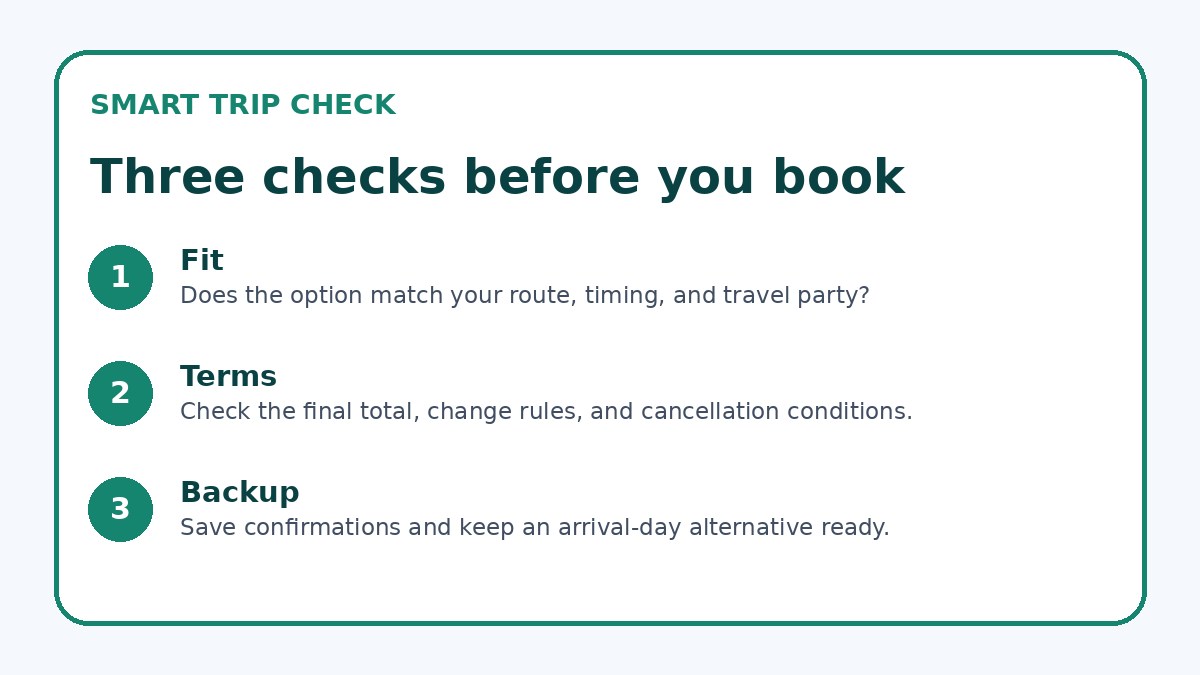
- List the two most likely reasons you would need to change travel plans and prioritize them before comparing tickets.
- Read the full change and cancellation policy on the operator’s final booking page and save a screenshot of the terms.
- Confirm who can request a change—both passengers or only the original booker—and document the required process.
- Check whether refunds go back to the original payment method or are issued as travel credit, and note any time limits.
- Compare how seat assignments and paid extras are treated if the fare is changed or partially refunded.
- If using an agent or aggregator, verify whether changes are handled by the agent or require direct contact with the operator.
Practical booking and day‑of travel tips
When booking, always save screenshots of the full terms and the confirmation email showing the fare code and any included flexibility. If the policy is unclear, use the chat or phone support and ask specifically about changing one passenger’s travel date, name changes, and whether refunds are possible; keep a record of the agent’s responses. If you’re using an agent or aggregator, confirm whether they act as an intermediary for changes or whether you must contact the operator directly.
On travel day, carry ID that matches the booking and have digital copies of confirmations accessible to both partners. If one person needs to adjust plans at short notice, check if changes can be completed via the operator’s app or website—these tools are often faster than waiting on a helpline. Finally, if a flexible ticket includes perks like priority boarding or seat reservations, confirm both names are covered so you can travel together without last‑minute seat reshuffling.
Frequently asked questions
Can one partner change their ticket without affecting the other?
That depends on the booking terms. Some tickets permit changes per passenger, while others treat the reservation as a single record requiring joint changes. Always check the operator’s definition of a passenger record and whether online forms allow modifications for individual travelers. When in doubt, contact the operator, ask explicitly if single‑passenger changes are allowed, and save that response. If separation is likely, consider booking separate tickets or choosing an option that clearly documents individual change rights.
Is it better to buy flexible tickets or cheaper nonrefundable fares with insurance?
There’s no one‑size‑fits‑all answer: flexible tickets simplify changes and avoid claims processes, while insurance can be cost‑effective for specific cancellation reasons. Compare the premium for a flexible fare against the insurance premium and policy exclusions. Check that the insurance covers the reasons you care about and that it pays out quickly enough to be useful. For many couples, flexibility is worth paying for when schedule changes are likely; for low‑risk trips, cheap fares plus insurance may be reasonable.
What key details should couples verify on the operator’s booking page?
Couples should verify change windows (how close to departure changes are allowed), change fees, refund method (credit or original payment), whether name changes are permitted, and who may request modifications. Also check limits on the number of changes, any administrative charges, and rules for transferring extras like seats. If the booking uses vouchers or credits, confirm their expiry and transferability. If the operator’s language is unclear, ask support and keep written confirmation before completing payment.
Final planning note
For couples traveling between Dubai and Abu Dhabi, thinking through probable changes and comparing ticket terms will save stress and money. Decide whether you need full flexibility, limited change rights, or a low fare with insurance, and then inspect the operator’s full change, refund, and name‑change rules on the final booking page. Keep records of confirmations and agent responses, and prioritize options that allow single‑passenger changes if you might split plans. By matching your risk tolerance to the ticket’s documented policies, you can pick the option that protects your time and relationship without overpaying for unused flexibility.
Continue planning
Check current options and final conditions
Use the provider page to confirm live availability, the final total, cancellation terms, and every condition that matters to your trip.
This evergreen planning guide was created with AI-assisted drafting and a structured quality review. It does not display live prices, schedules, availability, visa guidance, or provider rankings. Verify current details before booking. Some links are affiliate links; we may earn a commission at no additional cost to you.