You’ve just landed at Jeju Airport with extra or oversized luggage — the first decision is whether to prioritize door-to-door convenience, cost, or flexibility. For travelers with heavy bags, a simple rule helps: if you want minimal handling and a predictable meeting point, choose a door-to-door option (taxi or pre-booked private transfer). If you’re staying near main bus routes and can move luggage yourself, airport public buses or a taxi-bus hybrid may save money. If you plan to explore beyond the city or have many stops, renting a car gives the most control but requires handling your bags to and from the vehicle. Read on to compare these choices by party size, arrival time, luggage count, and drop-off fit so you can make the call before deplaning.

Check options for your arrival details
Use your flight, luggage, party size, and accommodation address to compare current choices.
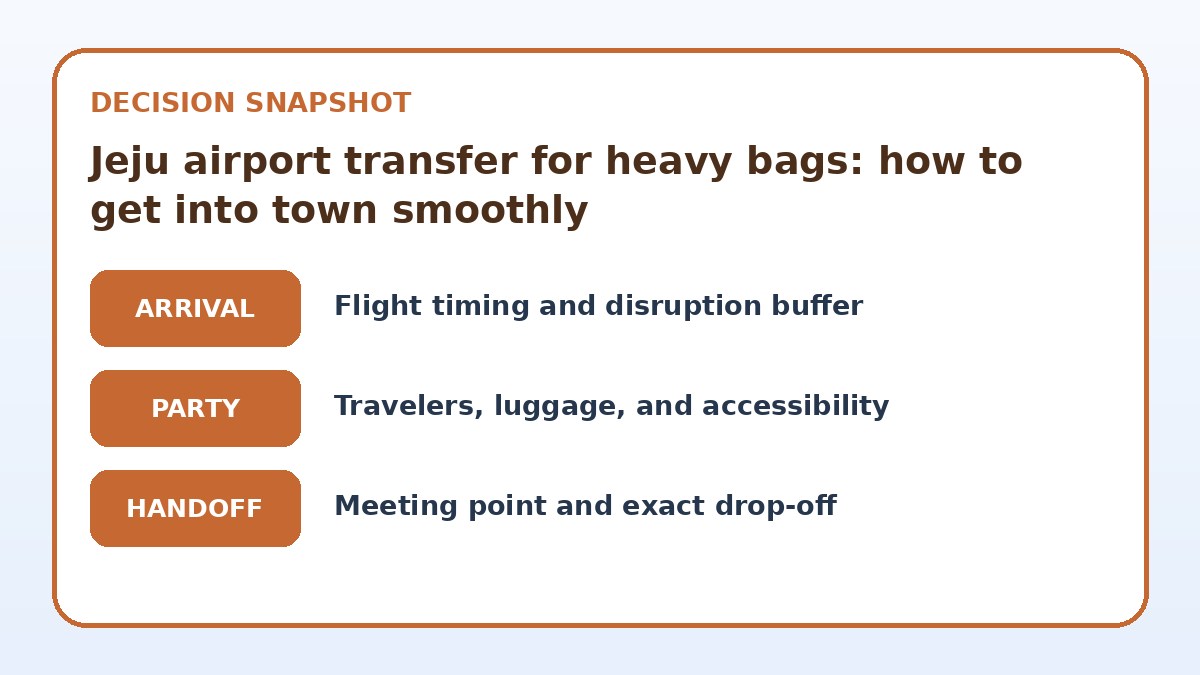
Luggage and party size: match vehicle space to bags
Count bags, measure any oversized items, and check whether your group needs extra seats. A standard taxi will usually fit two large suitcases plus carry-ons for two passengers, but larger parties or extra gear (bicycles, strollers) need a larger vehicle. Pre-booked private transfers or vans explicitly list passenger and luggage limits on their booking pages; verify those limits and confirm whether a driver can assist with loading. Don’t assume one large taxi will be enough—if you’re uncertain, reserve a larger vehicle or two cars to avoid awkward transfers and last-minute stress.
Consider how much you want to handle your own bags. If you prefer not to lift or store heavy items in overheads, door-to-door services allow drivers to help. For groups where only one person handles all luggage, a larger vehicle reduces repeated trips between curb and hotel. If you plan to combine airport pickup with onward travel on Jeju (day trips, hikes), renting a car gives you continuous luggage control; confirm trunk dimensions on the rental confirmation and bring straps or protective covers for loose gear.
Arrival details to have ready
- Count and photograph every piece of luggage; note dimensions and any item needing special handling.
- Confirm your accommodation entrance and nearest drivable drop-off on a map and save a photo to show drivers.
- If booking a private transfer, verify passenger and luggage limits and the provider’s flight-delay/wait-time policy on the booking page.
- Save your hotel name and full address in Korean, plus a local contact number, and have it ready on arrival.
- Plan a backup: identify the nearest taxi stand and the next bus departure times in case your pre-booked option is delayed.
- If renting a car, confirm rental desk hours, after-hours pickup policy, and where the vehicle will be parked relative to your room.
Late or disrupted arrival: keep backup plans ready
If your flight is delayed or re-routed, transport options change. Buses and shared shuttles often run on fixed timetables and may pause late at night; if you land outside regular hours, taxis and some private transfers remain the most practical choices. When booking a private service, check the provider’s policy on flight delays—many monitor arrivals but you must confirm whether there are wait-time limits or extra charges. If you choose a taxi, have your destination written in Korean and the hotel address available to avoid confusion at the curb.
For very late arrivals or long disruptions, prepare a short list of alternative meeting points and phone contacts. Make sure your accommodation knows the expected arrival window and whether you’ll need assistance with luggage on arrival. If you booked a rental car, check the rental desk’s hours and whether after-hours pick-up is possible; otherwise, plan to wait in the terminal or take a taxi to your lodging and collect a vehicle the next morning.
Match the transfer to your arrival
| Arrival approach | Best for | Detail to verify |
|---|---|---|
| Taxi (metered) | Small groups with moderate luggage who want direct, flexible drop-off. | Space may be limited for multiple large suitcases; ensure a larger taxi if needed. |
| Pre-booked private transfer/van | Families, groups, or oversized gear needing guaranteed vehicle space and assistance. | Less flexible on timing if provider has strict wait-time policies; confirm flight monitoring and wait rules. |
| Airport public bus/shuttle | Travelers on a budget staying near main routes who can manage their bags independently. | Fixed routes and schedules mean more handling and potential walking to final accommodation. |
| Rental car | Visitors planning multiple stops or island exploration who want full control of luggage and schedule. | You must move and secure your luggage yourself; check pick-up/drop-off hours and parking access. |
Make the meeting plan clear
Check the final pickup instructions, waiting conditions, and exact drop-off coverage.
Meeting-point clarity: avoid curbside confusion
Agree on an exact, simple meeting point before you land. Use recognizable features such as the domestic/international exit name, a numbered taxi stand, or a specific terminal gate. Share a small map screenshot or photo of the correct exit with any driver or tour operator. If multiple flights arrive at the same time, the driver could be delayed; set a clear wait-time and confirm phone contact so they can find you quickly instead of you carrying bags through busy corridors searching.
If language could be a barrier, save your hotel name and address in Korean on your phone and show it to drivers. For private transfers list a cell number that will work on arrival; if you use local SIM or roaming, confirm the number with the operator prior to travel. For meet-and-greets in bad weather, specify shelter locations like the arrivals lobby or a cafe door—this reduces the time spent standing outside with heavy suitcases.
Drop-off fit: think about final meters and access
Not all drop-off points are equal—some hotels and guesthouses are on narrow lanes, pedestrianized streets, or elevated walkways where vehicles can’t pull right to the door. Before choosing a transfer method, check photos or maps of your accommodation’s entrance and note whether a short walk, stairs, or cobbles are involved. If the last stretch is narrow, a smaller taxi might be more practical than a long van because it can stop closer to the entrance; if you need help carrying bags up multiple flights, arrange porter service or a driver willing to assist.
For rental cars confirm parking availability at your lodging and whether there are steps between the parking area and entrance. If you’ll be hopping between multiple nearby villas or beaches, a rental may still be best despite extra handling—just plan where you’ll park and how luggage will be stored. Communicate docking possibilities with your driver for private transfers so they can choose the most convenient drop-off zone and avoid long-distance unloading with heavy baggage.
Airport Transfer & Local Mobility questions travelers ask
How do I decide between booking a taxi and reserving a private transfer for Jeju airport transfer?
Decide by counting people and luggage, and by how much help you want. For two travelers with one large suitcase each, a standard taxi often works and provides quick curbside departure. For families, groups with multiple large bags, or fragile/oversized items, a private transfer or van guarantees space and usually includes assistance with loading. When choosing a private service, check their stated luggage capacity and whether they monitor flights for delays; verify those details on the provider’s booking page before confirming.
Can I rely on public buses from Jeju Airport if I have a lot of suitcases?
Public buses are economical and serve main routes, but they require moving your luggage on and off the bus and possibly walking between stops and your accommodation. If you have many suitcases, bulky items, or mobility concerns, buses add physical effort and may be inconvenient during peak times. Use buses when your lodging is close to a major stop and you can handle loading; otherwise prioritize a taxi or private option that reduces transfers and walking.
What should I check if I plan to pick up a rental car at Jeju Airport with heavy luggage?
Confirm the rental office hours and whether after-hours pickup is available for late arrivals. Check vehicle trunk size and the confirmed passenger/luggage capacity on your reservation, and ask whether the rental desk will help with loading. Also verify where airport parking will place the car relative to terminal exits to avoid carrying bags long distances. If any of these details are unclear, contact the rental provider directly or compare options on a booking site like Trip.com before finalizing.
Final decision note
Choosing the right Jeju airport transfer when you have extra luggage comes down to three practical questions: how much help you want with bags, how flexible your arrival time is, and how close your accommodation is to a drivable drop-off. For minimal handling, book a private transfer or a larger taxi; for cheaper travel and simple itineraries, use the bus if you can handle the loading. If you’ll be moving around the island and want control, a rental car is sensible but requires you to load and secure everything yourself. Before you land, confirm luggage allowances, meeting-point details, and any wait-time policies so the handover is quick and stress-free.
Continue planning
Check current options and final conditions
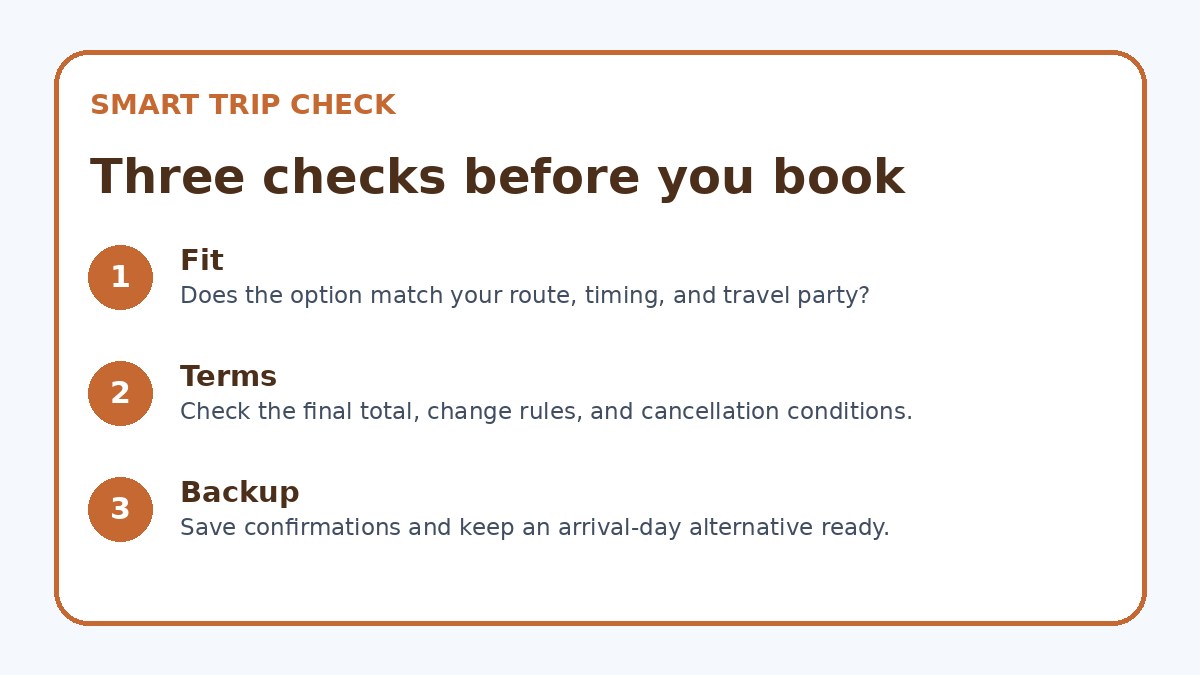
Use the provider page to confirm live availability, the final total, cancellation terms, and every condition that matters to your trip.
This evergreen planning guide was created with AI-assisted drafting and a structured quality review. It does not display live prices, schedules, availability, visa guidance, or provider rankings. Verify current details before booking. Some links are affiliate links; we may earn a commission at no additional cost to you.