If you’re arriving in Seoul with children and more than a carry-on, the practical choice is to pick an airport transfer that minimizes walking, waiting, and transfers. That might mean a private airport transfer or a more convenient train plus short taxi ride depending on your arrival time, hotel location, and how many adults are traveling. Start by listing what you’re carrying (strollers, car seats, large suitcases, day bags) and how mobile your children will be after the flight. Use that list to compare options on comfort, door-to-door convenience, and how easily drivers or station staff can handle heavy or bulky items. Later sections explain tradeoffs, key decision criteria, and what to verify when booking so the trip through Seoul’s airports feels manageable rather than chaotic.
See current options before you compare the details
Availability and final conditions change. Open Trip.com now or keep reading for the practical comparison.
Deciding: private transfer, shared shuttle, train + taxi, or public bus
Private transfers give you a door-to-door ride and usually the easiest handling of multiple large bags and bulky items like strollers and car seats. They remove the need to navigate stations or lifts with tired children. If your hotel has restricted curb access or narrow streets, confirm pick-up/drop-off points and whether the vehicle can stop close to the entrance. When booking, check the company’s policy on child restraints and how many large suitcases fit in the trunk. If you’re booking through an aggregator such as Trip.com, use that booking page to confirm exact vehicle size and any weight or baggage limits.
Shared shuttles and airport buses can be economical but often include additional stops and more handling of luggage by drivers and staff. For families with small children who need naps or predictable schedules, the extra stops can be disruptive. Train routes into central Seoul are fast and avoid road traffic, but they require stairs, elevators, or long station walks—factors that make them less convenient with multiple suitcases or a stroller. Compare expected walking distances inside stations and the availability of elevators when weighing a rail option; this is information you should verify on the transport provider or station website.
Practical packing and gear choices that make transfers easier
Streamline what you bring through two tactics: consolidate suitcases where possible and choose stroller and car seat solutions that fold compactly. A travel stroller that folds quickly and a lightweight, FAA-approved car seat can simplify transfers, particularly when you need to lift items into a taxi or onto a rail car. Keep a small, readily accessible bag with snacks, wipes, medication, and a change of clothes for both kids and adults; this avoids rummaging through large suitcases at pickup or in a station. Label checked bags clearly and attach a bright ribbon or tag so you spot them quickly after a transfer.
Use luggage gear strategically: a lightweight luggage strap or a small collapsible cart can help if you must move bags short distances between curb and lobby. If you expect to rely on taxis, measure suitcase dimensions against the vehicle’s trunk capacity or confirm the vehicle type when booking. For night arrivals, pack a comfort kit for children (blanket, familiar toy) to reduce stress during transfers. Finally, keep digital copies of booking confirmations and address details of your accommodation on your phone so drivers and station staff can quickly find your drop-off point.
| Approach | Best for | Tradeoff to check |
|---|---|---|
| Private transfer (door-to-door) | Families with multiple large suitcases or very young children | Higher cost and need to verify vehicle size and child-seat availability before booking |
| Train into city + short taxi | Families who want fast, traffic-free travel into central Seoul and fewer road delays | Requires elevator access and extra handling of luggage and strollers at stations |
| Shared shuttle or hotel transfer | Families wanting help with luggage but not paying for a private vehicle | Possible extra stops and longer door-to-door time, which can disrupt children's routines |
| Airport limousine or public bus | Families on a tighter budget and with manageable luggage and older children | Less flexibility and likely more walking to stops or between bus and hotel |
Ready to check the option that fits your plan?
Use your exact dates and traveler details so the provider page can show the current total and conditions.
Timing, arrival windows, and the realities of traveling with children
Arrival time influences the best transfer: early-morning and late-night flights reduce traffic delays but may limit shuttle schedules or public transport choices. Midday arrivals often offer the most public-transport options and easier station navigation with family. If your flight time is flexible, pick an arrival window that matches your preferred transfer mode—verify schedules for shuttles and trains on the provider’s site before booking. Consider how your children handle flight arrivals: if they nap on planes, a short, quiet transfer is often best to maintain their routine.
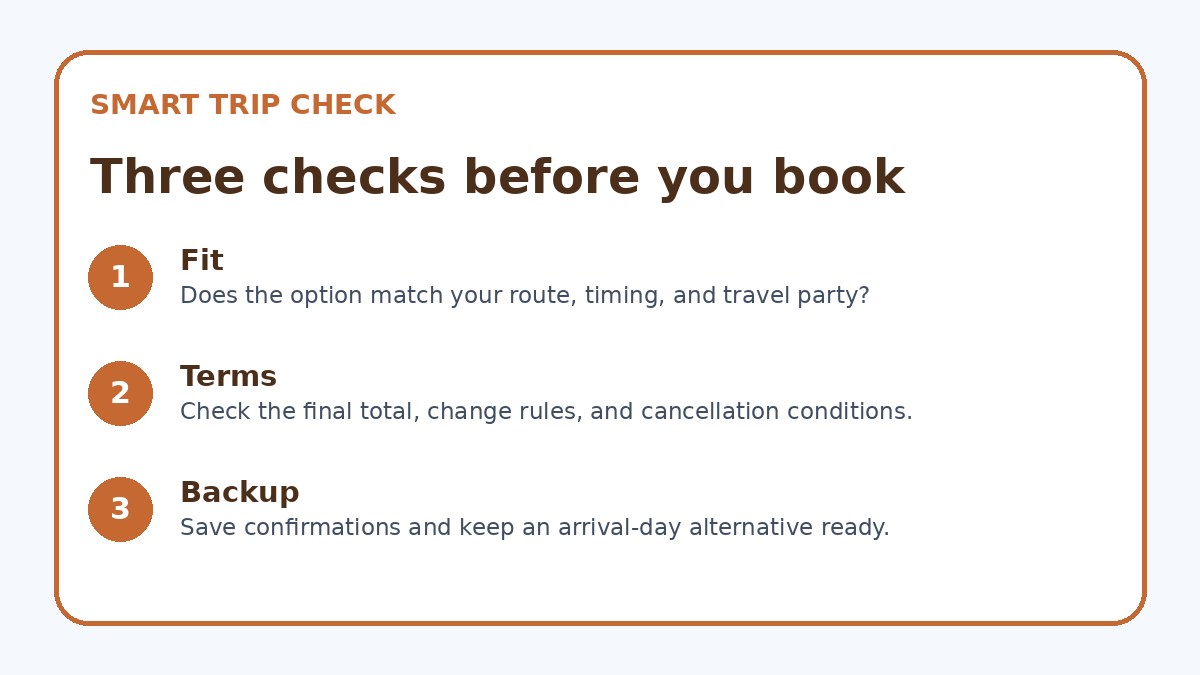
Allow flexible margins in your plan. With children, simple delays—bathroom stops, stroller folding, or baggage issues—can stretch door-to-door time. Book transfers that allow free waiting time or an easy rebooking process, and check cancellation or change conditions before committing. If you use public transport, identify staff-assisted routes and elevator locations in advance; if driving, plan for curbside loading areas and a drop-off point close to your accommodation to minimize the final carry with tired kids.
Before you book
- List all passengers, suitcases, and bulky items (stroller, car seat) before choosing a transfer.
- Measure or estimate suitcase dimensions and confirm vehicle trunk capacity or allow for a larger vehicle.
- Reserve a child seat or bring an approved travel car seat if your chosen transfer requires one.
- Save and screenshot your transfer booking, driver contact, and exact meeting point at the airport.
- Identify elevators, accessible routes, and staffed assistance options at the arrival station or terminal.
- Pack a ready bag with snacks, medicine, wipes, and a change of clothes for each child.
What to verify on booking pages and at the airport
On any booking page, confirm the vehicle type, luggage capacity, child-seat policy, meeting point procedure, driver contact options, and cancellation/change terms. If a provider lists pick-up at the airport, check whether the driver meets you at the arrival gate, the baggage claim area, or a fixed curbside. For trains, review which station entrance to use, elevator locations, and whether staff assistance is available for moving luggage between platform and concourse. These specifics often change more frequently than service descriptions, so always confirm them at the provider’s final booking page.
At the airport, identify a clear meeting spot and take a quick photo of signage or the transfer desk to show your children or the driver if you get separated. If you plan to use public transport, locate elevators and stroller-friendly routes as soon as you arrive; many major stations have staff who can assist with luggage if you ask. Keep small cash and local payment options ready for taxis that may not accept all card types, and confirm the drop-off point at your hotel before you leave the vehicle.
Frequently asked questions
Should I bring my car seat to Seoul or rely on local taxis and rental cars?
Bringing a car seat gives you predictable safety and comfort for small children, but it adds luggage bulk and can be heavy to move through airports and stations. If you rely on taxis or rental cars, check the provider’s child-seat policy and whether they can supply a suitable restraint; verify these details on the provider’s booking or rental page. A compact, airline-approved car seat or a lightweight foldable option reduces handling burdens. If you decide to leave a car seat at home, plan for taxis that allow booster usage or consider prebooking a transfer that includes a child seat.
Is it easier to take the AREX (airport rail) with children and luggage?
Airport rail is fast and avoids road traffic, which can be a relief after a flight, but you must consider station layout and elevator availability. Trains usually have limited luggage space and can involve stairs, long platform walks, or crowded connections—challenges with toddlers or many suitcases. If you choose rail, pick off-peak times and verify elevator locations in advance. For families with heavy or bulky luggage, a short final taxi from the station to the hotel can reduce walking and simplify the arrival.
How far in advance should I book an airport transfer for a family?
Book transfers early enough to secure the vehicle type and any child-seat options you need, especially during holidays or busy travel periods. For private transfers, reserving several days to weeks ahead gives you better odds of getting the correct vehicle size. Shared shuttles and some taxis can be arranged closer to arrival, but verify wait-time and cancellation policies on the provider’s page before relying on them. Keep a backup plan—such as a taxi app or a rail+taxi option—if your preferred transfer becomes unavailable.
Final planning note
Traveling through Seoul’s airports with children and luggage is a solvable logistical puzzle once you prioritize what matters most: minimizing lifts and walks, maintaining your children’s routines, or saving money. Start by inventorying people and baggage, then eliminate options that create long station walks or multiple transfers. For many families the extra cost of a private transfer pays off in reduced stress and easier door-to-door movement; other families prefer a rail plus short taxi for speed and reliability. Whatever you choose, verify vehicle size, child-seat rules, meeting points, and waiting allowances on the final booking page, and keep a small emergency kit and contact-ready confirmations to smooth the arrival.
Continue planning
Check current options and final conditions
Use the provider page to confirm live availability, the final total, cancellation terms, and every condition that matters to your trip.
This evergreen planning guide was created with AI-assisted drafting and a structured quality review. It does not display live prices, schedules, availability, visa guidance, or provider rankings. Verify current details before booking. Some links are affiliate links; we may earn a commission at no additional cost to you.