If you’re arriving in Tokyo for the first time, your immediate decision is which airport transfer to use. Tokyo has two major international gateways—Haneda and Narita—and each offers several ways into the city: rail (regional express or local lines), airport buses, taxis or private transfers. The right choice depends on your budget, the location of your hotel, how much luggage you have, and whether you want the fastest possible trip or the simplest, lowest-stress option. This guide gives a short practical answer up front, then walks through tradeoffs and booking considerations so you can compare options and verify the live details before you commit. Where provider-specific schedules or fares matter, check those on the carrier’s booking page or a current travel aggregator like Trip.com before you finalize plans.
Quick decision: which transfer to pick first
For most first-time visitors, pick one of three approaches based on priorities. Choose an express or direct train if you want the fastest ride into central Tokyo with minimal traffic risk. Choose an airport bus or shared shuttle if you prefer fewer transfers and a simple walk from the terminal to the coach. Choose a taxi or private transfer when door-to-door ease matters most, especially with heavy luggage or late-night arrivals. This quick decision framework helps you narrow options before comparing schedules and booking.
When deciding, also consider where in Tokyo you’ll be staying—different train lines and bus routes favor different neighborhoods. If you’re staying in or near a major station, a rail option often drops you closest. If your hotel is in a less central area or has limited public-transport connections, a direct road transfer may save time overall even if it costs more. Always check the provider’s web page for exact boarding points, luggage allowances, and whether multiple segments are required.
Trains: speed and frequency versus luggage and transfers
Trains are a favorite for travelers who prioritize speed and schedule reliability. Express services connect the airports to central Tokyo and are often frequent during the day; they usually require little to no road travel, which avoids traffic delays. If your flight arrives at a peak time or you want the fastest predictable journey, look up direct express services and whether a single-seat journey is available from your terminal to your city stop.
The tradeoff is luggage and transfers—train cars can be crowded during commuting hours and storage space varies. Decide whether you can manage your suitcases on stairs, platforms and possible transfers. If you have a tight connection to another train or a late flight, check step-free access at stations and whether reserved-seat options exist. Always verify current schedules and seat reservation rules on the operator’s booking page before you buy tickets.
| Approach | Best for | Tradeoff to check |
|---|---|---|
| Express train | Travelers who want the fastest, timetable-predictable arrival into central Tokyo. | May require managing luggage and possible station transfers; check seat reservations and station access details. |
| Airport bus / shared shuttle | Visitors prioritizing low-stress travel and direct links to major hotels or stations. | Subject to road traffic and multiple stops; confirm boarding points and estimated journey structure. |
| Taxi or private car | Groups, late arrivals, or travelers needing door-to-door convenience with heavy luggage. | Higher cost and variable travel time due to traffic; verify included fees and pickup instructions. |
| Local trains + transfer | Budget-conscious travelers who plan ahead and are comfortable navigating transfers. | More walking and time; check platform accessibility and luggage storage rules before you travel. |
Airport buses and shared shuttles: simplicity and door-to-hotel routes
Airport buses and shared shuttles score for low-stress transfers because they typically pick up at clearly marked stops just outside arrivals and drop you near major hotels or central stations. These services let you sit with your luggage rather than manage it through multiple train platforms. For travelers who prefer no transfers after arrival or who land late in the evening, an airport coach often offers the simplest route.
On the other hand, buses follow roads and can be slowed by traffic, especially during peak times, and routes may stop multiple times en route—so a bus trip may take longer than a direct train. Confirm boarding locations, exact hotel stops, and luggage rules on the operator’s site. If you need guaranteed hotel drop-off or are traveling with bulky gear, consider booking a private shuttle instead and verify vehicle size and pick-up point before departure.
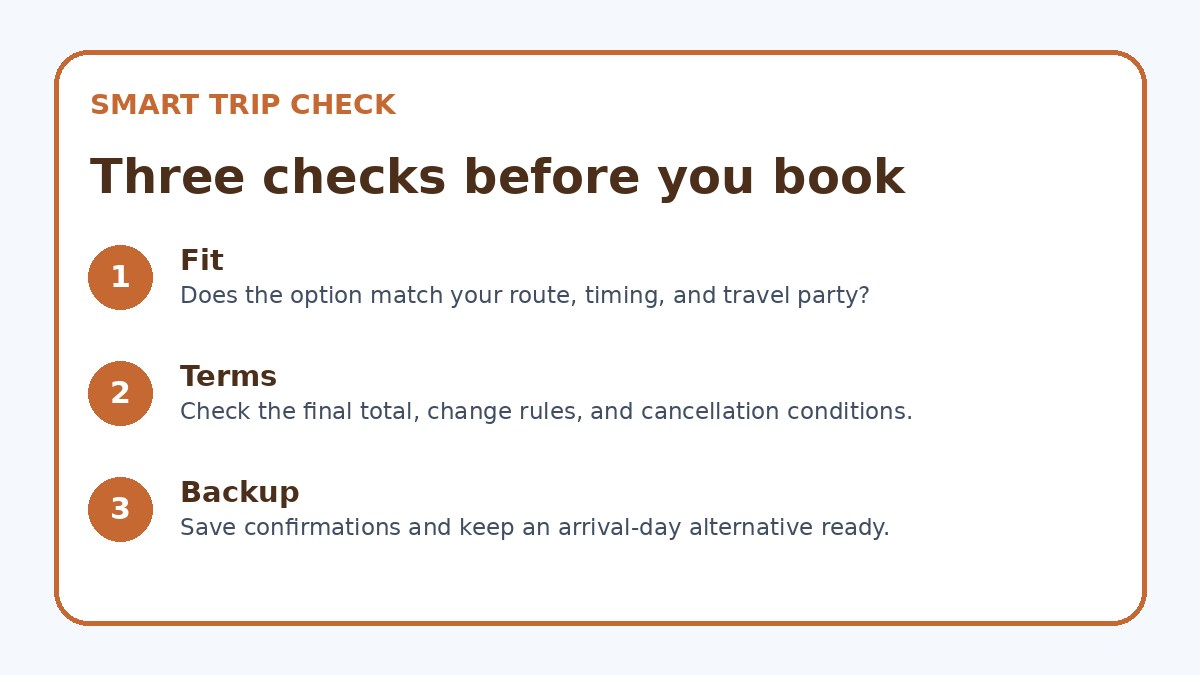
Before you book
- Confirm which Tokyo airport you arrive at and check terminal details on the airport’s official site or your airline confirmation.
- Decide whether minimizing time, minimizing transfers, or minimizing cost is most important for your arrival transfer.
- Look up live train and bus schedules for your arrival time and confirm direct-service availability on the provider’s booking page.
- If booking a taxi or private transfer, verify pickup location, driver meeting instructions, and any waiting-time or luggage charges.
- Check accessibility details—elevators, ramps and step-free routes—at stations and terminals if you have mobility needs.
- Have a backup plan (alternate train, bus route, or ride-hail option) in case your preferred service is delayed or fully booked.
Taxis and private transfers: convenience at a cost
Taxis and private transfers give complete door-to-door service and remove the uncertainty of navigating public transport with heavy luggage. They’re particularly attractive for groups or travelers with mobility needs, odd arrival hours, or multiple bags. You can book private cars in advance that meet specific needs—child seats, extra cargo space, or direct routes to accommodations not well served by public transport.
The tradeoff is cost and potential traffic delays. Road journeys from the main international airport can lengthen during busy periods, increasing both time and fare. If choosing a private option, read the booking page carefully to see what is included, whether waiting time is charged, and how the driver finds your arrival area. Compare costs and convenience against express trains or buses and decide which dimension—time, ease, or price—is most important for your trip.
Frequently asked questions
Which Tokyo airport transfer is best if I land late at night?
Late-night arrivals are often easiest with a taxi, private transfer, or an airport bus if one runs at that hour. Trains may reduce frequency or stop running depending on schedule, so confirm the last services for your arrival time on operators’ pages. If you book a private transfer, check the supplier’s policy for late arrivals and waiting time. Also confirm exactly where the driver will meet you in the terminal, as signage and pickup points can differ by arrival hall.
How should I choose between an express train and an airport bus?
Choose an express train if you prioritize speed and predictable running unaffected by road traffic; pick a bus if you want fewer transfers and easier luggage handling. Compare where each option drops you off relative to your hotel—an express train may put you closer to major hubs, while a bus might stop nearer to your accommodation. Review current timetables and boarding locations on the provider’s website and consider expected traffic conditions for buses during your arrival window.
Can I rely on ride-hailing apps for airport pickup in Tokyo?
Ride-hailing availability and airport pickup rules can vary; some services operate but use designated taxi or app-pickup zones rather than curbside hails. Before relying on an app, check the airport’s rules for app-based pickups and verify whether the service can pick up inside the terminal or at a specific external lot. If you prefer an app-based ride, plan for a short walk to the designated meeting point and check the driver’s instructions on the app once your booking is confirmed.
Final planning note
Choosing the right Tokyo airport transfer depends on where you’re staying, how much luggage you have, the time of your arrival, and whether you value speed, simplicity, or cost. Narrow your choice by deciding which of those factors matters most, then compare live train timetables, bus routes and pickup points, or private transfer terms on the provider’s booking pages. Keep a fallback option in mind—train schedules can change and road journeys depend on traffic. For current availability and schedules, you may check an aggregator like Trip.com, but always verify final details on the operator’s official site before booking.
Continue planning
Check current options and final conditions
Use the provider page to confirm live availability, the final total, cancellation terms, and every condition that matters to your trip.
This evergreen planning guide was created with AI-assisted drafting and a structured quality review. It does not display live prices, schedules, availability, visa guidance, or provider rankings. Verify current details before booking. Some links are affiliate links; we may earn a commission at no additional cost to you.