Practical answer: for most first-time visitors the KTX (high-speed train) or an express coach are the simplest ways to travel between Seoul and Busan; choose KTX when speed, city-center convenience, and comfort matter, pick an express coach when you want a lower-cost, direct seat and don’t mind a longer ride. Ferries and self-drive are realistic alternatives when your priorities include a relaxed daytime voyage, car transport, or island stops. In deciding, weigh total door-to-door time, how much luggage you have, what part of Busan you need to reach, and whether you prefer fixed departure times or flexible schedules. Below I explain tradeoffs, how to compare direct and connecting options, what to check on provider pages, and an actionable checklist so you can book with confidence.
Train options: speed, convenience, and station access
Trains between Seoul and Busan cover a spectrum: high-speed services, intercity expresses, and slower local routes that connect via transfers. For a first-time visitor, the difference that matters most is door-to-door time — how long it takes to get from your accommodation in Seoul to your accommodation in Busan including transfers. High-speed trains generally depart from Seoul’s main central stations and arrive at major Busan hubs, which reduces the need for extra transfers. They are well-suited for travelers with moderate luggage who value short transit times and consistent schedules.
When comparing train options, look beyond the train type to departure and arrival stations: a slightly slower service that drops you closer to your final destination can beat a faster train that requires an extra taxi or long metro ride. Also compare direct versus connecting itineraries; connecting services can be cheaper or fill gaps in the timetable but increase complexity and risk if you’re tight on time. Always verify seat classes, luggage allowances, and refund or change policies on the provider’s booking page before purchasing, since operational details and fare rules can change.
Coach travel: budget-friendly and straightforward
Intercity coaches offer a clear value proposition: a single reservation typically includes your seat and luggage space, and coaches run between major terminals with regular frequency. For first-time visitors who prioritize lower cost and a simple point-to-point trip, coaches are easy to understand — show up at the terminal, check your baggage, board, and relax. Many coaches provide onboard restrooms and occasional stops for refreshments, making them practical for travelers who prefer not to navigate transfers or multiple ticket types.
The tradeoff is time and city-center convenience. Coaches take significantly longer than high-speed trains and can be affected by road traffic during peak periods, which makes total travel time less predictable. If you plan to arrive in a particular neighborhood in Busan, check where the coach terminates and how you’ll continue from there. Also confirm baggage rules, whether seat selection is possible, and arrival terminal facilities on the operator’s official pages before you book or rely on third-party listings like Trip.com for availability snapshots.
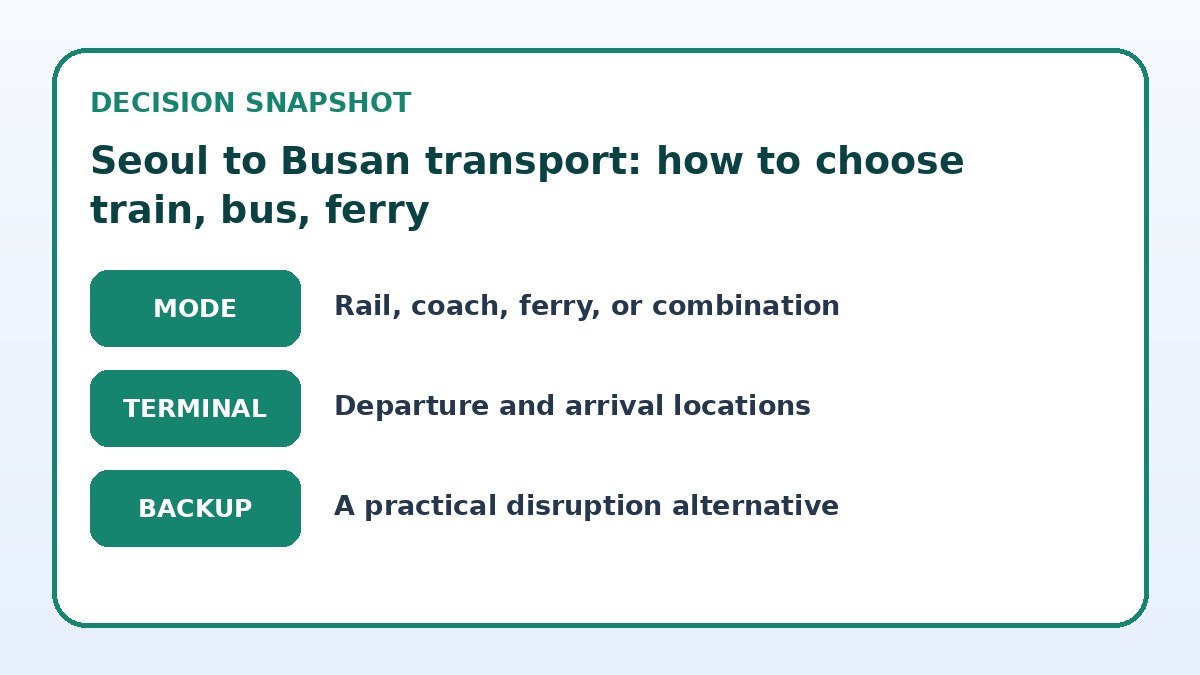
| Approach | Best for | Tradeoff to check |
|---|---|---|
| High-speed train | Travelers prioritizing speed, comfort, and city-center stations | Higher fare range and specific station arrival locations may need extra local transfers |
| Express coach | Cost-conscious travelers wanting a simple direct seat and luggage hold | Longer, less predictable travel time and arrival terminals that may be outside your final neighborhood |
| Ferry | Those wanting a relaxed voyage, cabin comfort, or to transport a vehicle | Slower door-to-door time and extra transfers to reach ports and city arrival points |
| Self-drive | Visitors who want full route flexibility, local exploration, or travel with lots of gear | Unfamiliar roads, tolls, parking challenges, and potential extra costs for fuel and insurance |
Ferry and sea options: a different travel experience
Taking a ferry between the Seoul area and Busan is a less common choice but it appeals to travelers seeking a scenic, slower-paced journey or who need to transport a vehicle. Ferries can offer comfortable cabins, a relaxed schedule, and the opportunity to break up travel with island hops if routes permit. For visitors who are not time-pressured and value the onboard experience, a daytime ferry with sea views or an overnight cabin can turn transit into part of the trip rather than just a transfer.
Ferries require extra planning: port transfers, possible overnight accommodation on board, and different baggage or vehicle rules than land transport. You must verify schedules, terminal locations, check-in windows, and vehicle policies on the operator’s booking page because these details vary and can change seasonally. If you include a ferry as part of a longer itinerary, factor in time to reach ports from central Seoul and to connect onward from Busan’s port to your final destination in the city.
Before you book
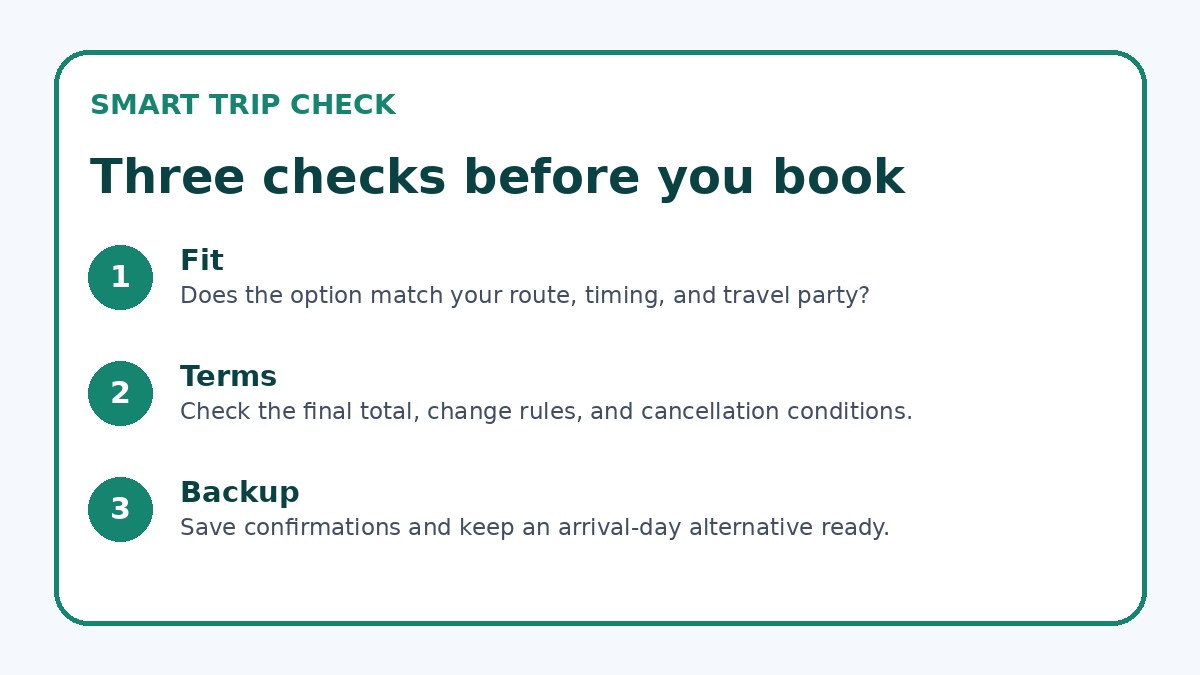
- Decide your primary tradeoff: speed, cost, flexibility, or onboard experience, and prioritize which matters most for your trip.
- Confirm departure and arrival stations or terminals for each option and map door-to-door travel time including transfers and local transit.
- Check luggage and vehicle policies on the operator’s official booking page, including size limits and whether space must be reserved.
- Compare direct versus connecting services and choose direct only if the price and schedule fit your total itinerary risk tolerance.
- Verify refund, change, and boarding/check-in rules on the provider site before you book; use that page as the authority for operational terms.
- If using a third-party platform like Trip.com to compare, always cross-check final availability and terms on the operator’s official page prior to payment.
Driving and other practical modes: flexibility versus hassle
Driving between Seoul and Busan gives maximum flexibility to stop, detour, and carry more luggage or outdoor equipment, and it’s useful if you plan to explore coastal or rural areas en route. For families or groups with a lot of baggage, a rental car can be cost-effective when split across passengers and time. It also lets you reach out-of-the-way attractions and offers door-to-door control that public transport can’t match in remote areas.
However, driving adds responsibilities and potential difficulties for first-time visitors: unfamiliar traffic rules, toll roads, parking in Busan, and urban congestion. Consider whether you’re comfortable driving in a foreign country and whether you’ll have navigation tools and local insurance sorted before departure. If you don’t want to drive all the way, combining train or coach with local car hire in and around Busan can deliver the best of both worlds — fast intercity travel plus local flexibility. Always check rental contract terms, deposit requirements, and fuel or mileage policies directly with the rental company before booking.
Frequently asked questions
How do I choose between KTX (high-speed train) and an express coach for my first trip?
Start by calculating door-to-door time: include travel to and from stations, typical traffic for coaches, and local transfers. If minimizing total time and avoiding road congestion matters, a high-speed train is usually better; if your budget is tight and you prefer a single-seat, single-ticket solution with luggage hold, an express coach may be preferable. Also consider where you’ll arrive in Busan — a coach terminal closer to your hotel can outweigh faster rail options that land at a distant station.
Can I take my rental car on a ferry if I want to combine driving with a sea crossing?
Some ferry services accept vehicles but policies, loading procedures, and booking requirements vary widely. Do not assume vehicle carriage; check the specific ferry operator’s booking page for vehicle dimensions, reservation rules, check-in times, and any extra fees. If you’re arranging this through a rental agency, confirm that their terms allow ferry transport and whether they require additional insurance or restrictions for sea transfers.
What should I verify on a transport provider’s booking page before paying?
Look for the exact departure and arrival terminals, seat or cabin class descriptions, luggage and vehicle allowances, check-in/time-of-boarding windows, and the operator’s refund and change policy. Also confirm whether the fare is refundable or exchangeable, whether seat reservations are included, and any identity requirements at boarding. If you find different details on a third-party site like Trip.com, use the provider’s official page as the final word and save screenshots of confirmation pages.
Final planning note
There’s no single right way to travel from Seoul to Busan — the best choice depends on whether you prioritize speed, cost, flexibility, or the onboard experience. For most first-time visitors who want a fast, convenient door-to-door plan, high-speed trains are the straightforward option; coaches are sensible when budget matters and you’re content with longer travel time; ferries and driving suit travelers who want a slower pace, vehicle transport, or route flexibility. Use the checklist to compare total travel time, terminal locations, luggage rules, and refund policies, and always verify operational details on the operator’s booking page before you finalize payment.
Continue planning
Check current options and final conditions
Use the provider page to confirm live availability, the final total, cancellation terms, and every condition that matters to your trip.
This evergreen planning guide was created with AI-assisted drafting and a structured quality review. It does not display live prices, schedules, availability, visa guidance, or provider rankings. Verify current details before booking. Some links are affiliate links; we may earn a commission at no additional cost to you.