If you’re arriving in Tokyo with oversized suitcases, instruments, or several checked bags, the practical question is simple: pick the option that balances how much time and effort you want to spend hauling luggage versus what you’re ready to pay. Public transport (trains, airport express buses) is efficient and often faster in traffic, but requires steps, platform changes, and carrying bags on/off systems. Private transfers (taxis, airport limousines, shared vans, private hire cars) offer doorstep drop-offs and fewer lifts, but involve more expense and potential delays in congested periods. Decide first how much walking, stairs, and time you can accept, then weigh your budget and arrival time. The rest of this guide explains the tradeoffs, how to compare routes and providers, what to confirm on booking pages, and a checklist to finish planning smoothly.
See current options before you compare the details
Availability and final conditions change. Open Trip.com now or keep reading for the practical comparison.
Assessing your luggage and mobility needs
Start by cataloging what you travel with: number and size of suitcases, fragile items, musical instruments, sports gear, or large boxes. Note whether you’ll have children, a stroller, or mobility needs that make stairs, long walks, or transfers difficult. In Tokyo many train stations have elevators and escalators but not every transfer is step-free; some smaller stations and older transfer corridors require stairs. If a single person is managing several heavy cases, the repeated lifting onto platforms and up escalators can turn a short journey into a tiring ordeal.
Also consider timing and group size. If you arrive outside the rail network’s peak operating patterns or during late-night hours, public options may be limited and a paid transfer could be the only practical choice. Traveling as a couple or family can make public transport more feasible because you can share carrying tasks, while solo travelers with oversized luggage often find private pickup worth the added expense. Finally, think about onward connections: if you must switch trains or take a taxi in central Tokyo after arriving, factor those extra moves into your decision.
Public transport: what to compare and expect
Public options from Tokyo’s airports commonly include express trains, local trains with transfers, and airport buses. When evaluating these, compare total door-to-door time estimated by route planners and how many transfers are required. Check whether the route uses an express service that boards at ground-level platforms or requires an elevator-access transfer; some express trains are more luggage-friendly than congested commuter trains. Think through the ‘last mile’ too: many hotels near major stations are easier to reach on foot, but those in narrow side streets may still require a short taxi from the station.
On booking or information pages verify luggage allowances and platform access details where provided; for example, some express services reserve space for large suitcases but others do not. If you plan to use staffed luggage services (baggage forwarding, station lockers, or on-train storage), confirm current availability and rules on the provider’s site. Be realistic about rush-hour travel: Tokyo trains can be very crowded, and transporting oversized cases through packed cars and station gates is often impractical during peak periods.
| Approach | Best for | Tradeoff to check |
|---|---|---|
| Public transport (trains, buses) | Travelers prioritizing lower costs and faster travel during traffic | Requires lifting, platform transfers, and handling bags through stations |
| Metered taxi or rideshare | Small groups or moderate luggage wanting door-to-door convenience | Higher fare and travel time depends on road congestion |
| Prebooked private car or van | Large groups, oversized items, or travelers needing guaranteed vehicle capacity | Most expensive; requires careful verification of luggage capacity |
| Shared airport shuttle or coach | Budget-minded travelers with moderate luggage who prefer some curb pickup | May include multiple stops and longer total door-to-door time |
Ready to check the option that fits your plan?
Use your exact dates and traveler details so the provider page can show the current total and conditions.
Private transfers: pros, cons, and what to check
Private transfers give you curbside pickup and drop-off, which is the main advantage when you have bulky or fragile items. Options range from metered taxis and app-based rides to pre-booked private cars or shared shuttles. They reduce the physical labor and the stress of navigating busy stations, especially after a long flight. However, they cost more and travel times depend on road traffic; late-night or early-morning arrivals may be easier because roads are quieter, while daytime pickups can be impacted by congestion.
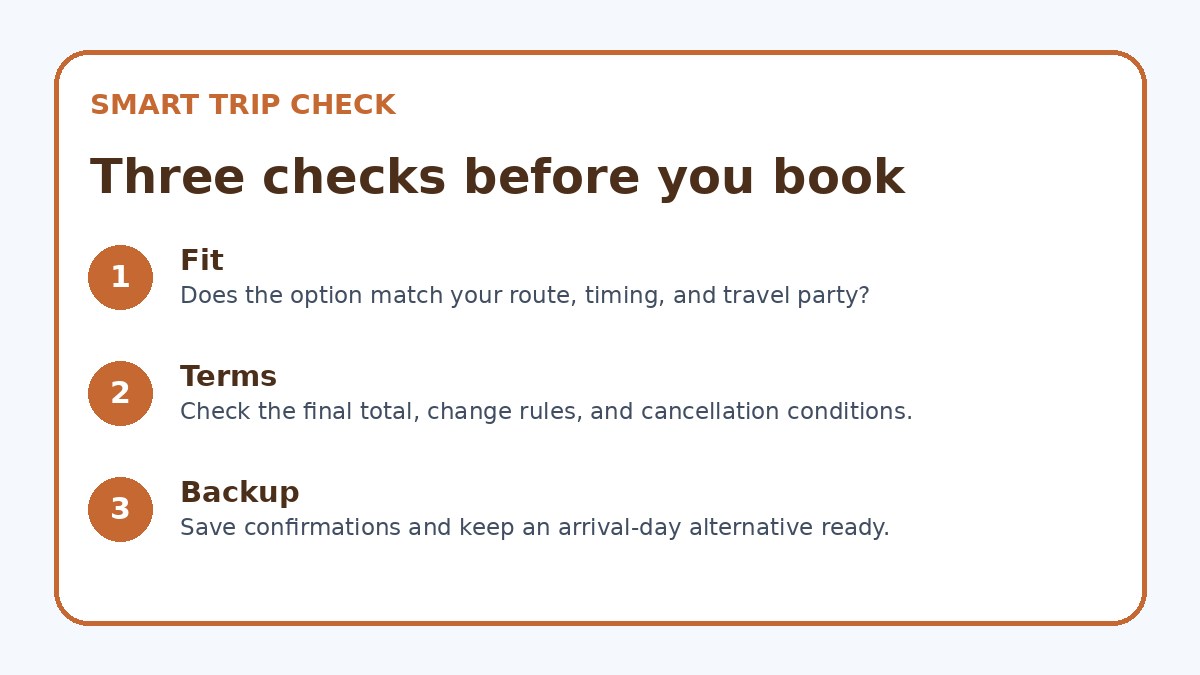
Before booking, read the provider’s luggage policy on the final booking page: confirm vehicle type, maximum number of bags, and whether large items count as extra units or require oversized-vehicle options. Check pickup instructions for fees, meet-and-greet procedures, or specific terminal pickup points. If you’re booking a private sedan for several large suitcases, verify that the quoted vehicle will actually accommodate them—photos and explicit dimension notes on the booking page are helpful. For third-party marketplaces including Trip.com, treat listings as starting points and verify details in the provider confirmation.
Before you book
- Count and measure all suitcases and oversized items; note any fragile or irregular pieces.
- Check train and bus route planners for door-to-door times including transfers and walking.
- On private provider pages confirm vehicle type, luggage capacity, and pickup terminal instructions.
- Verify cancellation and delay policies on the final booking page before you pay.
- Plan arrival time against Tokyo traffic patterns; consider off-peak private pickup if budget allows.
- Have a backup: identify the nearest taxi rank or late-night bus option from your arrival terminal.
Balancing cost, convenience, and timing
Think of the decision as a three-way tradeoff: money, effort, and time. If saving money is the priority and you can handle lifting and transfers, public transport will often be the right choice. If minimizing physical effort and having a predictable door-to-door experience matters more, a private transfer makes sense despite higher cost. Time of day matters: when roads are clear, a taxi can be quick; in heavy traffic, trains usually win on speed, but only if the train route requires few or no transfers.
To make the best call for your trip, run a side-by-side comparison for your specific arrival: pick the train/bus routes and calculate door-to-door time including walking and transfers, then get quotes for taxis or prebooked cars and estimate potential traffic delays for your arrival window. Check cancellation and rebooking policies on the supplier’s final page so you can change plans if flights are delayed. Reserving a flexible private option with clear luggage terms gives peace of mind, while a public rail or bus option keeps costs lower if you’re comfortable managing bags.
Frequently asked questions
Can I take oversized suitcases on Tokyo trains from the airport?
Yes, many travelers do bring large suitcases on trains, especially on airport express services designed for travelers. However, ease of boarding and storage varies by service and station layout; some trains have dedicated luggage areas while others rely on overhead racks and door spaces. If your journey requires transfers between lines or walking through crowded stations, moving oversized bags becomes harder. Before you travel, check the specific train service information and station maps where available, and consider whether a direct express or single-transfer route exists to minimize handling.
How do I know what size vehicle to book for private transfer in Tokyo?
Start by totaling the number and size of bags plus passengers. On the provider’s booking page look for vehicle categories (sedan, MPV, van) and explicit luggage capacity or photos showing trunk space. If the information is not clear, contact the provider or request a larger vehicle option when booking. For irregular items—surfboards, golf bags, musical instruments—ask about roof racks or specialized vans. Always confirm pickup and drop-off points and whether there are additional fees for oversized items on the final confirmation page.
Is luggage forwarding a practical alternative to transfer on arrival?
Luggage forwarding (takkyubin) is a widely used service in Japan that can simplify travel by shipping bags from airport to hotel or between hotels. It reduces the burden of carrying heavy items on trains or stairs and can be cost-efficient for large or bulky items. Keep in mind it is not instantaneous: most services deliver the next day or within a specified window, so you’ll need to plan without immediate access to your gear. Verify pickup/drop-off points, delivery timeframes, and insurance coverage with the forwarding service before handing over your luggage.
Final planning note
Choosing between public and private Tokyo airport transfer is a practical tradeoff based on how much you value time, money, and physical effort. If you can manage stairs, gates, and short walks and want to save, public trains or buses often work well—especially when a direct express limits transfers. If you have oversized, fragile, or many bags, or if mobility and doorstep convenience matter most, a prebooked private car or taxi reduces handling even though it costs more and can be slowed by traffic. Use the checklist above and always verify luggage rules, vehicle capacity, and pickup details on the final booking page before paying. For quick comparisons of current availability and options you can check services listed on Trip.com, then confirm directly with the chosen provider.
Continue planning
Check current options and final conditions
Use the provider page to confirm live availability, the final total, cancellation terms, and every condition that matters to your trip.
This evergreen planning guide was created with AI-assisted drafting and a structured quality review. It does not display live prices, schedules, availability, visa guidance, or provider rankings. Verify current details before booking. Some links are affiliate links; we may earn a commission at no additional cost to you.