For a first-time visitor the key question is simple: which Seoul airport transfer option gets you to your accommodation with the right balance of cost, comfort, and predictability? Start by deciding if you want door-to-door convenience, a single direct ride to the city center, or the flexibility to change plans on arrival. Seoul has multiple airport-to-city choices — dedicated airport buses, express rail, local trains and subways, taxis, and private shuttles — and the right pick depends on luggage, arrival time, budget, and how comfortable you are navigating public transport. This guide gives the practical answer up front, then explains tradeoffs and the specific checks to make on provider pages before booking so you can choose confidently and avoid common surprises.
See current options before you compare the details
Availability and final conditions change. Open Trip.com now or keep reading for the practical comparison.
Quick decision: pick one transfer type
When you need to make a quick decision at booking, narrow your options by three practical questions: how much luggage you have, how many people are traveling, and whether you prefer a predictable door-to-door ride or don’t mind transfers. If you have lots of luggage, a taxi or private transfer reduces walking and stair use; if you travel alone with carry-on bags and want to save money, rail or bus is sensible. Group size matters because a family of three or four can often split a car fare advantageously compared with multiple rail tickets.
Also consider arrival time and your tiredness level. After a long international flight many travelers choose a slightly more expensive door-to-door option for peace of mind. Conversely, if you’re arriving during peak public-transit hours and are okay with following signs and elevators, the express train or local subway delivers reliability and typically fewer traffic delays. Check provider pages for baggage allowances, station locations, and whether a service stops near your neighborhood.
Comparing speed, comfort and predictability
Speed can mean different things: travel time without traffic, number of transfers, or total door-to-door time. Rail services that operate on dedicated tracks avoid road congestion and are often the fastest on average, while buses will be affected by traffic but sometimes drop you closer to your door. Comfort includes seat space, room for luggage, and how long you need to stand. Predictability relates to schedules and frequency — if you need a guaranteed ride, a reserved transfer or taxi provides certainty you won’t face an unexpected wait.
When comparing options, map the full journey from airport door to your accommodation door. Factor in the walk or shuttle between terminals, time to claim baggage, and any transfers. On provider booking pages verify exact pickup and dropoff points, luggage policies, and if a reservation can be changed or cancelled. If you find different providers for similar routes, compare whether one is direct or requires that extra transfer, then decide if the small time savings are worth the price or complexity for your trip.
| Approach | Best for | Tradeoff to check |
|---|---|---|
| Private transfer or taxi | Travelers with heavy luggage, groups or those who want door-to-door convenience | More expensive and subject to road traffic; check pickup instructions and wait time policies |
| Airport express rail | Travelers prioritizing speed and avoiding road congestion | May require a walk or short transfer to reach final accommodation and has luggage limits |
| Dedicated airport buses | Those wanting direct stops near major districts without navigating trains | Affected by traffic and may have fewer late-night options; verify exact stop locations |
| Local subway and commuter trains | Budget-conscious travelers comfortable with transfers and local transit systems | Cheapest route may involve transfers and carrying luggage on stairs or between platforms |
Ready to check the option that fits your plan?
Use your exact dates and traveler details so the provider page can show the current total and conditions.
How to evaluate logistics on arrival
Before you leave home, pin the terminal you will arrive at and the nearest station or taxi stand for each transfer option. Airports serving Seoul may have multiple terminals and separate rail or bus stops; knowing your terminal helps you avoid needless walking or a shuttle between terminals. Confirm whether the service requires buying a ticket from a kiosk, a staffed counter, or a driver, and whether you need local transit cards or contactless payment that works in Korea.
On the provider’s final booking page check pickup instructions, the meeting point inside the terminal, whether the driver waits for delayed flights, and any transfer notes about stairs or elevators if you have heavy luggage. If you’re taking public transit, look up the station name at the airport and the transfer sequence (for example, transfer lines and transfer stations). Trip.com can be useful to compare current availability, but always verify timetable and pickup details on the operator’s official page before finalizing your booking.
Before you book
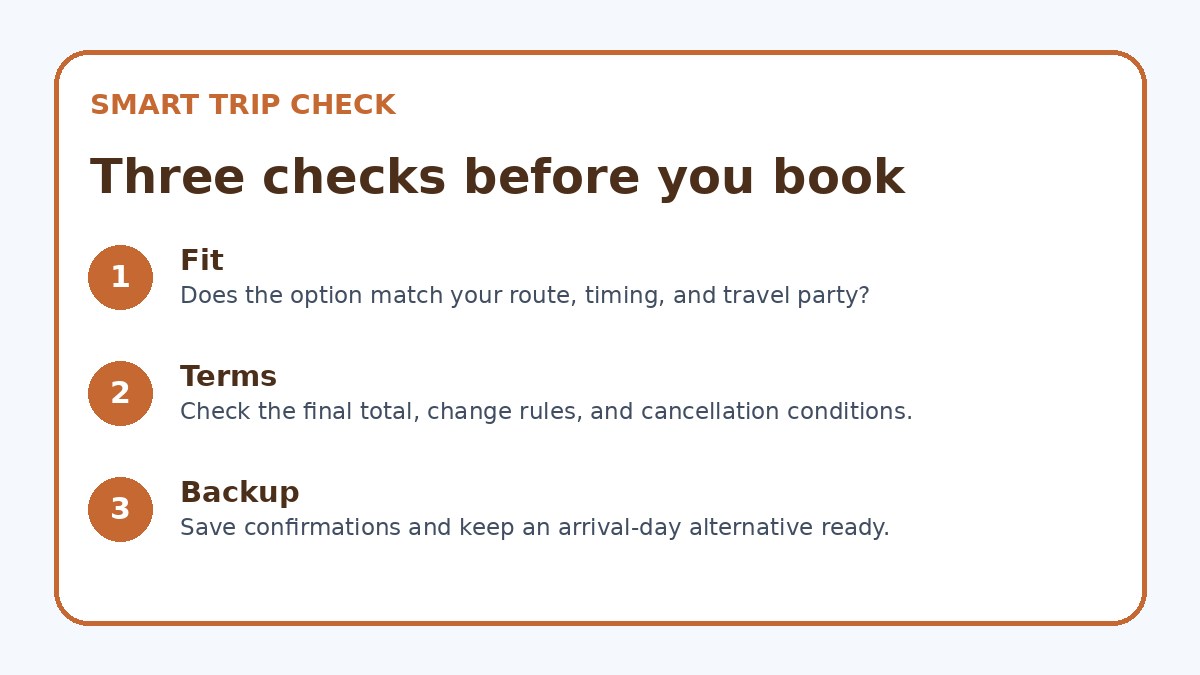
- Confirm which airport terminal your flight arrives at and the closest pickup or station for each transfer option.
- Verify baggage allowances, whether a carrier reserves space for large suitcases, and how luggage is handled by the service.
- Check pickup meeting points and the operator’s policy on delays or late arrivals on the final booking page.
- Compare door-to-door time by adding estimated baggage claim time, transfer walks, and any scheduled waits.
- Save the accommodation address in Korean and the phone number to show drivers or staff on arrival.
- Have a backup plan (alternative service or taxi app) if your primary transfer is disrupted or fully booked.
Practical tips for a smooth transfer
Pack a printed and a digital copy of your accommodation address in both English and Korean to show taxi drivers or transfer staff. Keep essential documents and a small amount of local currency accessible for small purchases or unattended ticket machines. Expect to claim baggage and pass through customs before you can meet a driver or reach a public-transit platform; build in a cushion for lines and inspections.
Communicate arrival changes promptly. If your flight is delayed, notify any prebooked transfer using the provider’s stated method to avoid missed pickups or waiting fees. For self-directed train or bus travel, saving station maps and a screenshot of the route helps if connectivity is intermittent. Finally, consider travel insurance that covers missed connections if your priority is a stress-free onward journey.
Frequently asked questions
Is it better to prebook a transfer or wait and choose on arrival?
Prebooking provides peace of mind and ensures a reserved pickup, which is helpful if you arrive late, have a lot of luggage, or are traveling in a group. Waiting to decide on arrival gives flexibility and may let you compare real-time conditions — for example, checking train frequency or traffic at the time — but it carries the risk that preferred services could be full or that you’ll face longer waits. If you prebook, verify cancellation and delay policies on the operator’s page so you know your options if plans change.
How do I choose between express rail and airport buses?
Choose express rail when you want to minimize road delays and value a faster predictable ride to central rail hubs; it’s usually straightforward for travelers without bulky luggage. Choose airport buses if you need a direct stop closer to your neighborhood or hotel and prefer fewer transfers. Compare the drop-off points versus the distance you’ll need to cover on foot or by local taxi, and confirm whether the bus route is direct or makes many stops — check operator details on their booking pages before committing.
What should I know about taking a taxi from the airport?
Taxis offer door-to-door service and are convenient with heavy bags or late arrivals, but fares vary and travel time depends on road traffic. Look for authorized taxi stands inside the terminal, avoid unlicensed offers, and if possible use an official airport taxi queue or app recommended by the airport to ensure you get a regulated driver. On the provider’s page or airport site verify where the taxi rank is located, whether flat-rate airport fares exist for your route, and if the operator accepts card payments or prefers cash.
Final planning note
Choosing a Seoul airport transfer comes down to balancing convenience, cost and timing. If you prize simplicity with luggage and a known arrival time, a reserved taxi or private transfer gives the least hassle. If you prefer speed and lower variability, the express rail is a strong choice, while airport buses and local trains are cost-effective if you’re comfortable with transfers. Before you book, confirm terminal details, pickup points, baggage rules, and delay policies on the provider’s official booking page. Use the checklist and comparison points here to match the option to your priorities and make the first minutes in Seoul smooth and predictable.
Continue planning
Check current options and final conditions
Use the provider page to confirm live availability, the final total, cancellation terms, and every condition that matters to your trip.
This evergreen planning guide was created with AI-assisted drafting and a structured quality review. It does not display live prices, schedules, availability, visa guidance, or provider rankings. Verify current details before booking. Some links are affiliate links; we may earn a commission at no additional cost to you.