Practical answer first: for most first-time visitors to New York City, start by comparing a curated package (flight + hotel + optional extras) and the self-built trip using separate bookings. If you value simplicity, single-point customer service, and fewer transaction searches, a package often saves planning time. If you need flexibility, want to mix budget and premium choices, or want granular control over neighborhood, airline, or attraction timing, booking pieces separately usually wins. The right choice depends on how much time you have to research, how flexible your dates are, whether you’ll change plans, and how comfortable you are handling multiple confirmations. Below you’ll find tradeoffs and decision criteria that help you weigh convenience, price transparency, cancellation rules, and where to double-check final vendor terms before paying.
See current options before you compare the details
Availability and final conditions change. Open Trip.com now or keep reading for the practical comparison.
How packages work and when they help
Package deals typically combine at least two travel components — commonly airfare and hotel — and sometimes add transfers or attraction passes. For a first-time visitor, that can be appealing because one checkout often means one invoice, a single point of contact for basic changes, and a simpler pre-trip checklist. Packages are particularly helpful when you have fixed dates, limited time to research, or prefer to let an agent or platform suggest sensible pairings of flight windows and centrally located hotels.
Packages can streamline coordination between elements (for example, aligning arrival and hotel check-in day), which reduces the chance of mismatched itineraries. But remember that packaging can restrict your choices: you may get fewer hotel categories in a given neighborhood or limited flight times. Before committing, ask what elements are changeable, whether any component is nonrefundable, and how customer support handles last-minute schedule changes. Always open and read the supplier’s final booking page to confirm those conditions.
Why separate bookings give control
Booking flights, hotels, and tours separately puts control in your hands. You can select a direct versus connecting flight, hand-pick a boutique hotel in a specific borough, or reserve timed-entry attractions that match your pace. This approach is useful if you plan to split stays across neighborhoods, combine budget and premium options, or want to use loyalty points for a particular hotel or airline. It’s also the easiest path to mix different providers and payment methods.
The tradeoff is more administrative overhead: multiple confirmations, separate cancellation policies, and potential conflicts if a delayed flight impacts a hotel check-in or a timed tour. To reduce risk, build buffer time into arrival and departure days, keep records of all confirmations, and consider buy protection or travel insurance that covers missed connections between separate tickets. Verify baggage allowances and change fees on each airline’s final booking page before paying.
| Approach | Best for | Tradeoff to check |
|---|---|---|
| Package (flight + hotel + extras) | Travelers who want simplicity and single-point support. | Less flexibility replacing or customizing individual components. |
| Separate bookings (DIY flight, hotel, tours) | Travelers who prioritize control, loyalty use, or neighborhood choice. | More time researching and managing multiple policies. |
| Hybrid (book flight and hotel separately but buy a city pass) | Travelers wanting control over travel but convenience on activities. | You must sync itineraries and confirm timed entries yourself. |
| Agent-curated package with add-ons | Travelers who value expert suggestions and tailored itineraries. | May include markups and fewer low-level budget options. |
Ready to check the option that fits your plan?
Use your exact dates and traveler details so the provider page can show the current total and conditions.
Cost comparison and where savings usually appear
Comparing costs requires a careful tally of all line items, not only headline prices. Packages might advertise a single lower combined number, but that can include restrictions such as nonrefundable fares or limited-room categories. Separate bookings sometimes look costlier at first glance but allow you to hunt for seat sales, hotel flash deals, or loyalty redemptions. Include taxes, resort or city fees, baggage charges, optional transfers, and attraction surcharges in your comparison so you’re comparing apples to apples.
Also consider soft costs: time spent searching, the value you place on simplified customer service, and the potential for refunds or changes. If a package provider bundles attraction tickets, check whether they are timed-entry and transferable. When looking at separate options, note whether a lower flight fare comes with fees for seat selection or carry-on baggage that make the final cost higher. Use price alerts and compare both package and DIY totals across a few booking sites; Trip.com can be one option to view current package availability, but confirm details on the provider’s final page.
Before you book
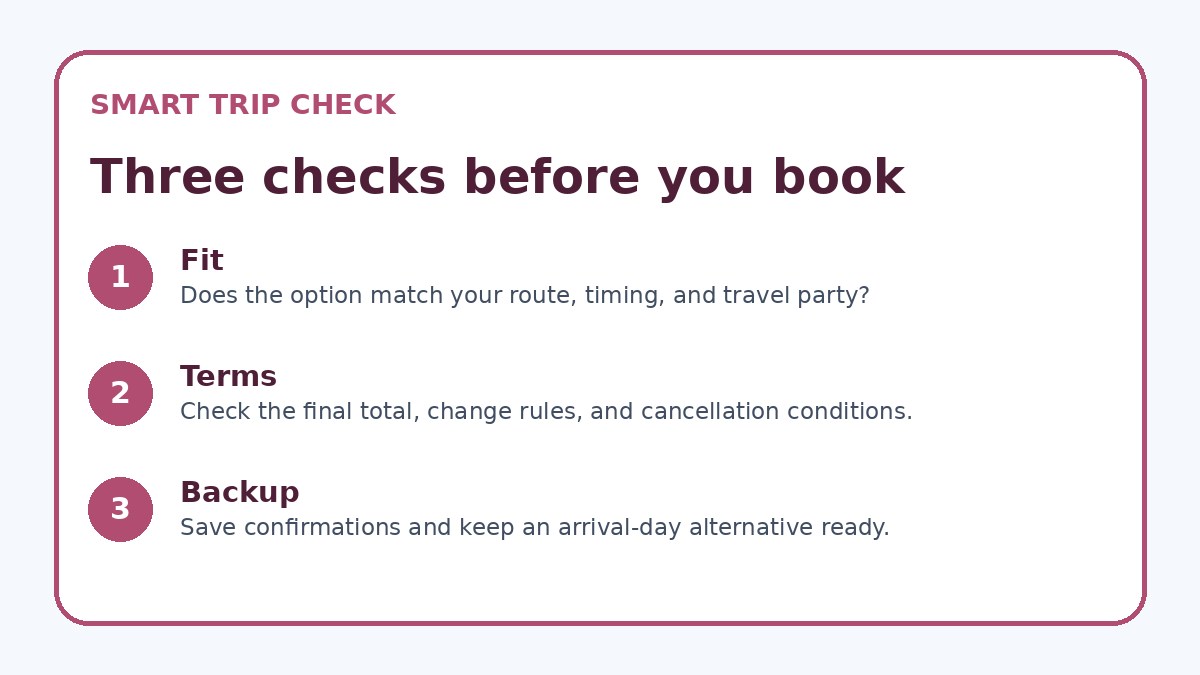
- Compare total out-the-door cost for package vs separate bookings, including taxes, fees, baggage, and transfers.
- Confirm flight times, baggage rules, and change/cancellation policies on the airline’s final booking page.
- Verify hotel check-in/out times, any city or resort fees, and the exact room category shown at checkout.
- Check whether attraction tickets are timed, transferable, and what the provider’s final terms allow for changes.
- Decide on refundable vs nonrefundable options and consider travel insurance for separate-ticket risk coverage.
- Organize all confirmations in one place (email folder or travel app) and note single contact for customer service.
Risk management, flexibility, and final checks
Flexibility is central to the decision. If your dates are fixed and you can’t tolerate changes, lean toward refundable elements whether packaged or separate. If you’re flexible and want the lowest nonrefundable options, separate bookings might save you money but increase exposure to schedule shifts. Regardless of approach, check cancellation windows, change fees, and whether refunds are handled by a single agent (for packages) or by multiple providers (for separate bookings).
Before paying, verify the exact flight times, baggage rules, hotel check-in and resort fee policies, and whether attraction tickets are timed and transferable. For multi-component packages, confirm who handles customer service and how to reach them in case of a day-of disruption. For separate bookings, print or save all confirmations in an organized folder or travel app. Always read the final booking page and terms the supplier shows at checkout — that is the contract you’ll be held to.
Frequently asked questions
If I book a package and a flight is delayed, who handles rebooking?
Packages often offer a single customer service team that coordinates basic changes, but responsibility can vary. Some packaged fares are nonrefundable or non-changeable, which limits options; in other cases the package supplier acts as an intermediary with the airline and hotel. Always check the package provider’s terms on the final booking page to learn if they rebook missed connections or if you must work directly with the airline. For critical connections, consider refundable fares or allow buffer time between arrival and booked activities.
Can I use hotel loyalty points if I buy a package?
Many package bookings do not earn or allow redemption of hotel loyalty points because the room rate is part of a packaged inventory. Policies differ by hotel and package provider. If loyalty credits or elite benefits are important, contact the hotel or read the package terms on the final checkout page to confirm eligibility. When points are essential, booking the hotel separately is usually the safest path to secure points, upgrades, and member benefits.
How should I decide whether to buy a New York City attraction pass in a package?
First, list the attractions you definitely want and note their admission structure (timed-entry, required reservations, or optional add-ons). If a package includes a pass, check whether it covers the attractions you plan to visit and whether entries require separate reservations. Calculate whether pay-as-you-go admissions would cost more or less than the included pass, remembering that a pass may force a tighter schedule. Always verify pass terms and any reservation requirements on the provider’s final booking page before purchasing.
Final planning note
There’s no universal answer for New York City travel deals: the right approach depends on your priorities. Choose a package if you want fewer decisions, single-point customer support, and a quicker booking flow. Opt for separate bookings if you need neighborhood choices, loyalty benefits, or fine-grained control over flights, transfers, and timed attractions. A hybrid approach suits travelers seeking control over travel logistics while buying convenience for activities. In all scenarios, verify the final checkout page for cancellation policies, baggage rules, room details, and who handles customer service—those specifics determine how resilient your trip will be to changes.
Continue planning
Check current options and final conditions
Use the provider page to confirm live availability, the final total, cancellation terms, and every condition that matters to your trip.
This evergreen planning guide was created with AI-assisted drafting and a structured quality review. It does not display live prices, schedules, availability, visa guidance, or provider rankings. Verify current details before booking. Some links are affiliate links; we may earn a commission at no additional cost to you.