If you’re a solo traveler looking at Sydney travel deals, the most practical first step is to estimate your total trip cost before you hit book. Don’t focus only on the headline flight or room rate: add transport from the airport, local transit or rides, attraction tickets you plan to use, meals at the level you prefer, travel insurance, and a buffer for small emergencies. Once you have a realistic total, you can compare options—cheaper flight but pricier transfers, or a centrally located room that saves transit time versus a cheaper peripheral hotel that adds daily commute costs. The rest of this guide explains how to gather the numbers, what tradeoffs to weigh, and how to verify provider details on confirmation pages so you avoid surprises.
See current options before you compare the details
Availability and final conditions change. Open Trip.com now or keep reading for the practical comparison.
Build a realistic total-trip equation
The single biggest planning mistake is treating a flight or room rate as the whole cost. To build a realistic total-trip equation, list fixed and variable items: flights, accommodation, airport transfers, daily transport, attractions you’ll definitely visit, daily food and coffee, occasional splurges, travel insurance, visas if needed, and a contingency fund. For solo travelers, splitting a ride or rental savings doesn’t apply, so multiply single-person rates. Work in local currency where possible to avoid conversion surprises, then check the likely exchange method and fees your bank or card will apply.
Use a simple spreadsheet or notes app to collect quotes and convert them to a single currency. For transport, estimate both public options and private rides for late arrivals or when you’re carrying luggage. For attractions, check ticket types (timed entries, app reservations) and whether skip-the-line options reduce time but raise costs. Factor in taxes and service charges shown on provider pages; when a site shows a lower headline price, open the final booking page and confirm total before you compare it with alternatives.
Compare location value, not just nightly rate
Choosing where to stay in Sydney is about commuting time, convenience, and how you plan to spend your days. A cheaper room on the outskirts can look attractive until you calculate daily transit time and cost. Add the cost of multiple public transport tickets or repeated ride-hailing trips and the value of the extra hours you’ll spend traveling. If you prefer wandering neighborhoods, staying centrally might let you walk to evening activities and reduce reliance on costly late-night transfers.
When evaluating accommodation deals, check the final booking terms on the provider’s page: does the rate include city or occupancy taxes, breakfast, Wi-Fi, or linen services? Note cancellation and change rules—flexible rates are often pricier but can save you money if plans shift. Also confirm practical details that affect cost: whether there’s a kettle or kitchenette (useful for breakfasts), secure luggage storage for late departures, and proximity to the train or ferry you’re likely to use most.
| Approach | Best for | Tradeoff to check |
|---|---|---|
| Cheapest headline fare or room | Travelers prioritizing lowest upfront spend | May add baggage, change fees, or higher local transfer costs that raise your total trip price |
| Flexible fare with higher headline price | Travelers wanting change options and lower risk | Higher upfront cost but potential savings if plans shift or delays occur |
| Central accommodation with higher nightly rate | Travelers valuing time, convenience, and walking access | Less transit cost and time but higher nightly outlay |
| Peripheral budget stay with cheaper nights | Travelers on a strict nightly budget | Lower room cost but more daily transit time and expense |
Ready to check the option that fits your plan?
Use your exact dates and traveler details so the provider page can show the current total and conditions.
Transport options and the arrival tradeoff
Sydney has several ways to move around, and your arrival time shapes the best choice. If you arrive midday, public train or coach options can be both cheaper and fast; for late-night or early-morning arrivals a taxi or ride-share might be necessary, adding to total cost. Compare the door-to-door price of a taxi or ride-share vs. an off-peak transit ticket plus a short bus. For many solo travelers the convenience and safety of a direct transfer is worth the extra money; for budget-focused travelers, planning arrivals during public transport hours saves cash.
When you compare flights, evaluate connecting vs. direct routings by adding transfer time and potential overnight layovers into the total trip cost. A cheaper flight with a long connection might require a hotel stay or additional transport; a slightly higher direct option could reduce those hidden expenses. Always check baggage inclusion and whether the fare permits free changes; a low headline fare that charges for bags and changes often ends up costing more than a slightly higher all-inclusive ticket.
Before you book
- Calculate your daily spending estimate for food, transport, and attractions in Sydney and multiply by the number of nights.
- Add fixed costs: roundtrip flight estimate, airport transfer, travel insurance, and any visa or mandatory fees you must pay.
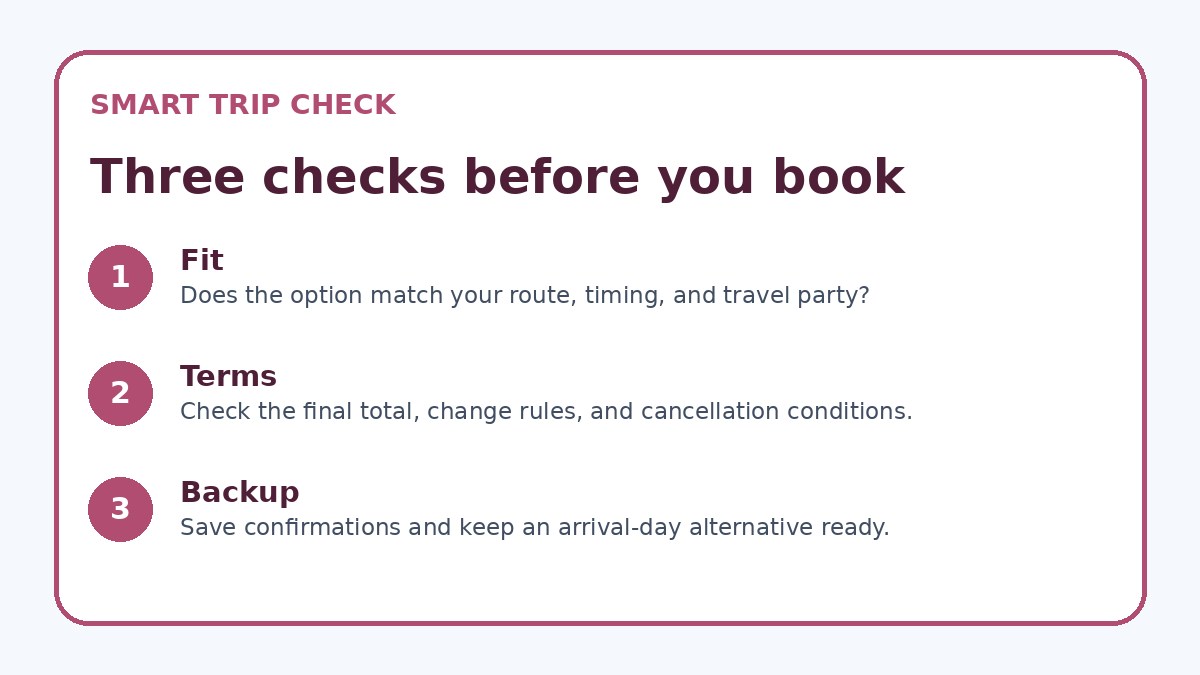
- Open the final booking page for each provider and confirm the total price, taxes, baggage allowance, and change/cancellation terms before selecting a deal.
- Compare door-to-door transfer options for arrival and departure times to decide if a more expensive flight earns back time or safety.
- Factor in accommodation location by estimating transit time and cost to your planned activities, not just the nightly rate.
- Set aside a contingency equal to at least 10% of discretionary spending and note emergency card/contact details for quick access.
Verify provider details and build a small contingency
Before booking, read the final booking page thoroughly and confirm the total cost you will be charged. Look specifically for baggage allowance terms, ticket or room change and cancellation fees, arrival taxes, and any mandatory local fees. If you book through an aggregator, follow the link to the provider’s confirmation and verify the same details there. Trip.com can be used to compare availability and terms, but always confirm the decisive facts on the airline, hotel, or attraction supplier page shown on your booking before paying.
Finally, include a contingency fund in your plan equal to at least 10–20% of your planned discretionary spending to handle small emergencies, an unplanned attraction, or a missed connection that forces a last-minute transport purchase. For solo travelers this buffer gives you flexibility without breaking the budget and avoids stress when plans change. Keep emergency contacts, quick insurance claim processes, and backups for payment methods in one place so you can act fast if something goes wrong.
Frequently asked questions
How do I compare Sydney flight deals when some show lower fares but add bag fees?
Start by breaking the fare into components: base fare, baggage fees, seat selection, and change penalties. Convert those components to a single currency and add them to the total you would actually pay at checkout. Compare that full-amount figure across options. Also check arrival times and whether the ticket allows a free or low-cost change—if your plans might shift, the more flexible fare could cost less in the long run. Finally, verify the baggage rules on the airline’s booking page, because aggregator summaries sometimes omit optional extras.
Is staying near Circular Quay or the CBD worth the extra cost for a solo traveler?
That depends on how much you value time versus money. Staying centrally reduces transit time to major attractions and often makes evenings easier and safer, which can mean fewer taxi rides and more walking. For short trips especially, saved transit time can be more valuable than a lower nightly rate further out. If you plan many daytime excursions away from the city center, a peripheral location could be economical—but run the numbers for daily transport, ready access to trains or ferries, and the extra time you’ll spend commuting.
What’s the smartest way to budget for attractions and excursions in Sydney?
Make a short list of attractions you definitely want to visit and check ticket types—timed entry, guided tours, or combination passes—and whether advance booking is required. Add those confirmed tickets to your fixed costs. For other activities, set a weekly or daily entertainment allowance and leave room for one spontaneous splurge. Check whether combo tickets or city passes save money for the specific sites you plan to visit, and verify final prices on the attraction’s official booking page so you aren’t surprised by booking fees or time-slot restrictions.
Final planning note
Solo travelers booking Sydney travel deals should treat the headline fare as the start of a calculation, not the finish. Add airport transfers, local transport, planned attraction tickets, meals at the level you prefer, insurance, and a contingency buffer. Compare options by total door-to-door cost and by how they affect your time and convenience. Before booking, open the provider’s final payment page and confirm the total price, baggage rules, and change or cancellation terms. Doing this work upfront removes unpleasant surprises, helps you choose the best tradeoff for your priorities, and makes your trip planning more confident and realistic.
Continue planning
Check current options and final conditions
Use the provider page to confirm live availability, the final total, cancellation terms, and every condition that matters to your trip.
This evergreen planning guide was created with AI-assisted drafting and a structured quality review. It does not display live prices, schedules, availability, visa guidance, or provider rankings. Verify current details before booking. Some links are affiliate links; we may earn a commission at no additional cost to you.