Practical answer up front: before searching for Sydney to Melbourne flights, lock in your travel dates, the exact traveler names and birthdates, a realistic baggage allowance, and your schedule priorities (earliest arrival, lowest transfers, or cheapest refundable fare). With those items prepared you'll be able to compare routing, connection risk, and fare rules side-by-side instead of juggling unknowns. This article shows how to weigh the route-versus-fare tradeoff for this busy domestic corridor and gives a clear pre-booking checklist you can follow on any airline or travel site. The rest explains what to verify on carrier booking pages—baggage allowances, change and cancellation terms, minimum connection times, and whether a chosen fare actually includes seat selection or carry-on—so you arrive in Melbourne with no unpleasant surprises.
See live routes for your exact travel day
Compare direct and connecting choices with the same baggage and traveler details.
Routing: direct versus connecting choices
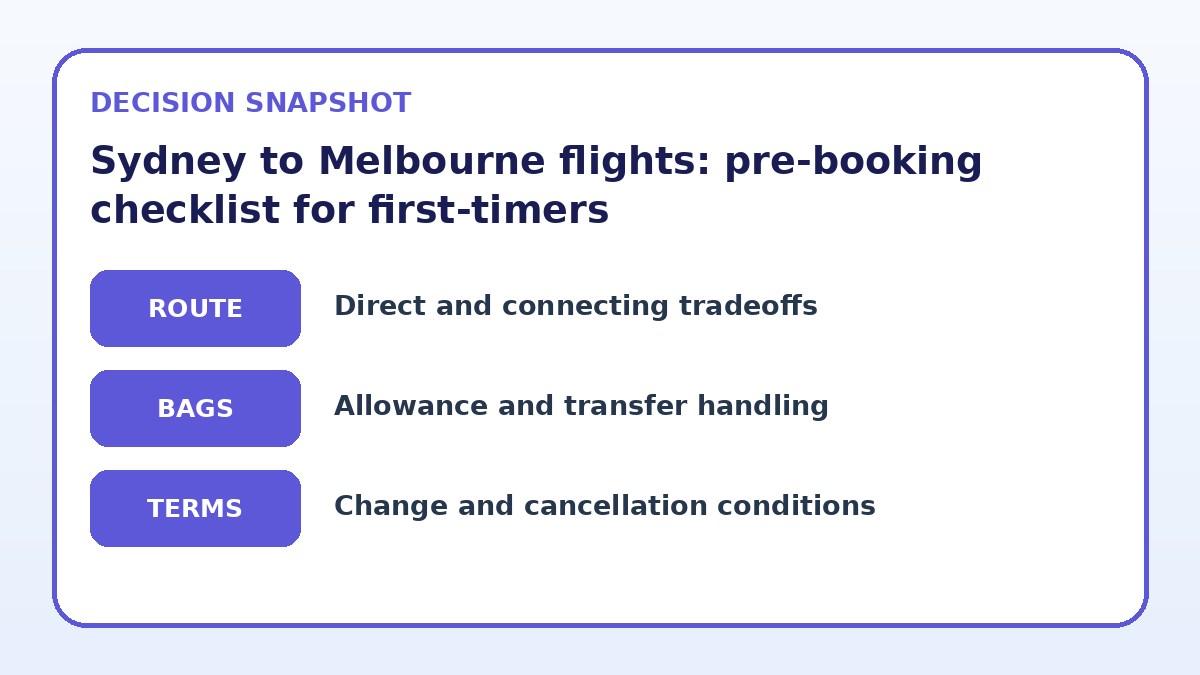
On the Sydney to Melbourne corridor you will typically see options described as direct (nonstop) or with a connection. Before you book, decide how much time you can realistically spend traveling versus on the ground. Nonstop flights usually save time and reduce the chance of missing a connection, but they may come at a higher headline fare or sell out earlier. Connecting options can be cheaper or simply available at the times you need, but each connection adds the risk of delays and the hassle of an additional boarding.
When comparing routes, check the total door-to-door travel window, not just flying time. Include expected transfer time, baggage collection or transfer rules, and whether you would need to change terminals at the connecting airport. On airline booking pages, verify the minimum connection time used in the itinerary and read the booking conditions for missed connections—this tells you if the airline protects you or if you’ll be responsible for rebooking in case of delay.
Baggage and connection risk: what to confirm
Baggage rules can change the economics of a fare quickly. Before you select a flight, check the exact allowance for carry-on and checked bags attached to the fare class you’re viewing. Some low-fare options exclude checked bags or charge for seat selection; add those charges to the headline fare to compare apples to apples. If you have a connection, verify whether your checked bag is through-checked to Melbourne or whether you must collect and re-check it during the layover—this detail affects connection time needed and the stress of the transfer.
If you’re booking separate tickets to save money, be cautious: separate bookings usually do not offer airline protection for missed connections. Confirm on each provider’s final booking page whether baggage is included and whether the carrier will accept responsibility for tight connections. If you value simplicity, consider the slightly higher cost of a single-ticket itinerary that covers both legs and baggage to reduce the risk of overnight rebooking and extra fees.
Compare flight-selection strategies
| Flight strategy | Best for | Risk to check |
|---|---|---|
| Choose nonstop flights | Travelers prioritizing speed, fewer transfers, and lower stress risk | Often higher headline fares and less scheduling flexibility during peak times |
| Accept a connection to lower fare | Price-sensitive travelers willing to add transfer time for savings | Increased chance of delay or missed connections; check baggage handling rules |
| Book a flexible fare | Uncertain itineraries or travelers who may need to change plans | Higher upfront cost but reduced risk and lower change/cancellation fees |
| Buy separate tickets for legs | Experienced planners seeking lower total cost with time buffer | No through-check protection; you bear the risk and cost of missed connections |
Recheck the complete itinerary
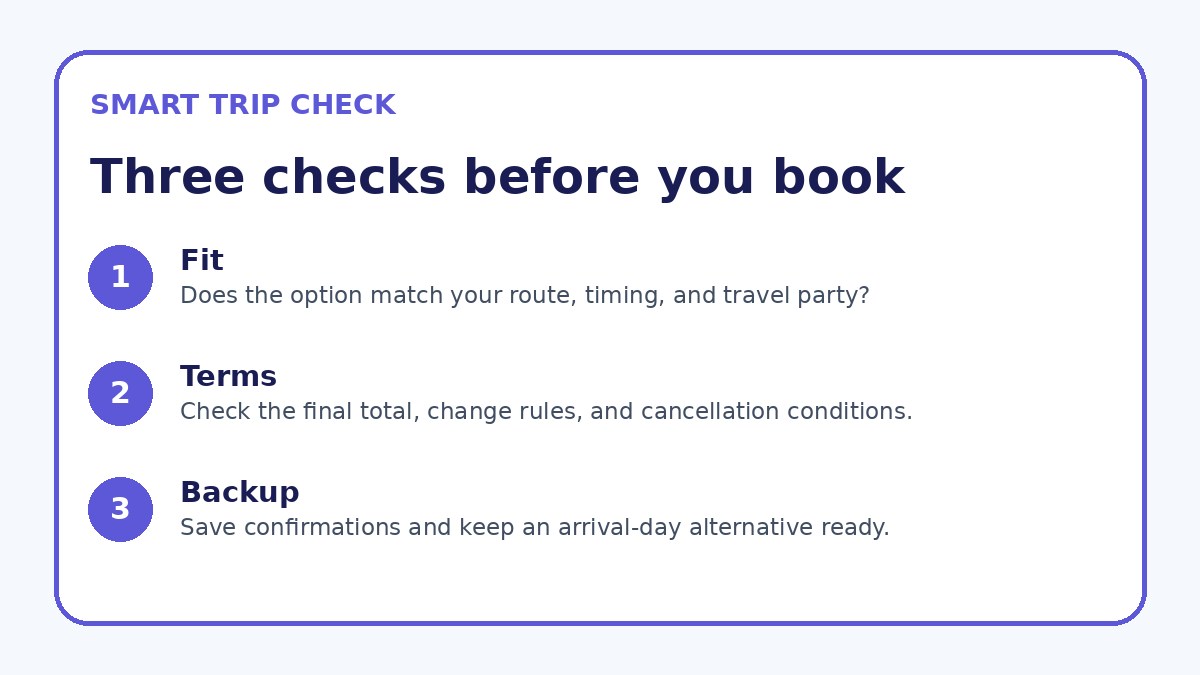
Confirm airports, connection handling, baggage, and change conditions before deciding.
Schedule fit and traveler details to prepare
Decide your acceptable departure and arrival windows based on ground transfers, check-in time, and any plans on arrival. For first-time visitors, earlier arrivals in Melbourne give more buffer for city access and check-in at hotels, while late arrivals can mean limited public transport or higher taxi costs. Have each traveler’s full name as it appears on ID, birthdate, and contact information ready before you start a live search so the fare you see matches the passenger profile and identity rules at check-in.
If you’re traveling with children, seniors, or mobility needs, check availability of specific seating, assistance services, or family boarding options on the carrier’s page. Verify whether infant or child fares require documentation at the airport and whether preassigned seating is available. Use consistent traveler details to avoid mismatched-booking issues; mistakes in passenger names or birthdates can be harder to fix after purchase and sometimes incur change fees.
Flight details to verify
- Set exact travel dates and preferred arrival/departure windows in Melbourne and Sydney before searching fares.
- Collect each traveler’s full legal name, birthdate, and contact number to use when retrieving live fares.
- Add expected baggage needs: note if you require checked bags, carry-on dimensions, or special equipment and check the fare’s allowance.
- Decide tolerance for connections: choose nonstop or connecting options based on total door-to-door time and transfer complexity.
- Open the airline’s final booking page to verify change and cancellation fees, refundability, and the ability to add or change seats.
- Compare total landed cost (fare plus baggage, seat selection, and any service fees) rather than headline ticket price alone.
Fare conditions: cancellations, changes, and small print
Read the fare conditions carefully before you hit purchase. Look for the exact change and cancellation fees, whether a fare is refundable, and if name changes are permitted. Many low-cost and economy fares restrict refunds and charge for changes; if your plans might shift, a more flexible fare could save money and stress despite a higher upfront price. On the final airline booking page, verify which extras are included—seat selection, priority boarding, and baggage—and whether those can be modified later without losing your original fare type.
Also confirm how the carrier handles irregular operations: does the fare include protection for missed connections caused by delays or cancellations, and will they rebook you on the next flight at no additional cost? These operational policies vary and can materially affect your experience. If you use an OTA or aggregator, cross-check the carrier’s own booking terms and contact details so you know who to call if something goes wrong. Trip.com can be a place to compare options, but always verify key conditions on the airline’s official page.
Flight Guide questions travelers ask
Should I always choose a nonstop flight from Sydney to Melbourne?
Not always. Nonstop flights are convenient and reduce the risk of delays from connections, which is useful for short trips or tight schedules. However, nonstop options can be less flexible or more expensive during peak times. If your schedule is flexible and you prioritize lower cost over time, a connecting flight may be acceptable. Always compare the total travel time, the fare with included baggage and seat fees, and how each option fits your on-ground plans in Melbourne before deciding.
How do baggage rules affect my booking decision for this route?
Baggage rules change the true cost of a ticket. Many low-fare classes exclude checked luggage or charge extra for it; seat selection and priority boarding may also be add-ons. Before booking, confirm the carry-on and checked-bag allowance attached to the specific fare class on the carrier’s booking page, then add any fees to the base fare. If you need to transfer on a connection, check whether your bag is through-checked or must be collected and rechecked, because that influences layover time and potential missed connections.
What should I verify on the airline page after selecting a flight on an aggregator?
After picking a flight on an aggregator, open the airline’s official booking page to confirm critical details: exact fare rules (change, cancellation, and refund terms), baggage inclusions, seat assignment options, and boarding policies. Verify the total price matches and check who will be your point of contact for irregular operations—airline or reseller. Also make sure passenger names and birthdates match what you’ll present at check-in; discrepancies can be difficult and costly to fix after purchase.
Final decision note
Preparing a short checklist before searching for Sydney to Melbourne flights makes the booking process faster and reduces surprises at check-in. Focus first on firming up travel dates, traveler names, and your baggage needs. Decide whether you value a nonstop itinerary for speed and reliability or are willing to accept a connection to lower costs, and always verify fare conditions and included extras on the carrier’s final booking page. Taking these steps helps you compare true total costs and pick the option that matches your schedule, luggage, and flexibility requirements before you commit.
Continue planning
Check current options and final conditions
Use the provider page to confirm live availability, the final total, cancellation terms, and every condition that matters to your trip.
This evergreen planning guide was created with AI-assisted drafting and a structured quality review. It does not display live prices, schedules, availability, visa guidance, or provider rankings. Verify current details before booking. Some links are affiliate links; we may earn a commission at no additional cost to you.