If you’re traveling solo to Washington, DC, the quickest planning win is choosing the area where you’ll spend most evenings and mornings. Pick an area first — it determines how you’ll reach museums, concerts, Capitol Hill business, nightlife, or work meetings. From there, decide how much you want to trade walkable convenience for in-room space, private bathroom, work surface, or sensory quiet. This article gives practical rules of thumb: which neighborhoods suit safety-minded walkers versus transit-first explorers, how daily-route friction affects your energy, and which room features really matter for solo stays. You’ll also find a fast comparison of four area-selection approaches and an actionable checklist so you can shortlist an area and filter rooms before you open live inventory. Follow these steps to balance location and comfort so you reach the parts of DC that matter to you without sacrificing a restful room.
Check live stays in the areas that fit
Use your dates and party size to compare current rooms after you narrow the neighborhood fit.
Neighborhood fit: match your itinerary and comfort level
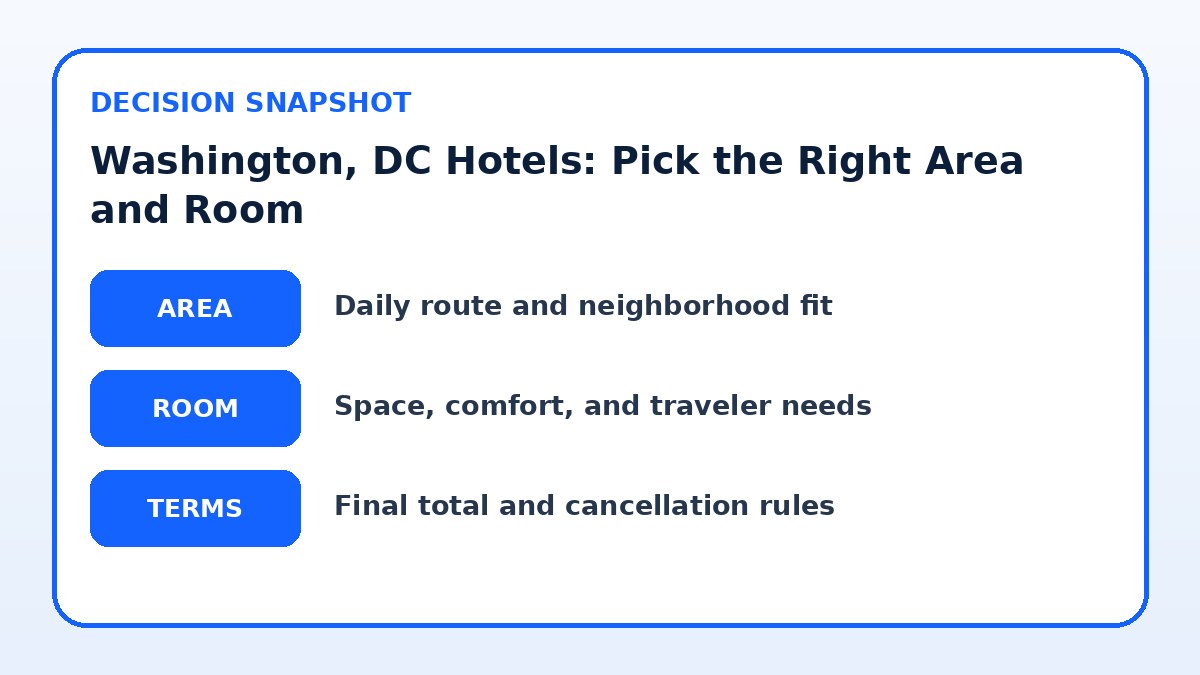
Decide how you want your days to flow before checking hotel inventory. Do you plan long museum days on the National Mall, frequent meetings around Capitol Hill, or evenings in Adams Morgan or U Street? Choose the neighborhood that minimizes back-and-forth commute for the majority of your activities. For a solo traveler, that also means thinking about how you feel walking alone after dark. Neighborhoods with steady pedestrian activity and good lighting will reduce anxiety and often provide late-day food options, whereas business districts can feel empty at night despite proximity to office buildings.
Consider transit access as a tie-breaker. If you’re comfortable with Metro and buses, neighborhoods a stop or two from your main destinations expand options and can offer quieter, less expensive rooms. If you prefer to avoid transfers, pick a neighborhood that puts most must-see spots within a single line or a walkable radius. Finally, factor in a fallback plan—nearby 24-hour transportation hubs, bike-share docks, or frequent ride-hail coverage—so you can adjust plans safely and quickly if the day runs long.
Choose an area-selection strategy
| Area approach | Best for | Tradeoff to check |
|---|---|---|
| Pick the central monuments/Mall area | Maximizing low-walk access to museums and major sights | Rooms tend to be smaller, pricier, and quieter options may be limited at night |
| Stay in a lively neighborhood (U Street/Adams Morgan) | Evening food, nightlife, and solo walking comfort with people around | Longer transit to Capitol and some museums; potential nighttime noise |
| Choose a business district (Downtown/Penn Quarter) | Short commutes to meetings and good daytime services | Areas can feel deserted at night and dining options may close early |
| Base farther out with better room value (Dupont/Columbia Heights) | Larger rooms and quieter stays with local neighborhood character | More transit time; requires planning first/last-mile or occasional ride-hail |
Daily-route friction: time, transfers, and first/last mile
Daily-route friction is the cumulative annoyance of walking, transfers, and waiting. Even a 10-minute walk each way adds up and chips into sightseeing or work time. When mapping routes, count transfers: a 20-minute door-to-door trip with one direct Metro may be less stressful than a 15-minute trip requiring two transfers and a long walk between lines. For solo travelers carrying camera gear or a laptop, consider routes with minimal stairs or with elevators shown on transit maps. Also review the first-mile and last-mile options—are sidewalks continuous, or is there a busy arterial you’d rather avoid at night?
Use friction to decide if a central but smaller room is worth it compared with a larger room further out. If you plan full days and only return to sleep and recharge, proximity matters more. If you need a quiet place to work during the day, a slightly longer commute to a quieter neighborhood with larger rooms may be preferable. Think beyond distance: look for hotels that advertise dedicated quiet floors, soundproofing, or business centers if those features reduce friction for your priorities.
Now compare like with like
Keep the same dates, guests, room needs, and cancellation preferences while you compare the final choices.
Room and solo-traveler needs: sleep, work, and storage
For solo travelers, prioritize room features that support sleep and productivity rather than maximum square footage. A reliable workspace with an ergonomic chair, good lighting, and nearby power outlets will make a compact room livable for remote work. Many travelers trade a larger bed for a private bathroom, since sharing corridors or communal bathrooms adds friction and can affect the feeling of safety. If you need to unpack or keep workout clothes handy, request rooms with a wardrobe or dresser rather than relying on luggage on the floor.
Noise control often beats glamorous views. Ask about room orientation (street vs. courtyard) and confirm whether windows open; in older DC buildings, operable windows may allow street noise that undermines sleep. If you’re sensitive to temperature or need late check-out for odd schedules, verify the property’s policies directly on the booking page. For tech needs, confirm Wi-Fi type and any business services before booking; many hotels vary widely in bandwidth, printing options, and meeting-room access.
Hotel booking check before payment
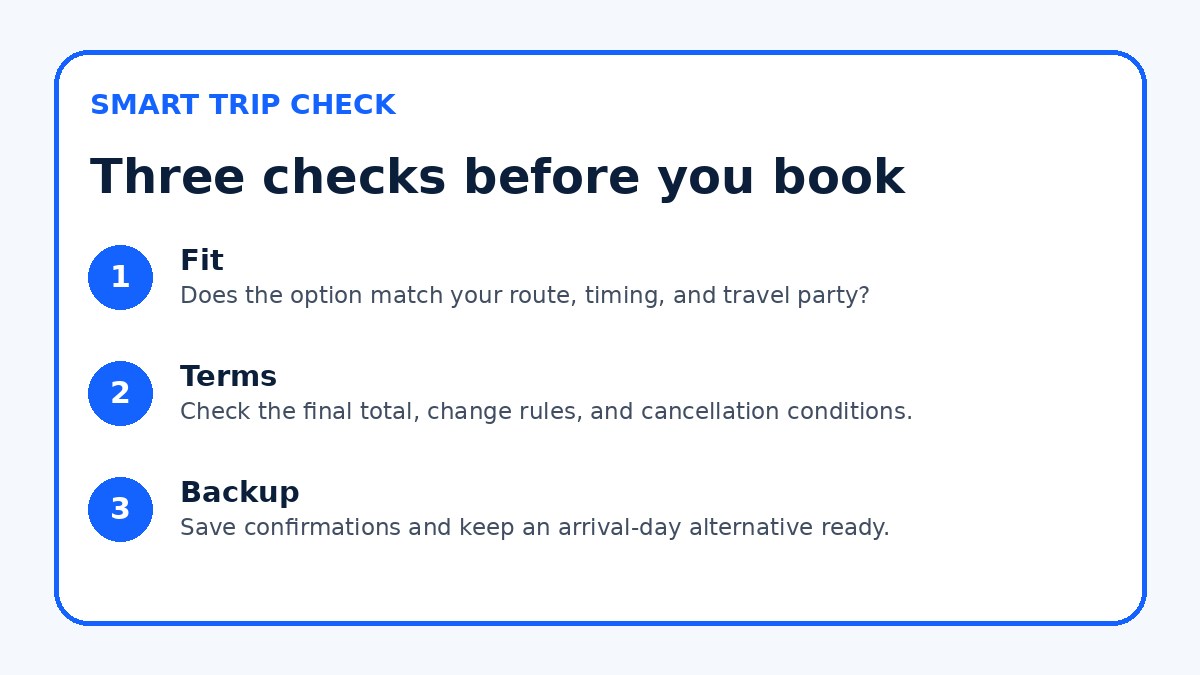
- Map your top three daily destinations and mark neighborhoods within a 15–25 minute transit or walk radius.
- Filter hotel results for room type specifics: private bathroom, workspace, and window orientation (street vs. courtyard).
- Read the cancellation and prepayment terms on the hotel booking page before selecting a nonrefundable rate.
- Confirm 24-hour desk availability, secure key access, and luggage storage options directly with the property.
- Ask the hotel which rooms are on quiet floors or have soundproofing, and request that on booking if sleep is critical.
- Compare transit options for your chosen neighborhood, including Metro lines, bus routes, bike docks, and typical ride-hail coverage.
Booking terms and final checks before you commit
Before you click reserve, check the precise booking terms on the provider’s page. Look for the exact cancellation window, any prepayment requirements, and whether taxes or resort fees are shown at checkout. If you have schedule uncertainty, choose a rate with a flexible cancellation policy, but read the fine print: timing for refunds and how modifications are handled differ across properties. Also check whether the listed room images match the specific room type you’ll receive; some hotels use representative photography for multiple categories.
Verify practical details that matter to solo stays: is there 24-hour front desk staffing, secure key-card access, luggage storage, and a visible house policy on guests and visitors? Confirm transportation options listed by the property, and if you plan to use bicycles or e-scooters, ask about onsite storage. If you need to confirm accessibility features or medical accommodations, request them directly via the hotel’s contact information shown on the booking page rather than relying on third-party summaries. Trip.com is an option to compare current availability, but always validate critical facts on the hotel’s own or the booking provider’s final page.
Hotel Guide questions travelers ask
Which Washington, DC neighborhood is safest for a solo traveler who wants nightlife?
Safety in DC combines personal comfort, lighting, and foot traffic rather than a single safest neighborhood. For nightlife and solo evening walks, U Street and Adams Morgan have active sidewalks, many restaurants and bars, and usually more pedestrian presence late into the evening. Dupont Circle also offers a mix of dining and late-night options with steady activity. Regardless of neighborhood, choose streets with continuous lighting, prefer main thoroughfares after dark, and confirm that your hotel’s front desk operates 24/7. Always verify local transit and ride-hail coverage for your stay.
Is it better to stay near the National Mall or in a residential neighborhood for a solo work-and-sightseeing trip?
If your primary aim is museum access and sightseeing, a hotel near the National Mall minimizes transit time to main attractions. However, those hotels may be smaller and offer fewer in-room work amenities. If you need reliable workspace, quieter nights, or larger rooms for remote work, a residential neighborhood such as Dupont Circle or Logan Circle may be better, with slightly longer commutes to the Mall. Balance the value of reclaimed daytime hours against in-room comfort: if you’ll work mornings and tour afternoons, prioritize workspace; if you’re sightseeing all day, prioritize proximity.
What room features should solo travelers not skip when booking in DC?
Prioritize a private bathroom, a functional work surface with nearby power outlets, and solid blackout curtains or a window that minimizes street noise. Confirm Wi‑Fi expectations on the booking page if you’ll work or stream content. For those who return late, request a room on an interior or courtyard side to reduce street noise, and verify whether the property provides 24-hour staffing and secure key-card access. If mobility or safety is a concern, check elevator availability and whether the hotel lists accessible rooms.
Final decision note
Balancing location and room comfort for a solo trip to Washington, DC means starting with the neighborhood that supports your daily priorities, then choosing room features that reduce friction and boost sleep and productivity. Map your top destinations, weigh transit transfers against walkable convenience, and favor room elements—private bath, workspace, quiet orientation—that make your stay manageable. Before booking, read the exact terms and confirm critical amenities on the hotel’s booking page. With a clear shortlist of areas and a shortlist of must-have room features, you’ll enter inventory browsing ready to pick a room that matches your energy, schedule, and comfort needs.
Continue planning
Check current options and final conditions
Use the provider page to confirm live availability, the final total, cancellation terms, and every condition that matters to your trip.
This evergreen planning guide was created with AI-assisted drafting and a structured quality review. It does not display live prices, schedules, availability, visa guidance, or provider rankings. Verify current details before booking. Some links are affiliate links; we may earn a commission at no additional cost to you.