
Practical answer first: if your family needs predictable door-to-door travel and minimal horizon for disruptions, choose a convenient option—the flight time and airport proximity that keeps transfers short and lowers complexity. If your priority is lower fares, a wider range of departure times, or the ability to change plans easily, choose schedule flexibility—this usually means more combinations of flights and fares, some with connections or looser change rules. Families often need a middle path: a flight that lands at a convenient airport with a fare class or add-on that allows reasonable changes. Below I explain the tradeoffs—what to compare on booking pages, how to think about connection risk versus schedule range, and which practical checks rescue a trip when plans change.
Decide what convenience means for your family
Convenience is more than the shortest flight time. For families that travel with young children, carers, or a lot of luggage, convenience often means fewer touchpoints: a direct flight when available, an airport with easy public transport or short driving distance, and departure times that match your child’s routine. It also includes small but crucial details such as how easy it is to check a stroller, whether the airline or airport offers family lanes, and how much walking or transit is required between curb and gate. Mapping transfers and realistic gate-to-car times before you book will reveal how convenient a given option truly is.
If convenience is your priority, put practical logistics at the top of your checklist. Consider airport layout at both ends, how taxis or rideshares serve each terminal, and whether terminal transfers are required. Also weigh flight timing against nap and meal schedules, and whether you’re comfortable with early morning or late evening travel. Convenience often costs more, but it reduces the hidden stressors—missed connections, long waits, and nighttime transfers—that can turn a short trip into a difficult day for everyone.
When schedule flexibility matters and how to get it
Flexibility helps when plans are still evolving: a sick child, changing event times, or the need to rebook at short notice. Flexible options include fares with generous change terms, tickets that allow name or date adjustments, or booking combinations that offer many departure times across carriers. Keep in mind flexibility isn’t free—fare classes that permit changes without punitive fees can be more expensive, and some flexible fares still have seat availability limits on popular flights. For families that anticipate possible shifts, it’s worth prioritizing the ability to move to another flight the same day or the next without prohibitive charges.
To secure real flexibility, compare the conditions on the airline’s booking page before you pay: look for details about change fees, reissue rules, travel credits, and how refunds are handled for partially used itineraries. Also check whether connecting itineraries are protected: if you book separate legs, a missed connection may not be covered. Consider third-party protections such as refundable add-ons or travel insurance that covers changes for family illness. Trip.com can be used to compare current availability and rules, but always verify final fare conditions on the carrier’s own booking page to confirm what is and isn’t allowed.
| Approach | Best for | Tradeoff to check |
|---|---|---|
| Maximize convenience (direct, close airports, predictable times) | Families prioritizing low-stress logistics and minimal transfers | Often fewer flight times and potentially higher fares or less flexibility to change dates |
| Maximize schedule flexibility (many departure windows, changeable fares) | Families with uncertain schedules or likely date changes | More complex itineraries, possibly connections, and higher rebooking costs if not carefully chosen |
| Balanced approach (direct where possible, flexible fare add-on) | Families wanting convenience without full premium fare cost | Moderate cost and moderate flexibility; requires careful reading of fare rules |
| Separate-ticket strategy (mix and match carriers to widen options) | Experienced planners who can manage risk and independent rebooking | Cheaper or more convenient times possible, but higher risk of uncovered missed connections |
Comparing direct and connecting options for families
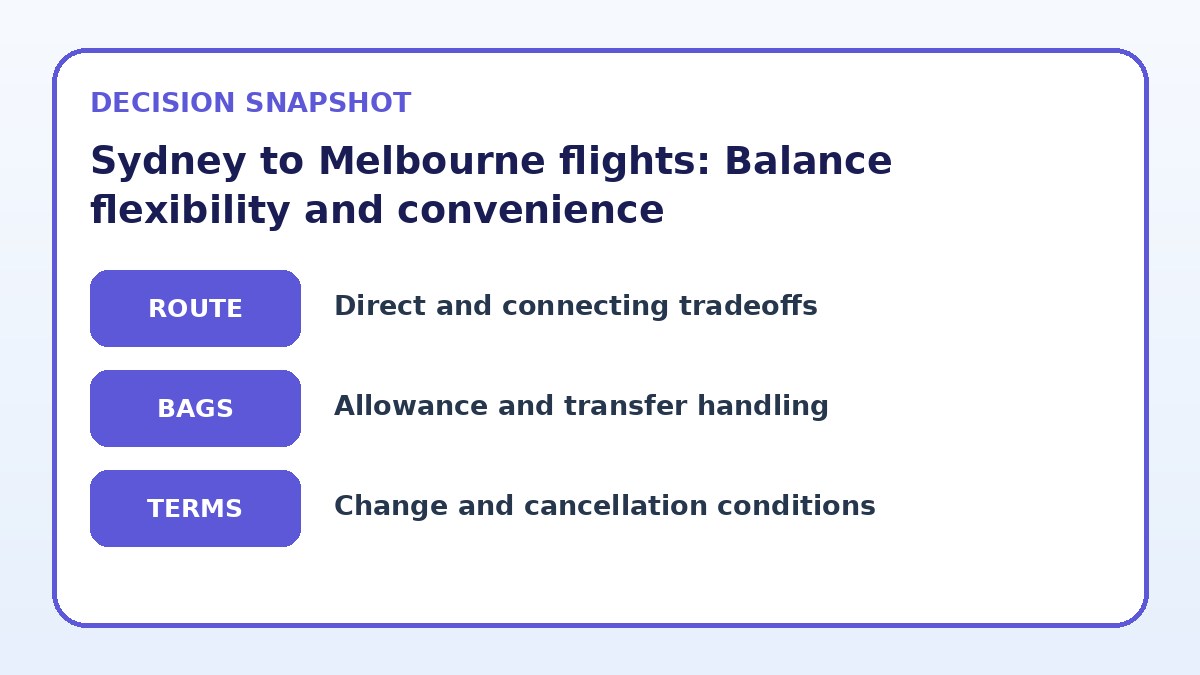
A direct flight simplifies a family journey: one boarding, one disembarkation, and less juggling of bags and children. But direct services may run at inconvenient times or be pricier, and on congested routes they can still be delayed. Connecting itineraries can offer better departure windows and sometimes lower fares, yet they increase the number of transitions and the chance of disruption. When comparing, evaluate the total journey including connection layovers, minimum connection times at each airport, and whether both legs are on the same ticket. Same-ticket connections offer protection if the airline needs to rebook you; separate tickets can leave you stranded if the first leg is late.
For families, pay attention to minimum connection times and the realism of transfer logistics: changing terminals, re-clearing security, or moving between remote gates adds time and stress. If you choose a connecting itinerary for schedule reasons, build in comfortable buffer times—longer than the absolute minimum—especially when travelling with strollers, toddlers, or elderly family members. Also check baggage transfer rules; families often prefer through-checked bags so you don’t have to collect and recheck luggage during a tight transfer.
Before you book
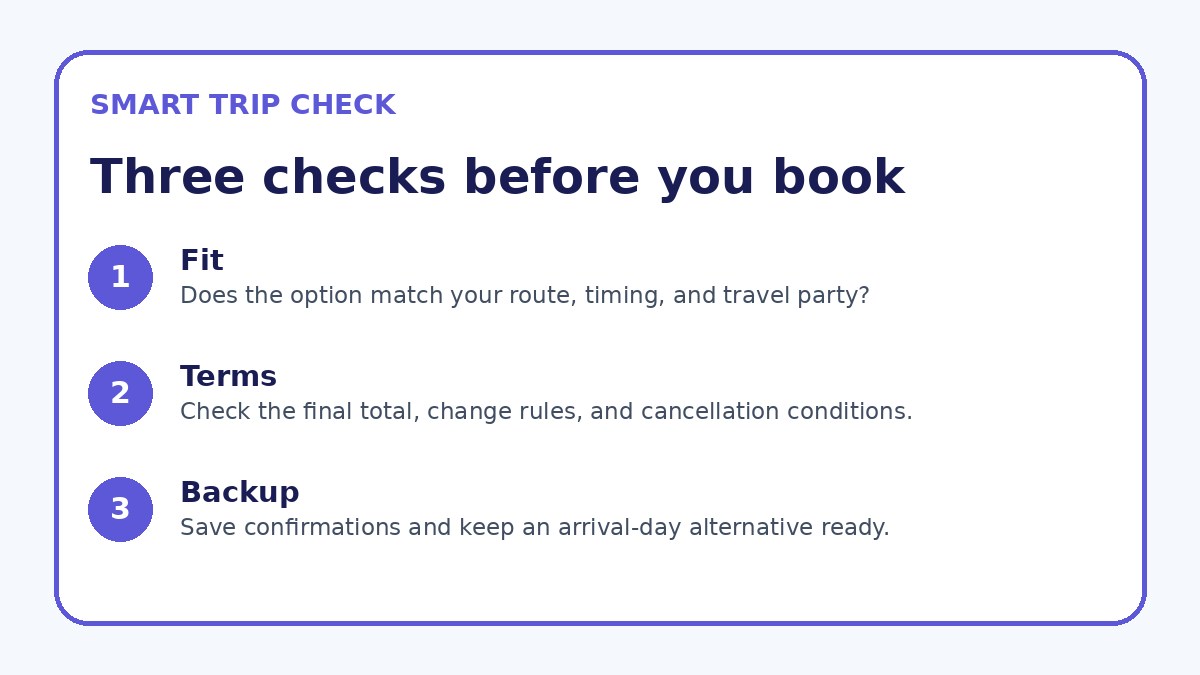
- Confirm total door-to-door travel time including drive, parking or transit, and realistic transfer time at each airport.
- Verify baggage allowances and whether strollers or car seats are included or need separate check-in on the airline booking page.
- Compare fare change rules and fees on the carrier’s final booking page before purchasing to understand rebooking options.
- Check whether your chosen itinerary is on a single ticket to ensure protection for missed connections.
- Reserve seats together if possible and note family-specific services like priority boarding or dedicated check-in lanes.
- Pack an easily accessible family essentials bag with meds, snacks, chargers and spare clothes to manage delays or unexpected waits.
Practical booking checks and day-of-travel tips
Before you finalize booking, compare the full set of conditions: total travel time from home to final destination, baggage allowances, carry-on rules, seat selection policies, and change/cancellation terms. Look for family-specific amenities such as priority boarding or family check-in lanes, and confirm whether your fare includes reserved seats together. If you’re using a third-party site to compare options, use it to shortlist choices but confirm the final fare conditions and any mandatory fees on the airline’s own booking page. Make note of transit options at the arrival airport so you can plan pick-up or onward connections with realistic timing.
On travel day, reduce stress with simple routines: arrive earlier than usual, keep essentials like snacks, medicines and a change of clothes in a carry-on, and pack commonly used items where you can reach them quickly. If a change becomes necessary mid-trip, contact the airline immediately—some rebooking windows and standby options are limited and handled differently by each carrier. For family emergencies, request assistance at the desk or gate; airports and airlines often have procedures to help families with urgent needs, but you should verify availability and exact services on the provider’s site before travel.
Frequently asked questions
Should families always choose direct flights between Sydney and Melbourne?
Direct flights reduce transitions and are simpler with children, but they’re not always the best choice. If direct options force inconvenient departure or arrival times, or come with fares that restrict changes heavily, a well-timed connection might be better for your family’s schedule. Compare total trip impact: door-to-door time, transfer complexity, and the booking conditions for changes. If you’re unsure, pick an itinerary on a single ticket and a fare class that allows reasonable changes—then verify those rules on the airline’s booking page before payment.
How much buffer should we allow for connections when travelling with young children?
Buffers should be larger than the airline’s minimum connection time to account for delays, bathroom stops, stroller folding, and moving between gates or terminals. For families, aim to add additional buffer time beyond the posted minimum—especially when terminal changes or security re-clearance are involved. If you must book a tight connection to save time, ensure both legs are on the same ticket and check the airline’s policies for rebooking in case of missed connections. Confirm transfer practicality at each airport before committing to the ticket.
What booking protections should families prioritize to reduce stress?
Prioritize a protected, single-ticket itinerary where possible, plus clear baggage-through rules so luggage is checked to the final destination. Look for fares or add-ons that allow free or low-cost changes, and read the carrier’s policy for same-day standby and rebooking. Consider refundable fare components or travel insurance that covers illness and family emergencies. Use comparison platforms like Trip.com to view options quickly, but always verify the final change, cancellation and baggage rules on the airline’s official booking page before buying.
Final planning note
Balancing schedule flexibility and convenience for Sydney to Melbourne flights is a practical tradeoff: pick convenience when you need simple logistics and minimal transfers, choose flexibility when dates are uncertain, and aim for a middle path when both matter. The right decision depends on your family’s tolerance for change, how many carry-on items and children you have, and whether you prefer predictable door-to-door timing or a wider set of departure choices. Always compare total travel time, ticket protections, baggage rules and change policies on the airline’s final booking page before you pay. With a clear checklist and a short buffer in your schedule, you’ll reduce stress and make the trip smoother for everyone.
Continue planning
Check current options and final conditions
Use the provider page to confirm live availability, the final total, cancellation terms, and every condition that matters to your trip.
This evergreen planning guide was created with AI-assisted drafting and a structured quality review. It does not display live prices, schedules, availability, visa guidance, or provider rankings. Verify current details before booking. Some links are affiliate links; we may earn a commission at no additional cost to you.