If you’re traveling alone in Singapore and planning to rent a car, focus first on pickup and return terms—those policies shape convenience, cost, and how smoothly your day runs. Practical priorities for a solo traveler are clear: choose a pickup location that suits your arrival method, confirm the ID and license requirements, inspect the vehicle carefully, and know precisely where and when you can return the car. Small differences—airport vs city pickup, supervised vs after-hours drop-off, fuel policy, and additional driver rules—can add unexpected time or fees. This article lays out the key clauses to compare, how they affect independent travelers, and tradeoffs that help you pick the best booking option for your itinerary and comfort level.
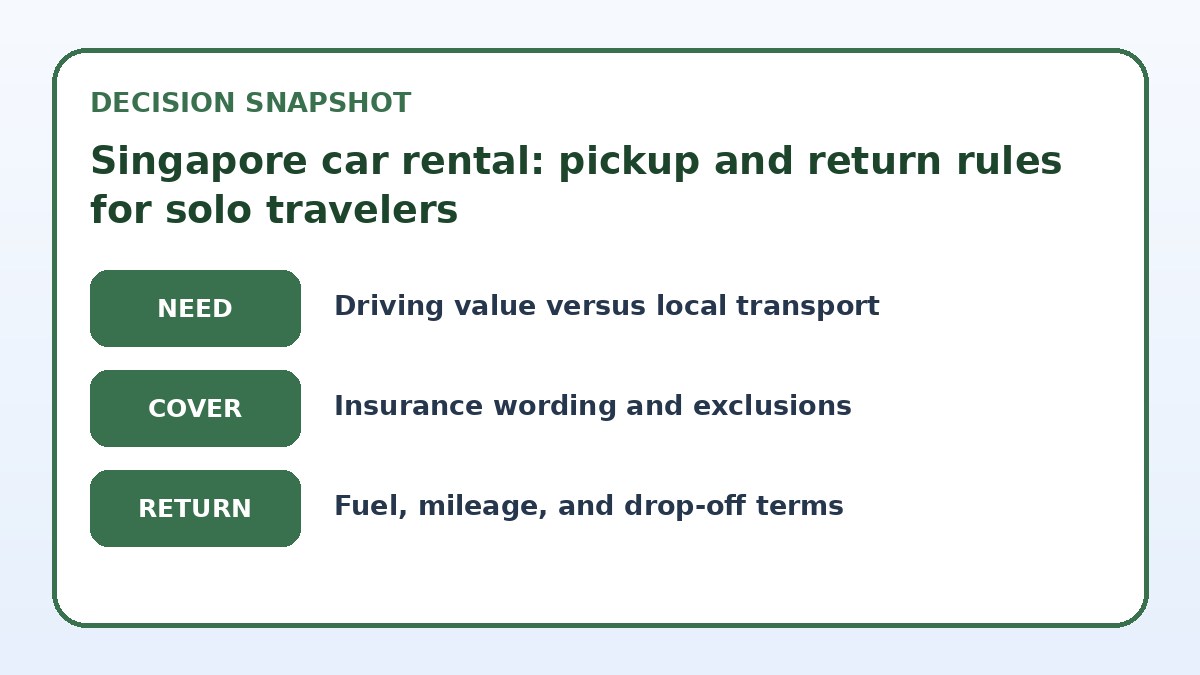
See current options before you compare the details
Availability and final conditions change. Open Trip.com now or keep reading for the practical comparison.
Choosing a pickup location: airport, downtown, or hotel delivery
Pickup location affects time, cost, and your first impression of driving in Singapore. Airport counters are straightforward if you arrive by plane and want paperwork handled immediately; they often have shuttle access to rental lots and can save you a taxi or train transfer. Downtown or neighborhood branches may be closer to your accommodation and let you avoid peak airport traffic. Consider local traffic patterns at your planned pickup time; Singapore’s central areas can be congested during peak hours so a slightly more distant, faster-moving route might be preferable.
Some providers offer hotel or residence delivery—convenient for solo travelers with heavy luggage or late arrivals—but these services can attract extra fees and stricter time windows. If you expect to arrive late, confirm exactly how late deliveries are handled and whether a staff member will meet you. For airport pickups check where the rental counter is located relative to arrivals and what identification and parking procedures apply; if a shuttle is used, know the wait times and pick-up point to avoid a long solo wait after a flight.
Documentation, age rules, and additional driver policies
Before you book, confirm which documents are mandatory at pickup: passport, local or foreign driver’s license, and possibly an International Driving Permit (IDP). Rules vary by nationality and license issuing country; solo travelers should prepare physical originals rather than relying on photos. Some companies require the renter to be at least a certain age or to have held a full license for a set period—common to see minimum license-holding periods—so verify that the provider accepts your history to avoid denial at counter. Also check payment method requirements, like a credit card in the renter’s name and any hold amounts for security deposits.
If you’re traveling alone but may share driving later, read additional-driver policies: some firms permit extra drivers for free while others charge per person and expect all drivers’ documents at pickup. For solo trips where you are the only driver, ensure you understand whether the booking includes only one permitted driver and whether that driver must be present at return. If you plan to hand the keys to someone mid-trip, check whether insurance and liability remain valid; many policies restrict who may operate the vehicle.
| Approach | Best for | Tradeoff to check |
|---|---|---|
| Airport pickup with supervised return | Arrivals who value staff assistance and straightforward paperwork | Often higher fees and potential airport waiting times compared with city branches |
| City branch pickup with self-service return | Travelers staying centrally who want quicker local access | You must manage parking and may face stricter inspection queues at busy times |
| Hotel/residence delivery and key-drop return | Solo travelers with late or multi-stop itineraries needing convenience | Extra delivery charges and greater responsibility for documentation on return |
| Full-to-full fuel with supervised inspection | Budget-conscious drivers who prefer transparent fuel billing | Requires time to refill before return and access to a suitable station |
Ready to check the option that fits your plan?
Use your exact dates and traveler details so the provider page can show the current total and conditions.
Return procedures, after-hours drop-off, and final inspection
Return terms determine your schedule flexibility. Supervised returns let a staff member check for damage and confirm fuel level in your presence, reducing the chance of post-rental disputes. After-hours or key-drop returns are convenient for late flights or early departures, but they transfer more responsibility to you: you should document the vehicle’s condition with photos, record mileage and fuel level, and get a stamped or emailed receipt if possible. Know exact return locations—some companies require the vehicle to be returned to the same lot while others allow different branches, often for a fee.
Understand how inspectors judge wear and damage. Small scratches, interior stains, and unreported dents can trigger charges; ask how minor dings are treated and whether there is a damage threshold. If you’re returning in busy urban areas, allow extra time for traffic, parking, and the final inspection. Also check whether the provider offers a grace period after the scheduled return time or charges incremental late-return fees—this affects whether it’s safer to plan a buffer between your last appointment and car handover.
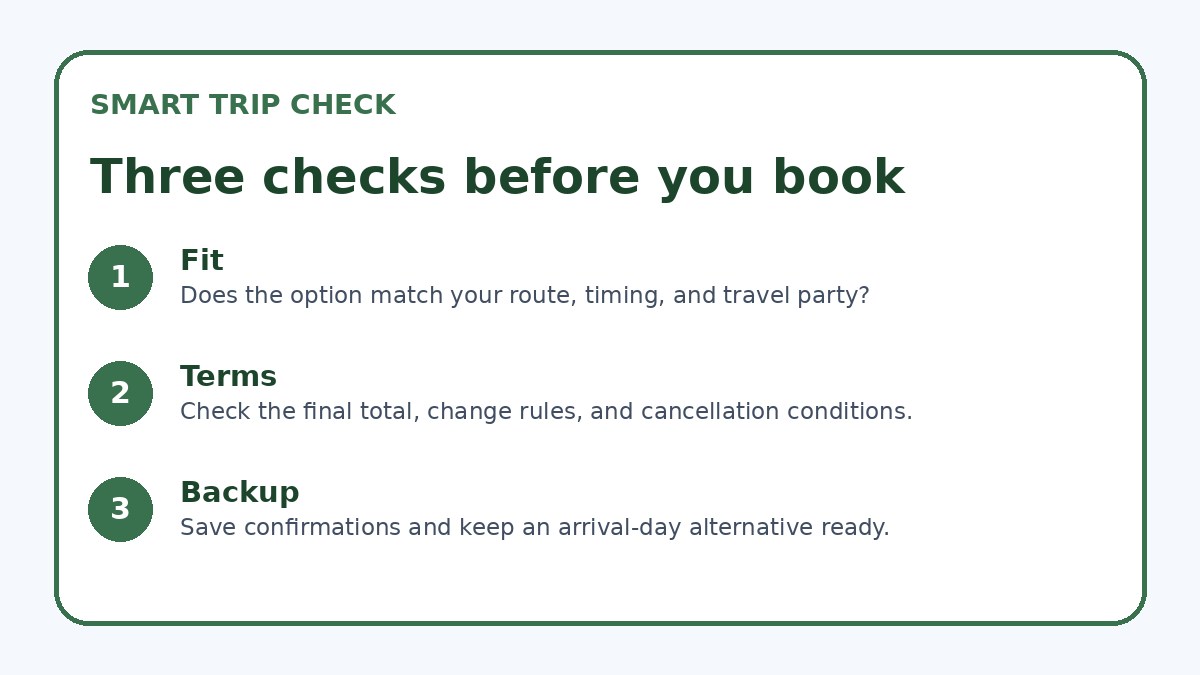
Before you book
- Confirm accepted ID and driving documents and carry originals plus an International Driving Permit if recommended on the provider’s booking page.
- Choose a pickup location that matches your arrival method and check exact meeting points, shuttle details, or delivery time windows.
- Photograph the vehicle from multiple angles, note mileage and fuel level, and email the images to yourself before leaving the lot.
- Clarify the fuel policy, whether you must return full-to-full, and where the nearest acceptable fuel station is located.
- Ask about the deposit/hold amount, acceptable payment methods, and how long the hold will remain after vehicle return.
- Request written confirmation of after-hours return procedures and obtain an emailed or stamped receipt at drop-off when possible.
Fuel, mileage, and billing: what affects final charges
Fuel policy is one of the most common causes of surprise charges. Typical approaches include full-to-full (you return with the tank as you received it), pre-purchase fuel, or pay-on-return. Full-to-full is generally the fairest for solo travelers who can refill locally before return; pre-purchase may save time but can leave you paying for unused fuel. Confirm the required fuel grade and whether refueling receipts are accepted. Also verify how mileage is counted—some rentals cap kilometers or charge per extra kilometer, which matters if you plan day trips outside the city.
Billing methods and hold amounts vary. Many providers place an authorization hold on a credit card at pickup to cover potential damage, fines, or unpaid fees; cash often won’t substitute. Ask what triggers additional charges (tolls, parking fines, missed return times) and how long holds stay on your account after return. For solo travelers keeping tight budgets, choosing a booking with transparent nightly or per-day rates, clear fuel rules, and a reasonable deposit policy minimizes unwelcome costs at the end of your trip.
Frequently asked questions
Do I need an International Driving Permit to rent in Singapore as a solo traveler?
Whether you need an International Driving Permit (IDP) depends on the country that issued your license and the rental firm’s policy. Some providers accept foreign licenses from certain countries while others require an IDP in addition to your passport. To avoid being turned away, check the rental company’s booking page for the exact documentation list, and bring originals rather than copies. If the booking page is unclear, contact the provider directly before you travel to confirm what they will accept at pickup.
What should I do if I must return the car outside office hours?
If your itinerary requires after-hours return, verify the company’s procedure: some have key-drop boxes, while others request you leave the car at a specified lot and lock it. For protection, take time-stamped photos showing the car’s external condition, odometer, and fuel level, and keep those images. Send an email to the provider immediately after dropping off to document the return, and request a receipt or acknowledgment. Also confirm whether there are additional fees for after-hours returns on the provider’s final booking page.
How do damage checks work and how can I avoid post-rental disputes?
Most inspections compare the vehicle’s condition at pickup and return; minor wear might be acceptable, but unreported dents, scratches, or interior stains often lead to charges. Avoid disputes by recording detailed photos and notes at pickup and asking staff to annotate any pre-existing damage on the rental agreement. Keep all signed paperwork and request that the inspector sign off on condition at return. If a disagreement arises, ask for a supervisor and request a written damage report and an itemized invoice showing repair estimates or charges.
Final planning note
Pickup and return terms matter greatly for solo travelers in Singapore because they shape convenience, costs, and your ability to travel on your own schedule. Prioritize clear documentation rules, a pickup location that suits your arrival, transparent fuel and mileage policies, and understandable after-hours procedures to minimize surprises. Before you finalize any booking, read the provider’s full terms on the booking page—especially sections on documentation, deposit holds, fuel, additional drivers, and damage claims. When in doubt, choose the option that offers the least post-rental uncertainty for your comfort level, and document everything at both pickup and return.
Continue planning
Check current options and final conditions
Use the provider page to confirm live availability, the final total, cancellation terms, and every condition that matters to your trip.
This evergreen planning guide was created with AI-assisted drafting and a structured quality review. It does not display live prices, schedules, availability, visa guidance, or provider rankings. Verify current details before booking. Some links are affiliate links; we may earn a commission at no additional cost to you.