Practical answer first: for most first-time visitors, start by comparing direct trains and express coaches that use Prague’s main stations (usually city-centre) and Vienna’s Hauptbahnhof or central coach terminals; choose the option whose station-to-door transfer and luggage friction match your tolerance for walking, connections, and timing flexibility. If your priority is fewer transfers and easier luggage handling, favour departures from central stations over remote airport terminals. If price or seat availability matters more than door-to-door convenience, a coach with a single drop in Vienna can still be straightforward. Below I explain how to evaluate terminal fit, luggage and transfer friction, timing flexibility, and how to prepare a solid disruption backup so you can choose the right Prague-to-Vienna transport plan with confidence.
Terminal fit: which stations keep your door-to-door time low
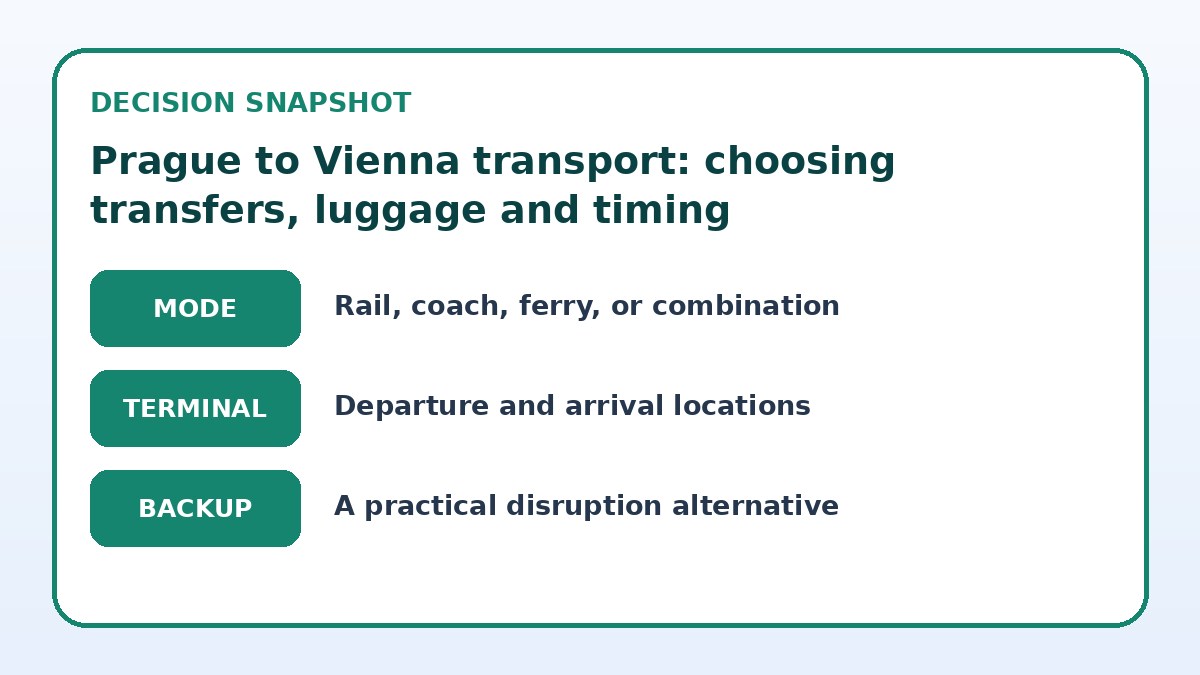
Choosing the right terminal means choosing how much of the trip you shoulder outside the booked vehicle. City-centre stations typically put you closer to hotels and public transit, lowering taxi or tram time after arrival. When comparing options, pin down the exact departure and arrival station names used in the booking interface — some schedules use different hubs or coach terminals whose transfer times vary greatly.
For each candidate, measure door-to-door practicality: distance from your Prague accommodation to the departure terminal, the number of changes required, and the likely arrival stop in Vienna. If an option lists an airport terminal, factor in extra transfer time and the availability of frequent public transport. Make a short map of walking legs, transit lines, or typical taxi journeys so you can compare the full journey rather than only the cross-border section.
Choose the end-to-end journey plan
| Journey approach | Best for | Friction to check |
|---|---|---|
| Direct train from central station to central station | Travelers valuing lowest transfer count and easier luggage handling | May be pricier or have fewer daily departures at peak times |
| Direct express coach between city centres | Budget-minded travelers who can handle undercarriage luggage loading | Longer on-board time and extra luggage transfer steps compared with trains |
| Mixed route: train to an airport then short flight or coach onward | Those balancing schedule constraints with alternative departure windows | Adds extra terminals and transfers; increases total door-to-door friction |
| Flexible, transfer-heavy plan with multiple short legs | Adventurous planners seeking the cheapest or most flexible timing | More walking, luggage handling, and risk that a single delay disrupts the full itinerary |
Check live intercity options
Look beyond the ride itself and compare terminals, transfers, luggage, and arrival fit.
Luggage and transfer friction: how bags shape the route you choose
Luggage handling can transform a comfortable ride into a stressful transfer. Trains often allow easy carriage into the carriage and off via platforms near street exits, which helps if you have heavy suitcases or a stroller. Coaches may require lifting bags into underfloor compartments and waiting for retrieval; if you have tight connection windows or mobility concerns, this added handling step matters.
Assess door-to-door friction by counting steps: how many times will you lift bags, descend stairs, or change vehicles? If you need luggage storage at a station, check whether the chosen stations have left-luggage options and verify availability on the provider’s booking page. A single direct service that keeps you from moving your bags multiple times is usually preferable even if the ride itself is slightly longer.
Timing flexibility: planning departures, buffers and arrival windows
Decide how rigid your schedule is before booking. If you must arrive in Vienna at a specific time for a meeting or event, prefer departures with generous buffers and fewer transfer dependencies. For a flexible itinerary, choose the cheapest or most comfortable option that fits your day; you can absorb small delays with slack in your plans.
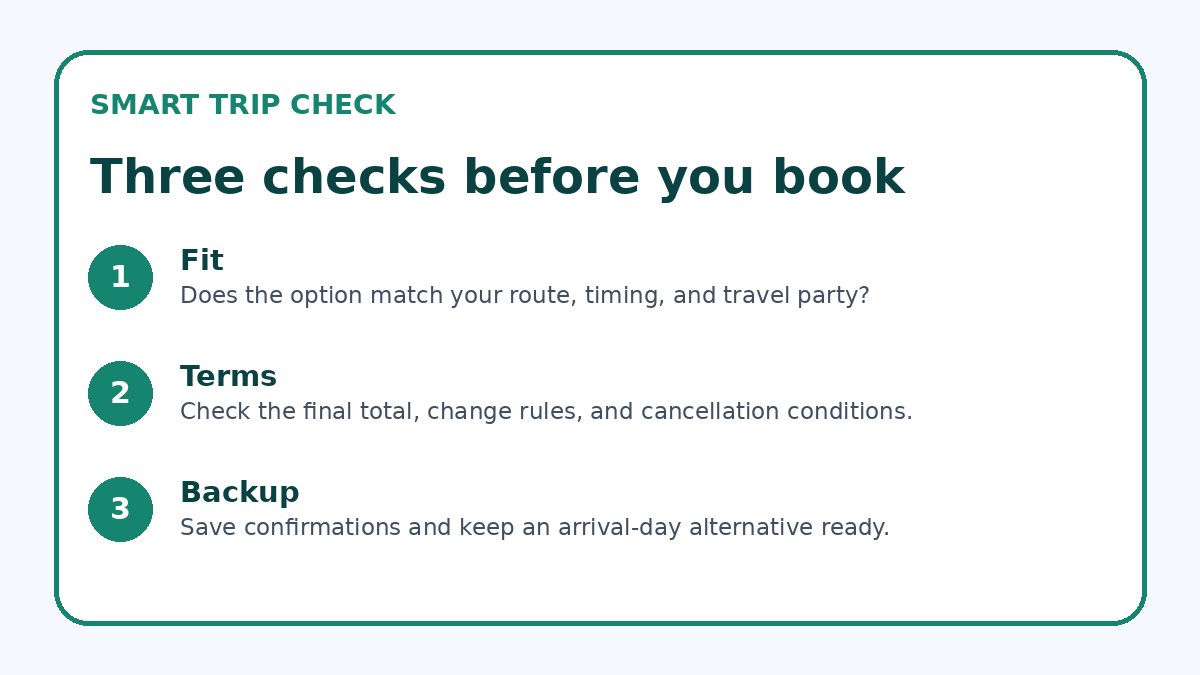
When building your timing, add realistic buffers for local transit to and from terminals, luggage loading, and potential minor delays. If you need to make a connecting train or check into a hotel on arrival, allow extra time rather than assuming on-time performance. Check the provider’s final booking page to confirm station names, connection times, and recommended minimum check-in or boarding arrival times.
Compare the practical alternatives
Use the final page to confirm what is actually offered on your dates and save a workable fallback.
Intercity travel checklist
- Confirm the exact departure and arrival station names on the provider’s booking page and map them to your accommodation addresses.
- Measure door-to-door transit time by adding walking, luggage handling, and local transit or taxi estimates before choosing a service.
- Verify luggage rules and free allowance on the booking page, and note whether platform or undercarriage loading applies.
- Identify at least one later departure and one different mode (train or coach) as a realistic backup for the same arrival area.
- Save screenshots of tickets and station maps, and download an offline transit map or a city taxi number before travel day.
- Check local public-transport schedules for your arrival time and confirm there is a feasible onward option from the terminal.
Disruption backup: practical contingencies and easy on-the-day swaps
A workable backup plan prevents a delayed cross-border leg from becoming a travel crisis. Identify at least one later train and one coach option that serve the same arrival area, and note local taxi ranks and tram or metro lines that can salvage your onward journey if the primary service fails. If you’re crossing late in the day, ensure there’s still public transit or a taxi supply on arrival.
On travel day, keep screenshots of your tickets, station maps, and contact numbers for your accommodation. If your booked option is delayed or cancelled, use the provider’s official pages to check rebooking rules and verify alternatives — you can also consult Trip.com for current availability if helpful, but always confirm changes on the provider’s final booking page before relying on them.
Rail & Intercity Transport questions travelers ask
Is it better to pick a train or coach from Prague to Vienna for easy transfers?
Both trains and coaches serve this route; trains generally reduce luggage handling and often arrive at central stations, which simplifies onward travel. Coaches can be cheaper and sometimes offer point-to-point city-centre pickups, but they usually require undercarriage loading and can add transfer friction if the coach terminal is outside the main rail hub. Compare the specific departure and arrival terminals and the number of expected transfers to find which gives you the least door-to-door hassle for your priorities.
How much extra time should I allow for station-to-station transfers and luggage?
Build conservative buffers: add time for walking between platforms or terminals, platform-level luggage handling, and any local transit or taxi rides to your final address. If you have heavy suitcases, mobility needs, or tight onward connections, increase your buffer further. Check the provider’s boarding advice and local station layouts on the booking page to estimate realistic transfer minutes rather than relying only on the advertised journey time.
What should I do if my booked Prague to Vienna service is delayed or cancelled?
Start by checking the provider’s official communication channels and the booking page for rebooking or refund policies. Meanwhile use your pre-identified backups: find the next train or coach serving the same arrival area, call or order a local taxi if public transit is limited, and inform your onward contacts or accommodation of the new ETA. You can consult Trip.com for current availability as an extra check, but always confirm any alternative directly with the carrier or booking provider’s final page before changing plans.
Final decision note
Planning Prague to Vienna transport well means thinking beyond the ride itself: match the departure and arrival terminals to your accommodation, choose the mode that keeps luggage handling to a minimum, and build timing buffers that reflect realistic door-to-door movement. Compare direct trains and coaches first, then weigh mixed or multi-leg options only if they materially improve arrival time or cost in a way you can manage. Before you book, verify exact station names, luggage rules and rebooking terms on the provider’s final booking page. Having one or two pre-checked alternatives and the right local transit info will keep a cross-border day smooth and much less stressful.
Continue planning
Check current options and final conditions
Use the provider page to confirm live availability, the final total, cancellation terms, and every condition that matters to your trip.
This evergreen planning guide was created with AI-assisted drafting and a structured quality review. It does not display live prices, schedules, availability, visa guidance, or provider rankings. Verify current details before booking. Some links are affiliate links; we may earn a commission at no additional cost to you.