If you’re travelling to Sydney on business and weighing whether to rent a car, make the decision first: does driving improve your itinerary? For most downtown meetings, short trips by taxi, rideshare or public transport are quicker and avoid parking and toll friction. But if your schedule includes suburban client visits, regional day routes (Blue Mountains, Northern Beaches) or carrying equipment, a rental can be time-saving. The main friction point for business travelers is the insurance wording on the rental contract: phrases like Collision Damage Waiver, Super CDW, excess, third-party liability, and authorised driver lists matter when an incident occurs. This guide gives a concise decision rule, explains the common insurance terms you’ll actually see on the booking and pickup paperwork, outlines typical pickup/return pain points, and offers a solid non-driving fallback so you can plan with confidence.
Deciding whether to drive: route value and itinerary fit
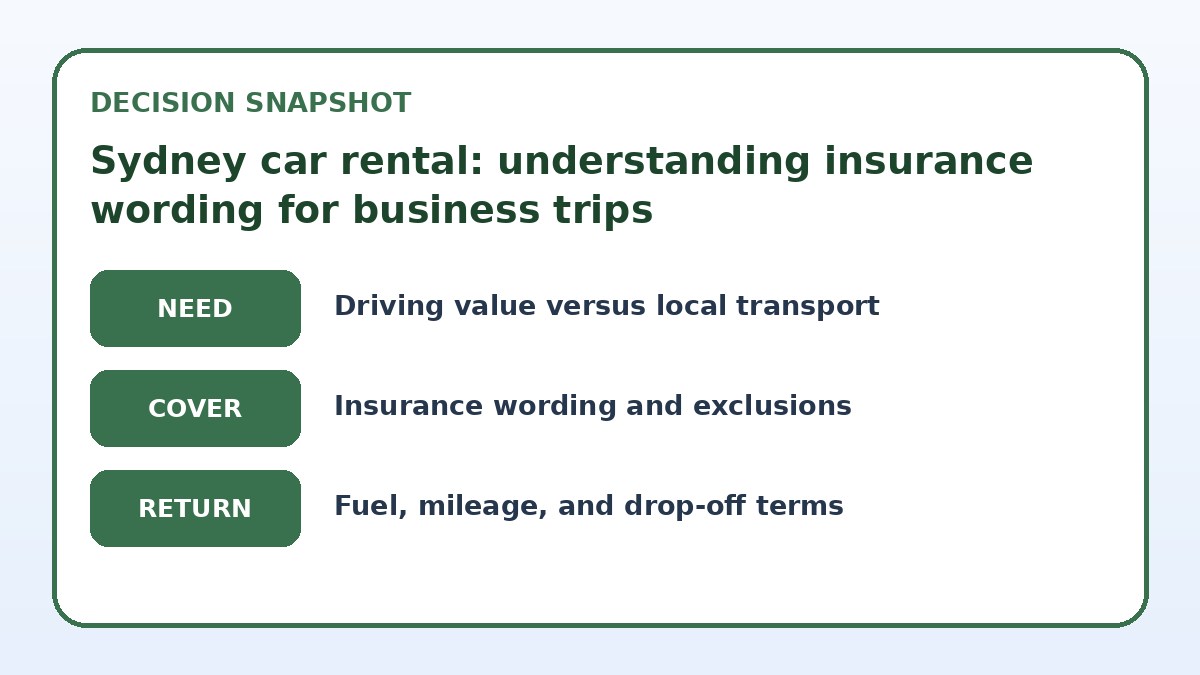
Start by mapping your appointments and estimating door-to-door times. Inner Sydney’s CBD, Barangaroo and near-Sydney Harbour are well served by trains, light rail and ferries; traffic and parking can make driving slower than it looks. If your day’s schedule clusters meetings in a tight radius, public transport or short rideshares usually beat rental cars. Conversely, if you need reliable access to multiple suburbs in a single day, or you must transport marketing materials, prototypes or a small team, a hire car can convert travel gaps into productive work time. Consider also late-night returns or meetings outside transit hours—those are practical reasons to choose driving.
When judging route value, weigh the cost of time and unpredictability. Factor heavy items such as equipment or samples: loading and unloading add time that taxis may not accommodate efficiently. Also check meeting locations for parking availability and fees; many central hotels have expensive or limited parking. If you foresee multiple suburban stops with tight turnaround times, the control and flexibility of a rental could be worth the extra administrative load. Otherwise, a non-driving strategy often reduces risk and simplifies expense reporting.
Decide whether driving earns its place
| Mobility strategy | Best for | Cost or friction to check |
|---|---|---|
| Full rental with excess reduction (paying extra to lower or remove excess) | Travelers needing full control and lowest personal liability during multi-stop days. | Higher daily cost and larger credit-card hold; verify exact reduced excess and exclusions on the booking page. |
| Basic rental without waivers (decline extras, rely on company/credit-card cover) | Those whose corporate or card insurance already provides adequate coverage and who want lower upfront fees. | Potentially large liability if coverage gaps exist; check written policy terms and credit-card claim requirements before declining waivers. |
| Non-driving: rideshare, taxi, public transport | Short-city itineraries where parking and congestion outweigh driving benefits. | Less scheduling control for multiple suburban stops and possible higher costs for frequent rides; keep receipts for expenses. |
| Car service or chauffeur hire | High-stakes meetings, equipment transport, or late-night itineraries prioritising reliability and company billing. | More expensive than self-drive but removes insurance and damage responsibility; confirm company approvals and invoicing process. |
Check live rental choices only after the route test
Use the exact driver, dates, pickup point, and return plan to compare current conditions.
Insurance wording explained for business travelers
Insurance sections on rental contracts use shorthand that matters. Collision Damage Waiver (CDW) or Loss Damage Waiver (LDW) typically limit your financial responsibility after an accident, but they rarely mean zero liability—most contracts still display an excess (also called deductible) which is the amount you pay before coverage applies. Super CDW or additional waiver options can lower or remove that excess for an extra fee. Third-party liability refers to damage you cause to other people or property, and may be supplied to meet local minimums; verify if your company policy or personal travel insurance supplements it.
Business travelers should also check theft protection, roadside assistance inclusions, and whether the policy names authorised drivers. Key phrasing to verify at booking and on the rental receipt: the exact excess amount in local currency, exclusions for tyres, windshields and undercarriage, conditions that void coverage (unauthorised drivers, off-road use, unreported damage), and whether credit card coverage applies. Don’t rely on summary bullet points—when you’re preparing a claim or negotiating at return, the precise wording on the rental agreement governs outcomes.
Compare the full rental conditions
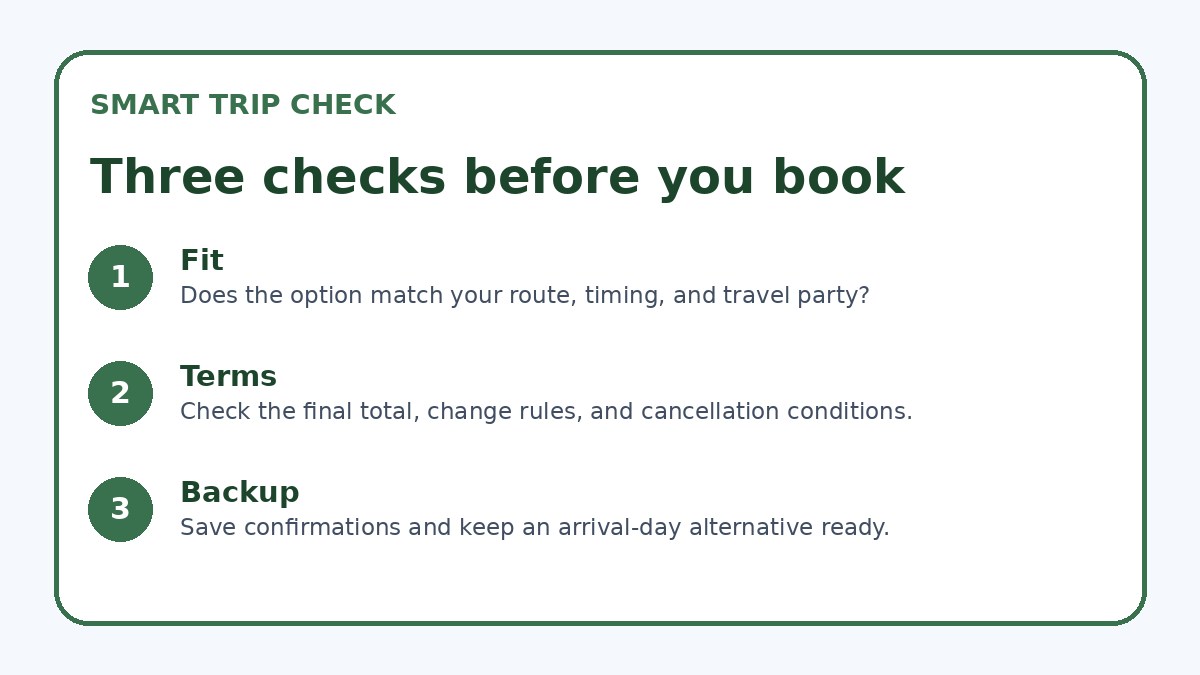
Confirm insurance wording, exclusions, deposit, fuel, mileage, and return terms on the final page.
Pickup and return friction: what to expect and avoid
At pickup, agents will present the rental agreement and may upsell excess reduction or additional drivers. Expect a pre-authorisation (hold) on your credit card that covers the excess and fuel charges; this hold can tie up significant funds on company cards if not anticipated. Inspect and photograph the vehicle thoroughly—open and close doors, take wide-angle shots and close-ups of existing dents and scratches, and keep timestamps. Ask the agent to initial damage you’ve documented and request a written condition report. Confirm the fuel policy and exactly where to return the car to avoid refuelling penalties.
On return, common disputes involve alleged unreported damage, missing fuel, and tolls or fines. Keep a copy of the return receipt showing odometer and fuel level, and photograph the car at handback. If you decline the rental company’s damage waiver at pickup but later seek reimbursement through company travel insurance or a credit card provider, you’ll need the rental contract, damage estimates, and police reports where applicable. For business claims, make sure your employer’s travel policy clearly states which coverages they accept and the process for reimbursement to prevent surprise out-of-pocket costs.
Car rental terms to verify
- Map all meeting locations and estimate door-to-door times to confirm if driving saves time overall.
- At booking, record the exact excess/deductible amount listed in local currency and whether a Super CDW removes or lowers it.
- Before authorising extras, check your company travel policy and any corporate or credit-card insurance wording for rental cover details.
- Photograph the vehicle’s condition on pickup and request the agent to note visible damage on the condition report.
- Confirm the credit-card pre-authorisation amount and whether your corporate card can accept that hold during your trip.
- On return, get a written handback receipt showing fuel level and odometer, and photograph the vehicle again as proof.
Non-driving fallback: workable alternatives for business trips
If driving adds complexity without enough benefit, arrange a reliable fallback. For intra-city travel, timed rideshares or metered taxis with expense receipts are straightforward; many companies have corporate accounts to simplify billing. For suburban or cross-harbour trips, combine public transport with point-to-point services—Sydney’s trains and ferries are predictable for many corridors and avoid parking and toll concerns. Pre-booked airport transfers or an on-call local chauffeur service can be economical for groups or late-night schedules where safety and punctuality are priorities.
Prepare this fallback before you depart: compile local taxi app details, estimate typical fares for common routes, and confirm company expense rules for gratuities and receipts. If you expect occasional car needs, consider booking a short-term hourly car hire or a local business car service that includes a driver; that removes rental insurance issues entirely while retaining private-vehicle convenience. Whatever you choose, document corporate approval and expense limits to ensure smooth reconciliation after the trip.
Car Rental & Road Trip questions travelers ask
Does my personal credit-card rental insurance cover business car hires in Sydney?
Many personal credit cards include secondary rental insurance that can apply when you decline the rental company’s CDW, but coverage varies by card and often excludes commercial or business use. For business travel, cards intended for personal leisure may deny claims if the trip is billed as corporate or if the driver isn’t named correctly on the rental agreement. Before relying on card insurance, obtain the insurer’s written summary of business-use terms, note any claim reporting deadlines, and confirm whether you must use the card to pay the full rental. Always compare that wording with your employer’s travel policy.
What exactly does ‘excess’ mean and how much should I worry about it?
Excess (deductible) is the amount you’re liable to pay before the rental or insurer covers the remainder of a loss. For a business traveler, the worry isn’t just the nominal amount but whether it will be charged immediately via the credit-card hold and whether your company will reimburse you. Check whether excess applies to theft, single-vehicle incidents, tyres or windscreen damage, and whether any local taxes apply to damage fees. If the excess is large relative to your company card limits, consider an excess-reduction option or authorised driver changes before pickup.
Which phrases on the rental contract most often cause disputes?
Disputes frequently stem from ambiguous terms: ambiguous authorised-driver language, unclear exclusions for tyres/windscreen/undercarriage, vague definitions of ‘off-road’ or ‘unsealed roads,’ and inconsistent statements about fuel policy. Also watch for wording about tolls, fines and administrative fees; some contracts pass on processing fees for unpaid tolls. When in doubt, ask the agent to point to the exact clause that covers each concern and request a copy of the rental conditions. Keep that copy with your expense documentation should a dispute or claim arise later.
Final decision note
For business travel in Sydney, make the drive-or-not decision first: only choose a rental if it meaningfully reduces travel time or solves logistical needs such as equipment transport or multiple suburban calls. When you do rent, the insurance wording governs financial risk—focus on the excess amount, what CDW or LDW actually covers, theft protection, and authorised-driver rules. At pickup, insist on a documented vehicle condition report and confirm the credit-card hold. If driving isn’t essential, a planned non-driving fallback—rideshare, train/ferry combinations, or a chauffeur service—often simplifies expense reconciliation and removes insurance headaches. Verify the final booking-page terms and your company’s travel policy before you sign anything.
Continue planning
Check current options and final conditions
Use the provider page to confirm live availability, the final total, cancellation terms, and every condition that matters to your trip.
This evergreen planning guide was created with AI-assisted drafting and a structured quality review. It does not display live prices, schedules, availability, visa guidance, or provider rankings. Verify current details before booking. Some links are affiliate links; we may earn a commission at no additional cost to you.