
Prague travel deals can fluctuate daily, and for busy professionals the impulse to 'snap up' a drop is real. The practical answer: treat price alerts as signals, not commands. Set alerts for flights and hotels with specific ranges and clear decision rules—limit how often you act, require at least two matching alerts or an approved budget range, and always check refund and change conditions before confirming. That approach keeps you responsive to genuine savings without creating unnecessary itinerary churn or misaligned expense reports. In this article I explain how to configure alerts, evaluate the tradeoffs of acting quickly versus waiting, and build simple approval steps that keep bookings compliant with corporate travel policy and your own time constraints.
See current options before you compare the details
Availability and final conditions change. Open Trip.com now or keep reading for the practical comparison.
Configuring effective price alerts for Prague travel deals
Start by defining what counts as a meaningful alert for your trip: a target fare, a percentage drop, or a room rate within your company per diem. Create separate alerts for each leg and for hotel categories (business district hotels, conference-area hotels, or convenient headoffices). Choose an alert cadence you can realistically monitor—daily summaries by email or push notifications during a brief daily review slot. This prevents alert fatigue and impulse decisions while keeping you informed about market movement.
Also include practical parameters: preferred carriers, acceptable connection times, airport alternatives, and minimum refund/change options. When watching hotels, set alerts by room type and cancellation policy so you compare like with like. Use a dedicated spreadsheet or app note to record the alert time, the quoted total price including taxes and fees, and the refundable/cancellation condition shown on the provider’s booking page. Verify these provider-specific details on the final booking page before paying.
Decision rules to avoid impulse booking
Create a short checklist you run through for every alert: does this fare fall below my set threshold, is it refundable or changeable within my policy, does it fit my schedule, and do I have approval if required? Insist on at least two corroborating signals—such as the same fare appearing across two different booking channels or the same hotel rate repeating within 24 hours—before acting. That reduces the chance of booking a transient price that disappears or of paying penalties to rebook.
Timeboxing decisions helps: give yourself a single 30 to 60-minute decision window after an alert triggers and then stop monitoring. If you don’t decide in that window, mark the alert as declined and only reopen if it recurs. This technique protects your focus and prevents ping-pong booking behavior. Remember to confirm provider policies on the checkout page: refundability, change fees, and whether a credit card pre-authorization will be charged immediately.
| Approach | Best for | Tradeoff to check |
|---|---|---|
| Immediate-book on first alert | Travelers with rigid schedules who must lock in plans quickly | Higher risk of impulse purchases and potentially worse cancellation terms |
| Wait for corroborating alerts | Business travelers who can tolerate short windows to verify deals | May miss fleeting lowest fares but reduces rebooking risk |
| Book only refundable/flexible fares | Those who value schedule flexibility and easy changes | Often higher upfront cost or smaller visible savings |
| Use corporate portal with alerts | Employees bound by company policy and expense rules | Limits supplier choice and sometimes lists higher prices than open-market alerts |
Ready to check the option that fits your plan?
Use your exact dates and traveler details so the provider page can show the current total and conditions.
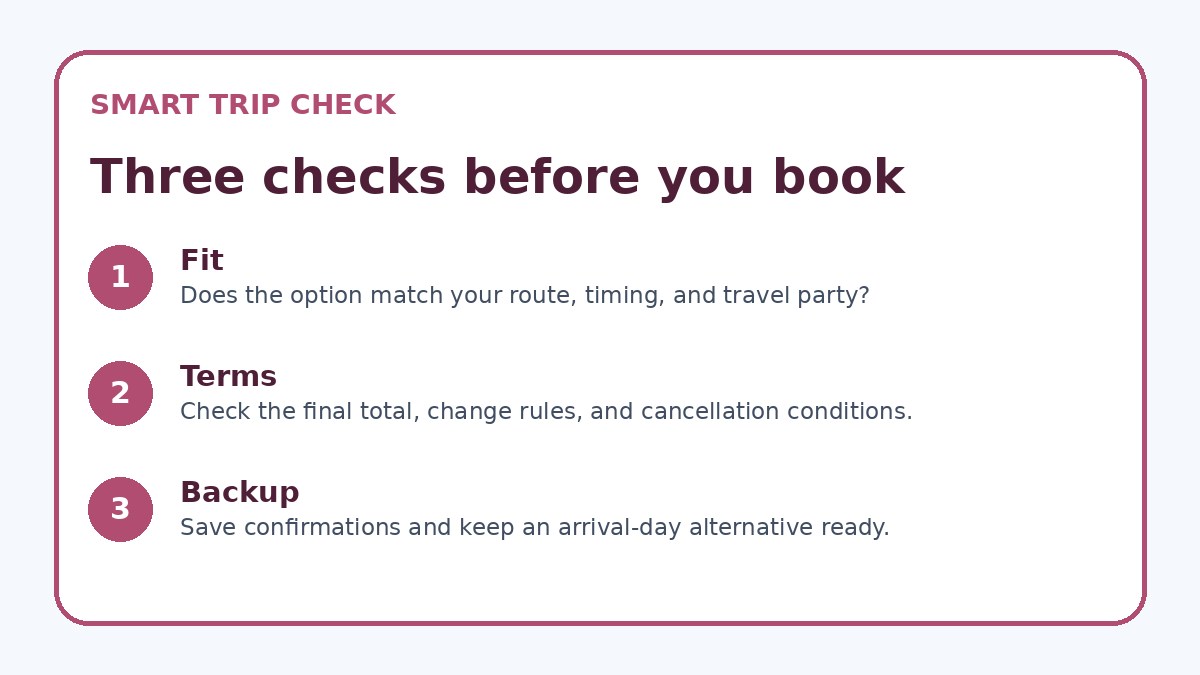
Balancing corporate policy, expense control, and traveler comfort
If your company has a travel portal or preapproved vendors, put those into your alert configuration first. Alerts that track inventory outside company channels can be useful for comparison, but before completing a reservation verify corporate reimbursement rules and preferred booking channels. If a cheaper option requires out-of-policy booking, calculate the total time and administrative cost to get retroactive approval versus booking an in-policy option with easier expense processing.
Factor traveler productivity: a cheaper flight with a long overnight connection or a remote hotel that adds daily transit time may cost you more in effective work hours. When comparing Prague travel deals, quantify non-monetary costs—extra transfer time, unreliable Wi-Fi, or early-morning departures—and weigh them against price differences. If in doubt, prioritize options that minimize risk to meeting schedules and client perceptions, and note the trade-offs on your expense justification if you choose the lower-cost but less convenient option.
Before you book
- Set separate alerts for outbound, return, and hotel bookings with explicit price or percentage thresholds.
- Verify refundability, change fees, and total payable (taxes and extras) on the provider’s final checkout page before purchasing.
- Require at least two matching alerts or one matching alert plus approval from your travel manager before booking.
- Timebox your decision to one 30–60 minute window after an alert to avoid repeated monitoring and impulse decisions.
- Record the alert screenshot, provider name, total price, and cancellation rules in a single log for expense justification.
- Add calendar reminders for ticketing deadlines, free-change cutoff dates, and check-in to avoid surprise fees.
Tools, verification steps, and post-booking best practices
Use at least two alert sources and a manual quick-check on the provider’s booking page before purchase. Many price alert services aggregate fares but may not always reflect carrier-imposed ancillary fees or seat availability. When you find a candidate price, go to the actual airline or hotel checkout page to confirm the final total, cancellation rules, and whether immediate payment or a deposit is required. Trip.com can be one of the places you compare availability and conditions, but always verify the final terms on the vendor’s page before committing.
After booking, record confirmation numbers, ticketing deadlines, and any penalty windows for changes. If you booked an option with limited flexibility, add calendar reminders for the last free-change date and for check-in tasks. Keep a short note for finance detailing why you chose this fare or rate (e.g., matched two sources, refundable in-policy option) so expense review is straightforward. These small steps reduce friction and make it easier to act again confidently on future alerts.
Frequently asked questions
How should I set alert thresholds for flights to Prague when traveling for work?
Pick a threshold that balances likely savings and practicality—commonly a percentage drop you feel is worth the administrative overhead or a fixed monetary amount relative to your usual fare. Start by noting several recent fares for your preferred times and cabin class to understand the typical range; then set the alert at a level that would meaningfully reduce your expense or fit corporate limits. Don’t forget to require a verification check on the airline’s checkout page to confirm taxes, seat fees, and change/refund terms before booking.
What if an alert shows a cheaper hotel but it’s outside my company’s approved vendors?
Compare total cost and administrative effort: a cheaper out-of-policy booking may save money but could require retroactive approval or a manual expense claim. Evaluate the room’s cancellation flexibility and any extra time or transport costs to reach meetings. If the savings are substantial and the hotel meets safety and proximity needs, get pre-approval from your travel manager or document the justification for finance. Otherwise, prefer in-policy options to avoid reimbursement delays or compliance questions.
Can I rely on one alert source, or should I monitor multiple channels for Prague travel deals?
Relying on a single source increases the chance of missing fees, availability nuances, or a transient fare that isn’t widely published. Use at least two alert channels—one aggregator and one direct-check on carriers or hotel sites—and confirm any candidate price on the vendor’s booking page. Aggregators are helpful for discovery; the vendor page is authoritative for final terms. Trip.com can be used as an additional comparison point, but always verify the exact cancellation policy and total payable on the vendor’s final booking screen.
Final planning note
Price alerts are powerful tools for business travelers to Prague when used with discipline. Treat alerts as data points that trigger a short, repeatable decision process: predefined thresholds, a verification step on the provider’s checkout page, and a confirmation or approval procedure that aligns with company policy. Use timeboxing to prevent constant monitoring and a simple logging habit to support expense reviews. This balances capturing useful savings while avoiding the administrative and professional costs of impulsive bookings. With those guardrails, alerts help you save money without adding uncertainty to your work trip.
Continue planning
Check current options and final conditions
Use the provider page to confirm live availability, the final total, cancellation terms, and every condition that matters to your trip.
This evergreen planning guide was created with AI-assisted drafting and a structured quality review. It does not display live prices, schedules, availability, visa guidance, or provider rankings. Verify current details before booking. Some links are affiliate links; we may earn a commission at no additional cost to you.