
Short answer: for couples planning a trip to Seoul, prioritize deals with refundable or flexible cancellation terms when your plans might shift, but expect higher restrictions or fewer perks in the most flexible fares. Pay attention to three things on any deal page before committing: the exact refund window and fees, whether changes are allowed and under what terms, and how cancellations are processed (credit, voucher, or cash). Couples should also check whether flexibility applies to every component—flights, hotels, tours—or only to selected parts. This article walks through practical tradeoffs, decision criteria for different relationship and travel styles, and the specific items to confirm on the provider’s final booking page so you leave with clarity, not assumptions.
See current options before you compare the details
Availability and final conditions change. Open Trip.com now or keep reading for the practical comparison.
How cancellation flexibility actually varies on Seoul travel deals
Cancellation terms are rarely one-size-fits-all. Some flight fares let you cancel for a small fee up to a few days before departure; others allow only date changes with difference collection. Hotels may offer free cancellation until a set date, or a non-refundable prepaid rate that is cheaper but final. Packages that bundle flights and hotels sometimes carry a single cancellation rule that overrides individual components, which can limit flexibility even if one part is refundable. For couples, that means a careful read of which element controls the overall booking.
Beyond the core refund/no-refund split, flexibility varies by how refunds are issued and how changes are handled. Providers may return funds to your original payment method, issue travel credits or vouchers, or require rebooking with a change fee plus any fare difference. Look for specific language about third-party components like local tours and activities; those often have different windows and force you to negotiate separately. Always confirm whether taxes and service fees are refundable—the headline price may not reflect what is recoverable after cancellation.
Tradeoffs couples should weigh when choosing flexibility
Paying extra for flexible cancellation can be worth it when plans are uncertain, but it isn’t automatically the right choice for every couple. If your trip is for a milestone with fixed dates—weddings, anniversaries, or work commitments—nonrefundable rates may be acceptable because dates are locked. Conversely, if either partner faces changing work schedules, health concerns, or family responsibilities, a more flexible option reduces stress even if it costs more upfront. Decide how likely you are to change plans and compare that likelihood with the premium for flexibility.
Couples should also consider peace of mind versus potential savings. Flexible fares may restrict seat selection, loyalty accrual, or promotional extras; hotels with free cancellation frequently have higher nightly rates than prepaid options. Weigh the monetary difference against the emotional cost of losing out on a trip and the hassle of rebooking. If you find flexible terms that still allow meaningful perks—late checkout, breakfast, or low change fees—those are generally better choices for a relationship-focused trip.
| Approach | Best for | Tradeoff to check |
|---|---|---|
| Flexible refundable fares and free-cancel hotels | Couples with uncertain schedules or important life events | Higher upfront cost, sometimes fewer promotional benefits |
| Nonrefundable prepaid deals | Couples with locked-in plans seeking lower base prices | Little or no recovery if you must cancel or change |
| Hybrid mix (flex for key items, prepaid for low-cost items) | Couples balancing budget constraints and risk management | Requires more research and managing multiple cancellation windows |
| Nonrefundable plus travel insurance | Couples wanting cost savings while retaining some protection | Claims process can be time-consuming and coverage varies by reason |
Ready to check the option that fits your plan?
Use your exact dates and traveler details so the provider page can show the current total and conditions.
Exactly what to verify on the booking page before you pay
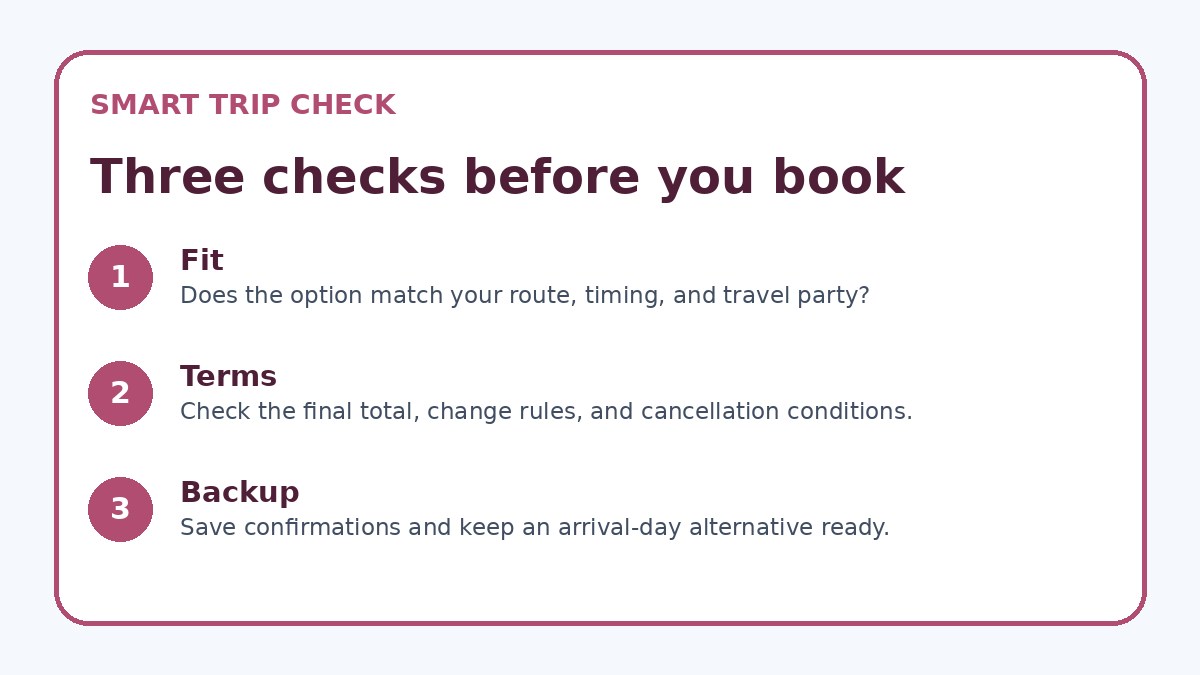
On the provider’s final booking page, inspect the cancellation and change policy wording carefully. Confirm the last date and exact local time you can cancel or change with full or partial refund, the precise fee structure (flat fee or percentage), and whether taxes, service charges, and third-party fees are refundable. Check how refunds are processed—some providers issue a credit with an expiry, not a cash refund—and whether that credit is transferable between travelers on the reservation.
Also confirm whether flexibility applies to all parts of the booking. For packages and bundled deals, find the clause that states which component’s rules dominate. Note any blackout dates, event periods, or seasonal restrictions that can void the flexible option. If insurance coverage or a refundable deposit is offered, examine exclusions and claim procedures carefully. If you’re unsure, screenshot the booking page and contact customer service; when they respond, save that communication with a timestamp in case of later disputes.
Before you book
- Read the full cancellation and change policy on the final booking page and note the exact last date and time for free cancellation.
- Confirm whether refunds are cash, credited to your card, or issued as vouchers and record any voucher expiry and transfer rules.
- Check that flexibility applies to each booked component—flights, hotels, transfers, and tours—and note if one component controls the whole booking.
- Compare the premium for refundable options against the expected cost of a likely cancellation to decide if the upgrade is worth it.
- If considering travel insurance, read exclusions and required documentation; ensure the policy covers your specific cancellation reasons.
- Save or screenshot the booking confirmation and any customer service communications that describe cancellation or change authorizations.
Decision approaches: flexible vs. nonrefundable for different couple scenarios
Adopt a probability-based approach: estimate how likely plans are to change and multiply that by the financially recoverable amount to compare against the flexibility premium. For couples with low change probability and strong schedule certainty, a cheaper nonrefundable hotel or fare can be a rational way to save. For those facing job uncertainty, caregiving responsibilities, or who like spontaneous extensions, prioritize refundable rates or free-change windows even if the upfront cost is higher.
Another useful method is hybrid booking: lock essential, high-cost items (international flights) with flexible fares and take calculated risks on lower-cost items (a single prepaid night or an inexpensive local tour). This balances cost control with protection where it matters most. Also consider travel insurance that covers cancellations for a broad set of reasons; if you choose insurance, confirm whether it complements or duplicates the provider’s own flexible terms, and whether claim conditions align with your likely cancellation reasons.
Frequently asked questions
If a hotel offers free cancellation until 48 hours before check-in, can I still get a refund after that window?
Usually not. Free-cancellation windows are strict: once you pass the stated deadline, the rate often becomes nonrefundable and the hotel can charge the full amount or a penalty. Some providers may allow changes for a fee or offer partial refunds for exceptional circumstances, but those are exceptions rather than the rule. If you anticipate a possible late change, either book a flexible rate, split your stay across refundable and nonrefundable nights, or check whether travel insurance covers late cancellations for your situation.
Do airline change fees always apply even if I bought a flexible ticket?
Not always. Flexible tickets commonly waive change fees, but they may still require payment of any fare difference between the original and new booking. The precise terms vary by fare class and airline policy. Also check whether flexibility applies to both date and name changes, and whether it extends to lower-cost ancillary items like seat selection or checked baggage. Always confirm the final booking page and retain a copy of the fare rules in case customer service applies a different interpretation.
Will travel credits or vouchers issued after cancellation usually cover taxes and fees on rebooking?
That depends on the provider. Some vouchers cover only the base fare or room rate and exclude taxes, service fees, or third-party charges; others cover the total amount originally paid. Voucher terms often include expiration dates and restrictions on transferability or blackout dates. Before accepting a voucher instead of a cash refund, verify whether it can be used for the full cost of your new booking, how long it is valid, and whether it can be applied to additional travelers or split across bookings.
Final planning note
For couples planning travel to Seoul, cancellation flexibility is a practical tradeoff between cost and certainty. Start by estimating how likely your dates are to change and where flexibility matters most—usually expensive, long-lead items like international flights or multiple-night hotel blocks. Read the full policy on the provider’s final booking page, verify refund method and deadlines, and confirm which components are covered. Use a hybrid approach if you want to balance savings with protection, and consider travel insurance only after matching its coverage against the provider’s cancellation rules. When in doubt, ask the provider in writing and keep that record with your booking confirmation.
Continue planning
Check current options and final conditions
Use the provider page to confirm live availability, the final total, cancellation terms, and every condition that matters to your trip.
This evergreen planning guide was created with AI-assisted drafting and a structured quality review. It does not display live prices, schedules, availability, visa guidance, or provider rankings. Verify current details before booking. Some links are affiliate links; we may earn a commission at no additional cost to you.